Paranormal Lens - A Crossroads Of Curiosities, LLC Production

Paranormal Lens - A Crossroads Of Curiosities, LLC Production

di Crossroads Of Curiosities, LLC
Stagione 1
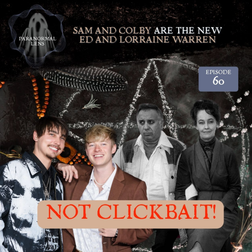
Sam and Colby are the NEW Ed and Lorraine Warren (NOT CLICKBAIT)
Not to toot our own horn, but this might be our most intriguing topic and conversation yet. On this episode of Paranormal Lens: Ben breaks down why he believes Sam and Colby are this generation's Ed and Lorraine Warren... and his argument surprisingly makes sense. As expected, the potentially controversial conversation also veers into highly compelling tangents: our goals in investigating; entertainment vs. storytelling; and what constitutes as compelling paranormal "evidence" (if there even is such thing as "evidence"). Are Sam and Colby the new Ed and Lorraine Warren? Let us know your thoughts in the comments! GEMINI SUMMARY: This episode of the Paranormal Lens podcast features a discussion where host Ben argues that popular YouTube paranormal investigators Sam and Colby are the modern-day equivalent of Ed and Lorraine Warren (1:37). Key themes discussed: Influence and Legacy: The hosts explore how both the Warrens and Sam and Colby have significantly influenced how their respective generations perceive, discuss, and investigate the paranormal (5:04-10:04, 11:18-13:58). Storytelling vs. Entertainment: A central debate revolves around the goals of investigating. The hosts emphasize the importance of storytelling over "empty entertainment," noting that while their own work is driven by a desire to explore the human experience, it inherently becomes entertaining to an audience (22:30-24:55). Evidence vs. Data: The group critiques the term "evidence" in paranormal research, suggesting that "data" is a more accurate descriptor for what is captured, which should then be evaluated by experts across various fields rather than being treated as definitive proof (25:06-33:05). Investigative Styles: They address criticisms regarding the "go-go-go" nature of internet culture, noting that Sam and Colby stand out by producing long-form, unedited content that keeps audiences engaged, contrasting this with more traditional, highly edited television formats like Ghost Hunters (37:37-41:25).
Does the amount of time you spend ghost hunting actually matter?
On this short and sweet episode of Paranormal Lens, we’re asking a deceptively simple question: does the amount of time you spend investigating a haunted location actually matter? We dig into our own experiences in the field and explore how the length of an investigation might influence what we experience, if at all. And, of course, we take the question to its extreme: if we were given an entire week to investigate any haunted location in the world, where would we go, and what would we hope to uncover? From our own anecdotal experiences to the ultimate paranormal dream investigation, this episode gets into how much time may or may not truly matter when you’re hunting for something you can’t necessarily predict. GEMINI SUMMARY: GEMINI SUMMARY: This episode of Paranormal Lens explores the question: does the amount of time spent ghost hunting actually matter? The hosts discuss their experiences and theories regarding how the duration of an investigation impacts the potential for paranormal encounters. Key discussion points: Investigation Duration: The hosts debate whether longer investigations inherently yield more results or if paranormal events are simply unpredictable, regardless of time spent on-site (0:00 - 28:45). The "Dream" Investigation: As a thought experiment, the team discusses what they would do if given an entire week to investigate a single haunted location, including where they would go and what they hope to uncover (throughout the episode).
Why do ghost hunters investigate at night? | DEBUNKING this popular paranormal myth
This episode of Paranormal Lens is full of hot takes and potentially unpopular opinions. In a rare moment when we all actually agree on something, none of us can quite wrap our heads around why so many paranormal investigators come up with weird, convoluted, or just plain factually incorrect explanations for why they supposedly need to investigate at night. So, on this episode, we’re poking holes in some of the most common myths and misconceptions surrounding nighttime ghost hunting. We’ll examine the claims investigators often make about why the paranormal is supposedly more active after dark... and whether there’s actually any good reason to believe them. We also share some of our recent daytime paranormal experiences; and reveal our own, surprisingly simple reason for investigating at night. Spoiler: it’s probably a lot simpler than you think. GEMINI SUMMARY: This episode of Paranormal Lens explores the common belief that ghost hunting must only be conducted at night and challenges the various myths used to justify this practice. Key takeaways regarding nighttime investigations: Debunking Myths: The hosts argue that nighttime is not a requirement for paranormal activity (3:02). Common excuses, such as ghosts being nocturnal or infrared cameras being necessary to capture them, are dismissed as illogical or just convenient excuses for filmmakers (15:58, 19:20, 21:36). The Real Reasons: The hosts admit that nighttime is preferred primarily for "spookier vibes" and to match the atmosphere people expect from paranormal media (10:42, 12:30). They also note practical factors like audience engagement, as viewers are more active in the evening, and location access restrictions during daytime hours (11:27, 31:27). Solo Ghost Hunt Challenge: The latter half of the episode focuses on a "scariest solo ghost hunt" challenge proposed in a previous episode (36:34). They brainstorm elements for this challenge, including being locked in a jail cell in an abandoned prison, having no communication with the outside, and using a strobe light flashlight (1:18:28 - 1:19:29). The hosts set a goal of 400 listens for the episode by September 1st to make this challenge a reality, promising to play a game of Jenga to decide who undergoes the solo investigation (1:20:47 - 1:23:22).
Time slips; places that don't exist; and Bitcoin is the Antichrist?
What if you visited a place that shouldn't exist... and then could never find it again? What if an object you know you had suddenly vanished without a trace, only to reappear somewhere completely unexpected? On this episode of Paranormal Lens, we explore the strange phenomenon commonly described as “glitches in the matrix." Experiences that seem to challenge our understanding of reality, from mysterious locations to disappearing objects that feel like reality itself has briefly skipped a beat. Are these experiences evidence of time slips, alternate realities, or something far more sinister? Or is there a much more mundane explanation? Could the way our brains process memory, perception, and expectation create the illusion that something impossible has happened? Throughout the episode, we'll examine some of the our own "glitches in the matrix," including a recent experience in Marshall, Michigan. GEMINI SUMMARY: This episode of the Paranormal Lens podcast explores the concept of "glitches in the matrix," experiences where locations, buildings, or objects seem to appear and disappear or defy logical explanation. Key Highlights: The Marshall, Michigan Experience (06:15 - 17:30): Ben and Angela, share a personal story from several months prior when they visited an antique store in Marshall, Michigan, that specialized in paper ephemera and vintage books. Upon returning to the town recently, they were unable to locate the building or find any online record of the shop, despite extensively searching maps, social media groups, and local streets. Missing Objects (17:42 - 22:21): The discussion shifts to the phenomenon of disappearing items. Ben recounts an experience in college at Riverbend Park, where a static EMF detector he was using for a web series vanished while he was driving home. He confirmed through recorded footage that the device was in the car, yet it was never found again. The Antichrist Debate (00:00 - 00:15, 24:35 - 25:05): The hosts jokingly debate whether Bitcoin or Bigfoot is the Antichrist, a recurring humorous topic on their show. Community Engagement (25:55 - 28:05): The hosts mention a challenge for their listeners: if episode 55 reaches 400 listens by the end of August 2026, they will commit to a high-stakes, solo ghost-hunting challenge they previously designed.
Podcast FEAR
Esplicito
On this episode of Paranormal Lens, we take a (slightly) more serious look at fear and the role it plays during paranormal investigations. The conversation takes some interesting turns as we explore how "clip culture" has shaped people's perceptions of investigators' experiences, and why every time we post ourselves reacting to something unusual or go live from an investigation, someone inevitably comments: "Don't show it fear!" We also discuss how some paranormal TV shows and investigation teams have made fear part of their brand and identity, and whether that alters their investigations or perceived experiences for better or for worse. GEMINI SUMMARY: In this episode of Paranormal Lens, the hosts explore the role of fear in paranormal investigations, specifically addressing why viewers often tell them not to show fear while investigating. Key Discussion Points: The "Don't Show Fear" Myth: The hosts discuss the common viewer sentiment that showing fear during an investigation makes an investigator vulnerable to demonic attachment or possession (2:37-3:00). They argue that while extreme vulnerability can be a concern, a natural, momentary reaction to a startling event is different from living in a state of perpetual fear (3:40-4:30). The Impact of Intent and Attitude: The team emphasizes that one's mindset matters. Going into an investigation with a negative, aggressive, or overly anxious attitude may influence the environment or create a self-fulfilling prophecy, whereas approaching it with a neutral, "clean slate" perspective is preferred (10:06-11:50, 12:52-13:40). Clip Culture and Perception: The hosts critique "clip culture" on social media, noting that 10-second viral clips of them getting startled do not accurately represent hours of steady, focused investigation. These snippets often lead to unfair judgments from audiences who don't see the full context (14:22-15:10, 24:09-24:45). Adrenaline vs. Reality: The team acknowledges that high-stress situations can make investigators more hyper-aware, sometimes causing them to misinterpret mundane shadows or sounds as paranormal (4:49-5:45). They argue that experienced investigators must learn to talk themselves down from these moments to objectively evaluate the evidence (5:45-6:00). Ultimately, the hosts conclude that getting "spooked" by an isolated event is a normal human reaction, not a dangerous mistake, and they remain committed to long-form, authentic investigation styles over the sensationalized content often found in the paranormal genre.
Designing the SCARIEST solo ghost hunt of ALL TIME
In this episode of Paranormal Lens, we’re asking a terrifying question: what would be the SCARIEST possible solo investigation for the Crossroads of Curiosities crew? (Spoiler alert: it does not involve handcuffs or bathtubs...) After nearly a decade of investigating some of the most haunted locations in the midwest, we’re turning the focus inward and designing the one ghost hunt that would truly test our courage, skepticism, and nerves. We're not creating the most "objectively" extreme investigation imaginable. We're creating the most terrifying one for us personally. What type of location would make us hesitate before walking through the door alone? What conditions would push us outside our comfort zones? And what paranormal scenarios would force us to confront our own fears? Oh, and there’s a catch… If this episode reaches 400 listens by September 1st, we’ve all reluctantly agreed to turn our hypothetical “scariest solo ghost hunt ever” into a reality. So give this new episode a listen, and be sure to share with your friends... we dare you. GEMINI Summary: In this episode of Paranormal Lens, the Crossroads of Curiosities crew brainstorms the most terrifying possible solo ghost investigation for themselves (1:38 - 1:53). Their goal is not to create an objectively extreme event, but to design a scenario that would personally test their nerves and fears. The "Ultimate" Scary Solo Cocktail: Setting: A large, abandoned haunted prison (7:16 - 7:20). Timing: Starts at 11:33 p.m. on the night of a new moon (24:26 - 25:12). Restraint/Isolation: The investigator is locked inside a cell with all cameras placed outside to ensure total isolation (8:14 - 8:28, 13:47 - 14:10). Environmental Factors: A random Craigslist coven is hired to perform a conjuring ritual on the prison grounds while wearing orange jumpsuits (23:07 - 24:17). Tools: A strobe light is used instead of a standard flashlight, and the investigator is provided with a word generator device (28:06 - 29:43). Psychological Hazards: Cat balls and Rem Pods line the hallway, a mirror is placed in the cell, and a Boo Buddy is kept just out of reach (12:42 - 13:06, 16:47 - 17:26, 25:45 - 26:15). The X-Factor: The crew aims to have a bat in the cell with the hope that it will leave droppings on the investigator (8:30 - 8:37, 30:45 - 30:52). The Challenge: The crew has agreed that if this episode receives 400 listens by September 1st, they will host a live-streamed Jenga match to determine who must perform this terrifying solo investigation within the next year (31:00 - 33:05).
Getting a Tarot Reading from a HAUNTED deck - Tarot Topic #1
Have you ever gotten a tarot card reading from a haunted deck? We can now officially say we have... and we received it live on air! This is a special episode of Paranormal Lens, the first of several "Tarot Topics" that we'll return to intermittently as the podcast progresses. We're joined by our good friend and tarot reader Lindsay to get an inaugural reading from her very haunted tarot deck. The resulting reading touches on some of our favorite topics like religious trauma as well as why some people (even those in the paranormal community) view tarot as something "evil" and 'demonic" when it's not.
AI is an egregore?? We wish we were kidding…
Who wants another episode about egregores??? *Crickets* Oof. Sorry to disappoint.. but on this episode of Paranormal Lens, we tackle our most controversial topic yet: is AI an egregore? Firstly, we tackle the huge and necessary question on if AI has a consciousness. Heck, do egregores even have a consciousness? Through billions of human interactions, are we collectively feeding a new thoughtform, or are we simply projecting age-old occult concepts onto cutting-edge technology? And where do ideas like egregores, tulpas, memes, archetypes, and collective consciousness intersect with artificial intelligence? Whether you're convinced AI is nothing more than sophisticated software or you're open to stranger possibilities, this episode digs into the folklore, philosophy, psychology, and paranormal implications behind one of the weirdest questions of the modern age. No easy answers. No fearmongering. Just an honest conversation about one of the most fascinating intersections of the paranormal and emerging technology. Also: Angela is 100% gonna try to reach out to Elias Thorne on our next TikTok Live, isn't she... GEMINI SUMMARY: This episode of Paranormal Lens explores the provocative question: Is AI an egregore? The hosts discuss whether human interaction with artificial intelligence is collectively feeding a new thoughtform, or if we are simply projecting occult concepts onto modern technology (2:03-4:28). Key themes and discussion points: Defining Egregores: The hosts describe an egregore as a "thoughtform" created by collective human belief and intent, which then takes on a life of its own (2:38-3:40). They draw parallels between this concept and the way people interact with AI, treating it like a conscious entity that learns from human input (5:21-6:06). The "Cloud" Analogy: The hosts compare AI, such as ChatGPT, to entities like the Hatman, suggesting that while individuals experience different versions of these "entities" based on their own personal inputs (algorithms), there is a collective "cloud" engine that connects them all (8:03-8:59). Shadow Self and Reflection: The discussion touches on the idea that AI acts as a "mirror" for human nature, potentially reflecting our fears, shadows, and subconscious intent, similar to how occultists view the interaction between a practitioner and an egregore (9:33-10:40). AI Inbreeding: The hosts discuss a recent Cornell University study mentioned in The Guardian regarding "AI inbreeding," where AI models generated consistent, fabricated stories about a non-existent person named Elias Thorne (22:04-23:45). They debate whether this phenomenon is a technological glitch or, in a paranormal sense, the birth of a new entity (24:36-25:27). Consciousness vs. Metaphor: The group remains skeptical about whether AI currently possesses actual consciousness but finds the metaphor for how these systems propagate through human belief and data extremely compelling (6:19-6:41; 16:44-18:11). The episode concludes by pondering if modern "shadow beings" might effectively be algorithms existing within our collective digital landscape (30:16-30:43).
Angela’s summer of sorrows (please don’t send to her mom)
In this truly one-of-a-kind episode of Paranormal Lens, Angela not only knows the topic, but she commands it! As a follow-up to something she alluded to in the 50th episode, she leads an intriguing conversation about why her views on death and the afterlife have changed since paranormal investigating. It's full of thought-provoking twists and turns, as the conversation veers from religious hypocrisy to free will and even the meaning of life! What a fun, summery topic. Just promise us you won't show her mom...
50th Episode: Paranormal AMA (Part 2)
Welcome to Episode 51: Episode 50, Part 2 of Paranormal Lens. (That's a mouthful, yikes!) Turns out we couldn't cram 50 paranormal AMA questions into a single episode, so the chaos continues. We're picking up right where we left off with more rapid-fire questions, bizarre tangents, and whatever else happens when two rowdy employees and a disillusioned HR manager are left unsupervised at the Cheese Factory. This is the last part of our never-ending Episode 50, we swear. Or is it...?
1 di 6