Sustainability, Climate Change, Renewable Energy, Politics, Activism, Biodiversity, Carbon Footprint, Wildlife, Regenerative Agriculture, Circular Economy, Extinction, Net-Zero · One Planet Podcast

Sustainability, Climate Change, Renewable Energy, Politics, Activism, Biodiversity, Carbon Footprint, Wildlife, Regenerative Agriculture, Circular Economy, Extinction, Net-Zero · One Planet Podcast

di Mia Funk
Stagione 11
Our Wild Familiars - DR. DAN WERB on Animals that Live Among Us & Urban Wildlife Conservation - Highlights
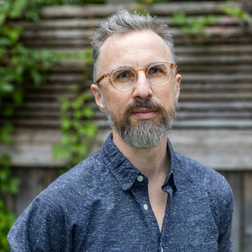
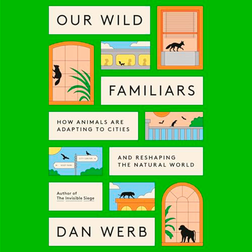
If you live in a city, you’ve probably had that moment in the middle of the night. You hear a scratching in the walls, or you catch the glowing eyes of a raccoon peering out from a dumpster, and for a second, the concrete world feels a lot less 'controlled' than we like to pretend. We’ve been taught to think of cities as 'biological deserts'—places where nature goes to die. But my guest today, Dan Werb, says that’s a myth we tell ourselves to feel safe. Dan is an award-winning epidemiologist and a musician, and in his new book, Our Wild Familiars, he explores the 'synanthropes'—the wild creatures that aren't our pets, but aren't quite strangers either. They are the coyotes, the bats, and even the octopuses that are learning to use our cities as laboratories for their own rapid evolution. He’s also the author of The Invisible Siege and City of Omens. (0:02) The unexpected biodiversity of urban areas and wild familiars (1:18) What is a Synanthrope? (4:15) The Myth of the Biological Desert (8:04) The Ancestral Bond between early humans, ravens, and foxes (9:15) Crows and Grudges (12:42) Stepping Stones in the Concrete (14:20) The Epidemiological Triangle (17:58) The Illusion of AI Connection (19:56) The Museum of Memory Episode Website www.creativeprocess.info/pod Instagram:@creativeprocesspodcast
How Animals Are Adapting to Cities & Reshaping the Natural World w/ Author & Epidemiologist DAN WERB
"So synanthropes are animals that have adapted to human-modified environments, and the Greek translation essentially is together with humans, so synanthrope. And they're a fascinating subset of wild animals that they're all around us, but we don't really notice them. And so in this new book, I was excited about writing something that had to do with the natural world. I was excited about writing something that touched on climate change. These are not just insects and earthworms and things like that. These are very large predators that have nevertheless found a way to survive among us. And that in and of itself I think is just an amazing story and what I explore in this book." If you live in a city, you’ve probably had that moment in the middle of the night. You hear a scratching in the walls, or you catch the glowing eyes of a raccoon peering out from a dumpster, and for a second, the concrete world feels a lot less 'controlled' than we like to pretend. We’ve been taught to think of cities as 'biological deserts'—places where nature goes to die. But my guest today, Dan Werb, says that’s a myth we tell ourselves to feel safe. Dan is an award-winning epidemiologist and a musician, and in his new book, Our Wild Familiars, he explores the 'synanthropes'—the wild creatures that aren't our pets, but aren't quite strangers either. They are the coyotes, the bats, and even the octopuses that are learning to use our cities as laboratories for their own rapid evolution. He’s also the author of The Invisible Siege and City of Omens. (0:02) The unexpected biodiversity of urban areas and wild familiars (2:32) What are synanthropes? (6:04) Why cities are becoming magnets for wildlife and natural biodiversity (14:32) How our discarded garbage acts as a reliable nutrition source (18:01) The raccoon city and highly adaptable urban mesopredators (21:49) Redesigning cities as crucial sites for wildlife conservation and containerisation (26:31) The impact of highways on mountain lion migration in Los Angeles (31:03) The ancestral spiritual bond between early humans, ravens, and foxes (38:24) Facial recognition, grudges, and the intense intelligence of urban crows (42:40) Discovering giant Pacific octopuses living in discarded garbage near Seattle (49:04) How translucent boardwalks helped save baby salmon afraid of the dark (52:42) Building green corridors and ecological stepping stones in the concrete (1:01:07) Cultural shifts in pods of orcas sinking boats off the Iberian coast (1:05:23) Social epidemiology, vulnerable populations, and insights from City of Omens (1:08:29) The epidemiological triangle and the environmental causes of novel viruses (1:16:08) The rhythm shift required to observe wild animals in urban spaces (1:25:26) Why we need more cosmological humility when studying animal biology (1:31:06) The illusion of AI connection and why engaging with nature expands the mind (1:34:46) Memories, Laughter, and Animal Connection Episode Website www.creativeprocess.info/pod Instagram:@creativeprocesspodcast
Stagione 10
Reincarnation, Food & Memory: AMITAV GHOSH on What Connects Us in an Age of Climate Crisis
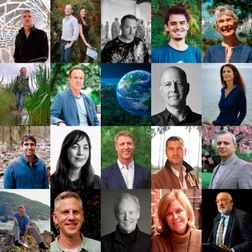
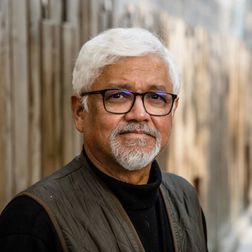
“Imagining with precision is a very fundamental part of my work. When I sit down to write about anything, whether it be The Hungry Tide in the Sundarbans, or let's say The Shadow Lines, or Ghost-Eye. It's very important for me to get the topography right, to get the outlay of the streets or the house exactly right so I can actually picture all of that in my head. It's very important for me to have a sort of pictorial sense of what I'm seeing and what I'm writing about. Before I can write about it, I need to see it, as it were. So that's absolutely fundamental to my craft. That's just how I go about it. Like the Sufis say—behind the apparent reality is a hidden or batin reality. “ In this episode of the Speaking Out of Place podcast, Professor David Palumbo-Liutalks with Amitav Ghosh about his new novel, Ghost-Eye. The novel is about reincarnation, but also a lot more. In our conversation we talk about the need to address the terrible set of environmental and other crises we face, and the seeming foreclosure of the imagination by the obsession with technology and the future it offers to us. Instead, we look to how we can fashion beginnings out of endings, aided by a renewed sense of wonder, curiosity, and awe. We turn to the body, to the haptic, and perhaps most important, to food as more than simply nourishment. In all this, story-telling, the revival of connections between living beings, and a deep sense of other times and places are central. (0:56) Planetary Crisis and Accelerating Disasters (3:50) The Lasting Impact of The Hungry Tide (5:00) Storytelling and the Existential Crisis (8:26) Imagining with Precision in Literature (12:46) The Denuded Human Existence and AI (15:37) Artisanal Intelligence vs. Artificial Intelligence (17:57) Food, Industrial Agriculture, and Memory (21:16) Cultural Assimilation Through Cooking (24:12) The Sociability and Joy of Cooking (27:57) The Failure of the Humanities (31:38) The Role of the Narrator (35:27) Regaining Our Sense of Wonder (37:04) Past Life Memories and Circular Temporality Episode Website www.palumbo-liu.com https://speakingoutofplace.com Bluesky @palumboliu.bsky.social Instagram @speaking_out_of_place
From Extraction to Regeneration: Redesigning Our Relationship with Nature
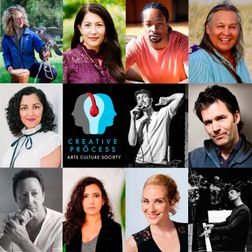
Today, we examine how we will adapt to a changing climate and learn to listen to the Earth.(0:00) Abrahm Lustgarten (Reporter, ProPublica) (3:00) Jon Gertner (Author, The Ice at the End of the World) (5:32) Bill Hare (CEO, Climate Analytics) (6:35) Rob Nixon (Prof. Environmental Humanities, Princeton) (8:12) Louis de Jaeger (Co-founder, Food Forest Institute) (10:06) Kathleen Rogers (Pres., EarthDay.org) (11:31) Rebecca Tickell (Filmmaker, Groundswell) (13:42) Ben Goldfarb (Author, Crossings) (14:56) Jane Madgwick (CEO, Plantlife International) (19:23) Jason deCaires Taylor (Sculptor, Underwater Museums) (21:02) William McDonough (Architect, Cradle to Cradle) (23:19) Euan Nisbet (Scientist, Royal Holloway) (26:06) Roland Geyer (Author, The Business of Less) (28:15) Ron Gonen (CEO, Closed Loop Partners) (29:34) Paul Shrivastava (Co-President, Club of Rome) (30:14) Carlo Ratti (Architect, Dir., MIT Senseable City Lab) (31:24) Osprey Orielle Lake (Founder, WECAN) (32:38) Liza Featherstone (Journalist) (33:41) Yolanda Kakabadse (Fmr. President, WWF) For more, listen to their full interviews Episode Site: https://www.creativeprocess.info/interviews-featured/anth-regen
Voices for the Earth: Sustainability, Nature, and the Changing World
Why do we write? Is it to capture a memory before it vanishes or to build a bridge between the person we are and the stories we've been told? In this episode of The Creative Process, we explore the practice of writing as an awakening and tool for discovery with a group of celebrated poets, novelists, musicians and thinkers. We hear from neuroscientist, dancer and author Julia Christensen on how literature inspires transformative aesthetic experiences. Award-winning poet and clinical psychologist Hala Alyan discusses navigating displacement through narrative, while bestselling author Andre Dubus III reflects on the honest labor of the writer and the willingness to fail. Pulitzer Prize-winning poet Jericho Brown shares how the sounds of American vernacular guide his work and Fmr. US Poet Laureate Ada Limón discusses holding hope within frightening thoughts about the future of our planet. NYT Bestseller Aimee Nezhukumatathil speaks on tenderness towards the natural world and naturalist Sy Montgomery shares how animals have been her greatest teachers. The conversation expands with poet Max Stossel on finding humanity in conflict, Tiokasin Ghosthorse on the ancient energy of the earth and Julian Lennon on art as a collective human endeavor. Finally, composer Erland Cooper takes us to the landscape of his youth, where the sound of the sea informed his creative voice. To hear more from each guest, listen to their full interviews. Episode Website www.creativeprocess.info/pod Instagram:@creativeprocesspodcast
Building Bridges Between Nature, Memory & Architecture with SALWA & SELMA MIKOU
“Architecture should bring a true sensation of wellbeing. We were really lucky to experience that as children, and now as architects, we try to bring all that we learned into our practice.” Salwa and Selma Mikou are the founders of Paris-based Mikou Architecture. Born in Fez, Morocco and educated in Paris, they have spent the last two decades reimagining the relationship between the built environment and the cultural landscape. After honing their craft under two of the world’s most iconic architects, Jean Nouvel and Renzo Piano, they founded their own studio. For them, architecture is a living interaction with landscape and what they call the Atlas of Resonance, interpreting the hidden layers of a territory, geology, memory, and craft. It is a philosophy that rejects the generic, seeking instead to weave together technological innovation with local materials. Whether it is a mosque in the north of England or a hybrid innovation hub in a former royal manufactory, their work asks a fundamental question: How does space shape the way we think, learn and remember? They were selected by Rem Koolhaas to represent Morocco at the Venice Biennale. Most recently, they were commissioned by Hermès to create a 17,000-square-meter facility that bridges industrial performance with poetic expression. At the heart of their practice is a belief that architecture is not just about building—it’s about shaping relationships: between people, between past and future, between technology and craft. (0:04) The Intuitive Knowledge of Living Art (4:24) The Medina and the Geometry of Childhood (8:18) The Social Spaces of Rooftops (13:46) The Intuitive Knowledge of Living Art (15:31) Contextual Echoes & Traces of the Site (19:18) The Twin Dynamic and Confrontation with 'l'autre' (26:42) The Temples of Water (33:24) The Mosque as Pure Spatiality (38:01) The Crisis Period and Structural Systems (48:24) Building Culture with Yves Saint Laurent & Pierre Bergé (51:38) The Wast ed-dar (وسط الدار) and the Heart of a Building (57:02) Preserving the Human Core of Expression (1:04:29) Urban Acupuncture in the Modern City (1:08:46) The Smells and Sounds of Home (1:10:02) Balance, Nature, and Sisterhood Episode Website www.creativeprocess.info/pod Instagram:@creativeprocesspodcast
The Future of Architecture & Cities of Tomorrow w/ CARLO RATTI, Director of MIT's Senseable City Lab
"What we need to do is learn from nature. If you think about how nature progresses through trial and error. I'm really a fan of how we can do open designs that citizens can respond to, and use the feedback in order to create similar systems to what happens in nature." Our guest today is Carlo Ratti, an architect, engineer, and academic who is deeply engaged with the critical questions facing our planet and its urban spaces. He's known for his innovative work at MIT's Senseable City Lab, where he explores how digital technologies are transforming our cities and for his groundbreaking design projectsaround the world. Carlo Ratti's work has been called everything from sensory city philosophy to a driving force behind the world of design. And having recently tackled one of the biggest challenges of our time as a curator of the 19th International Architectural Exhibition of the Venice Biennale, the exhibition Intelligence, Natural, Artificial, Collective seeks to fundamentally rethink architecture's role in an altered world and rapidly changing climate. (0:00) Learning From Nature's Trial and Error (1:20) The Senseable City (6:05) The Future Of Concrete and Circular Building (9:02) Peak Population And The Century Of The City (10:55) Transforming Architecture With Japanese Joinery and AI (14:36) Curating the Venice Biennale As An Open Lab (16:22) Blending The Natural And Artificial Through Data (20:32) Breaking Down Silos and Staying Curious Episode Website www.creativeprocess.info/pod Instagram:@creativeprocesspodcast
A Handbook for Climate Hopefuls with Veteran Environmental Journalist FRED PEARCE
After 40 years of reporting on the world's most pressing ecological crises, you might expect Fred Pearce to be a cynic. Instead, he’s one of our greatest advocates for hope. If you follow the news about the environment, it’s easy to feel a sense of impending doom. We hear about accelerating extinctions, collapsing water cycles, and climate tipping points. But my guest today, environmental journalist Fred Pearce, says that if you look at the "ground-truth"—the stories of nature and people he has encountered—there is a surprising, even radical, case for hope. His work has taken him to more than eighty countries, from the logging concessions of Borneo to the radioactive exclusion zones of Chernobyl. He is the environment consultant for New Scientist and a regular contributor to The Guardian. In his latest work, Despite It All: A Handbook for Climate Hopefuls, he challenges the prevailing narrative of environmental collapse. He argues that the "population bomb" is being defused, that we are approaching "peak stuff" in developed nations, and that nature possesses a staggering capacity for resilience that we often ignore. He says that a "Good Anthropocene" is not only possible but is already beginning to take shape through a combination of ancient wisdom and modern technical fixes. We’ll talk today about his life as a journalist and why pessimism may be the greatest enemy of progress. (0:00) The Radical Case for Climate Optimism (2:46) Traveling the World to Find Environmental Resilience (5:08) Fixing the Anthropocene and Escaping Despondency (10:22) Indigenous Wisdom and Local Stewardship (15:28) Rewilding and Trusting Nature's Adaptability (21:10) The Renewable Energy Transition in China and Beyond (23:56) Peak Stuff and Redesigning the Cities of the Future (34:01) Defending Democracy and Environmental Protestors (36:12) Drinking Radioactive Vodka in Chernobyl's Exclusion Zone (41:29) When the Rivers Run Dry and Water Scarcity (50:37) Why the Population Bomb is Defusing (55:36) The Origins of an Environmental Journalist (1:03:15) The Future of Journalism in the Age of AI (1:13:27) Generational Hope and the Next Industrial Revolution Episode Website www.creativeprocess.info/pod Instagram:@creativeprocesspodcast
Why Do We Listen to the Talkers More Than the Builders Saving the Planet? - Physicist, Designer, Investor TOM CHI - Highlights
Why does our economy treat environmental destruction as an inevitable side effect rather than a massive design flaw? How can shifting our focus from polarizing "talkers" to practical "builders" literally save the planet? We are repeatedly told that the climate crisis is too vast and volatile to solve, but what if the true obstacle is simply bad design? Tom Chi is a physicist, designer, inventor, and investor whose work has shaped everything from Google Glass and rapid prototyping at Google X to some of the most ambitious climate technologies being built today. He’s now the founding partner of At One Ventures, where he invests in deep-tech companies focused on a bold goal: a world where humanity is a net positive to nature. Tom’s new book, Climate Capital: Investing in the Tools for a Regenerative Future, reframes economics itself—not as a fixed law, but as a design discipline that can be reimagined to align with the physical realities of our planet. Drawing on science, systems thinking, and lessons from nature, the book offers a grounded, practical framework for moving beyond both climate doom and empty optimism—and toward real, regenerative solutions. Today’s conversation is about what Tom calls the 4Cs: Capital, Compassion, Climate, and Community—but also about agency, responsibility, and what becomes possible when we stop treating the future as something that happens to us and start designing it deliberately. 0:00) Build Integrity: Choosing Builders Over Talkers Why prioritizing those who physically create solutions over those who merely debate them is essential for systemic change (1:21) Overcoming Powerlessness Through Creativity, Critical Thinking, Community Compassion Utilizing a specific framework of portable skills to move from climate anxiety into meaningful, iterative action (2:22) Capital Misallocation: Taxing What We Want to See A critique of current tax structures that burden labor while under-taxing capital and failing to serve societal needs (3:47) The Volatility Gap: Why Average Temperatures Mislead Understanding why increasing climate volatility—rather than just average temperature rise—is the true driver of human distress (6:19) Economics As Design: Redesigning The Global Engine Moving beyond "physics envy" in economics to treat the global market as a discipline that can be redesigned for better outcomes (9:11) Depth Over Breadth: Reforming Education Through Experience (13:30) Local Resilience: How Cities Can Lead The Transformation Practical, block-by-block strategies for urban adaptation, from expanding tree canopies to improving household efficiency (16:33) AI and Robotics in Agriculture (19:12) Human-Centric AI: Flipping The Priority Of Automation (20:18) Thinking In Pictures: A Language Beyond Words Episode Website www.creativeprocess.info/pod Instagram:@creativeprocesspodcast
Climate Capital: Investing in the Tools for a Regenerative Future - TOM CHI, Google X Co-founder, Founding Partner At One Ventures
“In the book I spend a bunch of time basically teaching skills and teaching frameworks of thinking. Not to indoctrinate, it's not a framework like an ideology where you need to believe exactly these things. This is a lot more about how does one use their minds effectively to solve problems that have been solved before. Of course, I work on things that have to do with investment and climate and the future of the economy and automation. The main things I'm trying to teach in the book are skills around creativity, critical thinking, community compassion and frameworks around how to go and use that on problems that should be relatively portable to a bunch of problems that are meaningful to you. The way that education needs to change is that people need to actively be working on things that truly matter to them so that over time they end up being able to go make that difference.” Tom Chi is a physicist, designer, inventor, and investor whose work has shaped everything from Google Glass and rapid prototyping at Google X to some of the most ambitious climate technologies being built today. He’s now the founding partner of At One Ventures, where he invests in deep-tech companies focused on a bold goal: a world where humanity is a net positive to nature. Tom’s new book, Climate Capital: Investing in the Tools for a Regenerative Future, reframes economics itself—not as a fixed law, but as a design discipline that can be reimagined to align with the physical realities of our planet. Drawing on science, systems thinking, and lessons from nature, the book offers a grounded, practical framework for moving beyond both climate doom and empty optimism—and toward real, regenerative solutions. Today’s conversation is about what Tom calls the 4Cs: Capital, Compassion, Climate, and Community—but also about agency, responsibility, and what becomes possible when we stop treating the future as something that happens to us and start designing it deliberately. (0:00) Overcoming Powerlessness through Creativity, Critical Thinking, Community Compassion Why broad hopelessness about the future is a purposeful tactic to maintain the status quo. (7:16) How average temperature metrics fail to communicate the true danger of extreme climate volatility. (11:54) Economics as Design (17:11) Multi-disciplinary Learning Centered on Real-World Impact (26:12) Local Resilience (31:15) Tax & Capital Misallocation (36:52) Build Integrity (45:32) AI and Robotics in Agriculture (51:08) The First Honeybee Vaccine (56:11) The Entropy Curve of Pollution (1:15:31) Human-Centric AI Flipping the priority of automation to serve the collective good rather than enriching a select few (1:20:59) Thinking in Pictures How learning to communicate and problem-solve without language fueled a career in deep tech invention Episode Website www.creativeprocess.info/pod Instagram:@creativeprocesspodcast
1 di 57