Northern Latitudes

Northern Latitudes

di Bill Ault
Stagione 1
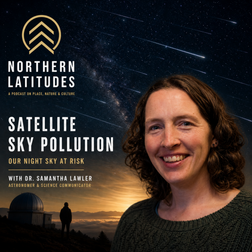
Northern Latitudes: Dr. Samantha Lawler - Crash Clock
About Our Guest Prof. Samantha Lawler is an astronomer at the University of Regina who studies the Kuiper Belt — icy bodies beyond Neptune — to understand how the solar system formed. She lives on a farm outside Regina under dark Saskatchewan skies and has emerged as one of Canada's leading voices on satellite light pollution. She has an asteroid named after her. What This Episode Is About There are now more than 10,000 Starlink satellites in orbit. One company — owned by one billionaire — controls two-thirds of all satellites in space, and the number is still climbing. Proposals are on file for AI data centres and giant reflective mirrors in orbit. One request alone asks for a million satellites. In this conversation, Prof. Lawler explains what this actually means: a night sky that is measurably changing, an atmosphere being chemically altered by thousands of burning satellites each year, and a collision risk that is compressing faster than most people know. Key Topics • The scale: 10,000+ Starlinks in orbit, permission for 42,000. One company owns two-thirds of all satellites — a shift that happened in six years. • The crash clock: Lawler's research calculates how long before a collision becomes likely if satellites lose the ability to manoeuvre. Nine months ago: 5.5 days. January: 3.5 days. Now: 3 days — and shrinking. • Kessler Syndrome: A runaway chain of collisions that could make low Earth orbit unusable for generations. The movie Gravity was not that far off. • Atmospheric pollution: Satellites burn up in the upper atmosphere, depositing metals — especially aluminum — as vapour. Alumina can contribute to ozone depletion. Space has no environmental regulations. • The night sky: Already ~10% brighter due to satellite numbers and debris. Human cultures have looked up at these patterns for as long as we have been human. • The rural internet dilemma: Both host and guest used Starlink during this recording. The need is real — but relying on a foreign billionaire-owned monopoly for rural connectivity is not a solution. Governments need to invest in ground-based infrastructure. Is There Hope? Yes — cautiously. OneWeb (800 satellites) and Amazon Kuiper (2,000) prove the service can be delivered with far fewer objects in orbit. The engineering problem is solvable. The political will is the harder part. What You Can Do • Contact your elected representatives at federal, provincial, and local levels — demand investment in rural broadband infrastructure. • Support dark-sky initiatives in your region. Links & Resources • Prof. Samantha Lawler — University of Regina • The Crash Clock paper • Lawler on Mastodon: @sundogplanets • International Astronomical Union on satellite constellations: iau.org • Dark Sky Association: darksky.org
Northern Latitudes - Small Wings, Old Bones
SMALL WINGS, OLD BONES Northern Latitudes — Episode Show Notes There's a thread connecting this episode that isn't obvious at first. One conversation is about something very much alive — small, social, and in trouble. The other is about something long gone, found frozen in rock on a high Arctic island. But both stories ask the same kind of question: what does an animal's fate tell us about the world it inhabited, and the one we're building now? Part One: The Science of Bees with Noria Morfin, Assistant Professor, Department of Entomology, University of Manitoba The University of Manitoba's Honey Bee Lab has been running for over a hundred years — longer than most people have been thinking about colony collapse. Noria Morfin arrived there a year ago, and she came in the way a lot of bee researchers do: through a side door. She was a veterinary student in Mexico when a single course on bee biology changed her direction entirely. She bought her first apiary before she graduated — twenty-five colonies of highly defensive Africanized bees. It was, she says, an education. In this conversation, we talk about what the lab actually studies (health, behaviour, disease dynamics, and the immune responses bees use to protect themselves), the varroa mite — still the dominant threat to managed colonies in North America — and what it looks like when you lose thirty to fifty percent of your livestock every year and have to rebuild every spring. We also get into the difference between managed honeybees and wild native pollinators, what integrated pest management actually means in practice, and whether there's reason for optimism. Noria thinks there is. She points to the research effort, the awareness, and a simple human reaction she notices whenever she mentions bees in conversation: people smile. Part Two: The Arctic Rhino with Dr. Danielle Fraser, Head of Paleobiology, Canadian Museum of Nature, Ottawa In 1986, a palaeontologist named Mary Dawson collected bones on Devon Island, deep in the Canadian Arctic. It took decades to understand what she'd found: a rhinoceros. Small-bodied, hornless, and 23 million years old — the farthest north any rhino fossil has ever been recovered. Dr. Danielle Fraser helped name it. The species name comes from Inuktitut — iuk, meaning frosty. Epihippus iuk. The frost rhino. What makes the find remarkable isn't just the location. It's what the anatomy suggests about origin. This animal looks like rhinos from Europe and Asia that are millions of years older — which means it crossed an ocean to get there. Not the Bering Land Bridge, the one we all learn about in school, but the other ones: two now-submerged connections running from northern Europe over Svalbard and Iceland to Greenland and into the high Canadian Arctic. It was long assumed these were under water by 50 million years ago. This fossil is 23 million years old. We talk about seasonal ice as a crossing mechanism, what a 75-80% complete skeleton allows a scientist to say that teeth alone never could, how many rhino species once roamed North America (many), and why they were all gone by about 5 million years ago. We also talk about what comes next — a planned field season on Banks Island, the logistics of getting a team of ten into the western Arctic, and what it means to name a new species and make it a type specimen that science will rely on for generations. Guests Noria Morfin — University of Manitoba, Department of Entomology Dr. Danielle Fraser — Canadian Museum of Nature, Ottawa
Northern Latitudes - Alison Criscitiello: What the Ice Remembers
What the Ice Remembers Preserving Climate History with Alison Criscitiello Ice is one of the planet’s most faithful historians. Layer by layer, it records volcanic eruptions, atmospheric chemistry, temperature shifts, and traces of human activity stretching back tens of thousands of years. In this episode of Northern Latitudes, Bill Ault speaks with Alison Criscitiello, Director of the Canadian Ice Core Lab at the University of Alberta, about what ice cores reveal. Beyond the science, this conversation explores the human side of polar research. Alison reflects on building a career in remote, high-latitude field science as a queer woman in a discipline that has not always been welcoming, and why visibility and inclusion matter for the future of climate science. In This Episode What ice cores are and how scientists extract them How ice preserves a detailed record of Earth’s atmosphere Why the Arctic and high latitudes are warming faster than the rest of the planet Key Takeaways Ice cores are not projections; they are direct physical records Climate change is already visible in the planet’s deepest archives Who does science—and who is supported to lead—shapes what we learn About the Guest Alison Criscitiello is the Director of the Canadian Ice Core Lab at the University of Alberta. Her work focuses on ice core science, climate reconstruction, and the preservation of irreplaceable polar climate records. Further Reading & Links Canadian Ice Core Lab – University of Alberta https://www.ualberta.ca/en/science/research-and-teaching/research/ice-core-archive/index.html
Northern Latitudes - Florence Williams: The Healing Power of Nature
Episode Re-Broadcast: Florence Williams The Healing Power of Nature In this re-broadcast episode of Northern Latitudes, we revisit a thoughtful and timely conversation with Florence Williams, journalist and author known for exploring the deep connections between human health and the natural world. Florence’s work sits at the intersection of science, psychology, and lived experience. In this conversation, we talk about how time spent outdoors influences our mental health, creativity, and resilience — and what the growing body of research tells us about why nature matters so much, especially in an increasingly indoor and screen-driven world. This episode is both grounding and practical, offering insight into how even small, everyday encounters with nature can have meaningful impacts on our well-being. Whether you’re hearing it for the first time or coming back to it with fresh ears, this is a conversation that rewards a second listen. In this episode, we discuss: How nature affects stress, attention, and mental health The science behind “nature therapy” and time outdoors Why modern life pulls us away from natural spaces — and what that costs us Simple ways to reconnect with nature in daily life Why these ideas feel even more relevant today About the guest Florence Williams is an award-winning journalist and author whose work explores health, science, and the environment. She is widely known for her writing on how natural spaces shape human well-being, blending research with storytelling to make complex science accessible and relatable. Listen again This episode originally aired as part of the Northern Latitudes podcast and remains one of our most resonant conversations about health, landscape, and the human need for connection to the natural world.
Northern Latitudes - Dr. Sylvia Pineda-Munoz
Northern Latitudes Podcast Dr. Sylvia Pineda-Munoz | What Earth’s Deep Past Teaches Us About Our Climate Future What can the deep past tell us about the moment we’re living in now? In this episode of Northern Latitudes, host Bill Ault sits down with Dr. Sylvia Pineda-Munoz — a paleontologist, ecologist, and founder of Climate Ages — to explore how ancient climates, fossil records, and long-term ecological patterns can help us better understand today’s climate and biodiversity challenges. Sylvia’s work bridges science and storytelling. By looking millions of years into Earth’s history, she helps translate complex research into insights that feel both grounded and relevant. Rather than focusing on prediction or panic, her approach emphasizes perspective — what past moments of rapid change reveal about resilience, limits, and adaptation. Together, Bill and Sylvia discuss how species have responded to environmental upheaval, what the fossil record can tell us about the future, and why storytelling plays such an important role in helping people connect with climate science. It’s a conversation about slowing down, zooming out, and learning to read the long patterns written into the landscape around us. This episode isn’t about easy answers. It’s about context — and what becomes possible when we take the long view. In This Episode Why Earth’s deep history still matters today What fossil records reveal about resilience and collapse How past climate shifts compare to modern change Translating complex science through storytelling 🌍 About the Guest Dr. Sylvia Pineda-Munoz is a paleontologist and ecologist whose research focuses on how species respond to environmental change over long timescales. She is the founder of Climate Ages, a platform dedicated to connecting Earth’s deep past with today’s climate and biodiversity conversations through accessible storytelling and science communication. 🔗 Learn More Climate Ages: https://climateages.com Sylvia Pineda-Munoz on Google Scholar Sylvia’s writing on Medium 🎧 Listen & Subscribe You can find this episode — and all episodes of Northern Latitudes — at northernlatitudes.ca, or wherever you get your podcasts. If this conversation resonated with you, consider sharing it with someone who enjoys thoughtful discussions about place, time, and the natural world.
Northern Latitudes - Nature as Nuture Just in Time for the Holidays
Northern Latitudes (Archive) Nature as Nurture — Dr. Melissa Lem The holiday season can be a time of connection and celebration—but it can also bring stress, exhaustion, and a sense of overload. In this archival episode of Northern Latitudes, host Bill Ault revisits a thoughtful conversation with Dr. Melissa Lem, family physician and a leading Canadian advocate for nature-based health. Drawing on the concept of Nature as Nurture, Dr. Lem explains how spending time outdoors—especially during the darker, colder months—can support mental well-being, reduce stress, and help regulate our nervous systems. This episode explores why nature isn’t just a backdrop to our lives, but an essential form of care—particularly during the holiday season, when expectations run high and personal time feels scarce. From short walks to mindful moments outside, Dr. Lem offers practical, accessible ways to reconnect with the natural world, even when schedules are full. Whether you’re feeling overwhelmed, disconnected, or simply in need of a pause, this conversation offers perspective, reassurance, and permission to slow down. Guest: Dr. Melissa Lem Theme: Nature, mental health, holiday stress, well-being Series: Northern Latitudes — Archival Episode
Northern Latitudes - Trina Moyles: Black Bear
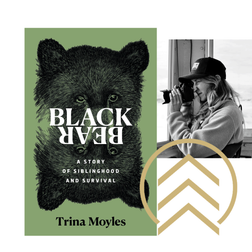
Trina Moyles: Black Bear In Episode 45 of Northern Latitudes, host Bill Ault sits down with award-winning author and journalist Trina Moyles to explore her deeply moving new book Black Bear — a powerful blend of memoir, ecology, and family history rooted in the rugged landscapes of northern Alberta. Moyles, known for her wildfire memoir Lookout, turns her lens inward in this new work, tracing the story of her brother’s struggle with mental health and addiction, her family’s resilience, and the quiet, watchful presence of black bears that shaped her life. In this intimate conversation, she reflects on grief, survival, and the complicated ways people and landscapes carry one another through crisis. In This Episode The origins of Black Bear and why this was the hardest book Trina has ever written How the rhythms and behaviours of black bears became metaphors for family, healing, and endurance A sister’s perspective on love, loss, and the long shadows of addiction What writing about deeply personal subjects can teach us about empathy, courage, and connection How Trina’s journalism, fieldwork, and years as a fire tower lookout continue to influence her storytelling About Trina Moyles Trina Moyles is a writer, journalist, photographer, and environmental advocate from Peace River, Alberta. Her previous book, Lookout, was a national bestseller and won acclaim for its clear-eyed portrayal of wildfire seasons and life alone in a remote fire tower. Her essays and reporting have appeared in The Walrus, The Globe and Mail, Passage, Hakai Magazine, and more. Learn more: https://www.trinamoyles.com Selected recent articles: “How We Remember the North” — The Walrus “The Last Lookouts” — Hakai Magazine “On Grief, Wildfire, and Bearing Witness” — Passage Magazine Episode Link Listen to all Northern Latitudes episodes: https://rss.com/podcasts/northernlatitudes/ Support the Show If you enjoy Northern Latitudes, please consider: Leaving a rating or review on your podcast platform Sharing the episode with a friend Following us on social media
Northern Latitudes - Bob McDonald: Just Say Yes
Episode Description What happens when a life is defined by curiosity — and the willingness to just say yes? In this episode of Northern Latitudes, host Bill Ault sits down with one of Canada’s most beloved science voices to talk about his new memoir, Just Say Yes. It’s a story of wonder, risk, and transformation — from humble beginnings to becoming a household name in science communication. Our guest’s journey reminds us that saying yes — even when the outcome is uncertain — can change everything. Guest Bio Bob McDonald is the longtime host of CBC Radio’s award-winning science program Quirks & Quarks and a leading science journalist whose enthusiasm for discovery has inspired generations of Canadians. Across his five-decade career, Bob has interviewed thousands of scientists, astronauts, and innovators, always driven by curiosity and a deep belief in the power of understanding our world. His memoir, Just Say Yes: A Memoir, offers an intimate look at the personal journey behind the public voice — filled with stories of risk, humility, and the adventures that shaped a remarkable career. Key Discussion Points The meaning behind the phrase Just Say Yes and how it shaped Bob’s life Growing up in a blue-collar family and finding a path to science and broadcasting Overcoming self-doubt and the “imposter moments” behind the microphone The role of curiosity and courage in science communication Lessons learned from decades of helping Canadians fall in love with science How to embrace opportunity — and what it means to say “yes” today Links & Resources Just Say Yes: A Memoir — Douglas & McIntyre Listen to Quirks & Quarks — CBC Radio / Podcast link Follow Bob McDonald — Official CBC profile Northern Latitudes — northernlatitudes.ca Produced and hosted by Bill Ault Recorded in partnership with Northern Latitudes Media Theme music by John Sanfilippo - Soundwise
Northern Latitudes - Trixie Pacis / Sasha Galitzki
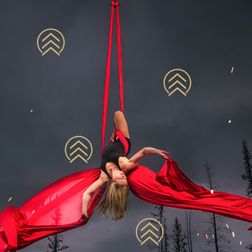
In this powerful episode of Northern Latitudes, host Bill Ault speaks with filmmaker Trixie Pacis and aerial artist Sasha Galitzki about their remarkable new documentary Embers, which makes its global premiere at the 50th Banff Centre Mountain Film and Book Festival on November 4, 2025. Embers follows Sasha through the emotional and physical aftermath of the 2024 Jasper National Park wildfire, one of the most devastating fires in recent Canadian history. The blaze destroyed her home and community, leaving behind a landscape of loss—but also the seeds of renewal. In the year that followed, Sasha turned to her art, using aerial performance as both therapy and protest. Her work became a living expression of resilience and a call to action in a world where climate change is no longer distant—it’s personal. The conversation dives deep into the making of the film and the meaning behind it. Trixie and Sasha discuss how Embers evolved as a sequel to their acclaimed 2024 documentary Wild Aerial, which captured Sasha performing breathtaking aerial routines in the frozen Canadian Rockies. Where Wild Aerial celebrated strength and endurance in the face of nature’s extremes, Embers reveals what happens when that same landscape turns hostile, and the artist must rise again—this time from the ashes. Throughout the episode, listeners will hear the story behind the story: The moment Sasha realized she had lost everything in the Jasper fire. How she channeled grief and fear into art that would inspire others. The creative partnership between Sasha and Trixie and how it deepened under pressure. The emotional and technical challenges of filming in wildfire-ravaged terrain. Why Embers is ultimately a film about hope, renewal, and the enduring connection between people and place. Both Trixie and Sasha reflect on how the project changed their perspectives as artists and citizens. They discuss the importance of storytelling in the climate crisis, not just to raise awareness, but to humanize the experience—to show that behind every wildfire, flood, or storm are people rebuilding their lives in extraordinary ways. As Sasha puts it in the film, “I lost my home and all my things, but I still have my art—and my love for Jasper.” That sentiment captures the essence of Embers: even when everything burns, the creative spark endures. With Embers, Pacis and Galitzki deliver a deeply human portrait of loss and recovery, reminding us that even in a warming world, there is still light to be found among the ashes. 🎬 Embers — Global Premiere: Banff Centre Mountain Film and Book Festival, November 4, 2025 🎥 Director/Producer: Trixie Pacis 🎭 Featuring: Sasha Galitzki 🌍 Themes: Wildfire recovery, art as activism, resilience, climate storytelling 🔗 Related Links: Embers Official Trailer Wild Aerial (2024) Banff Centre Mountain Film & Book Festival Northern Latitudes Podcast Follow Northern Latitudes for more conversations exploring the intersection of adventure, art, and the environment
Northern Latitudes - Keriann McGoogan: Sisters of the Jungle
“Sisters of the Jungle - The Trailblazing Women Who Shaped the Study of Wild Primates" Keriann McGoogan holds a PhD in Biological Anthropology from the University of Toronto and a Master’s from the University of Calgary. Keriann McGoogan+1 Her field work has taken her deep into the tropical forests of Belize, where she studied howler monkeys, and to the remote dry forests of Madagascar, where she lived for more than a year studying endangered lemurs. Keriann McGoogan+2Orion Magazine+2 Her latest book, Sisters of the Jungle (2025), explores the history of primatology — especially how women have come to dominate this field — by interweaving memoir, biography of pioneer female scientists (including Jane Goodall, Dian Fossey, Birutė Galdikas, and Alison Jolly), and her own adventures in the field. Douglas & McIntyre+2theseaboardreview.ca+2 Her earlier memoir Chasing Lemurs: My Journey Into the Heart of Madagascar recounts her personal story from Belize to Madagascar. Keriann McGoogan+1 Key Resources & Links Guest’s Website Keriann McGoogan – https://keriannmcgoogan.com/ Keriann McGoogan On the site you’ll find her bio, books, media appearances, and event info.
1 di 5