Kutxi — Voices from Endangered Language Communities

Kutxi — Voices from Endangered Language Communities

di Okan Dale
Stagione 1
How Majority Languages Shape Minoritized Languages: Basque, Laz, and Welsh
How much can a dominant language reshape the way a minoritized language is spoken? In this episode, we examine the influence of majority languages on grammar, pronunciation, vocabulary, and everyday speech across three different communities. Felix Parker-Price shares how English affects contemporary Welsh, including grammatical patterns that may increasingly mirror English. Felix is a Welsh language translator at Aberystwyth University Students’ Union and International Officer for Cymdeithas yr Iaith, the Welsh language activist organization founded in the 1960s. Maddi Kintana, a Basque language teacher and PhD candidate in Basque linguistics from Donostia, discusses the influence of French on Basque phonology and the differences that contact with dominant languages can create across regions. Okan Dale, a member of the Laz diaspora involved in teaching Laz and developing language-learning materials, explores code-switching between Laz and Turkish, including the patterns and unwritten rules speakers follow when moving between the two languages. Together, they consider whether these influences should be viewed as natural language change, a consequence of language shift, or something more complex—and what they may mean for the future of minoritized languages. Music by AudioCoffee (Denys Kyshchuk): https://www.audiocoffee.net/
Revitalization Projects: Frisian and Kurdish
In this episode, we continue our conversation on language revitalization by looking at the projects, people, and ideas helping communities keep their languages strong. Welmoed Sjoerdstra joins us to talk about her work with Afûk, the organisation for the Frisian language, as well as her research at NHL Stenden University of Applied Sciences, where she develops curricula for secondary and vocational education within the Multilingualism & Literacy research group. We’re also joined by Çiya Tabar, a member of the Kurdish community currently living in Bilbao, who shares his perspective on language, identity, and community-driven efforts to keep Kurdish culture visible across borders. Together, we reflect on how revitalization can start with small initiatives, why community involvement matters, and how local projects can grow into something much bigger over time. Enjoy! Music by AudioCoffee / Denys Kyshchuk: https://www.audiocoffee.net/
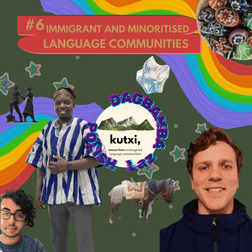
Immigrant and Minoritized Language Communities: Dagbamba, Laz and Polish
In this episode, we explore the differences, overlaps, and tensions between immigrant communities and Indigenous or minoritized language communities both in their homelands and across the diaspora. We’re joined by Mohammad Kamal-Deen Fuseini Dnshitobu, a professional teacher, Wikimedian volunteer, and grants manager for the Dagbani Wikimedians User Group. His work spans Sub-Saharan Africa, where he uses technology to support education, cultural heritage, and language visibility. We’re also joined by Stanisław Pstrokoński, a British-Polish linguist and founder of Panglot Labs, a company developing language-learning apps for lower-resourced and less widely taught languages. In the episode, Staś reflects on growing up Polish in the UK and on how Polish identity was often perceived by wider British society. As a side note, while Poland is often described as linguistically homogeneous, it is also home to a number of minoritized, regional, and heritage language communities, including Kashubian, Silesian, Lemko, Belarusian, Ukrainian, German, Romani, Yiddish, Lithuanian, and others. Finally, you’ll hear from Okan Dale, a member of the Laz diaspora who grew up outside his community. He reflects on what it means to grow up often unseen both by the larger Turkish diaspora and by majority societies in Europe. Together, our participants reflect on belonging, visibility, language, and identity: what it means to grow up within a community, outside of it, or somewhere in between. Stanisław’s company, Panglot Languages: https://panglotlanguages.com Music by AudioCoffee / Denys Kyshchuk: https://www.audiocoffee.net/
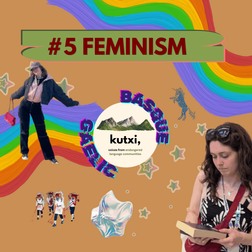
Feminism: Basque and Scottish Gaelic
What does it mean to bring feminism into minority language activism? In this episode, Anna Garvin and Maddi Kintana discuss how struggles for gender justice and linguistic justice can speak to one another. Through their experiences in the Scottish Gaelic and Basque communities, they reflect on the women who have shaped their relationships with language, the role feminism plays in their activism, and why gender is still too often overlooked in discussions around minoritized languages. A thoughtful conversation on identity, justice, community, and the future of language movements. Music by AudioCoffee(Denys Kyshchuk): https://www.audiocoffee.net/
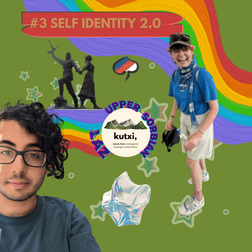
Self-Identity: Laz and Upper Sorbian
In this episode, we continue our conversation on self-identity with Okan Dale, a member of the Laz diaspora, and Nadja Šołćic (Scholze), an Upper Sorbian speaker from Germany. Together, they reflect on what it means to belong to communities whose identities are often shaped by language, history, place, and diaspora. Nadja shares her perspective on being Sorbian in Germany, while Okan speaks about navigating Laz identity away from the homeland and identifying differently depending on context. The conversation also touches on cultural practices that carry identity across generations, from Laz clanship and family roots to Sorbian traditions, traditional attire, and the importance of Easter as one of the most meaningful holidays in Sorbian culture. A conversation about identity, belonging, heritage, and the many ways we carry our communities with us. Music by AudioCoffee(Denys Kyshchuk): https://www.audiocoffee.net/
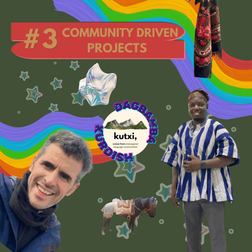
Community Driven Projects: Dagbani and Kurdish
This episode focuses on the power of community-led language work and the people creating meaningful projects from within their own communities. We speak with Çiya Tabar, a Kurdish community member based in Bilbao, and Mohammad Kamal-Deen Fuseini Dnshitobu, a Dagbamba language activist from Ghana. Çiya shares his passion for Kurdish language and culture, while Dnshitobu discusses his work with Wikimedia to support the digitization of Dagbani and related languages, helping make them more visible and accessible online. Together, we reflect on what it means to build language initiatives from the ground up, how digital platforms can support minoritized languages, and the unexpected cultural connections that emerge along the way — including, perhaps, the idea of a future Kurdish–Dagbamba Fire Festival. Music by AudioCoffee(Denys Kyshchuk): https://www.audiocoffee.net/
Revitalization Projects: Karelian, Laz and Wolastoqey
In this episode of Kutxi, we explore some of the language revitalization projects taking shape in our communities and the work people are doing to keep their languages strong. What kinds of projects are being created in different communities? What does it mean to create spaces where people can learn, use, and reconnect with their languages? And how do we hold both the joy of seeing learners grow and the frustration of working against larger challenges? This episode features Oluwi Aubin, a member of the Wolastoqewiyik community and one of the founders of Kehkimin, the first Wolastoqey land-based immersion school; Nastja Lebedeva, a Karelian teacher and tutor involved in online Karelian and Veps revitalization work through Karjalaikad; and Okan Dale, a member of the Laz diaspora working on Laz curriculum design, language technology resources, and creative tools for Laz learners. Together, they reflect on teaching, curriculum development, online language spaces, community-based revitalization, and the hopes, challenges, and doubts that can come with supporting endangered and minoritized languages. As with all episodes of Kutxi, this conversation brings together personal perspectives, not definitive representations of entire communities. Oluwi’s socials / projects (Instagram): @oluwi7 @kehkimin.immersion.school Nastja’s project (Instagram): @karjalaikad Minecraft Endangered Languages mod: For the Minecraft language mod, currently available for Laz and Wolastoqey, including the GitHub download link and installation video tutorial - message us on instagram or send us an email if you’d like to get involved: https://lazuri.org/resources Music credit: Music by AudioCoffee / Denys Kyshchuk: https://www.audiocoffee.net/
Self-Identity: Basque, Buryat, and Lower Sorbian
In the first episode of Kutxi, we explore self-identity and what it means to belong to a minoritized language community. How do language, culture, and belonging shape the way we see ourselves? And what happens when identity is rooted not only in ethnicity or place, but also in lived experience, community, and commitment to keeping a language alive? This episode features Luka Golinski, a Lower Sorbian speaker, Radna Poskhodiev, a Buryat language activist, and Maddi Kintana, a Basque speaker from Donostia. Together, they reflect on language, heritage, belonging, and the different ways identity is lived and understood across endangered and minoritized language communities. As with all episodes of Kutxi, this conversation brings together personal perspectives, not definitive representations of entire communities. Luka's Instagram: @lukalubosc @kolektiw.wakuum @archiwluzyca @suchenundfinden_film Radna's Socials: @svich.empire (Instagram) @Poskhodiev Radna (Facebook) @svichempire (Youtube) Maddi's Socials: @madmadnessk (Instagram) @ladymadimort (TikTok) @aek_korrika (Euskara Lessons for Adults) @sutan.borroka.transfeminista (Transfeminist group bilingual basque/french) Music by AudioCoffee(Denys Kyshchuk): https://www.audiocoffee.net/ "Serbski Cowboy" design from the incredibly talented @_typus_ (Instagram)