The Ordinary Way: Life and Holiness

The Ordinary Way: Life and Holiness

di Lupe Acevedo, Ryan Hamm, and Brian Nutt
Stagione 1
God Won't Give You More Than You Can Handle
"God won't give you more than you can handle." It's one of the most comforting, and most commonly quoted, phrases in Christian culture. But is it actually biblical? In this episode of The Ordinary Way, we explore where this popular saying came from, what 1 Corinthians 10:13 really teaches, and why Scripture paints a very different picture of suffering and dependence on God. Together we discuss: Where the phrase originated What Paul was actually talking about in 1 Corinthians 10 Why life often gives us more than we can handle How God uses weakness to teach dependence Why the gospel is about God's strength—not ours Throughout Scripture, God consistently works through people who know they aren't enough. Because the Christian life was never meant to be sustained by our strength. It is sustained by His grace. Join us as we discover why admitting our weakness isn't the end of faith, it's often where faith truly begins.
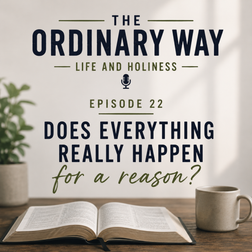
Does Everything Really Happen For A Reason?
"Everything happens for a reason." It's one of the most common phrases people hear after tragedy, but is it actually biblical? In this episode of The Ordinary Way, we examine where this popular saying came from, why it's become such a universal response to suffering, and what Scripture actually teaches about God's sovereignty, suffering, and hope. Together we discuss: Where the phrase "everything happens for a reason" originated What Romans 8:28 really means The difference between God causing suffering and God redeeming suffering Why Jesus often refused simplistic answers to pain How Christians can comfort people without offering clichés The Bible doesn't promise that life will always make sense. It promises something far greater: That God is with us, even when it doesn't. Join us as we discover why biblical hope isn't found in having all the answers—but in trusting the One who walks with us through every season.
God Helps Those Who Help Themselves... Right?
"God helps those who help themselves." It's one of the most quoted "Bible verses" that isn't actually in the Bible. In this episode, we explore where this popular saying originated, why so many Christians assume it's biblical, and how its message actually points in the opposite direction of the gospel. Together we discuss: The surprising history behind the phrase Why it resonates so deeply with our culture What Scripture really says about grace and self-reliance The difference between working for God's acceptance and working from God's acceptance Why spiritual maturity isn't becoming more self-sufficient, but more dependent on Christ Jesus doesn't wait for us to get our lives together before coming to Him. He meets us in our helplessness, saves us by grace, and then begins transforming us from the inside out.
Follow Your Heart? Maybe Not.
Episode 20: Follow Your Heart? Maybe Not. "Just follow your heart." It's one of the most common pieces of advice in modern culture. We hear it in movies, songs, graduation speeches, and across social media. It sounds empowering, but is it actually biblical? In this episode, we unpack where the phrase "follow your heart" came from, why it's so appealing, and what Scripture actually teaches about the human heart. Together we discuss: Why our culture encourages us to trust our feelings Bible verses that are often misunderstood or taken out of context What Scripture says about the condition of the human heart Why feelings make great indicators but poor foundations How to make decisions that honor Christ instead of simply following our emotions Join us as we explore what it means to let Jesus shape our desires instead of allowing our desires to shape our lives.
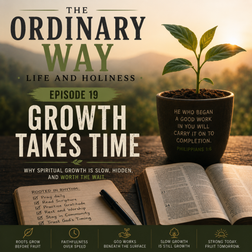
Slow Growth Is Still Growth
We all want transformation to happen quickly. We want breakthrough, maturity, healing, and spiritual growth right now. But throughout Scripture, God consistently works through processes: 🌱 Seeds 🌱 Farming 🌱 Pruning 🌱 Abiding 🌱 Walking In this episode, we explore why spiritual growth is often slow, hidden, and difficult to recognize in the moment. We discuss: Why people become discouraged by slow growth How God forms us over time The difference between emotional intensity and spiritual maturity Creating healthy spiritual rhythms Avoiding comparison, perfectionism, legalism, and isolation Because roots grow long before fruit becomes visible and growth that feels slow is often exactly how God works.
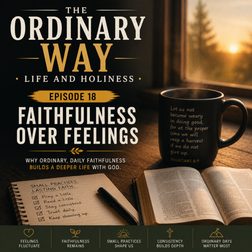
Faithfulness Over Feelings
Many Christians genuinely love God, but their relationship with Him rises and falls based on how they feel. We pursue God when we're inspired, challenged, or emotionally moved. But what happens when life gets busy, emotions fade, and spiritual excitement wears off? In this episode, we explore why feelings are a gift from God but a poor foundation for faith. We discuss the difference between spiritual passion and spiritual maturity, why consistency is often difficult, and how ordinary daily faithfulness shapes us far more than occasional spiritual highs. We talk about: Why Christians often build their faith around emotion The difference between passion and maturity How distraction and busyness undermine consistency Why small spiritual practices matter Practical ways to build sustainable rhythms with God Because the Christian life isn't built on occasional emotional moments. It's built through ordinary faithfulness over time.
The Ordinary Practice of Silence
Many Christians long to experience God's presence more consistently, yet often feel spiritually distracted and disconnected. In this episode, we explore a simple but powerful truth: God is present far more often than we realize. Together we discuss: • Why silence feels uncomfortable in modern life • The difference between being quiet and being attentive to God • How distraction affects our awareness of His presence • Practical ways to create space for silence and solitude • Ordinary moments where we can begin recognizing God throughout the day Drawing from Scripture and the wisdom of Christian thinkers throughout church history, we examine how slowing down can help us become more aware of the God who is already near. Because learning to walk with God isn't about finding extraordinary moments. It's about becoming aware of His presence in ordinary ones. Thanks for joining us for another episode of The Ordinary Way Podcast.
Starving for More
Many Christians genuinely believe in God but still feel spiritually dry. In this episode, we explore why so many of us hunger naturally for entertainment, distraction, affirmation, and noise while struggling to hunger for God. We talk about: How distraction reshapes our desires Why constant stimulation weakens spiritual sensitivity The connection between silence and spiritual awareness What to do during seasons of spiritual dryness How spiritual hunger can actually be cultivated over time Because appetite is shaped by what we consistently consume. This conversation is practical, honest, and deeply relevant for anyone who feels spiritually numb, distracted, or disconnected. Real hunger for God rarely appears overnight. It grows slowly through: Consistent exposure to His presence Feeding on His word Honest prayer Removing distractions Community and obedience Because the more we pursue God, the more we realize He was already pursuing us. 🎧 Thanks for joining us for this episode of The Ordinary Way Podcast.
Faith That Never Risks Isn’t Trust
Many of us trust God with eternity… but struggle to trust Him in everyday life. In this episode, we continue our conversation about relational faith, surrender, and the deeper barriers that keep us from fully walking with God. We talk honestly about control, fear, self-reliance, and why trusting God often feels difficult in real time. We explore: Why surrender feels risky The fears that drive our need for control How shallow trust develops Why consistency matters more than emotional spiritual moments How trust is actually formed through daily relationship with God Faith that never risks anything usually isn’t trust at all and if you’ve ever felt the gap between what you believe and how you actually live, this conversation is for you.
Unbelief in Disguise
Many of us trust God with eternity but we can live disconnected from Him in our everyday lives. In this episode, we wrestle with a hard question: Is it possible to believe in heaven, but not actually want God? We explore the difference between transactional faith and relational faith, and how easy it is to reduce Christianity to a one-time decision instead of an ongoing relationship. We talk about: Why we trust God for the future but struggle to trust Him today Signs we may be disconnected from God in daily life The difference between spiritual struggle and indifference How our practices reveal what we actually desire Why eternal life isn’t just a destination—but a relationship Because the question isn’t just: Do we believe in God? It’s: Do we actually want Him?
1 di 3