Intersections Podcast

Intersections Podcast

di Dr. Hitendra Wadhwa
The Greatest Human Experiment | Lynne Twist
What can one little individual do that could positively impact all of humanity? What mindset has silently shaped, distorted, and even destabilized our institutions, our economies, and even our sense of self? What is our relationship with money—and how can we align it with the deepest longing of our souls? Are we living inside an inherited story that no longer serves us—and if so, what would it take to author a new one? And in a time of collective fracture, could the real revolution be ontological—a shift not in what we have, but in who we are? Find out from Lynne Twist, exclusively in conversation with Dr. Hitendra Wadhwa on Intersections Podcast. Lynne Twist is a globally recognized humanitarian, author, and visionary who has spent more than forty years working to end hunger, empower women and girls, advance social justice, and protect the Amazon rainforest. As a senior leader and global fundraiser for The Hunger Project, she worked in more than 50 countries—from Mother Teresa’s mission in Calcutta to refugee camps in Ethiopia—gaining profound, firsthand insight into the human experience of scarcity and sufficiency. She later co-founded The Pachamama Alliance at the invitation of the Achuar people of the Amazon, forming a unique partnership that safeguards rainforest ecosystems, supports Indigenous sovereignty, and offers global education programs that cultivate ecological awareness, spiritual responsibility, and collective action. She is also the founder of the Soul of Money Institute, which has worked with over 100,000 people to transform their relationship with money and align financial resources with purpose and integrity. Her best-selling book The Soul of Money is considered a classic in conscious leadership, and her newest book, Living a Committed Life, distills her decades of activism into a guide for finding freedom and fulfillment in service of a larger purpose. In this episode, Lynne reveals: - The greatest experiment one visionary thinker undertook - The mindset at the root of all human misery—and how to transcend it - The hidden architecture of our relationship with money—and how to realign it with the soul - The inherited story shaping our institutions, identities, and destinies—and what it would mean to rewrite it
Getting the Whole World to Agree | Christiana Figueres
What does it take to get the whole world to agree with you? Where do all great change movements begin—and what kind of leadership can unify nations in a time of deep division? Which leadership coach can you turn to in every season of change—timeless, wordless, and always present? What’s the connection between personal and planetary resilience? And why is spiritual grounding essential for today’s leaders and changemakers? Find out from Christiana Figueres, exclusively in conversation with Dr. Hitendra Wadhwa on Intersections Podcast. Christiana Figueres is one of the world’s most influential climate leaders, best known for her role as Executive Secretary of the UN Framework Convention on Climate Change, where she led the six-year diplomatic effort that culminated in the landmark 2015 Paris Agreement, uniting 195 nations in a shared climate commitment. After leaving the UN, she co-founded Global Optimism, a social-purpose organization advancing the mindset and momentum needed for global climate solutions. She also co-hosts the award-winning podcast Outrage & Optimism, one of the world’s top climate podcasts, and is the co-author of the international bestseller, The Future We Choose: Surviving the Climate Crisis, which introduces the mindset of “stubborn optimism” and outlines the actions required to build a regenerative future. In this episode, Christiana reveals: - How to get the whole world to agree with you - Our best leadership coach in epic and everyday moments - Why spiritual grounding is essential for today’s leaders and changemakers
How Systems Change | Jeff Raikes
What kind of work ethic sustains greatness, and lays the foundation for enduring impact? How do successful leaders carry themselves in a room full of people? What are the underlying ingredients of systemic change, and how can one aspire to evolve systems that benefit everyone? Find out from Jeff Raikes, exclusively in conversation with Dr. Hitendra Wadhwa on Intersections Podcast. Jeff Raikes is the co-founder of the Raikes Foundation, which he and his wife, Tricia, established in 2002. The foundation helps empower young people to reach their full potential by supporting innovative work in education, youth homelessness and expanded learning programs. Jeff retired from his role as chief executive officer of the Bill and Melinda Gates Foundation in 2014, having guided the global organization through six years of significant growth. He came to the philanthropic world from a 27-year career at Microsoft Corporation, where he was a member of the senior leadership team and president of the Microsoft Business Division. Jeff serves on the boards of Costco Wholesale, Hudl, Green Diamond Resources, Epicrop, and the Jeffrey S. Raikes School of Computer Science and Management at the University of Nebraska-Lincoln. He has served as chair of the Stanford University Board of Trustees, where he received a bachelor’s degree in engineering-economic systems. In this episode, Jeff reveals: - The hidden risk of being the smartest person in the room - The work ethic every successful leader and changemaker must cultivate - How systemic change happens, and how to evolve systems that benefit everyone
What Spiritual Practice Does | Krishna Das
Could our deepest sufferings have any hidden virtues? Why do we so often chase moments of transcendence, and yet struggle to live them in our everyday experience? How can we take control of our mind and train it to take instructions from us? Can the repetition of certain sounds become a pathway to quieten the mind and reclaim our inner space? And what does it truly mean to walk the spiritual path, not once, but for a whole lifetime? Find out from Krishna Das, exclusively in conversation with Dr. Hitendra Wadhwa on Intersections Podcast. Krishna Das, also known as “the chant master of American yoga” (New York Times), is one of the most influential figures in bringing Kirtan—the chanting of sacred names from the Bhakti tradition of Indian spirituality—into contemporary Western spiritual life. A devotee of Neem Karoli Baba (Maharaj-ji), whom he met in the late 1960s in India, Krishna Das came back to the United States with a simple directive of service—one he later understood as bringing devotional chanting to the West as a living, accessible practice. Blending traditional mantra with melodies shaped by gospel, blues, folk, and rock, Krishna Das helped take Kirtan out of temples and yoga studios and into concert halls worldwide, becoming the best-selling Western chant artist and releasing 16 albums, including Live Ananda, which received a Grammy nomination in 2012. He is the author of Flow of Grace: Chanting the Hanuman Chalisa, and Chants of a Lifetime: Searching for a Heart of Gold, and the founder of the Kirtan Wallah Foundation, through which he continues to share the teachings of Maharaj-ji. In this episode, Krishna Das reveals: - How to take control of our mind - The science behind devotional chanting - What it takes to walk the spiritual path for a whole lifetime
How Saints View the World | Simran Jeet Singh
Why have we become so good at identifying what’s wrong in society, but struggle to imagine a solution for them? How do visionary leaders, reformers and saints think, view and act in the world? What place can we take refuge in when we want clarity to our most burning questions? And what is the true meaning of service, and how can we make our spirituality more practical Find out from Simran Jeet Singh—and from the great saints of Sikhism—exclusively in conversation with Dr. Hitendra Wadhwa on Intersections Podcast. An award-winning educator, acclaimed author, sought-after speaker and renowned faith leader, Simran Jeet Singh is a professor of history at the historic Union Theological Seminary, Executive Director of the Inclusive America Project at the Aspen Institute, Senior Fellow for the Sikh Coalition and host of the Wisdom & Practice podcast. Simran’s thought leadership on bias, empathy, and justice extends across corporate, university, and government settings, and has been invited to speak at prestigious institutions including Stanford University, Fortune 500 companies, The White House and Pentagon. Simran writes regularly for The Washington Post, CNN, TIME Magazine, Harvard Business Review, and Religion News Service, and is the author of the national bestseller, The Light We Give: How Sikh Wisdom Can Transform Your Life and the award-winning children’s book, Fauja Singh Keeps Going: The True Story of the Oldest Person to Ever Run a Marathon.
The Secret to World Peace | William Ury
Who is the most difficult person we’ll ever have to negotiate with? Why is it so hard to change people’s minds, and what’s the most graceful way to do it? Is there a root cause to all conflict? Could a simple path hold the key to turning any conflict into peace—at home, at work, and even between nations? And what, ultimately, is the secret to world peace? Find out from William Ury, exclusively in conversation with Dr. Hitendra Wadhwa on Intersections Podcast. William Ury is a social anthropologist, award-winning author, and one of the world’s leading thinkers on negotiation, with nearly fifty years of experience in helping address some of the world’s toughest conflicts, “from the halls of Harvard to the depths of Kentucky coal mines, from the White House Crisis Center to the deserts of Botswana, from corporate boardrooms to war zones in the Middle East, Korea, and Ukraine.” With former U.S. president Jimmy Carter, William co-founded the International Negotiation Network, a nongovernmental body seeking to end civil wars around the world. At Harvard Law School, he helped found the Program on Negotiation and the Harvard Negotiation Project research center. He is also the founder of the Abraham Path Initiative, a non-profit that brings Middle Eastern communities together through a long-distance trail tracing the ancient journey of Abraham and his family. His books include the fifteen-million-copy bestseller Getting to Yes, Getting Past No, The Third Side, and his most recent work, Possible: How We Survive (and Thrive) in an Age of Conflict.
Profit, Purpose and the Divine I Jay Coen Gilbert (B Corp)
What is the most powerful way a business can show up for society? What legacy can today’s institutions build if every action and interaction was grounded in spiritual attunement and sacred duty? How can today’s leaders, entrepreneurs and changemakers build enduring positive movements and become a lighthouse for others? And what four-letter word can orient us, our businesses, and our economy toward a future that makes our people and our planet thrive? Find out from Jay Coen Gilbert, exclusively in conversation with Dr. Hitendra Wadhwa on Intersections Podcast. Jay Coen Gilbert is the Co-founder of B Lab, the acclaimed nonprofit that created the global B Corp certification. Today, this movement includes over 9,500 certified organizations in more than 100 countries, all committed to balancing profit with purpose. He is also the Executive Chair of Imperative 21, a business-led network shifting the narrative toward a just, regenerative economy; and is now actively engaged in racial justice, co-founding White Men for Racial Justice and leading peer learning groups on anti-racism. Along with his B Lab co-founders, Jay has received the Skoll Award for Social Entrepreneurship and the McNulty Prize at the Aspen Institute, where he is a Henry Crown Fellow. Prior to co-founding B Lab, Jay co-founded and sold AND1, a $250M basketball footwear, apparel, and entertainment company. He has also worked for McKinsey & Co, as well as organizations in the public and nonprofit sectors. In this episode, Jay reveals: - The most powerful way a business can show up for society - What can happen if our every action and interaction was grounded in spiritual attunement - A four-letter word today’s businesses must build their future on
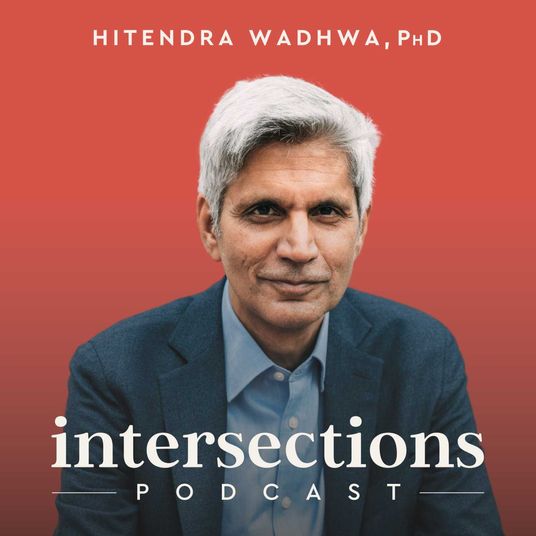
The Right to Be Responsible I Vincent Stanley (Patagonia)
What changes when people are able to bring their deepest values to work? What are the critical responsibilities businesses must uphold for society in today’s times? How can organizations gain the cultural confidence to do what’s right, even when the odds are against them? And what does it take for ordinary individuals to build a business that puts purpose before profit and become a role model for the entire business community? Find out from Vincent Stanley, exclusively in conversation with Dr. Hitendra Wadhwa on Intersections Podcast. Vincent Stanley has been with Patagonia on and off since its beginning in 1973, and has served in key executive roles as head of sales or marketing. At present, he serves as Director of Patagonia Philosophy, teaching company history and values to employees. More informally, he is Patagonia’s long-time chief storyteller. Vincent helped develop The Footprint Chronicles, the company’s interactive website that outlines the social and environmental impact of its products, The Common Threads Partnership, an initiative launched by Patagonia in collaboration with eBay, aiming to reduce environmental impact by promoting sustainable consumption habits; and Patagonia Books, the publishing branch of Patagonia, that produces high‑quality books aligned with the brand’s mission of environmental stewardship, adventure, and activism. He has co-authored two books with Yvon Chouinard, the founder of Patagonia: The Responsible Company (2012) and The Future of the Responsible Company (2023). Vincent is also a visiting fellow at the Yale School of Management, and also a poet whose work has appeared in Best American Poetry, a prominent annual anthology that showcases a curated selection of contemporary American poems. In this episode, Vincent reveals: - What changes when people are able to bring their deepest values to work - The minimum responsibility businesses must uphold in today’s times - What shifts when we see responsibility as a right, not a burden
Activating Group Genius I Nicole Schwab
Why are we out of balance, not just within our own selves, but collectively as society? What fundamental qualities do we need to cultivate that can lead to breakthrough solutions to humanity’s core problems today? What lessons can we draw from nature’s cycles to inform and advance our own work and life pursuits? What new avenues can we explore to shift us and others to a higher state of consciousness? What is the ROI of inner work? Does extraordinary change only begin through the force of a singular heroic individual or is that a myth? And what does it take to activate group genius? Find out from Nicole Schwab, exclusively in conversation with Dr. Hitendra Wadhwa on Intersections Podcast. Nicole Schwab is a policy leader, systems change expert and author, with more than 20 years experience in building communities and facilitating processes for collective action. She is the Co-founder and Managing Director of Ostara Collective, an environmental services organization, on a mission to restore relationships to ourselves, each other, and the Earth, building engaged communities of changemakers to reimagine and catalyse the emergence of an economy in service of life. In the past, Nicole has co-headed the Nature Pillar and chaired the Forum of Young Global Leaders at the World Economic Forum; advised forest and ocean conservation non-profits including National Geographic Society’s Campaign for Nature; and co-founded the EDGE Certified Foundation, a business certification standard for gender equality in the workplace. Nicole has also authored the book, The Heart of the Labyrinth, a spiritual parable offering earth centered wisdom. In this episode, Nicole reveals: - Why we are out of balance, not just within ourselves but as society - The ROI of inner work and fundamental qualities we need to cultivate to achieve breakthrough solutions at the personal and collective level
Entering Flow State I Robbie Anderson
Who are we when we are at our best? Is there a method to enter flow state at will? What wisdom can we draw from the high-stakes world of Formula 1 racing and apply to our own lives and work? What model can help us examine the inner workings of our mind—and begin to master it? And what is the most overlooked, yet essential, ingredient in elite performance Find out from Robbie Anderson, exclusively in conversation with Dr. Hitendra Wadhwa on Intersections Podcast. Robbie Anderson is a highly experienced performance psychologist and renowned ‘attention expert,’ specialising in high performing people, teams, and cultures, and serving individuals in professional, international and Olympic sport; businesses and hedge funds in the UK and US; and the emergency services and armed forces. An expert in applied neuroscience and high-stakes environments, Robbie personally collaborated with Chimp Model creator Professor Steve Peters for over a decade, co-founding and running a successful consultancy together, Chimp Management. Robbie is now Director at Performing Minds, supporting elite performers in sport and business, and is the Head of Psychology at Hintsa Performance, consulting to drivers and teams in Formula 1. In this episode, Robbie reveals: - A powerful model to gain deeper access to the mind and activate elite performance - A four-step method used by Formula 1 champions to enter flow state at will - The most overlooked aspect of elite performance
1 di 10