The Healing Theology Podcast

The Healing Theology Podcast

di Alejandra Salemi
Stagione 1
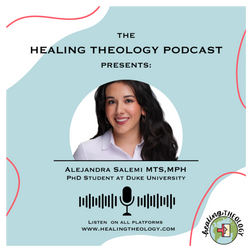
Alejandra Salemi and the introduction of Healing Theology
The inaugural episode of the Healing Theology Podcast, hosted by Alejandra, a PhD student at Duke University, dives into the intersection of religion and public health. Alejandra shares her personal journey and passion for exploring this underrepresented area of scholarship. From her experiences in academia to her work as a contact tracer during the pandemic, she delves into the complexities of religion as both a protective and risk factor in health outcomes. With a commitment to fostering conversation and curiosity, Alejandra aims to create a space where experts from diverse fields can share their insights and stories, ultimately inspiring others to pursue their own intellectual curiosities. Join her on this journey of discovery and dialogue, as she seeks to carve out a space for intersectional scientists and theologians alike.
Mari Lowe and Christ House
In this podcast, we are joined by Mari Lowe, a nurse practitioner working primarily at Christ House, an inpatient medical respite serving men experiencing homelessness in Washington, DC. Mari shares her journey from nursing school to becoming a nurse practitioner to joining AmeriCorps and challenging her own evangelical upbringing. Mari discusses the importance of humility, recognizing power dynamics when she is working with her patient population, and the significance of language choices in patient care. She also walks us through approaches of providing care with care, compassion, humanity and liberation at the center of it. Overall, the conversation delves into the complexities of providing healthcare to marginalized populations while showcasing Mari's personal beliefs and how she is contemplating institutional structures.
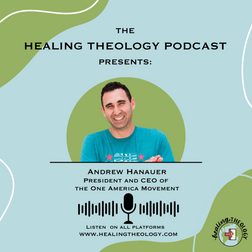
Andrew Hanauer, The One America Movement, and how we can better fight toxic political polarization
In this episode, we delved into a thought-provoking discussion with Andrew Hanauer, the President and CEO of The One America Movement. Andrew shares insights into the multifaceted work of his organization, which focuses on helping faith communities and fostering unity amidst political polarization. Emphasizing the urgency to restore trust in various institutions, Andrew highlights the detrimental effects of distrust, which can escalate into fear and extremism. He underscored the importance of returning to our shared humanity as a crucial step in addressing societal divides. Andrew outlined some key initiatives undertaken by the One America Movement, including efforts to prevent political violence and hosting election support forums aimed at facilitating constructive dialogue among faith leaders and communities. He also shed light on the intersection of public health, religion, and politics, emphasizing the need for collaborative approaches to tackle pressing issues such as loneliness and isolation. With a big election year for the US and many other countries across the world, our chat with Andrew aims to be a beacon of hope towards reuniting the growing polarization across political divides.
David Eagle and Clergy Health Trends
In this episode, we talk to Dr. David Eagle, researcher and professor at Duke University who leads the Religion and Social Change lab. Through the longitudinal study, The Duke Clergy Health Initiative, he shows us some of the health trends that are emerging within Clergy populations in North Carolina. We also talk about general trends he is seeing within the clergy in the North Carolina conferences of The United Methodist Church. We chat about the health trends he is seeing through his longitudinal study focused on seminary students as well as understanding health trends amongst clergy who are conservative-leaning versus clergy who are progressive-leaning.
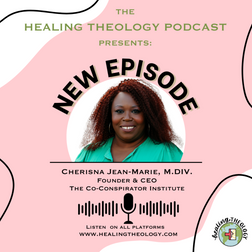
Rev. Cherisna Jean-Marie, Black Grief and Mary, Mother of Jesus
In this episode of the Healing Theology Podcast, host Alejandra Salemi sits down with Cherisna Jean-Marie, an ordained minister, anti-racist activist, and founder of the Co-Conspirator Institute. Cherisna shares insights into her work, which bridges social change, public policy, and theology through a deeply spiritual lens. The conversation delves into the Co-Conspirator Institute's mission of building Beloved Community by creating space for reflection, healing, and transformation from the culture of white supremacy. Cherisna discusses the importance of approaching anti-racism work from a mindful and heart-centered perspective, emphasizing the need for intentional healing spaces. Drawing on her womanist theology, Cherisna explores the significance of grief in addressing racial trauma, citing the story of Mother Mary's grief at the crucifixion of Jesus as a guiding narrative. Through programs like "Mary's Weekend," the Co-Conspirator Institute provides support for Black mothers grieving the loss of children to gun violence, offering holistic healing approaches that integrate physical, mental, and spiritual well-being. The conversation highlights the intersectionality of public health and religion, emphasizing the interconnectedness of body, mind, and spirit in achieving holistic well-being. Cherisna shares practical insights for individuals seeking to engage in similar work, stressing the importance of self-care and personal healing as foundational to serving others effectively.
Phifer Nicholson, Medical Ethics, and Perspectives on International Medical Efforts
On this episode, we chat with Phifer Nicholson, an MD Candidate and Theology, Medicine, and Culture Fellow at Duke University and incoming surgical resident at UCLA. Phifer shares about his experiences with medical ethics both domestically and abroad and hear about his journey through medical and divinity school. Integrating the two, Phifer shares his story of working in spaces like Palestine and South Sudan and helps us understand how he approaches his access and privilege in medical spaces through a posture of liberation theology and accompaniment. There is lots that faith-based medical efforts abroad have gotten wrong and in conversation with Phifer, we explore how we can be better neighbors and allies in an effort to liberate, heal and improve our infastructures together.
Rob Wilson-Black, The Faith and Politics Institute and Nonviolence Resistance
In this episode of the Healing Theology Podcast, we chat with Rob Wilson-Black, President and CEO of the Faith & Politics Institute in Washington, DC. With a background in nonprofit leadership and a deep understanding of religion in America, Rob has been at the forefront of guiding organizations through challenging times. We dive into Rob's experiences at both the Faith and Politics Institute and Sojourners, exploring their missions and his role in shaping them. From helping navigate these large institutions through the COVID-19 Pandemic and all that has unfolded in the US over the past couple of years, Rob has been at the forefront of helping craft spaces for nonpartisan conversation so that we can find ways to move forward together. As advocates for collaboration between faith organizations and health initiatives, we discuss the powerful impact such partnerships can have on communities. Rob reflects on Sojourners' contributions to this intersection, considering health through a religious lens and addressing opposition to public health policies. Shifting gears to his current role at the Faith and Politics Institute, Rob sheds light on the organization's efforts to bridge partisan divides in public health conversations. With a major election looming, we explore FPI's role in fostering bipartisan dialogue on crucial health issues. As is FPI's focus, this episode highlights the exploration of nonviolent resistance, a theme woven throughout Rob's work and advocacy, offering valuable insights into shaping a healthier future for all.
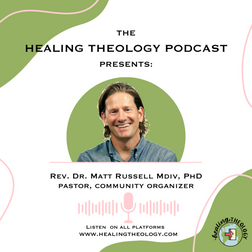
Rev. Dr. Matt Russell, Human Flourishing, Mental Health, and the Role of Religion and Community
In this episode of the Healing Theology Podcast, we hear from Rev. Dr. Matt Russell. Discussing the intersections of human flourishing, mental health, and the role of religion and community in supporting these concepts, Matt Russell talks about how human flourishing varies depending on context and how communities, even secular ones, can provide support systems similar to those traditionally offered by religious institutions. Matt Russell shares his experience in England at the University of Cambridge, reflecting a community's role in mental and emotional well-being. He also mentions his research on how religion contributes to human flourishing, emphasizing that while formal religious practices may decline, the underlying human needs for connection and care persist. Essential human experiences such as community, grace, forgiveness, and shame are universal, regardless of religious affiliation. While religious beliefs may seem irrational to some, the community practices and rituals associated with religion offer valuable lessons for societal well-being.
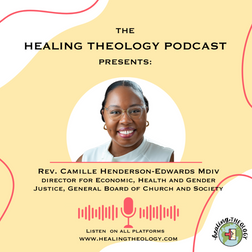
Rev. Camille Henderson-Edwards and the Intersection of Religion & Government to Fight for the Human Rights of Women and Girls Throughout the African Diaspora
In this episode of the Healing Theology Podcast, we hear from Rev. Camille Henderson-Edwards, the director for Economic, Health and Gender Justice at the General Board of Church and Society for the United Methodist Church . As she works at the intersection of government and religion, Rev. Henderson-Edwards highlights the ways that policy creates environments of flourishing or detriment and how our theologies prompt us towards action to live out a calling to love our neighbor. Sharing her journey from Spelman College working on helping churches navigate social principles to promote the health of women, she highlights the importance of the ways our faith activates action to build a better world.
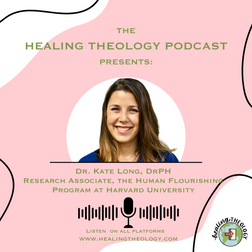
Dr. Kate Long, Hope, Forgiveness, and Harvard's Human Flourishing Program
In this final episode of the Healing Theology Podcast, we chat with Dr. Kate Long, researcher at Harvard University. Dr. Long works in the Human Flourishing Program and has spent years studying the health impacts of forgiveness, hope, and the ways that religious practices can directly impact physical and mental health. Looking at large datasets sampling adolescents, nurses, and the elderly, Dr. Long and her research team has been able to highlight the ways that hope and forgiveness has an impact on the individual. Researching topics such as these is no small feat, and Dr. Long helps explain the ways that researchers can tackle such mystery-filled research questions with rigor and humility for the unknown.
1 di 2