Hay Matters

Hay Matters

di Feed Central
Stagione 3
Building a Mixed Farming System That Spreads Risk
In this episode of the Hay Matters Podcast, Steve Page catches up with Anthony Exton in the Coolamon region to talk hay production, mixed farming, crop rotations and how diversification helps spread risk across the season. From vetch and oats through to straw, trucks and marketing hay through LocalAg, Anthony shares practical insights from the paddock and the decisions shaping the season ahead. In this episode: Why Anthony grows vetch and oats together Keeping grain and hay options open depending on the season Managing curing times, paddock selection and hay quality Seasonal conditions and sowing progress in southern NSW Reflections on last season’s hay yields and quality Marketing hay through LocalAg Key takeaway Building flexibility into a farming business through multiple income streams, marketing options and diversified production systems can help manage seasonal pressure and changing market conditions. Listen to the episode now.
The Legacy Tour: Inspiring the Next Generation of Hay
In this episode of Hay Matters, Hugh Ford takes us on the road with the Griffin Lanyon Legacy Tour, bringing together young farmers from across Australia to explore the future of the industry. From farm visits and large-scale operations to real conversations on the bus, this episode captures what’s actually shaping the thinking of young producers right now. In this episode: Why the Griffin Lanyon Legacy Tour was created and what it represents What young farmers are seeing across different regions and systems The importance of networking in a connected but spread-out industry Insights from visits to operations like John Deere and Midfield Meats How different businesses approach hay, grain, livestock and contracting What exposure to large-scale operations changes in your thinking Where young producers see opportunity in agriculture The role of innovation, technology and adaptability moving forward Key takeaway: The future of agriculture isn’t coming, it’s already here. Young farmers are building networks, embracing innovation and thinking beyond their own farm gate to shape what comes next.
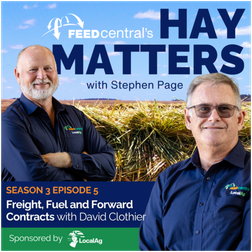
Season 3 Episode 5 - Freight, Fuel & Forward Contract with David Clothier
Freight is up. Fuel is tight. And supply is shifting further south. In this episode of Hay Matters, Steve Page sits down with David Clothier to unpack what’s really happening on the ground as we head into April. From recent travel across South Australia and Victoria to conversations with growers and buyers, this episode covers the key forces shaping decision-making right now. In this episode: How recent rain events have disrupted movement and demandWhy freight is becoming the biggest factor in pricing decisions Where supply is sitting and how far it needs to travel The growing role of forward contracts in managing risk What’s happening with lucerne, cereal hay and protein opportunities Why vetch is gaining attention heading into the next season Feedlot demand and what it means for northern buyers The outlook heading into winter and beyond Key takeaway: The fundamentals are strong, but distance, cost and timing are everything. Positioning yourself early could make all the difference this season.
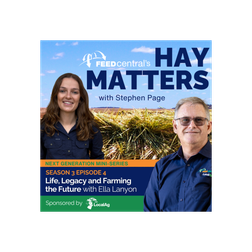
Life, Legacy and Farming the Future with Ella Lanyon
Show Notes In this episode of the Hay Matters Podcast, part of our Next Generation series, we sit down with Ella Lanyon, a broadacre grower from Victoria’s Wimmera region, to talk about farming, industry connections and the inspiration behind the Griffin Lanyon Legacy Tour. Ella shares the story behind the tour, created in memory of her younger brother Griffin, and how it brought together young people from across Australia to explore different farming systems, businesses and opportunities within agriculture. Alongside the tour, Ella also talks about her own farming operation near Birchip, where she manages a broadacre cropping business with her father while completing a Masters in Agriculture. From crop rotations and hay production to machinery investment and planting strategies, the discussion offers a practical look at decision-making on farm. In this episode, you’ll hear about: The idea behind the Griffin Lanyon Legacy Tour and how it honours Griffin’s passion for agriculture and community Why getting young farmers off farm to see other systems and operations is so valuable • The importance of networking and learning from others across the industry Visiting farms, feedlots, machinery operations and processing facilities across Victoria and South Australia Ella’s broadacre cropping operation near Birchip A three-way rotation of legumes, barley and oaten hay Increasing lentil production and how it compares to vetch Balancing grain and hay production depending on seasonal conditions Opportunistically cutting cereals for hay when moisture becomes limiting Planning for the season ahead, including planting windows and weed control Investing in machinery to improve efficiency and expand capacity Ella’s story highlights both the opportunities and pressures facing the next generation of farmers, from managing family businesses to making strategic decisions about crops, inputs and investment. One key takeaway? Young farmers benefit enormously from stepping outside their own operations. Seeing different systems, sharing experiences and building industry connections can bring new ideas, perspective and confidence back to the farm.
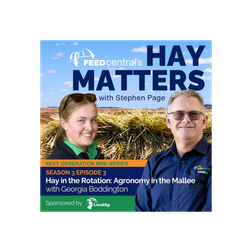
Hay in the Rotation: Agronomy in the Mallee with Georgia Boddington
Next Generation is a special mini-series within Hay Matters — spotlighting the voices building agriculture’s future. In this episode Steve Page catches up with graduate agronomist Georgia Boddington from ExceedAg to discuss hay production and cropping systems across the Wimmera Mallee. Georgia shares her journey from growing up on a sheep and hay contracting operation near Narracoorte to becoming an agronomist based in Swan Hill. With strong early exposure to hay production, she now works closely with growers across the region advising on rotations, crop management and seasonal decisions. The conversation explores how hay fits into mixed cropping systems in a low rainfall environment, with growers often planning paddocks that can go either to grain or hay depending on how the season unfolds. Georgia also talks about the importance of hay in managing resistant ryegrass, improving rotations and maintaining strong gross margins. Steve and Georgia discuss the realities of the past season, including dry starts, staggered germination and the challenges of managing crops across variable Mallee soil types. They also cover current paddock preparation, moisture conservation and how growers are positioning themselves ahead of the coming season. Georgia also reflects on her first year conducting hay inspections with Feed Central, explaining how the role complements her agronomy work and gives her the opportunity to see crops all the way through to the finished hay product. In this episode: Georgia’s pathway into agronomy and hay production Cropping systems and rotations in the Wimmera Mallee Why growers include hay paddocks in their rotations Managing resistant ryegrass through hay production Planning paddocks that can switch between grain and hay Seasonal challenges and lessons from last year Current paddock preparation and moisture conservation Georgia’s experience as a Feed Central hay inspector If you work in cropping, hay production or agronomy, this episode offers practical insights into how hay fits into modern rotations in one of Australia’s key grain growing regions.
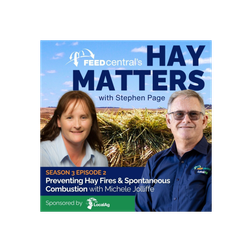
Preventing Hay Fires & Spontaneous Combustion
Guest: Michele Jolliffe, Agriculture Victoria Host: Steve Page Duration: 41:20 Episode Overview After dry seasons and increased on-farm hay storage, the risk of haystack fires is higher than ever. In this episode of Hay Matters, Steve Page sits down with Michele Jolliffe, Dairy Extension Officer at Agriculture Victoria, to explore the science behind hay fires and spontaneous combustion. Michele shares practical advice for growers, contractors, and producers to safeguard their feed, property, and infrastructure. What You’ll Learn in This Episode The causes of spontaneous combustion in hay How moisture levels influence fire risk Why large square bales require extra care Early warning signs of heating hay Safe temperature thresholds and monitoring techniques Best practices for stacking, ventilation, and storage When to call for emergency help The role of preservatives and modern monitoring technology Key Takeaway “Check the moisture and temperature of your hay before and after baling - proper stacking, ventilation, and monitoring are essential to prevent spontaneous combustion and protect your feed investment.” Links & Resources Feed Central website LocalAg Marketplace CFA Guidelines for Heating Hay Agriculture Victoria: The Science Behind Hay Fires
Seed, Germination & Hidden Forage Risks with Ken Cunliffe
In Season 3, Episode 1 of Hay Matters, Steve Page chats with Ken Cunliffe from AgEtal about why seed is one of the most critical inputs on farm. Ken explains: Germination vs vigour – how seed performs under stress Farm-saved vs purchased seed – what to check before planting Seed storage & handling – why heat, moisture, and treatment matter Prussic acid & nitrate testing – managing hidden forage risks He also shares insights into Feed Central’s in-field test kits, helping growers make faster, safer decisions for both crops and livestock. Listen now for practical tips to protect yield and reduce risk from planting through grazing.
Stagione 2
Summer Series - From Baling to the Boardroom
As the Hay Matters Summer Series wraps up, host Steve Page is joined by Harry Divall, a progressive hay and mixed farming operator based around West Wyalong and Stockinbingal, and a recent National Hay Award winner. Harry shares his journey into agriculture, from leaving school early and working with livestock in cold southern NSW, to discovering his passion for hay production and building a growing multi-farm operation. Together, they discuss the realities of making quality hay, managing weather risk, and adapting cropping and storage strategies across diverse regions. The conversation also explores Harry’s approach to crop rotations, soil health, silage versus hay decisions, and how spreading production geographically helps manage seasonal variability. Harry reflects on the steep learning curve of haymaking, the importance of continual improvement, and his vision for the future of the industry. The episode closes with Harry’s thoughts on joining the AFIA board, and his desire to see practical, accessible education become a cornerstone of the hay and silage sector. In this episode, you’ll hear about: Harry’s pathway into agriculture and hay production Lessons learned from producing quality hay in challenging seasons Crop rotations including oats, barley, vetch, canola and lucerne Managing risk through silage, grain, and staggered cutting times Benefits of farming across multiple regions and climates Hay storage strategies, including sheds and tarping Harry’s goals for AFIA and industry education Thanks for listening to the Hay Matters Summer Series. Season 3 is coming soon with new conversations, fresh insights, and more stories from across the hay and forage industry. Interested in being a guest, sponsor, or advertiser? Get in touch with the team at Feed Central. The Hay Matters Podcast is proudly presented by Feed Central and LocalAg.
Summer Series - Mixing Family and Business in Ag
In this Summer Series episode of the Hay Matters Podcast, brought to you by LocalAg and Feed Central, host Jon Paul Driver chats with Megan Ford about her path into agriculture, the growth of Feed Central, and the changing role of women in the industry. Megan reflects on the early days of building a business alongside her husband Tim while raising a young family, sharing the realities of juggling growth, family life, and big ideas. From kitchen-table planning and conversations on the go, to moments that tested resilience, this episode offers an honest look at what it takes to build something lasting. Listeners will hear about the pivotal 2014 hay shed fire and how strong family, team, and community support helped shape Feed Central’s future. Megan also highlights the impact of women’s networks such as the Queensland Rural Women’s Network and Australian Women in Agriculture, and how mentorship and connection have supported leadership and confidence along the way. The conversation also unpacks the thinking behind LocalAg—a platform developed over years of listening to farmers and customers, designed to reflect how producers want to do business today: with flexibility, transparency, and trust at the core. A thoughtful and inspiring episode about resilience, relationships, and evolving agriculture in Australia.
Summer Series - Talking Grasses with Marty Conroy
In this episode of Hay Matters, host Jon Paul Driver chats with Marty Conroy, Agronomy Services Lead for Northern Australia at Barenbrug Seeds. From Northern NSW, Marty provides a practical look at tropical pasture systems across Queensland, the NT, and northern NSW. He unpacks the science behind C3 and C4 grasses, explains how feed quality drives profitability, and highlights the untapped potential of pasture management and modern breeding programs. Marty explains how pasture breeding is now focused on fibre quality, seasonal fit, and regional adaptability. C4 grasses like Rhodes and panicum are critical in northern systems, with planting tied to rainfall and temperature windows. Feed quality is key to intake, weight gain, and financial returns. The episode also explores accelerated breeding through genomic tools, underutilised C4 pasture management strategies, strategic input use such as nitrogen, and the importance of benchmarking paddock performance year-on-year to make smarter decisions in unpredictable seasons.
1 di 6