The Great Asian Pushback

The Great Asian Pushback

di Council of Asian Liberals and Democrats
Stagione 1
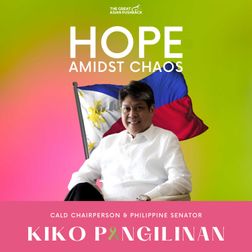
Hope Amidst Chaos
Describing Philippine politics in the past years as “chaotic” may even be an understatement. While some may say that politics in this Southeast country of more than 110 million people just reflects global trends, it cannot be denied that headline-grabbing issues such as the bloody war on drugs, the crackdown on the country’s biggest media outlet, and the bungled pandemic response show that Philippine politics took a turn for the worse. Amidst the chaos, those who still value decent leadership and effective governance pin their hopes on Vice President Leni Robredo. Her quick, focused, resource-efficient and innovative response to the pandemic provided a glimpse of what could have been if she were at the helm. Her commendable performance, however, still remains largely unappreciated by a significant segment of the population. But her recent proclamation to run for President, with Senator Kiko Pangilinan as her running mate, sparked the nation and fueled a wave of motivated and energized volunteers that could be described as “pink revolution,” a symbol of the great fight to reclaim democracy and dignity in leadership and governance. In this episode, Vice Presidential candidate Kiko Pangilinan will join us as he shares the vision of the campaign and how the Leni-Kiko tandem can show the Filipinos a different approach in reaching out to voters. How does the campaign define a new brand of leadership? What is the motivation of Leni- Kiko and the Kakampinks to remain hopeful and vigilant, amidst the political noise, widespread disinformation and seemingly ungrateful nation? Does the campaign still believe that the Filipinos will turn around and make the right choice in 2022?
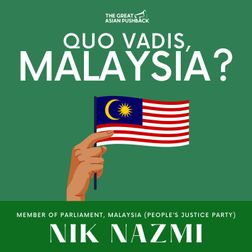
Quo vadis, Malaysia?
Malaysia is in crisis. For almost two years, the country’s political stalemate, coupled with economic downturn brought about by the COVID-19 pandemic, has made life more difficult for ordinary Malaysians. In recent months, the #benderaputih (white flag) took social media by storm – where low-income families waving white flags posted on social media to ask for help . On the political front, a counterpart “black flag” movement was launched to show defiance towards the government and its seemingly ineffective pandemic response. Criticisms of the previous government's handling of the pandemic contributed to Ismail Sabri Yakob's rise to power as prime minister in August 2021, but this change in leadership does not contribute much in addressing the hopelessness and cynicism that many Malaysians still feel. Malaysia is definitely on the edge. But is the political opposition ready to take over? What lessons did they learn from their previous governance experience? How can they prevent the mistakes committed in the past? How will the opposition’s platform of governance save Malaysia from its current predicament?
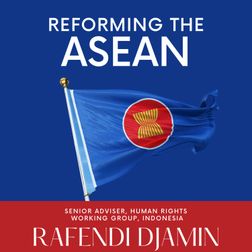
Reforming the ASEAN
Being the largest economy in Southeast Asia, Indonesia has long been considered as the Association of Southeast Asian Nations’ (ASEAN) de facto leader or “the first among equals.” With the decline of democracy in the Philippines and Thailand, and the political crisis still plaguing Malaysia's young democracy, this leadership has also extended to the democratic realm -- with Indonesia being the most stable and consolidated democracy among ASEAN members at present. The country, therefore, is in a better position to push ASEAN towards a more democratic direction. ASEAN, through the years, has incorporated "democracy" and "human rights" on its institutional documents, but a lot much needs to be done to translate this into reality -- as what the ongoing Myanmar political crisis suggests. How can Indonesia use its position to strengthen ASEAN as a democratic and rights-based regional organization? Rafendi Djamin, former chairperson of ASEAN Intergovernmental Commission on Human Rights (AICHR), shares his thoughts on the current dynamics and future prospects of democracy and human rights in the Southeast Asian sub-region.
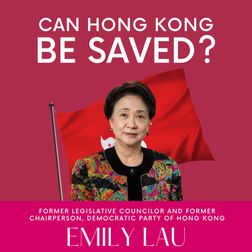
Can Hong Kong be saved?
The free, vibrant and cosmopolitan Hong Kong we all know and love seems to have been lost forever. The passage of the national security law in June 2020 signaled the beginning of the end. From that time on, crackdown on the democratic opposition, on the media, and on civil society has expanded and intensified -- leading to the ouster or resignation of democratically elected officials from the opposition, the closure of independent media such as Apple Daily, and the legal harassment or imprisonment of anyone who refuses to toe the line. Taking these into account, the big question that comes to mind is: “Can Hong Kong still be saved?” Two Hong Kong democrats, belonging to different generations and adopting different approaches, point the way forward. Where is Hong Kong now? How will the people of Hong Kong fight back amidst draconian laws? Is there a sense of fatigue or fear on the side of the opposition? How do you overcome these, if any? What’s next for the democracy fighters and supporters?
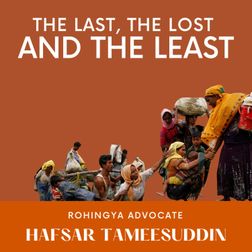
The Last, The Lost and The Least
Forced to leave by the deadly violence between ethnic Arakanese Buddhists and Rohingya Muslims in 2012, Hafsar Tameesuddin spent the last nine years seeking refuge in Thailand, then Malaysia, until she finally settled in New Zealand, where she is now pursuing a bachelor’s degree in social work? The journey that brought her to her new host country was difficult, but thousands of Rohingyas are in a much worse situation given the raging pandemic, the military coup d’etat in Myanmar, and the growing hesitance of countries to take in refugees. It is for this reason that Hafsar continues to advocate for the rights of the Rohingyas even if the world seems to have forgotten them. Her life in New Zealand is a world away from her life in Myanmar, where the Rohingyas are not even considered citizens and do not possess rights. How does she feel about her new life in her host country? How does she intend to use her newfound voice and freedom to improve the plight of the Rohingyas? If the international community has failed her people, are there ways for it to correct its past mistakes? What are her hopes and dreams for herself and the Rohingyas in general?
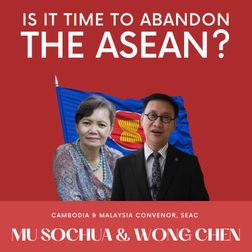
Is it time to abandon the ASEAN?
The recent Myanmar crisis is a litmus test for the Association of Southeast Asian Nations (ASEAN) -- and the regional organization is not faring well thus far. Progress on its five-point consensus to address the Myanmar crisis has been painfully slow, leading to calls for the establishment of alternative regional arrangements. One of which is the South East Asian Community (SEAC), which presents itself as an “alternative multilateral organization to replace the inter-governmental ASEAN.” Will SEAC work? How different is it from civil society initiatives that call for alternative regionalism? Can it really replace ASEAN, if so, in what way? How can non-elected leaders carryout the mandates of an institution like ASEAN? What are the challenges in making SEAC’s vision a reality? These are just some of the questions that Sam Rainsy, SEAC founder and Cambodian opposition leader, addresses.
The Great Divide Part 2
Thailand is a highly divided society – politically, economically and socially. Politically, the rivalry between the red shirts and yellow shirts are still present and brewing. This is compounded by the economic divide – Thailand being one of the most unequal societies in the world. The division also has a generational (old vs. young) and geographical (urban-rural, north-south) dimensions, making the existing divides much more complex, even explosive. These crisscrossing divisions explains the country’s tumultuous recent past. Will the ongoing pandemic eventually lead to the day of reckoning in Thailand? How do young people intend to contribute in addressing the existing divisions in society? What is there to fix? What kind of Thai society do young people want? How do they see the future? Thailand’s young political leaders, who belong to different sides of the political divide, provide their perspectives. The Great Divide Part 2 Speaker: Issadaorn Kulsantao, Former ‘Bad Student Group’ Leader Moderator: Marites Vitug
The Great Divide
Thailand is a highly divided society – politically, economically and socially. Politically, the rivalry between the red shirts and yellow shirts are still present and brewing. This is compounded by the economic divide – Thailand being one of the most unequal societies in the world. The division also has a generational (old vs. young) and geographical (urban-rural, north-south) dimensions, making the existing divides much more complex, even explosive. These crisscrossing divisions explains the country’s tumultuous recent past. Will the ongoing pandemic eventually lead to the day of reckoning in Thailand? How do young people intend to contribute in addressing the existing divisions in society? What is there to fix? What kind of Thai society do young people want? How do they see the future? Thailand’s young political leaders, who belong to different sides of the political divide, provide their perspectives. Great Divide Part 1 Speaker: Parit Wacharasindhu
Secure Voices Within
The Philippines survived the years of darkness during Martial Law in the ‘70s till the early ‘80s. Today, the country faces the same narrative – abuse of power and blatant disregard of human rights and rule of law, and the use of state agencies to intimidate and persecute critics. Moreover, the Philippines is confronted by an ineffective government and an inadequate leadership that has resulted in a poor COVID-19 response marred by corruption and misuse of public funds. Janina Vela, an actress, social media influencer and vlogger, joins us in this episode to talk about the power of youth—those who call for genuine change through education and the power of one’s vote. Here are some of the questions she will be answering: How can social media be used for the common good? How does a young person continue to start believing in the political process again and take the difficult path forward knowing that there could always be backlash along the way? How can the youth change the current narrative of the country? What are the difficulties encountered in mobilizing the youth? What mobilization strategies work in the Philippine context? Moderated by: Marites Vitug
What’s the Tea?
The Milk Tea Alliance started in April 2020 to defend a famous Thai actor who was attacked online by Chinese social media users for his unwitting support for Hong Kong through his tweet. The fandom of the actor, who come from all over Southeast and East Asia, soon realized that there is another tie that binds them together – their pro-democracy stance and seemingly anti-China sentiment. From thereon, the hashtag #MilkTeaAlliance kept coming up whenever there are challenges to democracy, human rights and the rule of law in Thailand, Hong Kong, Taiwan, Philippines, Cambodia, Vietnam, among others. The Alliance has no identifiable leaders, which is in line with the objective of avoiding persecution of the authorities. It is loosely organized, primarily online, and composed of young, social media- savvy users who share tips on how to reduce online footprint and how to arrange and disperse street rallies rapidly. The fluidity of Milk Tea Alliance is considered both as a strength and a weakness. Can the Alliance really make a contribution to bringing political change in Southeast and East Asia using its current strategies? Speaker: Dr. Roger Huang, Lecturer at Macquarie University Moderated by: Marites Vitug, Rappler Editor-at-Large
1 di 2