Corruption Watch

Corruption Watch

di Corruption Watch
In the Still of Night – a climate governance podcast, episode 5
The fifth and final episode of Corruption Watch’s new five-part podcast series on climate governance is now available. In this episode, we discuss what needs to happen for climate change management to benefit those who feel the devastating effects most keenly - the communities on the ground - and for the just transition to be truly just. In this episode we hear from experts and community voices that have contributed to the previous four episodes, including Transparency International climate researcher Gvantsa Gverdtsiteli, Bongani Johannes of Mining Affected Communities United in Action, climate science writer and journalist Leonie Joubert, and Wade Parker of the Surplus People Project.
In the Still of Night - a climate governance podcast, episode 4
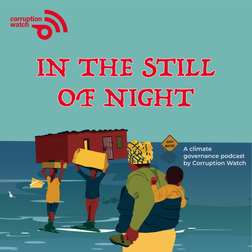
The fourth episode of Corruption Watch’s new five-part podcast series on climate governance is now available. In this episode, the focus is on disaster management and the Disaster Management Act, whose goal is to facilitate a co-ordinated and integrated approach across all levels of government in times of crisis. However, the act has come under increasing scrutiny following devastating floods in KwaZulu-Natal, the Western Cape, and other parts of South Africa, and a wholly inadequate response in terms of the human crisis. Guests include legal researcher Mashudu Masutha, community activist Blessing Nyoni, Wade Parker from the grassroots organisation Surplus Peoples Project, and several representatives from the Riverlands community in the Western Cape.
In the Still of Night - a climate governance podcast, episode 3
This podcast series of five episodes compellingly captures communities’ experiences with climate change and failures in disaster relief by government. This is the third episode, and focuses on the responsible managing of climate-related budgets and projects, weak governance structures hindering the effective implementation of climate policies and community support programs, deficiencies in the Climate Change Act, and more. The backdrop is the 2022 closure of the Komati power station in Mpumalanga and how it failed as a test case for the just transition to clean energy. Our guests include climate sustainability expert Professor Imran Valodia of Wits University; legal researcher Mashudu Masutha; climate science writer and journalist Leonie Joubert; Bongani Johannes from Mining Affected Communities United in Action; Malik Dasoo, a researcher with Extinction Rebellion; and community voices from Limpopo and Mpumalanga, including Grace, Mam’Nkuna, and Sinki.
In the Still of Night - a climate governance podcast, episode 2
This podcast series of five episodes compellingly captures communities’ experiences with climate change and failures in disaster relief by government. The second episode considers the just transition and what this means in practical terms. What does a genuine just transition look like? What changes do we need? As with episode 1, this features narration, interviews, explanations, and commentary from experts. These include legal researcher Mashudu Masutha; Transparency International climate researcher Gvantsa Gverdtsiteli; journalist and climate science writer Leonie Joubert; Joanne Yawitch, head of the Presidency’s Project Management Unit; Thabo Molelekwa, assistant editor at Oxpeckers; Tim Lloyd, associate at Alt-Advisory; Bongani Johannes from Mining Affected Communities United in Action; and Open Secrets investigators Michael Marchant and Zen Mathe, authors of the research report Who Has the Power: South Africa’s Energy Profiteers.
In the Still of Night - a climate governance podcast, episode 1
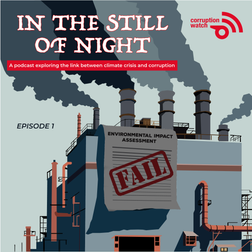
This podcast series of five episodes compellingly captures communities’ experiences with climate change and failures in disaster relief by government. The first episode sets the scene with a harrowing first-hand recounting of the Riversands floods of 2024, then goes on to establish the concept and context of climate governance with gripping narration, explanations, and commentary from experts. These include legal researcher Mashudu Masutha, Transparency International climate researcher Gvantsa Gverdtsiteli, and Open Secrets investigators Michael Marchant and Zen Mathe, authors of the research report Who Has the Power: South Africa’s Energy Profiteers.
In the Still of Night - Episode 1 Teaser
Trailer
This podcast series of five episodes compellingly captures communities’ experiences with climate change and failures in disaster relief by government. The first episode sets the scene with a harrowing first-hand recounting of the Riversands floods of 2024, then goes on to establish the concept and context of climate governance with gripping narration, explanations, and commentary from experts. These include legal researcher Mashudu Masutha, Transparency International climate researcher Gvantsa Gverdtsiteli, and Open Secrets investigators Michael Marchant and Zen Mathe, authors of the research report Who Has the Power: South Africa’s Energy Profiteers.
Episode 3 - Spotlight on 2024 elections: What's different this time?
In this third episode, Corruption Watch's executive director Karam Singh sits down with Robyn Pasensie from My Vote Counts and independent candidate Zackie Achmat in a lively discussion and analysis of South Africa's recent elections. The group talks about party funding and sources of campaign money, trends in terms of right and left politics, questionable appointments to parliamentary committees. what to expect in the fight against corruption going forward, and more.
Episode 2 - Spotlight on 2024 elections: What's different this time?
In this episode, Corruption Watch executive director Karam Singh is in discussion with Nicki van ‘t Riet, the organisation’s head of Legal and Investigations, and Dan Mafora from the Council for the Advancement of the South African Constitution (CASAC). They discuss Dan’s new book that looks at a variety of issues relating to populism and the judiciary, which in turn informs a broader election discussion on the recent IEC vs MK Party judgment which found former president Jacob Zuma ineligible to stand for elections. They further discuss political parties’ election manifestos and expectations for the upcoming poll.
Episode 1 - Spotlight on 2024 elections: What's different this time?
In this first episode, Corruption Watch executive director Karam Singh sits down with Robyn Pasensie from My Vote Counts, to talk us through the reasons this election stands out from those in the past. They discuss new regulations by which parties need to abide, including disclosure of party funding, and we hear how independents are now able to enter the race and what this means for the elections and South Africa's democracy.
Episode 5: Land and Corruption: Story of the marginalised
As we have established in previous episodes of this moving and thought-provoking series about land corruption in South Africa, poor and marginalised communities have received a raw deal in their quest for inclusion and equality in the land equity dynamic since the dawn of democracy. The stories of beneficiaries told throughout the series are testament to severe hardships, misery, and exclusion, and the absence of accountable leadership from those responsible for this neglect and abject failure to ensure equality and justice for farmworkers. This episode explores how policies introduced along with the new democratic order could inadvertently be responsible for the continued suffering of labour tenants and other social groups trying to access and own land. This in spite of the constitutional safeguards put in place to mitigate the very hardships that are now experienced by the rural poor. Experts discuss the problems at hand, and some of the solutions that have been put in place.
1 di 3