Papers Illuminated - Člankarnica

Papers Illuminated - Člankarnica

di Kemijski inštitut
Stagione 2
#26: Rethinking the Atmosphere - Kristijan Vidović
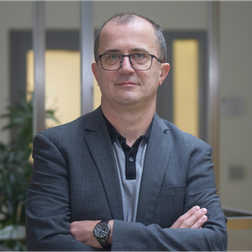
Did you know that tiny droplets of water in the atmosphere can transform a common air pollutant into powerful climate-warming compounds? In this episode of Papers Illuminated – Člankarnica, we sit down with Kristijan Vidović from the Department of Analytical Chemistry to explore the hidden chemistry taking place inside clouds, rain, fog, and atmospheric aerosol particles. Our conversation focuses on his latest research, published in Environmental Science & Technology, investigating how naphthalene reacts in the atmospheric aqueous phase under sunlight and in the presence of HONO. Rather than producing the compound scientists traditionally expected, the study reveals that the dominant product under atmospherically relevant conditions is 2-nitro-1-naphthol, a previously unrecognized contributor to brown carbon. A second product, 1-nitronaphthalene, appears mainly under more concentrated conditions associated with aerosol liquid water. We discuss what brown carbon is, why its ability to absorb sunlight matters for both air quality and climate, and how water, hydroxyl radicals, dissolved oxygen, and HONO work together to drive these atmospheric reactions. Kristijan also explains how the team combined laboratory experiments, HPLC and mass spectrometry, UV–Vis spectroscopy, kinetic modeling, and thermochemical calculations to reconstruct the reaction mechanism and estimate the climate relevance of these compounds. Join us for a fascinating journey into the chemistry of the atmosphere, where invisible gases, sunlight, and microscopic water droplets interact to influence the air we breathe, the formation of particles, and the planet’s radiative balance. Along the way, Kristijan shares insights from his scientific journey, the importance of persistence and curiosity in research, the surprising power of simple analytical tools, and his dream experiment: monitoring particle formation around Ljubljana to better understand the unique atmospheric chemistry taking place in Slovenia. You can read the whole paper here: https://pubs.acs.org/esthag/article/60/23/16758/5184061/Integrated-Kinetic-and-Thermochemical-Analysis-of
#25: Bridging Science and Industry - Robert Dominko
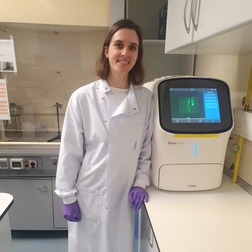
Did you know that the structural engineering of modern battery electrodes can be inspired by the intricate pathways of our body's own circulatory system? In this episode of Papers Illuminated – Člankarnica, we sit down with Professor Robert Dominko, Head of the Laboratory for Modern Battery Systems and Head of the new Center for Development, Demonstration and Training for Carbon-Free Technologies at the National Institute of Chemistry, Slovenia, to explore how high-TRL engineering is driving the green transition. We dive deep into their latest research published in the prestigious journal Energy Storage Materials, focusing on a groundbreaking method to structure battery electrodes using polar and non-polar solvent dynamics. By creating bio-inspired transport channels and boosting the active material content up to 60%, their work drastically cuts inactive additives while achieving unprecedented areal capacities of 30–50 mAh/cm². Join us for a fascinating look at how fundamental chemistry, scale-up engineering, global industry collaborations with partners like Honda, and a bold vision for fully decomposable batteries are teaming up to shape the future of energy storage! Paper: https://www.sciencedirect.com/science/article/pii/S2405829726003338?via=ihub
#24: Mapping the Invisible Geography of Cells - Anja Trupej
Did you know that the internal architecture of our cells' production hub is governed by a hidden "protein code"? In this episode of Papers Illuminated – Člankarnica, we sit down with Anja Trupej from the Laboratory for RNA Networks to explore how a groundbreaking molecular tool is shedding light on the world of cellular condensates. We dive deep into their latest research published in the prestigious journal Nucleic Acids Research, focusing on HCR-Proxy—an innovative proximity labelling technique that allows scientists to map the precise protein neighborhoods around RNA molecules with unprecedented subcompartmental resolution. Join us for a fascinating look at how cutting-edge chemistry, mass spectrometry, biology and super-resolution microscopy are teaming up to map the invisible geography inside our cells! Paper: https://academic.oup.com/nar/article/54/4/gkag086/8494757
#23: Behind the Science of Turning Waste to Bio-based Chemicals - Maja Gabrič
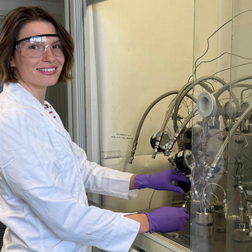
Did you know that a byproduct of biodiesel production can be transformed into a key ingredient for paints, coatings, and even acrylic nails? In this episode of Papers Illuminated – Člankarnica, we sit down with Maja Gabrič from the Department of Catalysis and Chemical Reaction Engineering (National Institute of Chemistry) to discuss how innovative catalysts are turning waste glycerol into valuable, bio-based acrylic acid. We dive deep into their latest research published in the journal Carbon, focusing on how the structure of carbon supports, often seen as "invisible" players in catalysis, actually dictates the success of the entire chemical reaction. In this episode, we discuss: The Big Picture: Why shifting from fossil-fuel-based production to sustainable, bio-based chemicals is a necessity for the industry. From Waste to Everyday life: The chemical journey from waste oil to the acrylic acid, that is used in everyday, for example in paints, textiles and personal care. The "Invisible" Game Changer: Why the choice of carbon support (from activated carbon to nanotubes) makes or breaks the catalyst's performance. The Breakthrough: How Maja’s team achieved up to 83% selectivity using specific mesoporous carbon supports, while others remained almost inactive. Future Frontiers: The challenge of catalyst leaching and Maja’s "dream experiment"—monitoring rhenium’s oxidation states in real-time (operando) under high pressure and temperature. Join us for a fascinating look at how fundamental chemistry is solving global sustainability challenges one molecule at a time. Paper: https://www.sciencedirect.com/science/article/pii/S0008622326000187
#22: 80 let znanosti Kemijskega inštituta – prof. dr. Venčeslav Kaučič
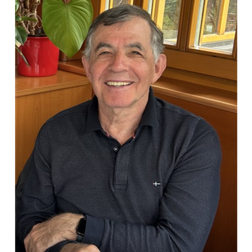
Ob 80-letnici Kemijskega inštituta se v posebni epizodi podkasta Papers Illuminated - Člankarnica ne posvečamo le suhoparnim številkam, temveč zgodbam, ki so gradile slovensko znanost. Naš gost je akademik prof. dr. Venčeslav Kaučič, ki je skozi desetletja soustvarjal njegovo pot. V pogovoru se vračamo v 70. in 80. leta, ko je bil ritem raziskovanja drugačen, oprema pa nepredstavljiva za današnje standarde. Ali je bila znanost nekoč bolj premišljena ali gre le za nostalgijo? Kako se je spremenil položaj slovenskega raziskovalca v tujini in kateri tehnološki preskok je profesorja najbolj presunil? Pridružite se nam pri raziskovanju preteklosti, ki je tlakovala pot sodobnim odkritjem, in prisluhnite razmišljanju o tem, kaj Kemijski inštitut definira danes – po osmih desetletjih premikanja meja.
#21: Shining Light on CO₂ Conversion - Petar Djinović & Miha Okorn
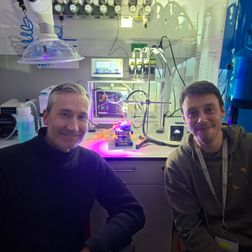
In this episode of Papers Illuminated – Člankarnica we are joined by researchers Petar Djinović and Miha Okorn from the Laboratory for Catalysis at the National Institute of Chemistry. Together they explore an intriguing question: can visible light help convert carbon dioxide into something useful? Their recent research shows how light can accelerate the catalytic conversion of CO₂ into carbon monoxide (CO), an important building block used in the chemical industry to produce fuels and chemicals. By combining heat and visible light in a process called photothermal catalysis, the team discovered that reactions can run faster and potentially more efficiently. But the story is not as simple as shining a light on a catalyst. Sometimes light helps and sometimes it actually makes the reaction worse. In this conversation, Petar and Miha explain how unexpected experimental results led them to rethink their assumptions, redesign their catalysts, and uncover the mechanisms behind light-assisted chemistry. The episode also dives into the experimental side of research: special light sources, sunglasses in the lab, catalytic materials and advanced techniques that allow scientists to observe catalytic reactions while they are happening. What you’ll learn in this episode: Why converting CO₂ into CO matters for industry and the carbon cycle How visible light can accelerate catalytic reactions Why experiments sometimes produce the opposite of what scientists expect What it takes to study chemical reactions in real time How new catalysts can make reactions more energy-efficient If you’re curious about how catalysis, energy, and light intersect and how fundamental research can open new technological possibilities this episode is for you. 🔬 Read the papers: https://www.sciencedirect.com/science/article/pii/S1385894725125291?via=ihub https://onlinelibrary.wiley.com/doi/10.1002/cey2.70102 __________ In the Papers Illuminated - Člankarnica podcast, together with researchers from the National Institute of Chemistry, we present interesting and accessible explanations of their latest discoveries, published in prestigious scientific journals. We invite you to follow us on social media and send us your questions, comments, and suggestions. https://www.ki.si/o-institutu/podkast/clankarnica/
#20: What makes some RNA more sticky than others? - Tajda Klobučar & Jona Novljan
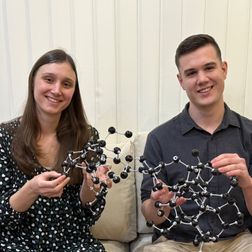
In this episode of Papers Illuminated – Člankarnica, we explore a new study revealing a hidden layer of cellular organization. Researchers Tajda Klobučar and Jona Novljan describe a newly identified class of “sticky” RNAs and the features that make them prone to condensation. These RNA networks can act like liquid command centers, helping cells organize reactions without physical walls. We discuss how these condensates form, why they matter for health and disease, and what this discovery means for our understanding of how cells build order out of chaos — plus plenty of behind-the-scenes stories from the research itself. 🔬 Read the paper: https://www.cell.com/cell-genomics/fulltext/S2666-979X(25)00321-0
#19: The Molecular Battles That Shape Our Food Supply - Nika Žibrat Kalanj
In the latest episode of Papers Illuminated – Člankarnica, we are joined by Nika Žibrat Kalanj from the National Institute of Chemistry, who takes us into the fascinating world of plant cells, membranes, and surprisingly clever microbial proteins. We start with the basics of what a cell membrane is and why it is much more than just a passive barrier. It’s a highly selective filter that protects the cell and controls what gets in and out. Nika explains how certain toxic proteins released into the environment by plant pathogens recognize these membranes, latch onto specific lipids, and ultimately damage plant cells. Along the way, we explore why some of these proteins are unusually flexible, allowing them to attack a wide range of plants, and how even small differences in membrane composition can have big biological consequences. The episode also offers a behind-the-scenes look at real research life, from extracting lipids directly from vegetables to navigating long periods of failed experiments before everything finally clicks. We place these discoveries into a broader context, discussing why plant research is often overlooked, how plant diseases threaten global food production, and why understanding membrane biology at the molecular level matters for the future of agriculture. An episode for anyone curious about the hidden battles at the surface of cells and why they matter far beyond the lab. 🔬 Read the paper: https://www.science.org/doi/10.1126/sciadv.adw6401 __________ In the Papers Illuminated - Člankarnica podcast, together with researchers from the National Institute of Chemistry, we present interesting and accessible explanations of their latest discoveries, published in prestigious scientific journals. We invite you to follow us on social media and send us your questions, comments, and suggestions. https://www.ki.si/o-institutu/podkast/clankarnica/
#18: How Cells Sense Danger - Elvira Boršič Mlinarič
IIn the latest episode of Papers Illuminated – Člankarnica we are joined by Elvira Boršič Mlinarič, who walks us through her recently published paper on NLRP3 inflammasome activation. We talk about how immune sensors detect danger in the cell, why where proteins gather can matter as much as what they sense, and how clustering on membranes or protein scaffolds triggers inflammatory responses. Together, we unpack complex molecular immunology concepts and place them into a broader biological and biomedical context, from fundamental mechanisms to disease relevance. An episode for anyone curious about how cells recognize trouble and respond. 🔬 Read the paper: https://www.nature.com/articles/s41467-025-60277-4 __________ In the Papers Illuminated - Člankarnica podcast, together with researchers from the National Institute of Chemistry, we present interesting and accessible explanations of their latest discoveries, published in prestigious scientific journals. We invite you to follow us on social media and send us your questions, comments, and suggestions. https://www.ki.si/o-institutu/podkast/clankarnica/
#17: Modeling Microbubbles and Gas Vesicles - Tilen Potisk
In this episode of Papers Illuminated – Člankarnica, we talk with Tilen Potisk, co-author of a cutting-edge paper that develops advanced particle-based models for microbubbles and nanoscale gas vesicles, two of the most important structures used in modern biomedical ultrasound. Tilen walks us through why encapsulated microbubbles and protein-based gas vesicles matter for imaging and drug delivery, what distinguishes them, and why modeling their mechanical behavior has been so challenging until now. This conversation opens up the nanoscale world behind ultrasound contrast agents and highlights how physics-based simulations can guide the design of next-generation therapeutic carriers. If you’re interested in soft matter physics, biomedicine, modeling, or simply enjoy clear explanations of complex science, you’ll love this episode. 🔬 Read the paper: https://pubs.acs.org/doi/10.1021/acsanm.5c02783 __________ In the Papers Illuminated - Člankarnica podcast, together with researchers from the National Institute of Chemistry, we present interesting and accessible explanations of their latest discoveries, published in prestigious scientific journals. We invite you to follow us on social media and send us your questions, comments, and suggestions. https://www.ki.si/o-institutu/podkast/clankarnica/
1 di 3