Catalyst by Camber Creek

Catalyst by Camber Creek

di Camber Creek
If “Renewable Computing” Works At Scale, There Might Not Need To Be A Data Center In Your Backyard
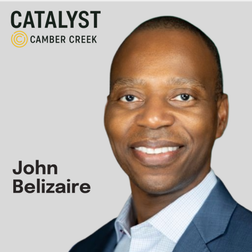
John Belizaire and his company's stock price have been on a roller coaster ride. Soluna connects clients with big computer processing needs to the energy to power those calculations. Because it was so heavily tied to Bitcoin mining, the share price has risen and fallen with the cryptocurrency and is now down more than 3000% from its 2021 peak. But John is convinced that he and his team are solving big problems, like how to efficiently power data centers. Instead of requiring utilities to build expensive new infrastructure in highly populated areas, Soluna locates its data centers next to renewable energy assets like wind farms, where the marginal cost of a kilowatt-hour is minuscule. And he spends a fair amount of his time on social media explaining this approach. It's fascinating. Even though Soluna is a public company, it leverages the strategies of startups and influencers to reach retail and institutional investors, because the price of energy is rising, but the value in capturing people's attention is even greater. 1:30 John’s early fascination with technology 4:32 Founding his first company 9:59 Soluna’s business model 18:11 Working with intermittent energy sources 21:05 Navigating crypto markets and Soluna's dramatic stock price swings 25:35 Pitching Soluna’s story to institutional and retail investors 29:12 The changing culture of investing. Navigating speculation, meme stocks, prediction markets, and the blurring line between investing and gambling. 34:20 Why John spends so much time creating educational content, including frequent videos on social media, to help investors understand both the energy industry and Soluna's role within it. 36:19 Traditional equity analysts play a smaller role than they once did 45:17 On the growing public resistance to data centers and how Soluna is responding: renewable computing
On The Internet, No One Knows You’re A Dog, Or A Bot—Except Proof
Esplicito
If you've ever notarized a document online instead of having to get in your car to drive to a notary public, you have Pat Kinsel to thank. And if one day your identity is not stolen after you purchase something on the web, you may have Pat and his team to thank for that, too. As Co-Founder of the identity-verification company Proof, formerly known as Notarize, Pat Kinsel gets animated about problems that are important but largely invisible, vulnerable moments during pivotal online interactions that can come back to haunt us if the right protections aren't in place. So he's building a trust layer for the internet with clients like Visa. Pat spoke with Camber Creek Managing Partner Jake Fingert about how he got started as an entrepreneur and working with partners who appreciate big and lucrative but overlooked problems. 1:19 Growing up in California on the Stanford campus, where his mother worked. Surrounded by entrepreneurs and venture capitalists from an early age, Pat says he always knew he wanted to build companies. 2:49 Launching his first company while in college after leaving school to take a job in financial technology. Although that first venture failed, it convinced him that entrepreneurship was the right path. 3:57 Joining Microsoft to learn how world-class technology companies operate. 8:22 Pat's next company, Spindle. Building social search technology, launching products ahead of competitors, and eventually selling the business to Twitter after solving a major data-classification challenge. 11:35 After working as a venture investor and seeing companies like Drizly and Lob modernize traditional services, he realized notarization could be transformed the same way. 14:03 Changing state laws to permit remote online notarization 21:26 Evolving from Notarize to Proof. Proof's core mission: allowing people to securely prove who they are and what they have authorized online. 28:03 Proof's partnership with Visa. Studying the history of Visa led Pat to recognize parallels between the evolution of payment security and the future of digital identity. 30:56 Deepfakes and AI impersonation are already more dangerous than most people appreciate. Pat argues individuals need cryptographic digital identities. 39:34 Did Pat always know online notarization would eventually become something bigger?
The Co-Writer of "The Hangover" Runs A Media Empire Out Of An Old High School In Syracuse
Esplicito
Jeremy Garelick just wants to make people laugh. But to sustain an incredibly successful career doing that, he has solved some pretty knotty problems. In his twenties, he didn't know how to write a script but transformed himself from a production assistant into a sought-after screenwriter in just a few years. He would go on to co-write The Hangover. When movie studios refused to make the kind of comedies he loves, because they thought the return on smaller films wasn't worth their effort, he purchased an old high school as a film set, kept costs low, and arranged his own financing. Today, he controls every aspect of production on a campus called American High. While Hollywood struggles in the streaming era and sees diminishing returns from old, overused properties, Garelick has figured out his own business model, how to grab attention with original stories, and when he needs to, bypass the studio system, all in the service of jokes. 3:13 Garelick describes growing up in New York with no entertainment industry connections. A conversation with classmates about unusual summer experiences convinced him that he could pursue something beyond the familiar world around him. 4:20 Persistence and cold outreach led him to an internship at Disney through a producer’s office. There, he fell in love with screenplays and began writing extensive notes on scripts despite having no formal training. 9:35 No one ever asked the interns for their opinion, yet only a few years later he became one of Hollywood’s highest-paid screenwriters. 11:44 Interning with television legends David Milch and Steven Bochco before joining the talent agency CAA 15:00 Arriving in Florida for the filming of Tigerland and realizing immediately that directing movies was what he wanted to do with his life 19:08 The Hangover 28:46 Writing for stars Vince Vaughn, Adam Sandler, Kevin Hart, and Owen Wilson 30:36 Realizing that high school movies share many production requirements and that controlling the location could dramatically reduce costs. After learning about New York’s film tax incentives, he searched online for schools and found the perfect property. 37:30 The origin story of Rolling Loud 40:45 Why he is not afraid of artificial intelligence 44:12 Partnering with Hulu 53:17 Garelick is a creative first and a talented, but accidental, entrepreneur out of necessity
Artificial Intelligence That Creates More Career-Defining Moments For Users
There are pivotal moments that have the potential to change so much. We take on new jobs, new projects, get promoted, start hiring for a key role. When the right people coordinate during these small windows of time, great things can happen. But we may not hear about them until the opportunity to connect, do business, or celebrate together has passed. A startup called Ren is fixing this by teeing up information about key moments happening to the people you know so that you can act. Camber Creek sat down with Ren Systems CEO Canay Deniz to talk about his mission to systematize serendipity, as he describes it, and why Camber Creek invested. 1:14 Canay shares his immigration story. Born in a refugee camp, he and his family received asylum in Switzerland, where he spent most of his childhood and received his education. 3:00 Canay describes joining an early-stage startup spun out of ETH Zurich, where he worked on predictive analytics for industrial equipment and telecommunications infrastructure. 7:30 On “engineered serendipity.” Many successful leaders repeatedly place themselves in situations where opportunity can emerge. 10:58 Contrasts between European and American attitudes toward risk, entrepreneurship, and innovation. 14:06 Ren’s central mission: helping people stop missing important moments in the lives of the people and organizations they care about. 17:00 Extensive customer interviews revealed a common problem among dealmakers: learning about important developments too late to act on them. 21:00 One user attributed a career-defining business win to information surfaced through Ren. 28:23 Why platforms like LinkedIn fall short for relationship management and business development. 32:24 Ren’s emphasis on simplicity, including AI-generated outreach suggestions and workflow automation. The platform learns a user’s communication style and becomes increasingly personalized over time. 39:00 Canay introduces one of Ren’s future initiatives: helping organizations determine the best person to facilitate an introduction to a target contact or company. 41:55 Avoiding generic-sounding AI-generated communication. In Canay’s view, purpose-built AI should amplify individuality rather than homogenize communication. 46:21 Ren’s security architecture isolates and protects sensitive customer information.
Her Organization Has A Perfect Track Record Preventing Maternal Deaths During Childbirth. But She Knows One Day It Won’t.
Aza Nedhari set out to solve an enormous problem facing women giving birth. The US has the highest rate of maternal death of any high-income country, and within the US, that rate is by far the highest for Black women. Researchers estimate that most of these deaths are preventable. To fix this, Aza helped invent a new type of community health worker, a perinatal community health worker, coordinating across medical professionals and generations of family members to reshape the environment around expecting mothers. Over more than a decade, her organization, Mamatoto Village, has a perfect track record: four thousand families and zero maternal deaths. But what kind of toll does perfection take when navigating complex health systems, economic inequality, and bias? And how important is it to celebrate now when you know that eventually, statistically, you will lose at least one? 1:25 Mamatoto Village’s history and the story behind its name 4:45 The stark maternal mortality statistics facing Black women and why these disparities persist across income and education levels. 7:30 The unique challenges facing families in Washington, DC’s Wards 7 and 8, where maternal mortality rates are especially severe 9:20 Aza traces the roots of today’s maternal health inequities through American history, public policy, and healthcare system design. 11:45 Black patients often must advocate forcefully to receive appropriate healthcare and be heard by providers. 18:55 Serena Williams’ experience gave these disparities a national audience. 23:10 Mamatoto Village’s intervention model and how it operates on the ground. It’s a three-generation approach, educating not only mothers but also partners, grandparents, and extended family members. 25:30 The Perinatal Community Health Worker credential that Aza and her co-founder created 31:20 How do healthcare providers respond to Mamatoto’s involvement with patients? 34:45 Mamatoto Village’s extraordinary track record: over 4,000 families served with zero maternal deaths. But should they continue to tout that number? 44:40 The first time they met, Lionel made Aza cry. 46:15 Aza explains the immense personal weight of leading a social change organization and carrying community stories. 49:45 Aza reflects on sustainable leadership practices and the need for strong support systems around founders and social entrepreneurs. 55:00 Mamatoto Village’s proprietary electronic health record platform 58:40 Aza shares future initiatives, including a new birth center east of the river in Washington, DC
The Founder of Facebook Marketplace Says Customers Will Tell You What Your Product Is—If You’ll Listen
If you can turn your business into a platform, you probably should. There are amazing multi-billion-dollar products out there, but any one product has limits. Companies that run platforms, by contrast, cultivate ecosystems that make it possible for other businesses and many products to thrive. That is a much bigger market. Deb Liu knows a ton about platforms. It took years of advocacy and strategy, but she literally invented Facebook Marketplace and ran Facebook’s entire platform group, helping monetize the different ways users wanted to leverage the network. Now she’s founded an AI startup helping small businesses go from zero to fully automated. Like platforms, Deb is multifaceted, so this conversation also goes deep on payments, the trust gaps that have to be filled to make online transactions possible, and some of the differences between running public and private companies. 1:40 Deb argues that any product with scale should become a platform that enables others to build businesses. 2:50 How APIs and developer ecosystems expanded Facebook’s reach 4:45 Observing user behavior and enabling emerging use cases 5:00 PayPal’s unexpected adoption by eBay sellers became its defining business opportunity. 7:00 Closing the trust gap in e-commerce enabled trillions of dollars in transactions. 8:50 PayPal was fundamentally a risk management company as much as a payments company. 11:50 Deb praises Starbucks’ rewards ecosystem as one of the strongest examples of customer lock-in and loyalty and argues that more brands should emulate it. 15:20 inKind as an example of how a platform uses stored value to drive consumer demand 20:00 Deb reflects on the pressure public companies face to manage earnings and expectations. 25:10 Why Deb chose to lead Ancestry. 27:45 How her engineering background shaped her systems-oriented mindset. 29:00 Everyone has a hidden superpower that often feels effortless to them. 32:10 Why Deb intentionally questions her own intuition. 35:10 Her new startup, Ember AI. 40:40 Deb compares today’s AI moment to the early internet and mobile eras. 43:00 Deb predicts that “fast eats slow” will define the next phase of competition. 43:40 Purpose is the fuel that sustains long-term entrepreneurship.
The Man Who Helped Salesforce Prepare For The AI Era Has Advice For The Rest Of Us
After the public launch of ChatGPT, Salesforce knew that AI agents were coming for it. AI agents are smart, autonomous programs set loose on an infinite number of specific tasks. The danger was that this giant company that revolutionized business software and popularized the very concept of software as a service might be overtaken by the next big thing. One of the people it turned to to help prevent that was Prasad Thammineni. Now Prasad has his own company, Agentman, which is focused on helping organizations deploy AI agents that can automate sophisticated workflows without requiring users to write code. In Prasad's view, yes, AI agents might be as disruptive as many people fear. But he's also convinced that, like Salesforce, we can adapt. It's still early enough that we can all choose to be pioneers. 1:30 Prasad reflects on his entrepreneurial journey and explains why he repeatedly returns to building startups. 2:55 How Salesforce recognized that AI agents could threaten traditional SaaS business models 4:00 The early limitations of copilots and why customer expectations initially exceeded technical capabilities 6:30 From copilots to agents 7:20 The creation of Salesforce’s Frontier AI team to prototype technologies expected to mature a year later 11:10 Prasad argues that large technology companies must lead publicly even while products remain unfinished. 17:20 How he landed the leadership role at Salesforce.\ 19:20 Using AI to write the business model 23:50 Building AgentMan 28:40 Why AgentMan chose healthcare as its initial vertical 30:40 Healthcare organizations accelerated technology adoption after COVID. 31:40 Focusing on small practices rather than large hospital systems 38:40 Are end-users ready to build their own agents? 40:40 Are concerns about AI-driven job displacement justified?
If You Want To Improve Your Community, Think Like A Developer
If you want to improve your local community, think like a developer. Federal government programs spur billions of dollars of investment in real estate. For example, Opportunity Zones alone account for more than $14 billion per year in private investment driven by tax incentives. But how do these programs work? What are we getting for all that spending? And how do the economic realities of building things in the US incentivize where money is and isn't placed? Brett Theodos can answer all of this. He's Director of the Center for Local Finance and Growth at the Urban Institute and a leading researcher in place-based development. Whether you're a mission-driven investor, a for-profit real estate owner, or a neighborhood advocate, looking at community through the lens of capital, as Brett does in this conversation, is incredibly helpful. He spoke with Camber Creek Partner Alexandra Nicoletti and Head of Platform Lionel Foster. 1:40 Brett reflects on growing up in Oak Park, Illinois, and how living in a walkable, racially integrated community shaped his worldview. 4:00 The physical design of communities profoundly shapes social, economic, and political outcomes. 06:30 Brett evaluates the largest government-funded real estate investment programs in the country, including Opportunity Zones, New Markets Tax Credits, Choice Neighborhoods, and Community Development Block Grants. What are we getting for the billions we’re spending? 09:10 The US is pretty good at subsidizing new buildings in poor areas and supporting market-rate development in affluent ones, but struggles everywhere in between. 13:30 US housing and community development policy has increasingly shifted from direct spending toward tax incentives. 15:30 How Opportunity Zones became one of the least targeted federal economic development programs in US history 25:10 Tax-credit programs create significant barriers to entry because of legal and financial complexity. 27:00 Brett praises smaller developers willing to invest in uncertain or declining markets for undertaking socially valuable work. 29:00 Financing gaps, regulation, labor shortages, tariffs, and demographic shifts continue to constrain housing supply. 30:00 The unrealized promise of automation and prefabrication in lowering construction costs 31:00 Policymakers underestimate the human and entrepreneurial realities developers face when deciding whether to pursue projects.
How Kevin Bacon Helped Spark a Social Impact Movement
At the University of Maryland, the actor Kevin Bacon funded a “Shark Tank”-style competition for young social entrepreneurs. Instead of investing in skincare brands or gourmet cookies, judges heard pitches from students who wanted to right some wrongs in the world and help people. That competition grew into the University of Maryland's Do Good Institute, which supports classes and research and uses social entrepreneurship to help students learn, lead, and grow. Camber Creek spoke with Jenny Cox and Nathan Dietz from the Institute about what happens to a giant college campus when an entrepreneurial mindset is taught, encouraged, and rewarded. 1:20 The Do Good Institute is a hub for social impact providing funding, education, and resources to students. 2:10 The Institute’s research function and focus on measuring the impact of social entrepreneurship programs 3:30 Expanding programming, from early student engagement to post-graduate entrepreneurial support 6:30 A student-led effort to reduce campus food waste led to the creation of the first Do Good Challenge. 8:00 Collaborating with Kevin Bacon’s foundation 12:50 Social entrepreneurship follows the same disciplined, problem-solving mindset as traditional entrepreneurship. 19:00 Intermediate and advanced offerings, including incubators, accelerators, and seed funding programs. 21:15 Approximately 10–15% of University of Maryland College Park students engage directly with Do Good programming. 29:30 Students increasingly want both financial success and social impact. 41:45 The Do Good Institute wants to do its part to counteract a broader trend of declining interpersonal connection
Nurses Have Seen It All—And They See What’s Coming
Nurses are on the front lines of public health. They work in hospitals and sometimes in people’s homes. They’re trained to meet people where they are and communicate across patients, doctors, and policymakers. Nurses are, in effect, some of the medical field’s best diplomats. And today, those skills are being put to the test. The US population is aging at exactly the same time the federal government is cutting health research funding and creating an environment that incentivizes top talent from around the world to study or work elsewhere. One of the foremost leaders navigating this difficult inflection point is Sarah Szanton, dean of one of the top-ranked schools of nursing in the world at Johns Hopkins University. Sarah sees what’s coming for all of us. The current problems in US healthcare are real, but nurses like Sarah stand out as a source of hope. 1:20 There are mounting pressures on nursing education, healthcare, and research. 4:20 The ripple effects of federal funding delays across faculty, staff, and students 6:45 Recent policy changes are disrupting a system optimized for high-level research output. 11:10 Sarah’s path from policy work on Capitol Hill to becoming a nurse. Nurses’ role as communicators and translators across stakeholders drew her into the profession. 14:00 The historical shift that made nursing a predominantly female profession and current efforts to make the field more inclusive. 16:25 The role of immigration in sustaining the US nursing workforce 19:00 Nurses are a big part of the response to an aging US population. 21:55 Community-based healthcare innovations driven by nursing and neighborhood nursing 28:15 Lionel reflects on the importance of communication in healthcare, sharing personal experiences with loss. 30:50 Nurses are trained to support not just patients but families through critical moments. 34:30 Funding and immigration shifts may push talent to other countries.
1 di 4