Between Two Chairs - Demystifying Commercial Real Estate

Between Two Chairs - Demystifying Commercial Real Estate

di Fernando Arencibia, Jr. and Jennifer Wollmann
Stagione 4
The Data Behind Miami's Boom: An Interview with Ana Bozovic
Esplicito
In this episode of Between Two Chairs, Fernando Arencibia and Jennifer Wollmann sit down with Ana Bozovic, founder of Analytics Miami and MiamiDealSheet.com, for a data-driven conversation on where the Miami real estate market is headed next. The discussion moves from Ana’s background in mathematics, physics, and competitive athletics to the macro forces reshaping South Florida: domestic wealth migration, luxury transaction volume, pre-construction opacity, replacement-cost pressure, and the widening gap between headline narratives and market reality. As hosts of Between Two Chairs and leaders at Avanti Way Commercial, the premier commercial real estate brokerage in Miami and South East Florida, Fernando and Jennifer guide listeners through the strategic questions investors should ask before buying into South East Florida commercial real estate. The episode highlights why trusted data, segment-specific analysis, and non-reactive decision-making matter in a market still early in its long-term transformation. For investors, developers, brokers, and business owners, this conversation offers a grounded framework for evaluating Miami’s next phase of growth. Key Takeaways · Miami market shift is being driven by macro forces, domestic wealth migration, and long-term confidence in South Florida’s trajectory. · Luxury real estate demand remains strongest at the highest price-per-square-foot segments, where new and prime product continues to attract capital. · Pre-construction pipeline visibility is a major challenge for consumers because many projects are not easily searchable through traditional listing channels. · Replacement-cost pressure is reshaping affordability, especially as land and construction costs make new lower-priced condo inventory difficult to deliver. · Data-driven investing requires moving beyond headlines, lagging indicators, and bias-confirming narratives to understand true supply-and-demand directionality.
Won’t You Be My Broker? Mr. Rogers’ Lessons for Commercial Real Estate
In this episode of Between Two Chairs: Demystifying Commercial Real Estate, Fernando Arencibia Jr. and Jennifer Wollmann take the Kindergarten Series in an unexpected direction: Mr. Rogers’ Neighborhood. What starts as a playful tribute to Fred Rogers becomes a practical conversation about the core skills that make great commercial real estate professionals stand out—curiosity, listening, consistency, authenticity, execution, and kindness. Jennifer makes the case that Mr. Rogers may have been the “secret greatest CRE broker to ever live,” because he modeled the very behaviors brokers, investors, and advisors need every day: showing up in the neighborhood, learning how businesses operate, asking better questions, making people feel seen, and building trust one conversation at a time. Key Takeaways · Curiosity is a competitive advantage. The best CRE professionals ask questions to understand people, businesses, operations, and submarkets—not just to confirm what they already think. · Relationships outlast transactions. Trust is built one conversation at a time, and the strongest brokers invest in communities rather than chasing one-off deals. · Listening reveals the real problem. Great advisors pause, ask follow-up questions, and uncover the client’s true pain points before offering solutions. · Execution beats endless preparation. Training, conferences, and planning matter, but progress happens when you apply what you learn and take action. · Consistency builds trust. Clients value predictability: returning calls, communicating clearly, telling the truth, and following through. · Set expectations early and often. Whether in brokerage, investing, or build-outs, people want to know what to expect before they move through a complex process. · Kindness is not weakness. Treating people with dignity can strengthen negotiations, deepen empathy, and help advisors guide clients more effectively. Why CRE Professionals Should Listen This conversation reframes commercial real estate success around fundamentals that are easy to discuss but hard to practice consistently. Brokers, investors, business owners, and anyone building a market presence will hear practical reminders about being present in the community, understanding clients’ operations, communicating value, and becoming a trusted guide instead of a transactional salesperson. Some of the Mr Rogers' episodes referenced in this episode: Mr Rogers talks about curiosity Haircut episode Crayon episode Super Bowl 2026 Lady Gaga's rendition of “Won’t You Be My Neighbor?” with the incomparable Lady Gaga Mr Rogers addresses Congress
Retail Follows Rooftops: An Interview With Jose Almirall and Laura Salom of Luxury Builder Porta Negra
In this episode of Between Two Chairs: Demystifying Commercial Real Estate, hosts Fernando Arencibia Jr. and Jennifer Wollmann sit down with Jose Almirall and Laura Salom, the husband-and-wife team behind Porta Negra Design and Build, to explore how luxury residential development shapes the future of Miami commercial real estate. From South Miami and Coral Gables to Pinecrest and the City of Miami, the conversation connects rooftops, retail demand, permitting complexity, construction costs, buyer psychology, and the relationship-driven mindset required to succeed in one of the most competitive real estate markets in the country. Why Miami Commercial Real Estate Brokers Should Listen Top Miami commercial real estate brokers know that retail follows rooftops. This episode offers an inside look at how high-end residential construction, luxury homebuyer demand, local permitting, and neighborhood transformation influence commercial property opportunities across South Florida. Jose and Laura share how they built a data-driven, relationship-centered design-build company over 10 years, evolving from South Miami flips into large-scale custom homes and ultra-luxury new construction.
Miami Commercial Real Estate Market Update: Q2 2026 Trends
In this episode of Between Two Chairs, Fernando Arencibia Jr. and Jennifer Wollmann break down the Q2 2026 South Florida commercial real estate market and what it means for Miami commercial real estate brokers, investors, landlords, tenants, and developers. Using the latest South Florida commercial market data, they discuss why sales volume may be down while fundamentals remain strong, where institutional capital is moving, and why Miami-Dade, Broward, and Palm Beach continue to stand out nationally. The conversation covers the continued flight to quality across office, industrial, retail, and multifamily; the rise of Broward County as a stronger commercial real estate connector; the impact of new construction pipelines; and the opportunities emerging in Class B and Class C office buildings, small industrial lots, and value-add commercial assets throughout Southeast Florida. Key Topics Covered · Q2 2026 South Florida commercial real estate sales trends · Why South Florida commercial sales declined while market fundamentals stayed strong · Miami office market performance · Industrial real estate rent moderation · Retail real estate strength · Multifamily construction, rent pressure, absorption, and long-term demand · Broward County’s acceleration as a commercial real estate investment market · Flight to quality and investor demand for well-located commercial assets · Opportunities in Class B and Class C office conversions and improvements · · What brokers and investors should monitor in Q3 and Q4 2026 Miami Association of Realtors Commercial Report Miami Commercial Office Report
How Can Commercial Realtors Build Community Through Social Media?
In this episode of Between Two Chairs, hosts Fernando Arencibia and Jennifer Wollmann explore how authentic storytelling, hyperlocal content, and community-building can transform a real estate brand. Joined by Miami realtor Lynley Ciorobea, the conversation moves from career reinvention and social media consistency to the deeper business value of relationships, collaboration, and showing up with purpose. Lynley Ciorobea is the founder of Lynley Residential Group at Real Broker LLC, specializing in seller representation in Coral Gables, South Miami, Pinecrest, Palmetto Bay, and Coconut Grove. Through practical examples like “Car Confessions,” Coffee and Convos, and viral neighborhood updates, the episode reveals why local expertise is built through repetition, generosity, and trust—not just listings and sales stats. This discussion reinforces a core market truth: the strongest real estate professionals are not only transaction advisors, but community connectors. Investors, brokers, and business owners interested in Miami and South East Florida commercial real estate will hear why consistent visibility, authentic content, and collaborative networks create long-term authority in a competitive market. 3. Key Takeaways · Hyperlocal marketing builds trust faster than generic real estate content because it speaks directly to the neighborhoods and communities people care about. · Community building is a long-term business strategy: relationships with agents, local leaders, clients, and business owners compound over time. · Social media consistency matters more than perfection; repeated visibility creates recognition, credibility, and inbound opportunities. · Miami market storytelling works best when complex real estate updates are made simple, visual, and shareable. Commercial real estate authority grows when brokers show local fluency, collaborate across networks, and contribute value before asking for business. Connect with Lynley Ciorobea! LinkedIn → https://www.linkedin.com/in/lcrealestate/ Instagram → https://www.instagram.com/lynleyresidential/ Website → https://lynleyresidential.com/ YouTube → https://www.youtube.com/channel/UCAv81z_uM3tPwgPq_t8Z0FA/featured
Relationship Building in Commercial Real Estate: The CRE Organizations Every Broker Should Know
Real estate is a relationship business—and in commercial real estate, relationships can be the difference between seeing a deal after everyone else and hearing about a market shift before it becomes public knowledge. In this episode of Between Two Chairs: Demystifying Commercial Real Estate, Fernando Arencibia Jr. and Jennifer Wollmann kick off August’s relationship-building theme by exploring the professional communities, associations, and local networks that help commercial real estate brokers, investors, lenders, appraisers, developers, property managers, attorneys, designers, and service providers build trust, share market intelligence, and serve clients better. They discuss why commercial real estate networking is especially important in markets like South Florida, where information on lease terms, off-market opportunities, neighborhood trends, asset-class shifts, and transaction history often moves through trusted broker-to-broker conversations rather than public platforms. The conversation highlights national and international commercial real estate organizations—including the National Association of Realtors, CCIM Institute, SIOR, ICSC, ULI, CREW Network, IREM, and the Realtors Land Institute—along with South Florida resources such as Miami Realtors Commercial and CIASF, the Commercial & Industrial Association of South Florida. In This Episode Learn: · Why relationship building is essential in commercial real estate brokerage · How professional communities help new brokers understand local markets faster · Why broker-to-broker relationships matter for lease comps, sale comps, off-market opportunities, and neighborhood insight · The value of commercial real estate associations such as CCIM, SIOR, ICSC, ULI, CREW, IREM, RLI, Miami Realtors Commercial, and CIASF · How networking events, market tours, lunch-and-learns, deal-making sessions, and local chapters create real business value · Why giving information, making introductions, and being a resource matters as much as asking for help · How South Florida’s commercial real estate ecosystem supports brokers, investors, lenders, appraisers, inspectors, developers, and service providers
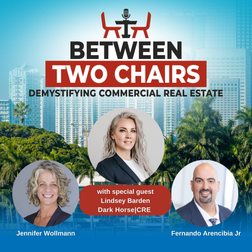
How Commercial Real Estate Brokers Help Retail Businesses Expand | Tenant Representation, Site Selection & Franchise Growth with Lindsey Barden
What separates an average commercial real estate broker from one who becomes an indispensable advisor? In this episode of Between Two Chairs: Demystifying Commercial Real Estate, hosts Jennifer Wollmann and Fernando Arencibia Jr. sit down with Lindsey Barden, Principal Broker and Co-Founder of Dark Horse CRE, to discuss one of the most specialized areas of commercial real estate brokerage: retail tenant representation. Whether you're a commercial real estate broker in Miami, South Florida, or anywhere in the country, you'll discover how successful tenant representatives help businesses expand, identify profitable retail locations, analyze demographics beyond simple data reports, and become trusted long-term advisors instead of transaction facilitators. Lindsey shares how she built a successful retail brokerage by specializing in franchise expansion, site selection, and helping multi-unit operators strategically grow across new markets. Rather than relying solely on demographic reports, she explains why understanding traffic flow, customer behavior, local market knowledge, and future development patterns often matter more than population statistics alone. In this episode you'll learn: How commercial real estate brokers create long-term value through tenant representation Why retail tenant representation differs from landlord representation How franchise brands select new markets What makes an ideal retail location Why local market expertise often beats demographic reports The importance of traffic patterns, curb cuts, visibility, and accessibility How commercial real estate professionals develop lasting client relationships Strategies for choosing a profitable niche in commercial real estate How retail brokers use ICSC and Retail Live to build national relationships Why authenticity on social media can become a powerful business development strategy What do figure skating, time management, horseback riding, and co-tenancy have to do with commercial real estate Who to work with if you are looking for retail space in Knoxville or East Tennessee (Lindsey, of course). Jennifer and Fernando also explore the importance of specialization in commercial real estate, how retail brokers evaluate communities beyond traditional market reports, and why becoming part of your client's growth strategy leads to stronger long-term relationships and repeat business. Quote of the episode: "Ride through the messy." Lindsey Barden
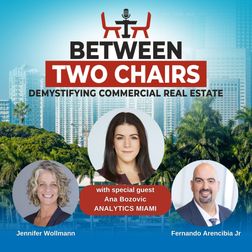
What's A Buy Box and How to Build One Before You Buy Commercial Real Estate
In this episode of Between Two Chairs: Demystifying Commercial Real Estate, we break down one of the most important steps for any real estate investor: defining your “buy box.” Instead of chasing anything that looks like a “good deal,” we explain how investors can create a clear investment framework based on goals, asset class, location, price range, property quality, management expectations, and desired returns. The conversation explores why a buy box helps investors move from vague interest to focused decision-making. We discuss how an investor’s “why,” risk tolerance, available time, market knowledge, and personal experience should shape the types of properties they pursue. Topics Covered · How to define a commercial real estate buy box · The difference between chasing deals and following an investment philosophy · How asset class affects management intensity and risk · Why location analysis goes beyond liking a market · The role of demographics, zoning, and economic drivers · How to evaluate price beyond the purchase number · Why flexibility matters in real estate investing · How operational experience can create value · Lessons from Airbnb, multifamily, industrial, self-storage, hotels, land, and retail · How brokers can help investors clarify what they actually want to buy Successful investing starts before the search begins. By defining a buy box, investors can narrow their focus, learn their market, evaluate opportunities more objectively, and act with confidence when the right deal appears. The best buy box is not just about numbers; it should also reflect lifestyle goals, management capacity, risk tolerance, and the investor’s own strengths. Whether someone is buying a long-term rental, a short-term rental, an industrial box, a self-storage facility, or a small hotel, the key is to know how the property makes money, what could go wrong, what alternatives exist, and how the investor’s own experience can improve performance. If you are interested in investing in real estate and want help defining your buy box, reach out to Fernando and Jennifer to talk through the questions they use when evaluating their own investment criteria.
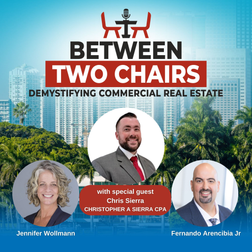
Tax Strategies and Retirement Planning for Real Estate Agents: Interview with Chris Sierra CPA
A good friend of ours called one day and said, "You have to do a podcast episode on how to retire from real estate so agents and brokers don't have to work until their 90's -- unless they are able and want to." Gus Fonte an industrial broker and investor that we interviewed, knows the value of investing in what he knows and will be able to retire whenever he wants. We decided to interview Chris Sierra, CPA,to have him highlight the main steps to take at different stages of your real estate career. To set yourself up for a successful retirement as a real estate agenthere are some of his basic tips: structure your business properly, organize your finances, and invest consistently for the long term. To find out exactly how to do each of those steps, and what other ones to take at different stages of your career, pull up a chair and join us!
Office-to-Residential Conversions and Adaptive Reuse in South Florida
From office space to living space, the conversation over converting unused office space has been a topic of conversation since COVID. In this episode, we look at office to residential conversions in South Florida via two distinct projects: The Hazel in Doral and The Hyve at Dadeland. The conversation highlights how highest and best use, land size, zoning changes, construction costs, floor plate challenges, parking, walkability, transit access, and surrounding amenities all influence whether an office building is preserved, converted, or torn down. Overall, the episode frames these projects as major bets on South Florida’s evolving real estate market, especially as developers look for ways to turn aging office properties into housing while better connecting them to the communities around them.
1 di 18