Aviation Education

Aviation Education

di MKD
Stagione 1
Mastering the Challenges of Aviation
Aviation students often face challenging subjects that demand strong technical skills. Aerodynamics, with its complex physics and math, is frequently cited as a difficult area. Aircraft systems and propulsion also require in-depth understanding of mechanical and electronic components. Navigation, flight planning, air law, and human factors further contribute to the rigor of aviation education. These subjects are difficult because of complex principles, real-world applications, and the need to stay updated with rapidly advancing technology. Success requires dedication and a solid grounding in science and technology.
Airport Traffic Patterns
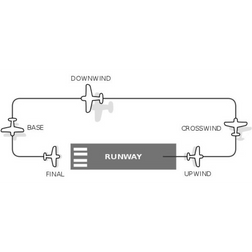
Airport traffic patterns provide a structured method for aircraft to land or depart from airports, especially those without air traffic control. These patterns consist of standardized legs, including upwind, crosswind, downwind, base, and final approach, typically flown at 1,000 feet AGL. While standard patterns involve left turns, some airports use right-hand patterns due to local conditions. Pilots announce their position and intentions using the Common Traffic Advisory Frequency (CTAF) at non-towered airports, and must maintain awareness of other aircraft. Factors like wind and other traffic may necessitate adjustments to the pattern. Adhering to these patterns ensures safety and efficiency in the airspace.
METAR Weather Reports Explained
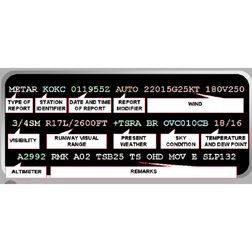
METAR reports are standardized aviation weather observations. These reports come in two forms: routine (METAR) and special (SPECI), issued hourly or when significant changes occur, respectively. A METAR contains specific elements presented in a defined order, including report type, station identifier, date/time, wind, visibility, weather phenomena, sky conditions, temperature/dew point, altimeter setting, and remarks. This information informs pilots about current conditions. It includes specifics like wind direction/speed, visibility in statute miles, cloud cover, temperature in Celsius, and altimeter settings. Remarks provide additional details, such as pressure changes or specific weather events not covered in other sections.
Left Turning Tendencies
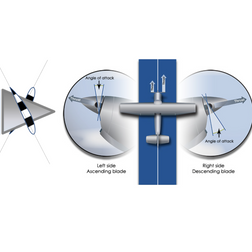
Aircraft propellers generate thrust, but also introduce unwanted forces that pilots must manage. These forces, known as left-turning tendencies, include torque, caused by the engine turning the prop, and spiraling slipstream, where propwash hits the rudder. P-factor arises from uneven lift distribution on the propeller blades during climbs, and gyroscopic precession occurs when forces are applied to the spinning propeller. Each of these factors creates a unique challenge for pilots to counteract through control inputs to maintain stable flight. Conventional-gear aircraft experience gyroscopic forces more than tricycle-gear.
Hardest Subjects in Aviation
The podcast explores the most challenging subjects in aviation, identifying aerodynamics, aircraft systems and avionics, propulsion, navigation and flight planning, air law and regulations, and human factors as particularly demanding. These areas require strong foundations in physics, mathematics, and technology, along with meticulous attention to detail due to the high-stakes nature of aviation. The difficulty stems from the complexity of the concepts, their real-world applications, and the constantly evolving technological landscape. Mastering these subjects is crucial for success in the aviation field.
Spatial Disorientation and Visual Illusions in Flight
Spatial disorientation in flight, a leading cause of aviation accidents, arises from sensory conflicts between visual, vestibular, and proprioceptive inputs. Visual illusions, such as those caused by runway slope or lighting conditions, exacerbate this problem. The podcast details various types of visual illusions and their effects on pilot perception, emphasizing the importance of instrument reliance for safe flight. Methods for preventing spatial disorientation through training and instrument proficiency are outlined, highlighting the crucial role of instrument flying in mitigating risks associated with sensory deception. Ultimately, the podcast stresses the critical importance of instrument reliance and training to prevent spatial disorientation accidents.
Guide to Aviation
Aviation studies encompass the design, operation, and management of aircraft and air travel. The field is multifaceted, incorporating engineering, air traffic control, safety regulations, and environmental considerations. Educational programs offer training in various aviation specializations, including aircraft systems, air traffic management, and aviation law. Career paths range from piloting and air traffic control to managerial and research roles within the aviation industry. Many universities provide undergraduate and graduate degree programs in this area, often incorporating practical experience and prior learning.
5 C's - Lost Aircraft Procedures
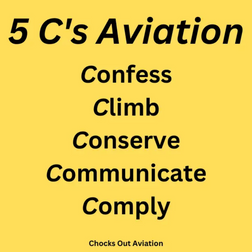
This podcast details procedures for pilots who become lost in flight. Key strategies include the "Five C's"—Circle, Confess, Climb, Conserve, and Communicate—to regain situational awareness and request assistance. The document outlines using available resources, such as air traffic control, electronic flight bags, and navigation aids (VOR/NDB), to determine location and plot a safe course. Common errors made by lost pilots are also highlighted, emphasizing the importance of fuel management, proper use of navigational tools, and timely communication. Ultimately, the text aims to guide pilots toward safe resolution of in-flight disorientation.
Basic Med
BasicMed is a program allowing U.S. pilots to fly without a full FAA medical certificate, provided they meet specific requirements. These requirements include completing a medical exam with a state-licensed physician, finishing an online medical course (like those offered by AOPA or the Mayo Clinic), and adhering to operational limitations on aircraft type, passenger numbers, flight altitude, and purpose. The program, established through congressional legislation (FESSA and the FAA Reauthorization Act of 2024), offers relief from traditional FAA medical certification for certain pilots, including private pilots, flight instructors, and examiners. However, pilots with certain mental health, neurological, or cardiovascular conditions may require special issuances before qualifying for BasicMed.
Aircraft Performance/Weight & Balance
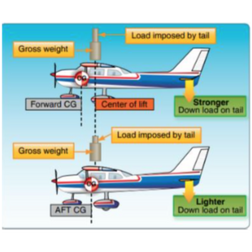
This podcast outlines the crucial concepts of airplane weight and balance. Key terms like center of gravity (CG), reference datum, and moment are defined, along with their impact on aircraft performance. Weight limits (maximum takeoff, landing, ramp, and zero fuel weight) are explained, emphasizing their importance for safe operation. CG location affects stability and controllability, highlighting the differences between forward and aft CG. Finally, it underscores the pilot's responsibility to ensure the aircraft remains within its weight and balance limits before each flight, referencing relevant regulations.
1 di 3