Automotive industry Quality and Engineering

Automotive industry Quality and Engineering

di Veljko Massimo Plavsic
Stagione 1
Three AI Revelations That Are Redefining Car Safety
Introduction: Beyond Buckles and Airbags For decades, the story of car safety has been one of reaction. Seatbelts restrain you during an impact. Airbags cushion you. Anti-lock brakes engage when you're already skidding. These are brilliant, life-saving technologies, but they all share one thing in common: they are designed to mitigate a disaster that is already underway. Now, a new paradigm is emerging, shifting safety from reactive to predictive. By leveraging artificial intelligence to analyze immense volumes of driving data, engineers are uncovering surprising truths about the root causes of accidents. A new automotive safety initiative, Project Sentinel, is at the forefront of this shift, and its findings challenge some of our most fundamental assumptions about what it means to be safe on the road. This article explores the three most counter-intuitive takeaways, revealing how AI is learning to prevent accidents before they even begin. -------------------------------------------------------------------------------- 1. The Over-Confidence Trap: Why "Perfect" Drivers Can Be a Liability The first surprising discovery turns a common assumption on its head: drivers with spotless records can sometimes pose a greater risk than those with minor infractions. Project Sentinel's AI found that a history devoid of incidents can foster a complacency that leads to a critical weakness when facing sudden, unpredictable hazards—what the project team calls "Black Swan" events. The "why" is rooted in hard data. The project's AI found that drivers with zero logged infractions over a five-year simulation had a 15% slower reaction time to these "Black Swan" events compared to drivers with a history of minor, infrequent infractions. This "Complacency Curve," as the project calls it, challenges not just insurance risk models but the very way we design training and licensing for an automated future. This insight is impactful because it challenges our very definition of a "safe driver," shifting the focus from a perfect historical record to the necessity of constant situational awareness. -------------------------------------------------------------------------------- 2. The Urban Illusion: Slow Speeds Don't Mean Low Risk Most drivers feel a sense of relative safety when crawling through slow-moving city traffic. The speeds are low, and control feels high. However, Project Sentinel’s data reveals this feeling to be a dangerous illusion. The data shows an extremely high frequency of low-speed collisions in dense urban environments. The reason is cognitive overload. While the speed is low, the number of complex, unpredictable variables a driver must track is immense, averaging 12 to 15 dynamic variables simultaneously, from pedestrians to cyclists and intersections. This creates a staggering mental burden. A key finding from the project highlights the sheer complexity of this environment, even for a machine: "The sheer density of unpredictable variables in urban environments makes low-speed navigation one of the most computationally challenging problems for an AI." If navigating this chaos is one of the most difficult tasks for a powerful AI, it represents an even greater cognitive strain for a human driver. This is precisely why this seemingly "safe" environment is actually fraught with a high probability of risk. -------------------------------------------------------------------------------- 3. Smart Data Over Big Data: The Myth of "More is Better"
Automotive Cybersecurity Risk Analysis
This document provides a systematic analysis of security threats, potential impacts, and mitigation strategies for the modern connected vehicle platform, based on the project's foundational documentation. -------------------------------------------------------------------------------- 1.0 Introduction: The Evolving Threat Landscape for Connected Vehicles The strategic importance of cybersecurity in the automotive sector has grown exponentially. As modern vehicles become more complex and interconnected, their integration of advanced electronics, wireless communication, and external networks creates a vast and evolving attack surface. This increasing connectivity, while enabling revolutionary features, introduces new and significant security challenges that must be addressed proactively throughout the entire vehicle lifecycle. The core objectives of this security project, as outlined in the foundational documentation, are to establish a comprehensive and resilient security posture. These objectives include: • Identification of potential vulnerabilities across all electronic systems and communication interfaces. • Development of robust countermeasures designed to prevent, detect, and respond to cyber threats. • Compliance with international standards, specifically adhering to the rigorous framework established by ISO/SAE 21434. • Integration of security solutions in a manner that does not compromise vehicle performance, safety, or user experience. A robust risk analysis is therefore contingent on a clear understanding of the system's foundational security architecture, which defines the boundaries and interfaces to be protected. -------------------------------------------------------------------------------- 2.0 System Architecture and Security Posture A multi-layered, defense-in-depth security architecture is fundamental to protecting the modern vehicle. This approach ensures that a compromise in one layer does not lead to a systemic failure. This section details the core components of the proposed system, each designed to protect a specific domain of the vehicle's electronic infrastructure and to function as part of an integrated whole. 2.1 Central Security Gateway The Central Security Gateway functions as the vehicle's central firewall and network router. Its primary responsibility is to filter and monitor all data traffic exchanged between different network domains, such as infotainment, telematics, and powertrain. By enforcing strict, policy-based communication rules, it isolates critical systems and prevents unauthorized messages from propagating. It serves as the first line of defense for the internal networks detailed in Section 2.3 and relies on cryptographic identities managed by the HSM (Section 2.2) to authenticate traffic. 2.2 Hardware Security Module (HSM)
Toxic spreadsheet
The Automotive Industry Crisis: A Failure of Vision and a Call for Radical Transformation Executive Summary The global automotive sector is facing a profound existential crisis that extends beyond technological disruption. While Western automakers have invested billions in electrification and digital innovations, they have critically neglected their most vital asset: human capital. This has resulted in a severe skills gap, delayed projects, compromised quality, and a rapid erosion of market share and profitability. The core of the crisis is not a lack of technology, but a failure of strategic vision and a deep-seated managerial resistance to change. In stark contrast, China has executed a methodical, decade-long industrial strategy, creating an integrated ecosystem of specialized education, battery production, and government support. This has granted Chinese firms a dominant position, with superior technology, faster development cycles (24-30 months vs. the West's 48-60), and significantly lower production costs. The primary obstacle to a Western recovery is internal. An over-reliance on obsolete tools like spreadsheets, which consume 30-40% of technical professionals' time, combined with a management culture that protects the status quo, is paralyzing innovation. The solution requires a "360-degree industrial transition"—a radical overhaul of processes, culture, and skills. This involves eliminating outdated workflows, embracing end-to-end digitalization, and aggressively adopting Artificial Intelligence not as a threat, but as a tool to amplify human capability. Survival is contingent on the courage to abandon failed past practices and execute this comprehensive transformation without delay.
Ford Bronco Seat Bolt Defect: Internal Risk Analysis
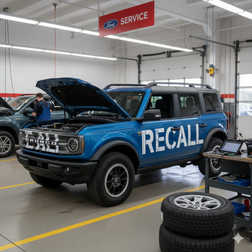
Ford Bronco Seat Bolt Defect: Internal Risk Analysis 1.0 Introduction and Purpose This document provides an objective, data-driven risk analysis of the recent National Highway Traffic Safety Administration (NHTSA) recall concerning the Ford Bronco front seat pivot bolt. The purpose of this internal analysis is to synthesize the available information regarding the defect's nature, scope, and potential impact. The findings herein are intended to inform strategic decision-making across key business functions, including safety compliance, operational logistics, and brand management, ensuring a coordinated and effective corporate response. 2.0 Defect Characterization A precise definition of a product defect is strategically fundamental. A clear technical understanding forms the basis for developing an effective engineering response, communicating accurately with regulatory bodies like the NHTSA, and mitigating potential legal and financial exposure. The issue at the core of this recall involves a specific structural component failure within the vehicle's cabin, with a technical breakdown as follows: • Component: The specific part identified as faulty is the height-adjust pivot bolt located in the front driver and passenger seats. • Failure Mode: The nature of the defect is a critical lapse in assembly and quality control, where the bolt may be loose or completely dislodged from the seat frame. • Quality Control Assessment: The presence of a loose structural bolt on a new vehicle represents a significant quality control failure. As noted in the source material, such a defect "simply shouldn't happen" and points to a critical lapse in manufacturing or inspection protocols. This specific technical failure has a widespread impact, affecting a significant number of recently produced vehicles. 3.0 Scope and Scale of the Recall Quantifying the scope of a recall is essential for strategic planning. These metrics directly inform logistical requirements for the service campaign, guide financial provisioning for repair costs, shape the customer communication strategy, and ultimately define the overall magnitude of the business impact. The core statistics for this recall, as documented by the NHTSA and Ford, are presented below.
Honda's Family Haulers Under Fire: Feds Investigate Over 500,000 Odyssey and Pilot Models for Major Safety Flaws
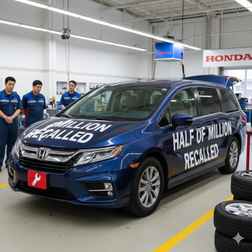
Honda's Family Haulers Under Fire: Feds Investigate Over 500,000 Odyssey and Pilot Models for Major Safety Flaws Introduction: The Unsettling Truth Behind a Trusted Family Brand For decades, the Honda brand has been synonymous with reliability and trust, a go-to choice for families seeking safe, dependable transportation. Vehicles like the Honda Odyssey minivan and the Pilot SUV are staples in suburban driveways, purchased with the expectation that they will protect the people that matter most. It’s a reputation built on years of engineering and customer satisfaction. That well-earned trust is now facing a serious challenge. The National Highway Traffic Safety Administration (NHTSA) has announced two official investigations into more than 583,000 of these popular family vehicles for significant safety concerns. While these are not yet recalls, they represent a critical development that every Odyssey and Pilot owner needs to understand, as the issues involve fundamental safety systems: airbags and seat belts. 1. A Safety Feature That's Dangerously Proactive: The Odyssey's Airbag Issue The first investigation centers on a deeply alarming problem: the inadvertent deployment of side airbags in 2018-2022 Honda Odysseys. According to complaints filed with the NHTSA, these airbags can deploy suddenly and without warning while the vehicle is in motion. In some cases, the trigger was as common as driving over a pothole. This potential issue, which could affect 441,002 vehicles, is particularly troubling for a model that has been Honda's most recalled vehicle over the past decade. The NHTSA has already received 18 complaints, including two reports of injuries. The agency's official statement underscores the severity of the risk: The complaints allege that the inadvertent deployments occurred while the vehicle was in motion. Consumers allege no warning prior to air bag deployment. Some allegations state that the deployment(s) occurred after traveling over a pothole or similar roadway feature. Inadvertent deployment of air bags while a vehicle is in motion can lead to injury of vehicle occupants or driver distraction, which may result in a collision. This is a profoundly concerning development. A safety feature designed to save lives in a collision is potentially causing the very distraction and


The Hypercar and the Screw: A Case Study on the Aston Martin Valkyrie Recall
The Hypercar and the Screw: A Case Study on the Aston Martin Valkyrie Recall In base a 1 fonte The Hypercar and the Screw: A Case Study on the Aston Martin Valkyrie Recall Introduction: The Devil in the Details The Aston Martin Valkyrie is more than just a car; it's a masterpiece of automotive engineering, a hypercar that pushes the boundaries of technology and performance. When a machine this complex and meticulously built is announced, the world takes notice. It's even more surprising, then, when such a vehicle is recalled not for a complex system failure, but for a component so seemingly mundane: a screw. This analysis explores how a tiny, incorrectly sized part can trigger a cascade of critical failures in a multi-million dollar machine, offering a powerful lesson on the absolute importance of quality control. -------------------------------------------------------------------------------- 1.0 The Recall in Numbers: Key Facts The official recall notice, monitored by Germany's Federal Motor Transport Authority (KBA), outlines the essential scope of the issue. Detail Information Make Aston Martin Model Valkyrie Number of Vehicles Affected 137 Production Period 16. 6. 2020 – 23. 12. 2024 Official KBA Reference 15104R Manufacturer Code RA-18-2044 These figures provide the what, who, and when of the recall, but the technical explanation reveals the true severity of the problem. -------------------------------------------------------------------------------- 2.0 The Chain Reaction: How a Small Screw Creates a Big Problem The defect at the heart of the Valkyrie recall demonstrates a classic chain reaction, where a single, small error escalates into a potentially catastrophic system failure. 2.1 The Root Cause: An Issue of Millimeters The point of origin for this multi-million-dollar recall is a fundamental error of dimensioning: the screws used on the fuse box's locking plate were manufactured to be too long. In the tightly packaged architecture of a hypercar, where every gram of weight and cubic centimeter of space is meticulously optimized, there is no tolerance for such a deviation. This seemingly minor discrepancy is the starting point for a series of dangerous consequences. 2.2 The Domino Effect: From Damaged Wires to System Failure The oversized screws set off a dangerous sequence of events, with each stage presenting a greater risk to the vehicle and its occupants. 1. Initial Damage: The excess length of the screws causes them to press into and damage the vehicle's wiring harness. This harness is the nervous system of the car, routing power and data to all critical components and transmitting everything from critical sensor readings to driver control inputs.
Case Study Analysis: Ferrari 296 Recall (NHTSA ID: 25V716000)
Case Study Analysis: Ferrari 296 Recall (NHTSA ID: 25V716000) 1.0 Executive Overview This formal case study analyzes the Ferrari North America recall (NHTSA ID: 25V716000), deconstructing the technical defect, potential risks, and prescribed remedy based exclusively on the official filing. The analysis begins with the foundational identification and scope of the recall. 2.0 Recall Identification and Scope The accurate identification of a recall's scope establishes the fundamental parameters of the event, defining the responsible manufacturer, the affected vehicle population, and the component systems involved. These details for recall 25V716000 are as follows: Identifier Details Manufacturer Ferrari North America, Inc. NHTSA ID Number 25V716000 Manufacturer Recall Number RC 93 Affected Components ENGINE AND ENGINE COOLING Affected Vehicles 2025 296 GTS and 296 GTB Potential Number of Units Affected 6 With the specific vehicles and limited number of units identified, the analysis can now focus on the underlying technical problem that necessitated this recall action. 3.0 Technical Problem Analysis The defect's root cause, a failure in assembly-line quality control, highlights a critical vulnerability in the vehicle's engine and cooling system. Ferrari's investigation pinpointed a specific mechanical failure as the source of the defect. The technical defect stems from an assembly process error. The core issue is precisely described as follows: The nut securing the oil filter connection to the turbocharger oil feed pipes was tightened incorrectly and may cause an oil leak. The direct consequence of this defect is a potential oil leak from a critical engine component. This single point of failure introduces a significant vulnerability within the engine and engine cooling system. This oil leak transforms a minor assembly defect into a critical fire hazard. 4.0 Risk Assessment and Safety Implications An assessment of a defect's consequences determines its severity and the required urgency of the response. In this case, the mechanical failure creates a direct and severe risk to vehicle occupants, necessitating an immediate owner directive. The primary risk associated with the potential oil leak is severe. As stated directly in the recall documentation, "An oil leak near a combustible source increases the risk of a fire." This elevates the defect from a potential performance issue to a critical safety hazard. In response to this significant risk, a "Do Not Drive Warning" has been issued to all owners of the affected vehicles. This measure is reserved for defects with a high potential for severe consequences and is a critical step to mitigate the identified fire risk. The directive instructs owners to cease operating their vehicles immediately until a repair can be performed, prioritizing owner safety until the official remedy is implemented. With the immediate risk contained through this directive, the focus shifts to the official remedy required to make the vehicles safe for operation. 5.0 Corrective Action and Remediation Plan The remediation plan for this recall is defined by a clear corrective action, a no-cost provision for owners, and a structured communication strategy. This plan is designed to ensure full compliance and restore vehicle safety. The official remedy is a multi-step process designed to correct the defect: 1. Immediate Owner Action: Owners are advised not to drive their vehicles until they have been repaired. 2. Official Repair Procedure: Ferrari will verify tightness and retighten the attachment nut. 3. Cost to Owner: The remedy will be provided free of charge.
Case Study: The Audi High-Voltage Battery Recall
Case Study: The Audi High-Voltage Battery Recall 1. Introduction: Overview of the Safety Recall This case study examines a significant safety recall initiated by Audi for its Q7, A8, and Q8 models. The core issue involves the high-voltage battery, which was found to have a defect that could cause the cell modules to overheat during the charging process, creating a serious risk of fire. This recall prompted a worldwide response to address the potential hazard in thousands of vehicles. Now that we have a high-level overview, let's examine the specific technical failure that prompted this safety action. 2. The Core Problem: A High-Voltage Hazard The Defect Explained The technical defect at the heart of this recall is a conditional vulnerability within the vehicle's power system. The cell modules of the high-voltage battery are at risk of overheating, but this danger specifically manifests during the charging cycle. This overheating condition elevates the situation from a minor malfunction to a critical safety issue, creating a tangible risk of fire. Understanding the seriousness of the defect, it is crucial to identify the exact scope of vehicles impacted by this recall. 3. Scope and Impact: Identifying the Affected Vehicles Recall Identification Details Category Details Affected Models Q7, A8, and Q8 Production Period 22 August 2019 – 31 July 2024 Total Vehicles Recalled (Worldwide) 18,652 With the population of affected vehicles clearly defined, let's turn to the corrective measures Audi implemented to resolve the issue. 4. The Official Solution and Administrative Action 4.1. The Corrective Measure The official remedy prescribed by Audi is a software-based solution. To rectify the overheating risk, the software for the high-voltage battery must be updated. This corrective action is required to be performed at an authorized Audi workshop to ensure it is implemented correctly. 4.2. Regulatory Oversight The recall is being officially monitored to ensure compliance and tracking. The key reference codes are listed below: • Monitoring Authority: Kraftfahrt-Bundesamt (KBA), the German Federal Motor Transport Authority • KBA Reference Number: 15663R • Internal Manufacturer Code: 93QQ This case of a software-based fix for a hardware risk provides several important lessons for understanding modern vehicle safety.
A Single Corroded Bolt Grounds Over 166,000 Toyotas: Key Takeaways from the Proace Recall
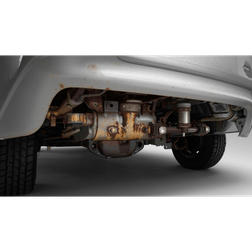
A Single Corroded Bolt Grounds Over 166,000 Toyotas: Key Takeaways from the Proace Recall In base a 1 fonte A Single Corroded Bolt Grounds Over 166,000 Toyotas: Key Takeaways from the Proace Recall We place an implicit trust in our vehicles every day. We assume the complex machinery carrying us to work, school, and home is engineered to a faultless standard. But sometimes, a massive safety issue doesn't come from a complex system failure but from a single, tiny, and overlooked component. This article breaks down the recent global recall of over 166,000 Toyota Proace vans and distills the most important and surprising lessons for every car owner. 1. The Smallest Flaw Can Create the Biggest Risk The core defect is deceptively simple: Toyota is recalling 166,018 Proace and Proace Verso vehicles because of corrosion on the bushing of the front control arm. Over time, this corrosion can weaken and ultimately cause the arm's mounting bolt to break. The potential consequence of this failure is severe, leading to a sudden and dangerous loss of vehicle control. As the official recall notice states: A breakage may result in unpredictable vehicle behaviour. Fortunately, the solution is straightforward: at an authorized workshop, the affected control arm bolts and bushings will be replaced. This situation is a powerful lesson that a component costing just a few dollars can lead to catastrophic failure, proving that diligent safety checks are non-negotiable for any vehicle owner. 2. A Six-Year Window Puts Countless Drivers on Alert A lesson in long-term wear, the recall applies to vehicles manufactured between March 3, 2016, and July 8, 2022. This extensive six-year production window is a direct result of the nature of the defect. Unlike an immediate manufacturing error, corrosion is a slow, insidious process that can take years to manifest as a critical failure. This is precisely why such a long timeframe is implicated, putting owners of both new and older models on alert. Here are the key recall details: • Make: Toyota • Models: Proace, Proace Verso • Number of Vehicles: 166,018 • Production Period: 3 March 2016 – 8 July 2022 • KBA Reference: 15442R • Manufacturer Code: CI25-016 Because the timeframe is so broad, owners cannot rely on the vehicle's age alone to determine if they are affected. It is essential to check the specific details against your own vehicle information.
The Toyota Production System: A Strategic Framework for Executive Leadership
Introduction: Reframing TPS Beyond a Manufacturing Toolkit The Toyota Production System (TPS) is frequently miscategorized as a niche methodology for improving factory floor efficiency. This view misses its profound strategic relevance. TPS is not merely a toolkit; it is a comprehensive economic system designed to solve the most fundamental challenges modern organizations face. This briefing deconstructs the persistent misunderstandings that hinder TPS adoption and reframes it as an essential economic framework for executive leadership. Despite its proven success, TPS remains elusive for the vast majority of the 240,000+ U.S. companies with over 50 employees. The system was introduced to the wider world in 1990 through the book The Machine that Changed the World, which coined the term "lean manufacturing." The primary barrier to adoption lies in the term itself. James Womack, a co-author of the book, later expressed regret, recognizing that "lean manufacturing" inadvertently framed TPS as a collection of tools—the diagnosis of a widespread misunderstanding. This led Jeffrey Liker, in his seminal work, to deliberately choose the title The Toyota Way—the prescription to correct this view by emphasizing the system's deep philosophical underpinnings. The failure to grasp this holistic nature is precisely why so many "lean" initiatives stall. This report will now explore the specific consequences of this misunderstanding. 2.0 The Foundational Misunderstanding: Why "Lean" Initiatives Stall Understanding common failure patterns is of paramount strategic importance for any leadership team considering a significant organizational transformation. This section dissects why so many well-intentioned lean implementations fail to deliver on their transformative potential, providing a crucial diagnostic for leaders aiming to avoid the same pitfalls. According to Olivier LaRue, President of Ydatum, the critical insight is that most lean implementations fall short because they are treated as "add-ons" to an organization's existing, and fundamentally incompatible, mass production system. These entrenched systems are architected around a single principle: batch-orientation, driven by the goal of reducing unit costs through economies of scale. The entire management structure, financial reporting, and operational cadence are built to support this fundamentally inflexible model. When lean tools are simply layered onto these incompatible systems without changing the core philosophy or management behaviors, the outcome is predictable. The effort generates widespread frustration, delivers only minimal, localized improvements, and is eventually abandoned. To succeed, leaders must move beyond this failed "add-on" approach and embrace what TPS truly is: a fully integrated system. 3.0 Deconstructing TPS: An Integrated System for Value Creation
1 di 9