World's Greatest Dad with Ali & Neil

World's Greatest Dad with Ali & Neil

por Abel Bunny Entertainment
Private Equity Is Coming For Your $20 Bagel...also Dad Mailbag
Are private equity firms coming for your bagels? And when did a bagel with lox become a $20 meal?This week on World’s Greatest Dad, Ali Khan and Neil Padover dive into the great American bagel debate: New York vs. everywhere else, what makes a great bagel, the rising cost of eating out, homemade lox, and why investors are suddenly betting big on premium bagel shops. Then it’s time for the Dad Mailbag. Ali and Neil tackle some very real parenting questions: What do you do when your child wants to quit a sport you love? How honest should parents be with kids about money? And how do you balance needing alone time with being the house where your kids always want their friends to hang out? Plus: school fundraising auctions gone wildly out of control, private equity dads, Neil’s questionable cinnamon-raisin-bagel-with-whitefish choices, Ali getting auctioned off for charity, Seventh Heaven nostalgia, Jessica Biel at Tufts, and one extremely embarrassing Beverly Mitchell Cameo. World’s Greatest Dad is a parenting and fatherhood podcast hosted by Ali Khan and Neil Padover, featuring honest conversations about raising kids, marriage, family life, food, pop culture and the strange experience of trying to be a good dad. Subscribe for new episodes and clips from World’s Greatest Dad.
Alex Trippier On The Invisible Work of Parenting That Most Dads Miss

What if being a great dad isn't about spending more time with your kids but about noticing the behind the scenes work you've never seen? This week we're joined by parenting coach, writer, and father of three Alex Trippier for one of our most eye-opening conversations yet. We talk about: what "mental load" actually means why dads often feel like they're trying their hardest and moms still feel overwhelmed raising sons differently than previous generations why showing real appreciation changes marriages and why fatherhood forces you to grow up in ways nothing else can. Whether you're a new dad, seasoned parent, or just trying to be a better partner, this conversation will change how you think about parenting. If you're curious about Alex's work you can learn more here: https://www.skool.com/be-a-happier-parent/about
What Movies Can Teach Us About Being Dads — Allan Shedlin Returns!

Allan Shedlin is back! Our first returning guest joins us as his Daddying Film Festival and Forum heads into its sixth year in Washington, DC. Allan tells us how a movie about a fractured father son relationship inspired him to create a festival dedicated to using film to start conversations about fatherhood and why he believes some of the most powerful stories aren't about perfect dads, but ordinary fathers simply trying to show up. We talk about the incredible films that have come through the festival, including one made by a 17-year-old girl reconnecting with the father she hadn't seen in eight years, why dads are so often portrayed as either buffoons or villains in movies, the small everyday rituals kids actually remember, and why sometimes being a good dad is really just as simple as having breakfast together every Saturday. Plus: Allan is about to become a great-grandfather, the festival has added a Best Podcast category, and yes… we're going to have to submit World's Greatest Dad.
He Quit Banking to Raise His Daughter: Derek Mitti on Parenting, Content & Career Pivot
Derek Mitti never planned to become one of the internet’s most beloved dads but a career pivot from banking to full-time fatherhood changed everything. In this episode, he shares how documenting life with his daughter Tallulah (aka the “internet’s nice girl”) led to viral success. Derek opens up about growing up in Zambia, his complicated relationship with his own father, and how it shaped the dad he is today. Plus he shares the emotional story of becoming a father, navigating fertility challenges, and intentionally creating a different childhood than the one he experienced. We also dive into the realities of balancing content creation as Daddy Dearest, with being present as a parent. If you’re interested in modern fatherhood, viral parenting content, or career reinvention, this episode delivers.
How to Talk to Your Kids About Death
Little Kids, Big Questions: How to Talk to Your Kids About Death Death is one of the most difficult topics parents will ever have to discuss and one of the most inevitable. Whether it’s the loss of a loved one, a pet, or a question that comes unexpectedly during an ordinary day, children eventually confront the concept of mortality. For many parents, those moments bring anxiety, uncertainty, and a deep fear of saying the wrong thing. In this episode, we explore how children understand death at different developmental stages and why their questions are often less about mortality and more about safety and permanence.We share real parenting moments including the experience of being caught off guard and struggling to explain complex realities in age-appropriate ways. Plus we discuss how parents can balance honesty with emotional readiness. We also examine the importance of language, the challenges of discussing sensitive causes of death such as suicide, and why conversations about death unfold over time rather than in a single moment. Want The "Full Little Kids, Big Questions" Toolkit? Visit out Substack to download the companion toolkit for scripts, conversation starters, and age-specific guidance to help you navigate hard conversations with confidence.
How To Talk To Your Kids About Money
Money is one of those topics that gets complicated fast because before you can teach your kids about it, you have to reckon with your own baggage around it. In this episode, Neil and Ali get personal about their own relationships with money, from allowances and video game regret to the anxiety of being surrounded by families who have more, and what all of that quietly teaches our kids without us ever saying a word. The conversation covers what the research actually shows: that kids start forming beliefs about fairness, status, and value way earlier than most parents expect, and that how you talk about money (or don't) shapes their relationship with it for life. Neil and Ali dig into why parental modeling matters more than any lesson you could sit your kid down to deliver, how scarcity language can create anxiety, and why saying no sometimes is one of the more loving financial decisions you can make. Listeners will come away with an age-by-age breakdown from the three-year-old who wants everything in the Target dollar section to the teenager whose identity is quietly tangled up in what they have and what they don't. Plus practical tools for building financial literacy at every stage. And stick around for the Elon Musk tangent at the end may or may not be the most clarifying part of the whole episode.
How to Talk to Your Kids About Body Image
Little Kids, Big Questions: How to Talk to Your Kids About Body Image Body image is one of the most personal, and loaded topics a parent can face, partly because most of us are still carrying our own baggage. In this episode, Neil and Ali get real about growing up in the 80s and 90s, an era of diet culture, locker room taunts, and clean-your-plate rules rooted in real scarcity, and how those messages quietly shaped the way they feel about their bodies today. The conversation explores what kids actually hear (from parents, peers, and media) and how even well-meaning comments can plant seeds of shame. Neil and Ali discuss the difference between teaching healthy habits and fostering fear around food, why body positivity is more than a buzzword, and how diet culture has simply shapeshifted from Jenny Craig to Instagram fitness bros. Listeners will come away with a practical toolkit: age-by-age guidance from toddlers through teenagers, language that focuses on what bodies can do rather than how they look, and strategies for raising kids whose sense of self-worth isn't tangled up in the size of their jeans. Most importantly, this episode is a reminder that the most powerful thing a parent can do is make home a place where every body belongs.
How to Talk to Your Kids About Homelessness, Inequality & Poverty

Little Kids, Big Questions: How to Talk to Your Kids About Homelessness, Inequality & Poverty Children notice inequality earlier than many adults realize. Seeing someone experiencing homelessness, noticing differences between neighborhoods, or asking why some people have more than others can lead to difficult questions that parents aren’t always prepared to answer. In this episode, we explore how to talk about poverty and inequality in ways that build empathy without shame or fear. We discuss the difference between individual circumstances and systemic factors, how family values and cultural experiences shape perspectives, and how parents can help children understand fairness, privilege, and compassion. We also address practical questions like whether to give money to someone asking for help and how to model kindness in everyday life. Listeners will gain language for explaining complex social realities in age-appropriate ways, strategies for encouraging empathy and awareness, and reassurance that these conversations help kids develop moral understanding and social responsibility.
How to Talk to Your Kids About Drugs & Alcohol
Little Kids, Big Questions: How to Talk to Your Kids About Drugs & Alcohol At some point, kids notice substances...whether it’s alcohol at home, marijuana in public, or references in media and peer conversations. Many parents feel unsure how to address the topic without sounding alarmist, hypocritical, or overly strict. In this episode, we explore how to approach conversations about drugs and alcohol with honesty, nuance, and credibility. We discuss the difference between fear-based messaging and education, how parental modeling influences kids’ decisions, and why curiosity and open dialogue are more protective than lectures. We also talk about adolescent brain development, risk-taking behavior, and how to create an environment where kids feel safe asking questions or seeking help. Parents will leave with tools for having ongoing conversations about substances, strategies for building trust and critical thinking, and reassurance that prevention begins with connection, not control.
How to Talk to Your Kids About Mental Health
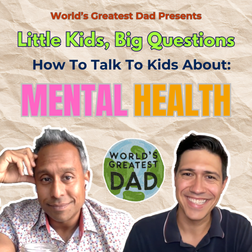
Little Kids, Big Questions: How to Talk to Your Kids About Mental Health Mental health conversations are becoming more common but they can still feel intimidating for parents. Kids experience anxiety, sadness, stress, and emotional challenges, and many parents aren’t sure how to recognize when something is normal versus when support is needed. In this episode, we explore how to talk about emotions, mental health, and coping in ways that normalize feelings without minimizing them. We discuss emotional vocabulary, modeling regulation, the impact of stress and environment, and how to create a home where kids feel safe expressing what they’re going through. We also talk about when to seek professional help and how to reduce stigma around therapy and mental health care. Parents will walk away with practical tools for supporting emotional development, language for validating feelings, and reassurance that mental health is simply part of overall health, not something to fear or hide.
1 de 9