ウルセーうちん○

ウルセーうちん○

por KōdenTeruaki
Temporada 1

Chap 3. Escaping the underworld in a burial shroud
IA
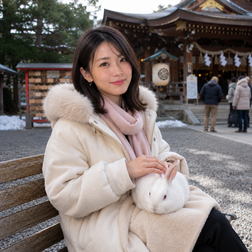
Analysis of ウルセーうちん○ Chapter 3: 第三話: 仙土地: ヒーローのネ申客死 "In this episode, 30-year-old aspiring novelist Ōwa Nadeko, reluctantly returns to her hometown for a New Year's shrine visit while struggling with severe depression and feelings of failure. After a breathing exercise triggers an out-of-body experience, she is drawn into the Japanese underworld, where a talking rabbit enlists her to rescue captive yōkai imprisoned by a faction of oni operating a grotesque breeding camp. Exploiting the unique status of her living spirit, Nadeshiko orchestrates a daring prison break, risking herself to save both the rabbit family and an imprisoned dragon yōkai, whose gratitude ultimately secures the captives' freedom. Returned to the world of the living before she can lose herself permanently in the spirit realm, she awakens with a renewed appreciation for the fragile bonds connecting her to others, symbolized by a matching rabbit amulet shared with her cousin. Blending psychological drama, Japanese mythology, and dark fantasy, the episode explores depression, self-worth, bodily autonomy, and the rediscovery of purpose through compassion and human connection."

Chap 2. Magical Girl Cosplay Versus Military Simulators
IA
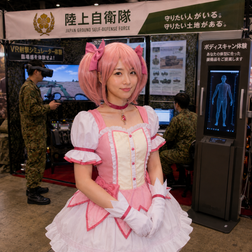
Analysis of ウルセーうちん○ Chapter 2 第二話: 「門」 攻撃は最大の防御なりだって。ホームアドバンテージはどうですか? "The episode follows 30-year-old freelance journalist and aspiring novelist Ōwa Nadeko, writing under the pen name Pink Great Peace, as she covers the Tokyo GameKet convention while dressed in an absurd magical-girl cosplay. Assigned to test a Japan Ground Self-Defense Force VR recruitment simulator, she becomes caught in a chaotic encounter with a group of tech-savvy middle schoolers who effortlessly defeat the military inside the simulation by exploiting game mechanics rather than following its intended rules. Although the episode humorously contrasts rigid institutions with agile digital natives, its conclusion turns sharply critical: Nadeko's article is censored by her editor, her professional identity is revealed to be owned by her publisher, and even her attempt to share the truth independently online is erased by automated copyright enforcement. Beneath its comic surface, the episode examines the limits of individual agency in an age where military authority, corporate bureaucracy, intellectual property, and digital platforms exert greater control over identity and information than physical force alone."

Chap 1. A novelist's debt to giant cigarette beetles
IA
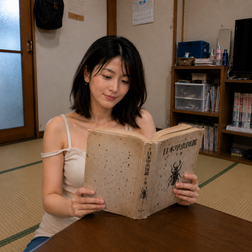
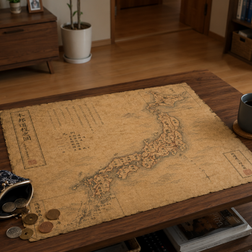
Analysis of ウルセーうちん○ Chapter 1: 第一話:児童労働搾取○・資本○な本の虫 "This opening episode follows the struggling aspiring novelist Ōwa Nadeko, whose attempt to rid her apartment of cigarette beetles leads to a surreal otherworldly ordeal where she is forced into a grotesque textbook-producing sweatshop run by a giant anthropomorphic insect. Through this darkly comic isekai premise, the story satirizes exploitative labor systems, debt traps, and the precarious existence of creative workers, as Nadeko endures child labor, predatory economics, imprisonment, and even execution after her writing inspires a workers' rebellion. Blending absurd fantasy with biting social criticism, the episode contrasts the protagonist's dream of becoming a novelist with the harsh realities of poverty, artistic rejection, and financial insecurity, ultimately suggesting that the true nightmare is not the fantasy world itself, but the economic conditions awaiting her upon returning to reality."

Chap 15-16. Walking across Japan after an AI layoff

Bonus
IA
Longer analysis of ウルセーうちん○ Chapters 15: 第十五話: ウルセーうちん○ 【前編】 and 16: 第十六話: ウルセーうちん○ 【後編】 . "This episode chronicles the collapse of Ōwa Nadeko's old identity and the uncertain first steps toward creating a new one. After refusing to accept a humiliating salary cut following her employer's decision to replace much of its writing staff with generative AI, she loses not only her job but also the pen name and creative identity she spent a decade building. Forced to leave Tokyo, she packs up her life with the help of close friends, confronts unresolved guilt by visiting the memorial of someone from her past, and returns to her hometown in Akita before setting out on a journey across Japan. Along the way, the episode contrasts the cold logic of corporate life with the warmth of personal relationships, explores the emotional burden of reinvention, and transforms an ordinary road trip into a symbolic passage from loss and regret toward an unwritten future, culminating in Nadeko's decision to reinvent herself once again as a VTuber documenting Japan's culture and landscapes."

Chaps 12-14. How Gothic lace shields a fractured mind

Bonus
IA
Longer analysis of ウルセーうちん○ Chapters 12 第十二話: 東遊記: 温故知新書 【前編】; 13 第十三話: 東遊記: 温故知新書 【中編】 and 14 第十四話: 東遊記: 温故知新書 【後編】. "This episode follows Ōwa Nadeko, a 31-year-old aspiring novelist who uses an elaborate Gothic Lolita persona as psychological armor, as her friends stage a bizarre “kidnapping” that doubles as an intervention, forcing her out of her controlled, performative identity and into a confrontation with her inner world. Blindfolded and transported from the hyper-modern chaos of Tokyo into the remote mountains, she undergoes a sensory and psychological transition that culminates in her arrival at an eerie, decaying mansion—an externalization of her subconscious. Through this orchestrated descent, the episode explores how the human mind constructs defensive “fortresses” to suppress trauma, using surreal narrative elements and shifting tones—from absurd comedy to psychological tension—to depict the fragile boundary between identity and repression. Ultimately, the story frames Nadeko’s journey as the beginning of an unavoidable reckoning, where confronting deeply buried memories becomes necessary for integrating her fractured sense of self."

Chap 11. Trapped in a broken human washing machine
Bonus
IA
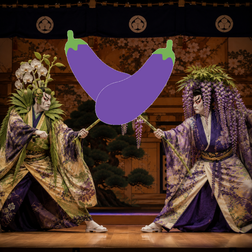
Longer analysis of ウルセーうちん○ Chapter 11: 第十一話: 永合い:三途の川で散ずる. "This episode centers on Ōwa Nadeko, a struggling writer and gig worker, who takes her cousin Toyo to an ultra-modern Tokyo bathhouse where even the most basic routines have been transformed by excessive “smart” technology. What starts as a humorous critique of overengineered convenience—contrasting simple, practical tools with expensive, data-driven alternatives—quickly turns unsettling when Nadeko agrees to test a fully automated human washing machine for a paid review. The device, designed to optimize hygiene through invasive biometric monitoring and AI control, traps her inside after a network failure, revealing the risks of systems that rely entirely on constant connectivity. As Nadeko’s situation becomes increasingly claustrophobic and precarious, the episode underscores its central themes: the dangers of technological overreach, the commodification of personal data, and the vulnerability of workers operating within precarious, platform-driven economies."

Chap 10. Invasive Ragweed and the Flower Class War

Bonus
Explícito
IA
Longer analysis of ウルセーうちん○ Chapter 10: 第十話: 色々な色っぽい色艶. "This episode begins in the grounded, almost mundane setting of a massive early-morning flower market, where Ōwa Nadeko, a struggling novelist working as a florist’s assistant, is introduced to the hidden biological violence underpinning the beauty of cultivated flowers—particularly through her boss Luna’s severe ragweed-induced hay fever, which reframes plant life as a system of aggressive reproduction rather than passive decoration. That conceptual lens becomes literal when Nadeko is abruptly pulled out of reality and into a microscopic, anthropomorphized plant world, where ecological dynamics—pollination strategies, invasive species, and parasitism—manifest as social hierarchies, conflict, and exploitation. As the narrative escalates, the initially abstract distinction between controlled, marketable flora and invasive, wind-driven species like ragweed transforms into a central antagonistic force, driving both physical danger and thematic critique. The episode ultimately fuses botanical science with surreal fantasy to expose parallels between natural competition and human systems of inequality, using Nadeko’s disorientation as the vehicle for a dense, allegorical exploration of survival, dominance, and systemic imbalance."

Chap 9. Pink Flame and the Flour Bazooka Nightmare

Bonus
IA
Longer analysis ウルセーうちん○ of Chapter 9: 第九話: 私たちは愛弗廉じゃ〜. "This episode presents a sharply comic yet structurally revealing descent into chaos, following Ōwa Nadeko—a struggling aspiring novelist working as a low-tier costumed performer—through what begins as a routine children’s entertainment gig and rapidly escalates into a multilayered crisis involving workplace precarity, corporate pressure, and physical absurdity. Framed through Nadeko’s analytically inclined perspective, the narrative dissects the rigid, quasi-feudal hierarchy of the live-action character industry, positioning her group, “E-Flame,” at the bottom rung as an “officially approved copy,” subject to both economic exploitation and symbolic marginalization. The episode’s momentum is driven by escalating disruptions—unscripted combat, equipment failure, and surreal elements like a flour explosion—which function not merely as slapstick but as expressions of systemic instability within gig labor. Beneath its farcical surface, the episode juxtaposes cynicism about commodified performance with fleeting moments of human connection, ultimately rendering the chaos both materially grounded and thematically resonant as a critique of precarious creative labor."

Chap 8. Underwater Yakuza and Royal Lye Soup
Bonus
IA
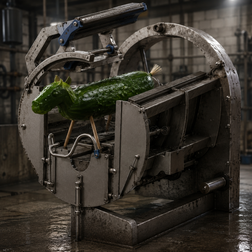
Longer analysis of ウルセーうちん○ Chapter 8: 第八話: 八百屋が九重で三軍に. "This episode follows aspiring novelist and freelance photographer Ōwa Nadeko as a routine assignment to photograph the dawn off the coast of Fukuoka spirals into an absurd fantasy after she rescues a giant sea turtle and is drawn into an underwater Dragon Palace. There she becomes entangled in a surreal society governed by rigid bureaucracy, organized crime, and economic dysfunction, where a vegetable merchant's entrepreneurial schemes transform the kingdom's mafia, trigger a state-sponsored soup craze, and ultimately cause an obesity epidemic and black market. Blending satire of Japan's demographic decline, capitalism, bureaucracy, environmental pollution, and public policy with a modern retelling of the Urashima Tarō legend, the episode contrasts fantastical adventure with mundane reality. Although Nadeshiko survives sharks, political intrigue, and an undersea economic crisis—and even returns with proof of her extraordinary journey and a magical gift—her triumph is undercut when she arrives home to find her electricity disconnected over an unpaid utility bill, emphasizing that the most inescapable forces are often the ordinary bureaucratic burdens of modern life."

Chap 7. Reality TV Mascots and Space Cows

Bonus
IA
Longer analysis of ウルセーうちん○ Chapter 7: 第七話: 売るトラが牛ナウ. "This episode follows aspiring novelist Ōwa Nadeko as she endures a brutally exploitative farming reality show on a Miyazaki cattle ranch, where contestants are deprived of food, manipulated by producers, and treated as expendable commodities for entertainment. What begins as a satire of corporate media and agricultural labor abruptly transforms into absurdist science fiction when Nadeshiko is abducted by humanoid alien cattle, who mistake her mascot costume for the armor of their sworn enemies—space-tiger salesmen whose greatest weapon is predatory timeshare contracts. Through this bizarre encounter, the story expands its critique from factory farming and reality television to financial exploitation, bureaucracy, and social apathy, ultimately revealing that the same systems reduce both humans and animals to disposable assets. Returning to Earth, Nadeshiko witnesses exploitation continuing unabated and confronts her own temptation to look away, discovering that even small acts of resistance carry personal costs. By closing with an unsettling parallel between preparing a cucumber salad and the clinical language of livestock slaughter, the episode argues that modern society normalizes exploitation through efficiency, sanitized language, and the comforting belief that the suffering of others is "not my problem.""
2 de 3