Untangling Web3

Untangling Web3

por Jack Davies & Alec Burns
Temporada 1

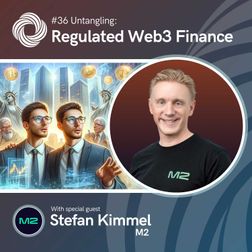
#36 Untangling: Regulated Web3 Finance with Stefan Kimmel

In this episode Alec and Jack welcome Stefan Kimmel, CEO of M2, a Web3 trading and investment platform. Kimmel discusses his background in traditional finance and IT consulting, leading to his current role in the Web3 space. He emphasizes the transition from centralized to decentralized systems and the potential of digital assets and blockchain technology. The conversation explores the challenges in digital asset adoption, the importance of regulatory frameworks, and the future of M2. Kimmel discusses significant market events like Bitcoin ETFs and the upcoming Bitcoin halving and their impact on the digital finance sector. He also addresses the need for customer-focused services in the Web3 space, highlighting the importance of user experience. Concluding the episode, Kimmel shares insights into the future of digital assets and their role in the modern economy. He predicts a bullish market for 2024, driven by factors like ETF approvals and the Bitcoin halving. This conversation with Stefan highlights the transformative impact of Web3 and digital assets on finance and investment, emphasizing the importance of adapting to these changes. Untangling Web3 is brought to you by hosts Jack Davies and Alec Burns, with music by Daniel Paigge. Got a question or topic suggestion? Send us an email at theuntanglingweb3podcast@gmail.com. Love what you're hearing? Show your support by becoming a subscriber and don't forget to leave us a stellar review. The views we express here are our own, and do not represent the views of our employers. Nothing discussed or stated in the show should be considered advice.
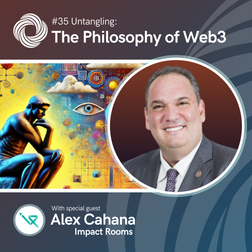
#35 Untangling: The Philosophy of Web3 with Alex Cahana

In this episode, Alec and Jack are joined by Dr. Alex Cahana to discuss the philosophical side of Web3. Dr, Cahana, with over 25 years of experience in clinical practice and expertise in Web3 and blockchain, provides an in-depth analysis of integrating technology into healthcare. He emphasizes the ethical considerations and personal aspects of datafication in healthcare, viewing data as an extension of the self. Dr. Cahana explores the societal impacts of AI and blockchain and advocates for decentralized models in technology and governance, such as DAOs and smart city initiatives. His insights highlight the potential of these technologies in transforming healthcare and society, advocating for a citizen-driven approach in technology governance. This episode offers a comprehensive view of Dr. Cahana's perspective on the intersection of healthcare, technology, and societal change. Untangling Web3 is brought to you by hosts Jack Davies and Alec Burns, with music by Daniel Paigge. Got a question or topic suggestion? Send us an email at theuntanglingweb3podcast@gmail.com. Love what you're hearing? Show your support by becoming a subscriber and don't forget to leave us a stellar review. The views we express here are our own, and do not represent the views of our employers. Nothing discussed or stated in the show should be considered advice.
#34 Untangling: Bitcoin ETF Approvals

The latest episode of Untangling Web 3 focuses on the recent approval of Bitcoin spot ETFs and its implications for the crypto and Web3 spaces. The hosts, Alec and Jack, discuss the SEC's reluctant approval, the impact of institutional investment in crypto, and the dynamics of Bitcoin ETFs. They explore the irony of Bitcoin ETFs being somewhat contrary to Web3 principles, as they centralize Bitcoin ownership. The episode also covers the hack of SEC's Twitter account, its effect on Bitcoin's price, and the broader implications for the cryptocurrency market. Additionally, the discussion includes the varying philosophies and technologies of different Bitcoin forks (BTC, BCH, BSV) and their potential role in ETFs. The podcast concludes with reflections on the overall positive start of the year for Web3 and crypto. Untangling Web3 is brought to you by hosts Jack Davies and Alec Burns, with music by Daniel Paigge. Got a question or topic suggestion? Send us an email at theuntanglingweb3podcast@gmail.com. Love what you're hearing? Show your support by becoming a subscriber and don't forget to leave us a stellar review. The views we express here are our own, and do not represent the views of our employers. Nothing discussed or stated in the show should be considered advice.

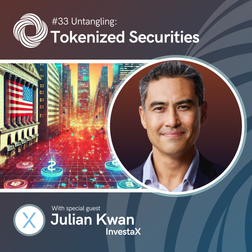
#33 Untangling: Tokenized Securities with Julian Kwan

In this episode of Untangling Web3, hosts Alec Burns and Jack Davis welcome Julian Kwan, CEO of InvestaX and IXSwap, a notable figure in real estate, prop tech, and blockchain. Julian shares his entrepreneurial journey from Sydney to Shanghai, leading to the founding of InvestaX, a tokenization SaaS platform in Asia. He details how InvestaX was born out of the need to modernize the initial low-tech approach of equity crowdfunding and P2P lending platforms. His venture into the ICO boom further spurred the integration of digital currencies with digital securities, aiming to transform the investment landscape. The discussion then shifts to the specifics of tokenization and the role of automated market makers (AMMs) in security tokens. Julian elaborates on how IXSwap, inspired by Uniswap, provides a platform for trading tokenized assets. This platform merges the efficiency of DeFi with the regulatory framework of traditional finance, representing what Julian calls Web 2.5 – a blend of traditional systems and blockchain innovation. He emphasizes the importance of creating user-friendly experiences in web3 technologies, arguing that ease of use and familiarity are essential for wider adoption. Concluding the episode, Julian envisions a future where all types of assets, including carbon credits and real estate, will be tokenized on public protocols. He advocates for the shift from paper-based systems to digital ones, underscoring the potential of this transformation to unlock new investment opportunities and fundamentally change our interaction with financial assets. This comprehensive discussion provides insights into the evolving tokenization landscape, highlighting the necessity for compliance, user experience, and the integration of traditional finance with DeFi. Untangling Web3 is brought to you by hosts Jack Davies and Alec Burns, with music by Daniel Paigge. Got a question or topic suggestion? Send us an email at theuntanglingweb3podcast@gmail.com. Love what you're hearing? Show your support by becoming a subscriber and don't forget to leave us a stellar review. The views we express here are our own, and do not represent the views of our employers. Nothing discussed or stated in the show should be considered advice.
#32 Untangling: 2024 Predictions

In the latest episode of the podcast, the hosts embark on an explorative journey into key predictions for the Web3 space in 2024, delving into a range of pivotal topics that are set to shape the future of this rapidly evolving landscape. The discussion opens with the potential impact of Bitcoin ETF approvals, a development that could herald the end of the current bear market by driving institutional adoption and legitimizing cryptocurrencies. The hosts then shift focus to the upcoming Bitcoin halving event, emphasizing its significance in potentially driving up Bitcoin's value due to reduced supply, and its broader implications for the crypto market. A major highlight of the episode is the exploration of the convergence between AI and blockchain technology. The hosts examine how this synergy could lead to groundbreaking advancements in both fields, enhancing security, trust, and functionality. Another exciting area of discussion is the evolution of the metaverse, with a specific focus on the transition to 'phygitals' – digital experiences blending with the physical world, redefining user interaction and immersion. Central Bank Digital Currencies (CBDCs) also feature prominently in the episode. The hosts analyze various countries' approaches to implementing CBDCs and how these digital currencies could transform traditional financial systems and practices. The episode rounds off with a crucial discussion on the anticipated wave of regulations in the web3 and crypto space, considering how this incoming regulatory framework could bring more stability, transparency, and investor protection, thereby shaping the future trajectory of blockchain and cryptocurrency adoption. Untangling Web3 is brought to you by hosts Jack Davies and Alec Burns, with music by Daniel Paigge. Got a question or topic suggestion? Send us an email at theuntanglingweb3podcast@gmail.com. Love what you're hearing? Show your support by becoming a subscriber and don't forget to leave us a stellar review. The views we express here are our own, and do not represent the views of our employers. Nothing discussed or stated in the show should be considered advice.
#31 Untangling 2023: The Web3 Review

In this year-end review episode, the hosts recap the major themes and events of 2023 in the web3 space. They kick off by discussing the significant impact of AI, notably Chat GPT, and its role as a game-changing application in making AI practical and understandable for users. The hosts emphasize the synergy between AI and blockchain technologies, particularly in tackling issues like data sovereignty and privacy. The conversation then shifts to the financial landscape, highlighting the recent banking collapses, including the fall of Silicon Valley Bank and its ties to crypto assets. This has sparked a growing interest in distributed cash systems and decentralized alternatives to state-controlled money. The hosts also discuss the challenges facing traditional financial systems, evidenced by layoffs and a shift towards AI in the web3 industry. They note the growing pains of web3, including regulatory actions and fines, particularly in Western countries, and acknowledge Ethereum's transition to proof of stake as a crucial development addressing environmental concerns. In the latter part of the episode, the hosts delve into various topics within web3 and crypto. They contrast proof of work and proof of stake in cryptocurrencies, mention the rising institutional interest exemplified by Blackrock's ETF approval, and explore the tokenization of real-world assets. Despite hypocritical statements from traditional finance figures, they note a secret investment in the crypto space. The concept of the metaverse, especially with Apple's entry with the Apple Vision Pro headset, is discussed, suggesting a shift in focus towards utility-focused projects and NFTs. The hosts conclude by reflecting on their podcast journey, thanking listeners for their support, and promising more exciting content in 2024, with a festive wish for a happy Christmas. Untangling Web3 is brought to you by hosts Jack Davies and Alec Burns, with music by Daniel Paigge. Got a question or topic suggestion? Send us an email at theuntanglingweb3podcast@gmail.com. Love what you're hearing? Show your support by becoming a subscriber and don't forget to leave us a stellar review. The views we express here are our own, and do not represent the views of our employers. Nothing discussed or stated in the show should be considered advice.
#30 Untangling: Binance & FTX

In this episode, the hosts delve into the recent upheavals in the Web3 finance sector, with a particular focus on the dramatic developments around FTX. They analyze the significant impact these events have had on the broader crypto industry, noting the increasingly blurred lines between web2 and web3 realms. A central topic of discussion is the controversy engulfing Binance, particularly its insufficient customer verification processes and alleged involvement in transactions linked to terrorist organizations. The situation escalates as Binance's founder, CZ (Changpeng Zhao), faces hefty fines and steps down as CEO, yet remains a key figure in the company. The narrative then shifts to the challenges faced by two major cryptocurrency exchanges, Binance and FTX. The hosts detail the Binance hack, leading to the controversial decision to roll back transactions in coordination with miners. They also scrutinize the scandal involving FTX and its sister company, Alameda Research, which resulted in a significant loss of funds, a liquidity crisis, and panic among investors. The episode further covers ongoing class action lawsuits against both exchanges, highlighting accusations of misrepresentation and misuse of customer funds, and the involvement of FTX's celebrity endorsers in these legal entanglements. In the final segment, the hosts dissect the criminal case against FTX and Alameda, revealing alarming financial practices that led to substantial losses. They emphasize the importance of individual responsibility over technology flaws and argue for the necessity of regulatory measures in the crypto space. While acknowledging the market’s volatility and complexities, the hosts suggest that proper regulation could bring more certainty and attract institutional players. Despite some concerns about potential overregulation, the increasing government interest in understanding and regulating cryptocurrencies is seen as a positive step, hinting at a maturing and more stable future for the Web3 industry. Untangling Web3 is brought to you by hosts Jack Davies and Alec Burns, with music by Daniel Paigge. Got a question or topic suggestion? Send us an email at theuntanglingweb3podcast@gmail.com. Love what you're hearing? Show your support by becoming a subscriber and don't forget to leave us a stellar review. The views we express here are our own, and do not represent the views of our employers. Nothing discussed or stated in the show should be considered advice.
#29 Untangling: The Crypto Markets with Gracy Chen

In this episode of Untangling Web3, hosts Alec Burns and Jack Davies welcome Gracy Chen, the managing director of Bitget, a prominent cryptocurrency exchange. Gracy, who has been a part of the crypto world since 2014, shares her journey from being a TV journalist covering finance and technology to becoming a crypto investor. She delves into her initial investments in major cryptocurrencies like BTC, ETH, and XRP and categorizes the crypto market into major cryptocurrencies, stablecoins, and altcoins, with altcoins defined as those outside the top ten or not classified as stablecoins. The discussion also highlights significant upcoming events in the crypto sector, including the BTC spot ETF approval by the SEC and Ethereum's Constantinople upgrade. The episode further examines the changing perception of Bitcoin, initially regarded as a digital cash system, now increasingly seen as digital gold, noting the low correlation between Bitcoin and gold prices. The influence of institutional investments on Bitcoin's relationship with traditional financial markets is also explored. Gracy discusses the vital role of crypto exchanges in user onboarding, liquidity, and extended services such as investment arms and decentralized wallets. She outlines the criteria for listing new projects on exchanges, focusing on project traction and tokenomics, and addresses challenges like navigating regulatory compliance and localization for global markets. Concluding the episode, Gracy highlights the importance of exchanges like Bitget in promoting financial inclusion and investor education, mentioning initiatives like the Big Protection Fund for enhancing user security. She emphasizes the necessity of making crypto accessible to new users through strategies like copy trading. The episode also covers the potential impacts of key events like the BlackRock Bitcoin ETF approval and recent legal developments in the crypto industry. Gracy wraps up by expressing her curiosity about meeting Satoshi Nakamoto, reflecting on the beginnings of Bitcoin and the future trajectory of Web3. Untangling Web3 is brought to you by hosts Jack Davies and Alec Burns, with music by Daniel Paigge. Got a question or topic suggestion? Send us an email at theuntanglingweb3podcast@gmail.com. Love what you're hearing? Show your support by becoming a subscriber and don't forget to leave us a stellar review. The views we express here are our own, and do not represent the views of our employers. Nothing discussed or stated in the show should be considered advice.

#28 Untangling: DeFi

In this episode of Untangling Web3, hosts Alec Burns and Jack Davis delve into the complexities and innovations of decentralized finance (DeFi). They begin by discussing the fundamental shift from centralized entities to technology-driven solutions in DeFi, highlighting the role of smart contracts as self-executing contracts distributed across blockchain networks. While acknowledging the transparency benefits of smart contracts, they also caution about potential risks like bugs. The conversation then turns to the ERC 20 and ERC 721 standards crucial for building tokens and NFTs and discusses oracles, vital for feeding external data to smart contracts, thereby broadening DeFi protocols' information scope. However, they note that oracles reintroduce a level of trust into the system, albeit distributed among multiple parties. The hosts explore key components of the DeFi ecosystem, including the practical applications of oracles, the importance of stablecoins in accessing monetary systems within DeFi, and the dynamics of lending and borrowing through smart contracts. They compare the risk-reward profile of DeFi lending and borrowing with traditional finance and introduce decentralized exchanges (DEXes) as alternatives to their centralized counterparts. They describe two types of DEXes: order book DEXes, similar to traditional stock exchanges, and automated market maker (AMM) DEXes, which rely on smart contracts and liquidity pools. Wrapping up the episode, Alec and Jack address the broader implications and challenges in the DeFi space. They discuss the risks of centralization within decentralized platforms, the anonymity in liquidity pools, and the debate over the comprehensive effectiveness of smart contracts. The conversation also touches on the potential of AI in enhancing smart contracts, the role of digital identity in DeFi, institutional adoption, regulatory challenges, and solutions like off-chain computation to address Ethereum's scalability issues. The episode concludes with an acknowledgment of the need for further expertise for a more in-depth understanding of the rapidly evolving DeFi landscape. Untangling Web3 is brought to you by hosts Jack Davies and Alec Burns, with music by Daniel Paigge. Got a question or topic suggestion? Send us an email at theuntanglingweb3podcast@gmail.com. Love what you're hearing? Show your support by becoming a subscriber and don't forget to leave us a stellar review. The views we express here are our own, and do not represent the views of our employers. Nothing discussed or stated in the show should be considered advice.
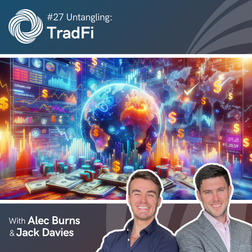
#27 Untangling: TradFi

In this episode of Untangling Web3, hosts Alec Burns and Jack Davies delve into the intricate relationship between decentralized finance (DeFi) and traditional finance (TradFi). They emphasize the importance of understanding the foundations of TradFi, including banks, investment firms, and stock markets, to fully grasp DeFi. Banks are highlighted as intermediaries, while stock markets are depicted as platforms for trading shares. The hosts also note the ongoing evolution of both TradFi and DeFi, with banks increasingly integrating technology-driven solutions and DeFi seeking regulatory clarity, exemplified by Coinbase's listing on a traditional stock exchange. The conversation then shifts to the dynamics of the stock market, highlighting its growth and volatility, driven by retail participation and tech IPOs. They explore the role of investment and asset management firms in growing funds through stocks and real estate, often employing AI for better returns. The discussion also touches on the ongoing debate about whether digital assets in Web3 should be classified as securities, impacting their regulation and taxation. They further distinguish between securities, like stocks and bonds, and commodities such as oil and gold, noting their stability against inflation. Concluding the episode, Alec and Jack discuss the philosophy of DeFi, aiming to redistribute trust from centralized entities to technology, enhancing transparency and efficiency in finance. They recognize that DeFi won’t entirely replace TradFi but note a gradual shift with traditional entities exploring DeFi opportunities. Despite challenges like regulatory uncertainties and cases like FTX, there is significant interest in what DeFi offers. Looking ahead, they tease upcoming episodes focusing on specific DeFi protocols, such as Uniswap, to dive deeper into their functionalities and the risks and concerns associated with them. Untangling Web3 is brought to you by hosts Jack Davies and Alec Burns, with music by Daniel Paigge. Got a question or topic suggestion? Send us an email at theuntanglingweb3podcast@gmail.com. Love what you're hearing? Show your support by becoming a subscriber and don't forget to leave us a stellar review. The views we express here are our own, and do not represent the views of our employers. Nothing discussed or stated in the show should be considered advice.
11 de 14