Unsung Podcast

Unsung Podcast

por Unsung Podcast
The Bad Wife by Julie Christmas - 358
Explícito
This week, we’re talking about Julie Christmas – a woman whose voice could peel paint off the walls one moment and tuck you into bed the next. Known for her work with Made Out of Babies, Battle of Mice, and her collaboration with Cult of Luna on Mariner, Julie’s debut solo album The Bad Wife is our focus here — an underrated little firebomb from 2010 that mixes noise, beauty, and some very sharp edges. We also trace her entire career: from the blood-curdling chaos of Made Out of Babies, to the theatrical collapse of Battle of Mice (complete with a 911 call and possibly a stair-related injury), and finally to Ridiculous and Full of Blood, her triumphant 2024 return. It’s one of those rare episodes where nobody dies, nobody gets sued, and there are no Nazis. Which, if you’re a long-time listener, you’ll know is fairly refreshing. Highlights 00:00 – Cold open and Toast of London chat05:14 – Who is Julie Christmas?10:25 – Vocal Style Breakdown: fragile-to-feral14:45 – Women screaming in heavy bands21:00 – Made Out of Babies discography walk-through36:00 – Battle of Mice and a post-metal relationship collapse41:56 – Mariner – the Cult of Luna collab that actually works44:45 – Ridiculous and Full of Blood (2024)51:30 – Spylcopa, Mouth of the Architect & other collaborations 54:55 – The Bad Wife (2010)

The Best of Arvo Pärt - 357

Explícito
This week, we’re going in the exact opposite direction as last week talking about one of the most quietly revolutionary figures in modern music: Arvo Pärt. That's right, we're pivoting HARD from death metal to neoclassical music. Strap in! We go deep on his early works, his religious conversion, and his shift into the sparse, meditative style known as tintinnabuli. Along the way we discuss how his music achieves emotional intensity through restraint, why he basically disappeared for several years, and how his minimalist compositions have become unlikely mainstays in film and television. Expect talk about Soviet censorship, spiritual longing, and just how hard it is to make music that seems this simple. If you’ve ever cried to Spiegel im Spiegel, you’ll understand. Highlights: 00:00 Introduction and Greetings 01:13 Discussing Radio Show Introductions 02:39 Highbrow Conversations and Wine 03:19 Introducing Arvo Pärt 03:30 Arvo Pärt's Pronunciation and Popularity 05:44 Arvo Pärt's Musical Journey 15:02 Arvo Pärt's Life and Struggles 34:12 Arvo Pärt's Film Scoring and Return to Music 35:30 Tintinnabuli Technique and Influence 44:56 Exploring the Melancholy Beauty of Arvo Pärt's Music 46:04 The Story Behind 'Für Alina' 46:55 The Technique of Tintinnabuli 51:38 Arvo Pärt's Religious Influence 01:03:37 Pärt's Impact on Modern Cinema 01:24:48 Pärt's Music in Palliative Care 01:29:35 Conclusion and Final Thoughts

Whisper Supremacy by Cryptopsy w/ Joe McGlynn from Man Must Die and Go Down Fighting - 356
Explícito
Once upon a time Man Must Die released two albums on Relapse Records and toured an absolute shit load. I actually remember when they toured with Machine Head, which is a fairly impressive thing for any metal band to achieve. Man Must Die were a death metal band, and in some quarters they were even called a technical death metal band. A term that vocalist, and our good pal, Joe disputes. And with good reason - technical death metal isn't really his bag. However, he does love Cryptopsy, and he has an extensive knowledge of death metal. And metal in general, really. So this week we thought it'd be a good idea to ask him to come along to talk about Cryptopsy, get his take on the various sub genres of death metal and to generally shoot the shit about a truly technical death metal band. Episode highlights: 00:00 Introduction and Greetings 00:11 The Joe Dilemma 01:05 Cultural Semantics and Humor 01:55 Podcast Dynamics and Editing 02:19 Introduction to Cryptopsy 04:14 Death Metal Deep Dive 11:09 Technical Death Metal Explained 29:07 Festival Chaos and Engineering Challenges 29:39 Dillinger Escape Plan Live Experiences 30:19 Technical Death Metal vs. Chaotic Metal 31:41 Progressive and Melodic Death Metal 34:07 Deathcore and Its Evolution 38:58 Cryptopsy's Journey and Lord Worm's Departure 49:39 Cryptopsy's Discography and Musical Style 01:01:06 The Science of Poetry 01:01:15 Depression and Lyrics 01:01:48 Cryptopsy's Musical Evolution 01:03:16 The Unspoken King Controversy 01:07:37 Return to Form: Self-Titled Album 01:13:42 Whisper Supremacy: A Detailed Analysis 01:22:34 Summarizing Cryptopsy's Impact 01:28:17 Upcoming Projects and Final Thoughts

Fishing for Luckies by The Wildhearts (Side B) - 355
Explícito
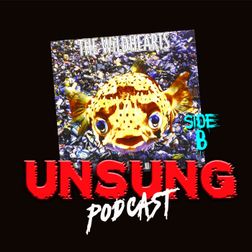
We’re back with the final part of our exploration of The Wildhearts, one of rock’s most truly unpredictable and chaotic bands. If you thought last week’s episode covered all their madness, think again cause we've a TON more stories in this one. Including a pretty grizzly tattoo story, so consider this a trigger warning for self-harm content. This time, we’re focusing on the mid-to-late years of their career, a period filled with controversial albums, internal meltdowns, and some truly bizarre stories. From an album that even the band hated to a festival riot they actively encouraged, The Wildhearts somehow never did things the easy way. We explore: The controversy around Fishing for Luckies and why it was re-released multiple times The implosion of the band in the late ‘90s and their never-ending lineup changes How Ginger Wildheart rebuilt the band from the ground up more than once The band's strangest stories, including hallucinated UFOs, body horror, and a food fight at Download Festival Why The Wildhearts never quite made it to the mainstream, despite being one of the most influential cult bands in rock We also attempt to answer some crucial questions: Did Endless Nameless ruin their mainstream chances, or was it just ahead of its time? Is Fishing for Luckies one of their best albums, or an overstuffed mess? Were The Wildhearts a punk band, a metal band, or something completely different? Episode Highlights & Timestamps 00:00 – Intro & Banter: More Groundhog Day jokes than necessary.01:07 – The Fishing for Luckies Controversy: A cash grab or a cult classic?04:25 – Endless Nameless & Their Most Divisive Album: Was this a genius move or career sabotage?09:10 – The Wildhearts’ Internal Chaos: Drugs, drama, and why they couldn’t hold a lineup together.16:02 – Ginger’s Grossest Story Ever: The marshmallow arm incident (not for the squeamish).19:24 – UFO Sightings & Conspiracy Theories: A night of hallucinations, tequila, and unexplained lights.20:55 – The Download Festival Riot: Why The Wildhearts encouraged 80,000 people to throw things at them.26:00 – Why Their Songs Are Too Long: Do they have too many ideas for their own good?33:40 – Their Legacy & Influence: Why they never broke through but remain a beloved cult band.49:00 – Final Thoughts & Outro: What we learned from this absolute rollercoaster of a band.

Fishing for Luckies by The Wildhearts (Side A) - 354
Explícito
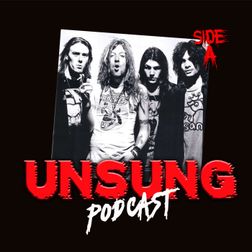
The Wildhearts could very well be one of the most chaotic, unpredictable, and underrated British rock bands ever. Ideal for unsung in a lot of ways, really. So this week and next, we'll we’re diving deep into their sound, history, and legacy. In this episode, we break down: Claims that they sound like The Beatles merged with Metallica The endless lineup changes, hiatuses and threats of legal action How Ginger Wildheart outsmarted the music industry before crowdfunding was even a thing Why touring is harder than ever for bands like The Wildhearts How they built a cult following despite never truly “making it” Episode Highlights & Timestamps 00:00 – Intro & Banter: Why we keep coming back to this band.13:00 – The Wildhearts' Unique Sound: The Beatles meets Metallica (or something even weirder).18:15 – Internal Chaos & Lineup Changes: A band that couldn’t stay together.28:05 – How Ginger Wildheart Outsmarted the Music Industry: Crowdfunding and business moves.39:50 – Why Touring Is Harder Than Ever: The death of mid-tier bands.45:00 – The Wildhearts’ Cult Status & Legacy: Why they never “made it” but still matter.51:00 – Final Thoughts & Outro: Would they even work in today’s industry?

The Fine Art of Original Sin by Ink & Dagger - 353

Explícito
We love it when we get a chance to talk about very influential bands who are extremely overlooked. It is, after all, the whole reason this podcast exists. And there are few as influential, and overlooked, as Ink & Dagger. Their albums aren't even on Bandcamp, let alone streaming sites. That probably tells you everything you need to know. Frankly, without Ink & Dagger, bands like Thursday, My Chemical Romance and a whole legion of post-hardcore/emo bands from the early 00s simply wouldn't exist. They gained a brief spike in popularity in the 2010s when they reformed with Geoff Rickly from Thursday on vocals, which ensured that their vital legacy got its day in the sun. Ink & Dagger were only active from 1995 to 2000, but were incredibly prolific in that short space of time, producing 4 EPs, 2 splits and 2 albums. Their sound evolved very quickly, and amongst all of that was relentless touring, a revolving door of band members (singer Sean McCabe and guitarist Don Devore remained the only consistent members) and at least a book or two's worth of insane on-the-road hijinks. The band agreed to disband in the year 2000 after their second album. But before they could even release that record, singer Sean McCabe passed away aged 27. A tragic exclamation point at the end of the band's short, crazy existence. If you like post-hardcore in any form but have never heard this band, well... prepare to be educated as, this week, we throw our focus on their debut album "The Fine Art of Original Sin".

Unsong: We Are the World by U.S.A. for Africa (Side B) - 352
Explícito
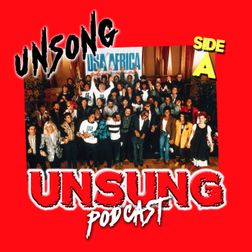
Well, here we are again, back in the trenches of musical altruism, digging through the chaos and cocaine fumes of We Are the World. In our final part of this double header, we examine the actual recording process—a night filled with megastars, massive egos, and the creeping existential dread of Bob Dylan. We cover: Lionel Richie’s unexpected side hustle as a musical firefighter, putting out diva-induced blazes. Quincy Jones' increasing exasperation as some of the greatest voices in music fail to hit their notes. Michael Jackson going off the deep end with Sheyla-Sheyla (which is absolutely, 100% real). Stevie Wonder offering to guide Ray Charles to the loo, leading to perhaps the only acceptable "blind leading the blind" joke in history. Prince skipping the whole thing to eat Mexican food down the road. Cindy Lauper causing technical difficulties by jingling like a Christmas tree made entirely of cheap jewellery. Diana Ross possibly being the most accidentally terrifying sweetheart of all time. Also: did this song actually make a difference? Or was it just the moment that finally convinced Michael Jackson he was the second coming? We get into all of that, while trying to decide whether the song is a masterpiece or just a very elaborate Pepsi advert. 00:00 Podcast Introduction and Banter 01:12 Podcast Admin and Patreon Promotion 04:42 Recording 'We Are the World': Setting the Scene 04:47 Quincy Jones and the Ensemble Choruses 07:03 Challenges and Tensions in the Studio 13:49 Prince's Absence and Sheila E's Disappointment 17:23 Final Takes and Notable Moments 25:14 Reflections and Aftermath 30:27 Michael Jackson's Missionary Phase 31:37 The Concept of an Artist's Imperial Moment 32:45 The Role of MTV and Charity Singles 34:09 Critiques and Controversies of Charity Campaigns 35:20 Bandaid vs. USA for Africa: Distribution and Impact 37:56 Political Complexities of Ethiopian Famine 44:08 Mismanagement and Consequences of Aid 47:02 USA for Africa's Long-Term Development Approach 49:53 Cultural Impact and Legacy of Charity Singles 52:39 Conclusion: Achievements and Lessons Learned

Unsong: We are the World by U.S.A. for Africa (Side A) - 351
Explícito
It’s 2025, and somehow, We Are The World is about to turn 40 years old. Time is a cruel joke. This week and next we'll be taking a deep dive into one of the biggest charity singles ever recorded. You know the one—Michael Jackson, Lionel Richie, Bruce Springsteen, Bob Dylan looking completely lost, and a very questionable Cyndi Lauper fashion choice. We cover: How this song was written in 10 days and recorded in one night (because the American Music Awards made it convenient). The absolute chaos of the recording session, including Lionel Richie trying to stay awake, Prince ghosting everyone, and Stevie Wonder insisting on singing in Swahili. Michael Jackson’s home studio, which included a chimpanzee, a Mynah bird that mimicked his voice, and a giant snake that terrified Lionel Richie. Why some artists hated the song, including Cyndi Lauper comparing it to a Pepsi commercial and Billy Joel thinking nobody actually liked it. What happened to the money, how We Are The World avoided Band Aid’s mistakes, and why Live Aid overshadowed it in the end. We also attempt to answer some crucial questions:Would a song like this even work today?Why does Quincy Jones always have the best stories?Has Bob Dylan ever looked more uncomfortable? Timestamps & Highlights 00:00 – Intro & Banter: Vikings, language learning, and Michael Christen (who?).02:00 – Patreon Plug: Give us money, or at least send the pod to a mortal enemy.06:47 – How "We Are The World" Came Together: The American Music Awards gave them a deadline, and chaos followed.16:54 – Artists Who Hated It (or Rejected It): Prince, Madonna, and Billy Joel’s existential crisis.27:20 – Michael Jackson’s Bizarre Recording Habits: A chimp, a bird, and a snake walk into a studio…36:00 – The Chaotic Recording Session: Bob Dylan, Huey Lewis, and why Quincy Jones had to babysit 40 superstars.47:00 – Stevie Wonder’s Swahili Suggestion: This actually happened.54:00 – What Happened to the Money?: How We Are The World handled charity better than Band Aid.1:06:30 – Live Aid & The Aftermath: How this song shaped charity singles forever.1:18:00 – Final Thoughts & Outro: The legacy of We Are The World, and who we’d put on a modern version. Join the Conversation! Which solo line would you claim if you were forced to sing on We Are The World? Should Bob Dylan have just walked out? Would a charity single like this even work in 2024? Tell us what you think, share the episode, and tag us if you’re spreading the good word. Support the Show!Want bonus episodes, early access, and a hand in what we cover next? Patreon is your friend. 👉 www.patreon.com/unsungpod Follow & Subscribe Threads: www.threads.net/unsungpod Instagram: www.instagram.com/unsungpod TikTok: https://www.tiktok.com/@unsungpod

Intros #2 with Grant Donaldson (Moni Jitchell, Civil Elegies) - 350
Explícito
In this episode we are joined by special guest Grant Donaldson from Moni Jitchell and Civil Eleigies, as he dives into some of his early musical influences. From Meatloaf's 'Bat Out of Hell 2' to ACDC's 'Back in Black' and Refused's 'The Shape of Punk to Come,' he discusses the impact these albums had on his life and musical development. Along the way, anecdotes, gig memories, and the pitfalls of mixing punk ideology with mainstream success provide some entertaining listening. 00:00 Introduction and Guest Welcome 00:21 Grant's Musical Background 01:14 The Concept of Intros Episodes 04:20 Grant's Album Picks 04:43 Discussion on Meatloaf's Bat Out of Hell 2 24:26 Live Performances and Personal Anecdotes 39:02 Meatloaf's Chaotic Concert Incident 41:01 Uncredited Vocalist on 'I Would Do Anything for Love' 41:37 Grant's Chronological Music Journey 44:13 AC/DC's 'Back in Black' Album Deep Dive 58:57 Refused's 'The Shape of Punk to Come' 01:12:53 Refused's Legacy and Reunion 01:25:51 Conclusion and Farewell

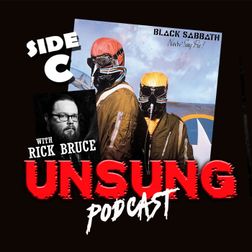
Never Say Die! by Black Sabbath w/ Rick Bruce (Moonshine Docks, Coffin Mulch) (Side C) - 349

Explícito
Welcome to the third and final part of our Black Sabbath expedition with Rick Bruce from Moonshine Docks and formerly of Coffin Mulch! We dive deep into the tumultuous yet fascinating journey of Sabbath's later years and the cap it off by discussing the often-maligned 'Never Say Die' album. From Ozzy Osbourne's erratic behaviour and his temporary exit, to Sabbath's experimentation with new soundscapes and their revolving door of members throughout the 80s and 90, nothing is off limits. We've got a few hilarious and poignant anecdotes, tackle critical reviews, and even compare Sabbath's work to culinary experiences. Tune in for a spirited debate about one of rock's most controversial albums and find out if 'Never Say Die' deserves its spot in the rock pantheon or the bargain bin. 00:00 Introduction and Welcome 00:05 Black Sabbath Expedition Begins 01:08 Diverging Opinions on Black Sabbath's Evolution 01:41 Ozzy's Departure and Band Dynamics 03:03 Ronnie James Dio Era 10:21 Heaven and Hell Album Discussion 19:44 Mob Rules Album Insights 22:42 Born Again and Beyond 33:40 Headless Cross Era: A Stodgy Comeback 34:47 The Tony Martin Reappraisal 35:31 Tear and Headless Cross: A New Sound 38:57 Dehumanizer: The 80s Band Reunites 43:38 Cross Purposes and the Grunge Era 49:32 Forbidden: The Misstep 56:55 Never Say Die: The Final Ozzy Album 01:12:34 Nosey and the 70s Sound 01:12:50 Sabbath's Unique Riffs and Drumming 01:13:16 Influences and Inspirations 01:14:17 Critiques and Musical Textures 01:15:30 Hard Road and Vocal Performances 01:16:49 Medieval Covers and Side 2 01:19:23 Shockwave and Air Dance 01:24:08 Over to You and Breakout 01:27:04 Swingin' the Chain and Album Conclusion 01:35:14 Final Thoughts and Reflections
4 de 46