Universe of Bright Minds

Universe of Bright Minds

por Satellite Evolution Global
Temporada 2
Autophage Space Propulsion Leads the Way
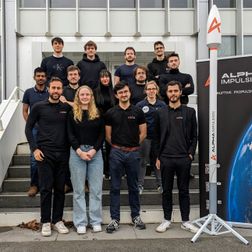
A new era is coming, marked by worldwide advancements in deep space exploration, reusability and super-heavy launch vehicles. In this exciting future, Alpha Impulsion a French company is leading the way in developing a disruptive autophage engine that will enable sustainable end-to-end propulsion for Europe. Richard Hooper talks to Marius Celette, CEO about the company and its future.
Digital Age Marketing for Satellite and Space Companies
Crispin Littlehales and Richard Hooper from the Satellite Evolution Group discuss how marketing has changed over the last two decades and how companies, however, small can achieve share of voice in a very congested satellite market.
Temporada 1
Visionary leadership: ST Engineering iDirect leads the way to satellite interoperability

Crispin Littlehales talks to Don Claussen, CEO, ST Engineering iDirect about how the market has evolved and how the company is addressing these changes - delivering high quality services and products to customers and partners.
Developing Space-based Solar Power
In this episode we explore Space Solar, a company with a vision to develop Space-Based Solar Power for the benefit of its stakeholders and the world. Its work will support the transition to Net Zero and provide global energy security, delivering a safe and secure world where clean, affordable energy is available to all. Constant, clean solar power from space is unaffected by the weather, seasons, or time of day. Independent Government-led studies confirm that Space-Based Solar Power is now technically viable and economically competitive with other renewables. Space Solar is developing Space-Based Solar Power to provide abundant, affordable energy for Net Zero and energy security. https://www.spacesolar.co.uk/
Europe accounts for just one-fifth of global space investment
Seraphim Space, the leading global SpaceTech investor, has published its whitepaper, detailing several policy recommendations to unlock growth within the European and UK space sector required to solve Europe’s security crisis. In response to President Trump’s demands that Europe increase its defence spending, the European Union has sought to mobilise up to €800bn in defence funding. The UK Government announced an increase in defence funding to 2.7% of GDP.
Building the In-Space Propellant Supply Chain

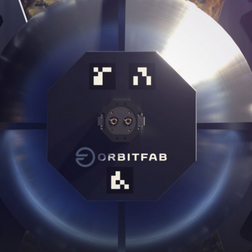
Orbit Fab was founded in 2018 to eliminate the single-use spacecraft paradigm with in-space refueling. Spacecraft are still limited to the amount of fuel they are launched with, which limits flexibility and poses long-term risks to the space environment. It resupplied water to the ISS, and launched the first commercial fuel depot into LEO. Its RAFTI refueling interface has become the industry-standard, and it has signed the first commercial and US Government fuel delivery services deals. Crispin Littlehales discusses the company and future plans with Daniel Faber, Founding CEO of Orbit Fab.
How Scottish space data is set to revolutionise financial services

Scottish space technology companies are at the forefront of helping financial institutions manage risk, verify sustainability claims, and make smarter investment decisions. By offering unprecedented insights into assets and portfolios, satellite data is reshaping how financial risks are assessed – helping to improve decision-making, protect investments, and drive better returns. Satellite Evolution Group discusses this interesting topic. Visit Scottish Development International to find out more.
Starlink Shines in Europe
According to Luke Kehoe, Industry Analyst Europe at Ookla, while Europe may not represent the largest market for satellite solutions, low Earth orbit (LEO) constellations have emerged as an important part of the connectivity toolkit in the region. And with a network of more than 7,000 satellites worldwide, SpaceX’s Starlink has taken advantage of this, securing a leading position in the LEO market, both in Europe and globally. Universe of Bright Minds discusses the findings. The full report can be found at Ookla: here
Asteroid 2024 YR4
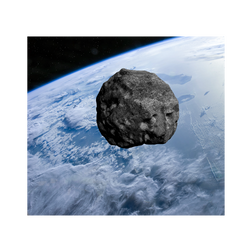
The European Space Agency (ESA) is closely monitoring near-Earth asteroid 2024 YR4, which poses a small but non-zero chance of impacting Earth in 2032. Currently estimated to be 40-100 meters wide, the asteroid has a 1.2% probability of impact according to ESA, a figure corroborated by NASA. This risk level has triggered the activation of two UN-endorsed international groups—the International Asteroid Warning Network (IAWN) and the Space Mission Planning Advisory Group (SMPAG)—to coordinate observation efforts and plan potential mitigation strategies.
Economics of Satellite and Space
Crispin Littlehales, Global Editor, Satellite Evolution Group talks to Chad Anderson, Founder and Managing Partner, Space Capital. Described by TechCrunch as “among the best-positioned people on either the investment or the operator side to weigh in on the current and future state of the space startup industry,” Chad Anderson has been pioneering investment in the Space Economy for over a decade. He is also author of The Space Economy: Capitalize on the Greatest Business Opportunity of our Lifetime, published by Wiley.
1 de 2