The Neurology Lounge

The Neurology Lounge
por Ibrahim Imam
Episode 13. Ravaged - Confronting the rage of motor neurone disease
In this podcast I use touching patient anecdotes to explore the characteristic and devastating manifestations of motor neurone disease, such as fasciculations and spasticity. I also explore the relentless progression of the disease. I also discuss the current understanding of the risk factors and mimics of the disease, and the challenges of making the diagnosis. I also covered the palliative treatments that are available, and the way many patients face up to the inevitable mortality of the disease.
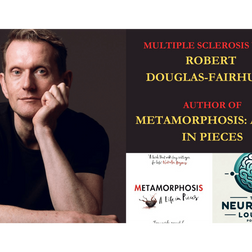
Episode 12. Multiple Sclerosis with Robert Douglas-Fairhurst - Author of Metamorphosis: A Life in Pieces
In this episode I explore the patient perspective of multiple sclerosis with Robert Douglas-Fairhurst, a Professor of English Literature and a Fellow of Maudlyn College, Oxford. He narrated his experience of the symptoms of MS in his memoir titled Metamorphosis: A Life in Pieces. We also reviewed the investigations and treatments he underwent, including the cutting-edge stem cell transplantation. He also discusses the physical and emotional burdens of the disease, and how he has adapted to live a fully functional life. Apart from Metamorphosis, his other books include Becoming Dickens (2011), which was awarded the Duff Cooper Prize; The Story of Alice (2015), which was shortlisted for the Costa Prize; and The Turning Point (2021). He writes regularly for publications including the Times, Spectator, and Literary Review, and he also appears in radio and television programmes including Start the Week, the Today Programme, BBC Breakfast, and The Culture Show. Robert Douglas-Fairhurst has acted as the historical consultant on BBC productions of Jane Eyre, Emma, Great Expectations and Dickensian, and both of the Enola Holmes films for Netflix.
Episode 11. 10 deceptive neurological symptoms you must never ignore
This podcast counts down the top ten subtle neurological symptoms that may be caused by serious neurological disorders
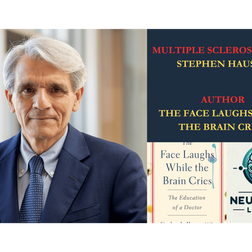
Episode 10. Multiple Sclerosis with Stephen Hauser: Author - The Face Laughs While the Brain Cries
In this episode, I discuss multiple sclerosis with leading neurologist Stephen Hauser. We explore his recent autobiography in which he narrates his long career in medicine and his breakthroughs in the field of multiple sclerosis. Stephen also explains how his life experiences determined his career choices. Stephen Hauser is director the UCSF Weill Institute for Neurosciences, linking the clinical and basic neurosciences at UCSF to accelerate research against neurologic diseases. Dr. Hauser’s research has advanced our understanding of the genetics, immunology, and treatment of multiple sclerosis (MS). His work led to the development of B cell therapies for MS patients, representing a powerful new approach for relapsing forms of the disease and the first therapy of proven value for progressive MS. Dr. Hauser is a member of the National Academy of Medicine and a fellow of the American Academy of Arts and Sciences and the American Academy of Physicians. He is an editor of the textbook Harrison’s Principles of Internal Medicine. Previously chairman of the Department of Neurology at UCSF for 25 years, he has also served as President of the American Neurological Association, President of the Medical Staff at UCSF, Chair of the Research Advisory Committee for the VA, and editor-in-chief of Annals of Neurology. Dr. Hauser has received numerous awards and honors for his work, including the Jacob Javits Neuroscience Investigator Award; John Dystel Prize for Multiple Sclerosis Research (2008); Charcot Award (2013); Taubman Prize for Excellence in Translational Medical Research (2017); and Scientific Breakthrough Award from the American Brain Foundation (2022).
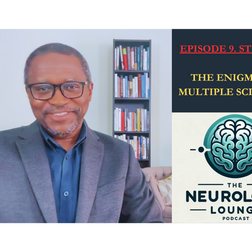
Episode 9. Enigma – The Conundrum of Multiple Sclerosis
In this episode, I explore the manifestations and management of multiple sclerosis. I use powerful patient memoirs, such as that of Ann Romney, to illustrate the diversity of presentations and variants of this ubiquitous and devastating neuroinflammatory brain disease. I also trace the history of multiple sclerosis with references to Lidwina, the patron saint of figure skaters. I also narrate the role played by French neurologist Jean -Martin Charcot in defining the disorder, starting with his observations of his own maid. I also explore the risk factors, investigations, and increasing range of treatments now available for the disease.
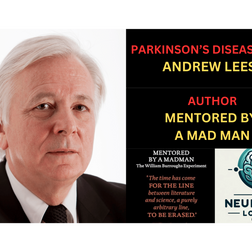
Episode 8. Parkinson's Disease with Andrew Lees: Author - Mentored by a Mad Man
In this episode I discuss the evolution of the treatments of Parkinson's disease with leading neurologist Andrew Lees. Our discussion focused on one of his autobiographical books, Mentored by a Mad Man. Andrew Lees is in the top three most highly cited Parkinson’s disease researchers in the world and included in Thomson Reuters 2015 List of the World’s Most Scientific Minds. We talked about his early exposure to the writings of Burroughs, and how this sustained his commitment to study medicine, and served as guiding light for his philosophy of research and the impetus for his search for chemical cures for Parkinson's disease. Andrew Lees was born on Merseyside and is a Professor of Neurology at The National Hospital, Queen Square and University College London. His latest books are Brainspotting: Adventures in Neurology, published by New York Review of Books in April 2022, and Neurological Birdsong, published by Mirabeau Press 2024.
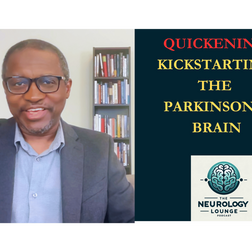
Episode 7. Quickening - Kickstarting the Parkinson's Brain
In this episode I explore the medical and surgical treatments of #Parkinson's disease. I trace the history of Levodopa with reference to the works of Nobel Prize winner Arvid Carlsson, Oleh Hornykiewicz, and George Cotzias. I also explored how neurologist Oliver Sacks used Levodopa to resuscitate the victims of von Economo's disease at Mount Carmel Hospital, New York. I also looked at the history of the surgical treatments of PD, such as the serendipitous discoveries of thalamotomy and deep brain stimulation by neurosurgeons Irving Cooper and Alim-Louis Benabid respectively. The podcast also covers the development of the ancillary drug treatments of the disorder.
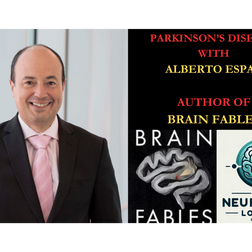
Episode 6. Parkinson's Disease with Alberto Espay. Author - Brain Fables
In this episode, I explore the pathology of Parkinson's disease and other neurodegenerative disorders with Prof. Alberto Espay, co-author of the book titled Brain Fables. Dr. Alberto Espay is Professor and Endowed Chair of the James J. and Joan A. Gardner Center for Parkinson’s Disease at the University of Cincinnati. Apart from publishing over 350 peer-reviewed research articles, Dr Espay has also published 9 other books, including Common Movement Disorders Pitfalls, which received the Highly Commended BMA Medical Book Award in 2013. Dr. Espay has served as Chair of the Movement Disorders Section of the American Academy of Neurology; as Associate Editor of the Movement Disorders Journal; as a member on the Executive Committee of the Parkinson Study Group. His 2022 TEDx presentation, “Parkinson’s and Alzheimer’s: The Solution in Sight,” was selected from more than 12,000 global entries for two 2023 Telly Awards, which honor excellence in video and television across all screens.
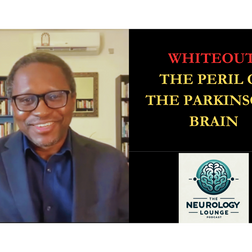
Episode 5. Whiteout - The Peril of the Parkinson's Brain
In this episode I explore the history and pathology of Parkinson's disease. I use anecdotes from fascinating patient anecdotes, such as that of cardiologist Thomas Graboys, to review the clinical manifestations of the disease. I discuss how Adolf Hitler's Parkinson's disease may have influenced the course of World War II, and I review the history of how the frozen addicts led to the development of the MPTP model of the disease. I also retell the development of the Contursi genetic model of Parkinson's disease. The podcast also discusses the risk factors, and the uncertainties that surround the cause of the disease.
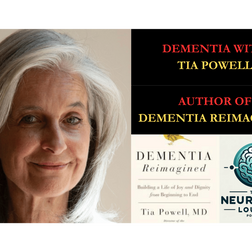
Episode 4. Dementia Conversation with Tia Powell: Author - Dementia Reimagined
In this episode I explore a refreshing perspective of Alzheimer's disease with physician Tia Powell, whose mother suffered from the disorder. We discuss her perspectives of the pathology and management of the disease, and her views on the balance between care and cure. Tia Powell is Professor of Epidemiology and Psychiatry at Albert Einstein College of Medicine and Montefiore Medical Center. For 15 years she was director of the Montefiore Einstein Center for Bioethics. Dr. Powell’s bioethics work focuses on public policy, aging, dementia, end-of-life care, and public health disasters. Tia Powell served as Executive Director of the New York State Task Force on Life and the Law, which was New York State’s bioethics commission. She founded and directed Einstein’s MS program in Bioethics.
1 de 9