The BarberShop with Shantanu

The BarberShop with Shantanu

por The BarberShop with Shantanu
Temporada 5
Bombay Shaving Company's COO & CEO on raising Series C & the path to IPO | ft. Aditya Sehgal
What if Bombay Shaving Company’s biggest opportunity is already in front of it, but the founders are not seeing it clearly? In this episode, Shantanu Deshpande (Founder & CEO, Bombay Shaving Company) sits down with Aditya Sehgal (Founder, Asgard. World and Ex-President & COO, Reckitt), along with Deepak Gupta (Co-Founder & COO, Bombay Shaving Company), to unpack what it really takes to build a large Indian consumer brand for the next decade. At the centre of this conversation is Bombay Shaving Company’s next big question: Can a grooming brand from India become a ₹4,000 Cr business, and eventually build products strong enough to compete globally? Aditya breaks down why India may still be behind China in innovation velocity, why local manufacturing is not just a financial decision but a strategic one, why AI will completely change how teams are built, and why money follows opportunity, not the other way around. What you’ll learn from this episode: - Why 10-year-old startups learn and adapt faster than 100-year-old FMCG giants - How the "XEMES" innovation formula works and why India's "jugaad" mentality might be holding it back - What the 2x2 AI Decision Matrix is (Repeatability vs. Sensitivity) and what tasks to automate - Why taking a lower margin to build local manufacturing is a massive strategic moat - How a non-tech executive built a fully functional app in 8 days just by using AI If you’re building a consumer brand, D2C business, retail company, or India-first startup, this episode gives you a sharp look at what it actually takes to build beyond the next quarter and create something that can compound for years. Navigate your way through these chapters: 00:00 Coming up 01:20 Introduction 02: 40 How They Built the Business 08:17 Breaking Down the XEMES Framework 16:15 Scaling Without Losing Quality 21:49 The Playbook for Building a ₹4,000 Cr Brand 27:42 How AI Will Transform Every Company 37:08 Closing Thoughts
How Founders Should Think About Product, Brand & Scale | The Founder's Meet: Pune Edition
Everyone talks about building a brand. Few talk about what actually breaks when growth starts becoming real. This is the very first episode of Founder's Meet, and it's happening in Pune. Shantanu Deshpande sits down with founders building across skincare, AI, home décor, food, climate action, travel, experiences, and consumer brands to unpack the real questions behind scaling in India. From a ₹50 Cr D2C food brand trying to scale to ₹500 Cr, to a SaaS founder questioning India's willingness to pay, to premium brands figuring out storytelling and consumer trust, this conversation brings together the messy but important problems founders face after the first phase of growth. What this episode covers: Why the product and brand need to grow together How storytelling builds trust beyond product claims Why scaling without systems can break a startup What makes consumers forgive, return, and stay Why a real community is more than just followers and comments How founders should think about co-founders, hiring, and equity Why entrepreneurship is not freedom, but accountability If you're building a D2C brand, SaaS company, consumer business, or founder-led startup in India, this episode offers a raw look at the decisions, trade-offs, and uncomfortable truths behind building something that lasts.
⁠From OEM To ₹20-25 Cr ARR: How Beanly Is Building India’s Next Coffee Brand
India’s next big consumer brands won’t be built on taste. They’ll be built on habits. In this episode of Khul Ke Scale, Shantanu Deshpande (Founder & CEO, Bombay Shaving Company) sits down with Rahul Jain (Co-founder, Beanly Coffee) and Samayesh Khanna (Co-founder, Beanly Coffee), along with industry veterans Shiv Shivakumar (Operating Partner, Advent | Ex-SVP, Nokia | Ex-CEO (India), PepsiCo) and Toshan Tamhane (Global Chief Operating Officer, UPL) to break down what it really takes to build a modern consumer brand in India. From coffee habits and convenience culture to product psychology, repeat purchases, distribution, and brand recall, this episode goes deep into why some brands become daily rituals while most disappear after the initial hype cycle. Beanly Coffee explains why they’re betting on India’s “on-the-go” lifestyle, how small product decisions influence consumer behaviour, and why building a habit is far more important than simply building a good product. At the centre of the conversation is a bigger question every founder struggles with: Why do consumers remember some brands instantly… while forgetting others completely? What you’ll learn from this episode: • Why 25% of Indians skipping breakfast is a massive business opportunity • Why convenience is becoming India’s biggest consumer trend • Why most D2C brands fail after their first growth spike • The real role of packaging, fragrance, texture, and recall in FMCG • How founders misunderstand consumer behaviour while scaling • What makes certain products become part of people’s daily routines If you’re building a consumer brand, D2C startup, FMCG business, or simply trying to understand where Indian consumer behaviour is heading, this episode offers a sharp breakdown of what actually creates long-term brand relevance in one of the world’s toughest markets. Navigate your way through these chapters: 00:00 Coming Up 01:40 Introduction 02:25 How Beanly Started 10:39 Question 1: Innovation, Scale, and Strategic Focus 19:35 What Latin America Teaches About Coffee 26:18 Question 2: Building the Right Omnichannel Mix 34:38 Question 3: How to Think About ESOP Allocation 44:00 Building a Strong Employee Value Proposition 49:46 Question 4: Choosing the Right Investors and Capital Structure 53:24 Shiv’s Key Takeaways for Beanly 59:41 Closing Thoughts
How to Build a ₹150 Crore Women's Grooming Brand | Bombae
Everyone thought women needed “safe” razors. Turns out, that was the biggest mistake the industry made. In this episode, Shantanu Deshpande (Founder & CEO, Bombay Shaving Company) breaks down how one insight led to building Bombae, a ₹150 Cr brand in just a few years. From understanding how women actually shave to rejecting the entire “make it pink” playbook, this is a masterclass in building products that truly solve for the user. Not by copying what exists, but by questioning the assumption itself. Shantanu explains how the real gap wasn’t safety, but lack of control and feedback, and how designing for that changed everything. What makes this conversation powerful is the clarity: most brands don’t fail because of execution, they fail because they solve the wrong problem. What you’ll discover: • Why “pink razors” are fundamentally flawed • The real difference between men vs women shaving behaviour • How one insight built a ₹150 Cr brand • Why copying incumbents guarantees failure • The thinking behind designing the Roll Blade Can a brand win just by understanding the user better than everyone else? This episode shows what happens when you stop guessing and start observing.
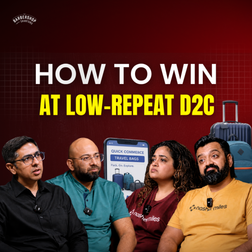
How Do You Build A Brand In A Low-Repeat Category? Nasher Miles On Luggage, LTV, CAC & EBOs
Everyone thinks luggage is a simple business… until they try building one. So how did Nasher Miles build a ₹150 Cr brand in one of the toughest consumer categories in India? In this episode of Khul Ke Scale, Shantanu Deshpande (Founder & CEO, Bombay Shaving Company) sits down with Lokesh Daga (Co-Founder & CEO, Nasher Miles) and Shruti K. Daga (Co-Founder, Nasher Miles) along with Revant Bhate (CEO, Mosaic Wellness) to unpack what it really takes to build in a market dominated by VIP, Safari, Samsonite and now Mokobara. From scaling to ₹150 Cr revenue, raising ₹37 Cr from 70 angel investors after Shark Tank, building a luggage brand in a low-repeat category, depending heavily on marketplaces, competing with VIP, Safari, Samsonite and Mokobara, to figuring out offline retail, EBOs, branding, profitability and Made-in-India manufacturing… this conversation goes deep into the realities of modern consumer brands in India. This episode covers: How Nasher Miles scaled through Amazon & marketplaces D2C vs marketplaces vs offline retail EBO economics & retail expansion Competing against legacy giants like VIP & Samsonite Why colour became Nasher Miles’ biggest differentiator If you’re a founder, operator, marketer, investor, or someone building a consumer brand in India, this episode is packed with hard-earned lessons on growth, positioning, retail, and brand-building.
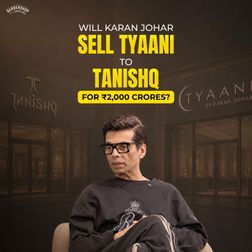
From Dharma Productions to Tyaani: India’s New Luxury Consumer | Ft. Karan Johar, Shravan Satyani
Everyone thought Karan Johar’s jewellery brand was just another celebrity play. It wasn’t. Behind Tyaani is a sharper bet: build a ₹250 Cr profitable jewellery brand inside a category that is barely 1% of India’s jewellery market. So what did Karan Johar and Shravan Satyani understand that most jewellery brands missed? Today, jewellery is emotion. It is vanity. It is Instagram. It is weddings. It is individuality. It is the feeling of wearing something no one else has. In this episode of Khul Ke Scale, Shantanu Deshpande (Founder & CEO, Bombay Shaving Company) sits down with Karan Johar (Filmmaker & Founder, Tyaani Jewellery) and Shravan Satyani (Co-founder & Managing Director, Tyaani Jewellery), along with Revant Bhate (CEO & Co-Founder, Mosaic Wellness), to decode how Tyaani built a 12-store, ₹250 Cr profitable jewellery business with 15% PAT. At the centre of it all is one big consumer shift: the Indian bride no longer wants just one expensive heirloom piece. She wants more looks, more occasions, more individuality, and more value in every purchase. This episode breaks down how Tyaani built around Polki, kept 80% of its inventory exclusive to each store, and still questions whether scaling too fast could hurt the brand. What you’ll learn from this episode: • Why Tyaani chose the 1% Polki market instead of chasing 85% gold • How Karan Johar’s taste became a real business advantage • Why Indian brides now want more looks, not just heirloom jewellery • Why 80% store-exclusive inventory is both a moat and a risk • Whether Tyaani should scale stores, take PE money, or prepare for IPO If you’re building a consumer brand, luxury business, retail company, or founder-led brand, this episode gives you a sharp look at how emotion, exclusivity, systems, and timing come together to build something that lasts.
The 60% Luxury Tax Scam: Why Indians Pay Double For German Cars | Ft. MD & CEO, Mercedes-Benz
India’s richest buyers still choose SIPs over Mercedes. Why? When a ₹1 Cr car loses to a ₹10k SIP, you’re not fighting competitors, you’re fighting mindset. In this episode, Shantanu sits down with Santosh Iyer (MD & CEO, Mercedes-Benz India Pvt. Ltd.) for a no-filter conversation on why India’s luxury car market is still tiny, what really drives high-ticket purchases, and how culture, family hierarchy, and risk appetite shape consumption in this country. From selling weighing machines to building one of India’s most premium auto brands, Santosh’s journey is anything but conventional. He shares how early failures in Nepal, turning around Yamaha, and working across global companies shaped his belief in one core idea: trust first, everything else later. Key takeaways from the episode: 1. Why Mercedes competes with SIPs, not just BMW & Audi 2. Why a ₹1 Cr car still takes 45 days of family decision-making 3. What stops India’s luxury market from scaling despite rising incomes 4. How D2C changed car buying and killed the “discount mindset” 5. What EVs, AI, and the next decade of mobility will actually look like. If you’re building a premium brand, selling high-ticket products, or trying to understand Indian consumers beyond surface-level data, this episode will completely change how you think about scale in India. Navigate your way through these chapters: 00:00 Introduction 04:17 Santosh Iyer’s early journey and leadership style 07:27 Entrepreneurial beginnings and risk-taking mindset 13:22 Moving into automotive and joining Yamaha 20.26 How the Indian luxury car consumer has evolved 28.00 Why SIPs are Mercedes-Benz’s biggest competition 30.05 India’s luxury car market vs China and global benchmarks 31:51 How car-buying decisions have evolved over the years 36:40 Inside Mercedes: teams, technicians, and execution 40:04 The D2C model and the challenge of changing dealer behaviour 46:55 Future of Mercedes in India and the EV shift 50:00 AI in automotive and marketing, and ‘make in India’ for the world, and the export opportunity 01:01:12 Closing Thoughts
The ₹500 Cr FMCG Playbook: Using the “Be Big, Be Fast, Be Bold” Framework to Scale Little Farms
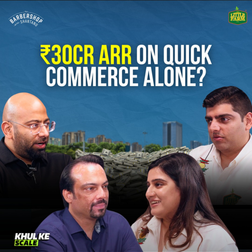
A ₹30 Cr pickle brand built from traditional recipes… now aiming for ₹500 Cr. But can a digital-first FMCG brand scale in India without going offline? In this episode, Niharika Bhargava (CEO, The Little Farm) and Aditya Bhargava (COO, The Little Farm) join Shantanu Deshpande (Founder & CEO, Bombay Shaving Company), along with Arjun Purkayastha (SVP & Managing Director, Greater China and North Asia, Reckitt), for a sharp conversation on building and scaling a modern food brand in India. Little Farm started by reviving family recipes and selling at farmers’ markets, before moving to D2C during COVID. Today, the brand has scaled to ~₹30 Cr ARR, with 70% of its revenue driven by quick commerce, selling over 70,000 jars every month. But growth brings harder questions: What does it really take to scale from ₹30 Cr to ₹200 Cr and eventually ₹500 Cr in a highly competitive, unorganised category? From distribution strategy and channel mix to inventory planning and product expansion, this episode breaks down the real decisions founders face while scaling a consumer brand in India. Problems we solve in this episode: • When is the right time for a young brand to enter offline retail, and does discovery still happen there? • How should founders move from manual inventory planning to a scalable forecasting system while staying cash-efficient? • When should a brand deepen its core category vs expand into new SKUs or adjacent products to drive growth? If you're building a D2C or FMCG brand, this episode offers a practical look at how modern brands are scaling today, and where most founders get it wrong. Navigate your way through these chapters: 00:00 Coming up 01:31 Introduction 02:39 How a Dadi’s Recipe Became Little Farms 05:22 The Journey of Scaling Little Farms 07:50 1st Question: When Is the Right Time to Enter Retail? 14:19 The Three Levers That Drive FMCG Growth 33:07 2nd Question: How to Build a Scalable Inventory System 42:00 3rd Question: When to Expand vs Deepen Your Core Category 46:33 The ‘Be Big, Be Fast, Be Bold’ Approach to SKUs 01:01:17 Why Nostalgia Works in Building Brands 01:04:56 Closing Thoughts
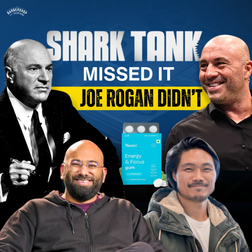
How Neuro Scaled $3M to $180M After Joe Rogan Mentioned It | Ft. Kent Yoshimura
What happens when Joe Rogan talks about your product… without being paid? In this episode of BarberShop Specials, Shantanu Deshpande sits down with Kent Yoshimura (Co-founder & CEO, Neuro) to break down how Neuro scaled from a niche idea to a global brand. Kent shares how a product built out of personal need turned into a business doing millions in revenue, and how one unexpected moment changed everything. From organic mentions by the world’s biggest podcast to building a powerful creator network, this episode uncovers how modern brands are actually built. The conversation also explores why creating a new category is harder than scaling an existing one, and how taste, pricing, and perception can make or break a product. What you’ll discover: 1. How Neuro went from $3M to $180M+ after key organic exposure 2. Why unpaid endorsements outperform traditional influencer marketing 3. The real challenge of building a new category (and why customers resist) 4. How TikTok compresses the entire purchase funnel into seconds 5. The creator flywheel that drives consistent brand growth Tune in for a no-filter conversation on distribution, psychology, and what it really takes to build a consumer brand today. Navigate your way through these chapters 00:00 Coming Up 00:56 Introduction 01:49 Neurogum Origin Story 05:22 Why the US Favours Multi-Careers 06:50 Entering A Crowded Market 08:36 US vs India Retail Game 14:47 Red Bull Wins With One SKU 19:05 $20K In 3 Days Trust 24:06 Joe Rogan Effect On Growth 28:42 Katy Perry Organic Push Moment 31:07 TikTok Drives Cross-Selling 36:03 TikTok Share In US Retail 37:47 AI Playbook Behind Neurogum 38:55 Creators vs Ads Reality 47:09 Coca Cola Playbook For Markets 54:36 What Entrepreneurship Really Feels 59:49 Closing Thoughts Shop for these on: Website - https://bit.ly/4sVSWpr Blinkit - https://link.blinkit.com/b/3y9itsvl Zepto - https://www.zepto.com/DeepLink?id=29d9a6d6-9805-4d95-b427-28c0974099d4&title=Neurogum
72% Repeat Rate but Only ₹23Cr Revenue: What’s Stopping Little Rituals From ₹100Cr?
In this episode, Gaurang Marvania (Founder, Little Rituals) joins Shantanu Deshpande (Founder & CEO, Bombay Shaving Company), along with Arjun Purkayastha (SVP & Managing Director - Greater China & North Asia, Reckitt), for a sharp conversation on building a premium baby-care brand focused on safe formulations and long-term trust with parents. Little Rituals started with just ₹50L and 3 baby oils and has now grown to a ₹23 Cr brand with a breakout sunscreen that did ₹12 Cr in revenue. Problems we solve in this episode: • Can a premium baby-care brand scale in India? • Should Little Rituals expand its product range? If you're building a D2C brand, consumer startup, or premium consumer product, this episode offers a practical look at the strategic decisions founders face while scaling a brand. Chapters: 00:00 Coming Up 01:22 Introduction 2:32 The Origin Story of Little Rituals 05:05 Growth Journey, Channels & Key Business Insights 07:07 How strong marketing drives brand growth 11:35 How can a brand build trust? 23:13 How to Influence Consumers to Buy 26:26 At ₹40 Cr, what should you focus on? 37:28 Dark Store Selection, SKU Launch & Working Capital Planning 45:00 When and Why to Raise Funding 51:57 Key Expert Insights for Brand Growth 54:08 Closing Thoughts
1 de 15