The Weirdling's Rise

The Weirdling's Rise

por Gus and Harley Aitoro
Temporada 1

🤔 Wide Sargasso Sea Fan Fiction: Bertha's Quest for Christophine's Secret

Two works present fan fiction that reimagines the character of Christophine from Jean Rhys's Wide Sargasso Sea, offering alternative backstories and motivations not explicitly found in the original novel or Jane Eyre. The first source, narrated by Antoinette, uncovers Christophine's past trauma involving abuse, murder, and a forbidden same-sex relationship, which led to her forced exile from Jamaica. The second source, the "Author's Notes," explains the creative choices behind this fan fiction, revealing inspiration from a song and a desire to explore themes of truth, deception, and the blurred lines between sanity and madness, especially in Antoinette's character. Ultimately, both texts aim to add depth and complexity to Christophine's character, creating a more mysterious and nuanced narrative.

↔️ The Shift: Modernizing Fundraising Operations
This excerpt from "The Shift: Modernizing Fundraising Operations" proposes a significant overhaul of a university's fundraising department. The Executive Summary introduces "The Shift" as a plan to move from siloed, school-specific fundraising to a more collaborative, cross-university approach. The Overview section highlights inconsistencies in workflow across different teams and presents survey results indicating that staff, while apprehensive, are capable of handling change both emotionally and rationally, aligning with the "Elephant and Rider" theory from "Switch: How to Change Things When Change is Hard." Finally, the Proposal outlines concrete steps for implementation, including reshuffling prospect portfolios and introducing a Belonging and Inclusion Group (BIG) to foster a more cohesive and efficient department.

⏳ The Urgency of Now: King's Timeless Justice
The essay we focus on this episode offers an analysis of Martin Luther King Jr.'s "Letter From Birmingham Jail," specifically focusing on the concept of "untimeliness" as raised by the clergymen. The author highlights King's powerful rebuttal to the idea that the civil rights demonstrations were ill-timed, emphasizing how King conveyed the urgent necessity for immediate action after centuries of injustice. The analysis underscores King's argument that waiting was synonymous with never, and that the oppressed could no longer defer their fight for equality. Ultimately, the text illustrates King's insistence on the "urgency of now" in the face of systemic oppression and broken promises.

💃 New York's Legendary Ballroom Scene: A Cultural Revolution

This is a special episode focusing on an important essay that explores the origins and cultural impact of New York City's ballroom scene, highlighting its emergence as a sanctuary for excluded Black and Brown queer individuals in the 1970s. It details how these competitions fostered community and a sense of belonging, particularly for displaced LGBTQ+ youth who found chosen families within "Houses." The text also discusses the ballroom scene's significant influence on mainstream culture, citing Madonna's "Vogue" and popular television shows like Pose and RuPaul's Drag Race as examples of its reach and the appropriation of its unique vernacular. Ultimately, the source emphasizes the scene's historical importance in the fight for gay rights and acceptance, despite the hardships faced by its participants.

🤔 Six Hats for Career Transition

Gus and Harley discuss a personal excerpt from "Six Thinking Hats: A Career Change Application," which outlines a personal application of Edward de Bono's Six Thinking Hats method to a career transition. The author details how each "hat" facilitated their decision-making process: the White Hat for objective information gathering, the Red Hat for acknowledging emotions without being controlled by them, the Black Hat for cautious risk assessment, the Yellow Hat for recognizing positive possibilities, the Green Hat for generating creative new options, and finally, the Blue Hat for managing the entire thinking process and making a decisive choice. This framework allowed for a structured and comprehensive approach to navigating a challenging professional change.

👤 Women, Stereotypes, and Media: A Critical Examination

This critical essay examines the impact of media and societal stereotypes on women, focusing on how these constructs create harmful environments, particularly for Black women. The author discusses Caster Semenya's public scrutiny due to her biological characteristics not fitting traditional female norms in sports, illustrating how the media sensationalizes differences. The text also references the historical introduction of "Norma and Normman" statues, designed to establish "normal" American body types, which inadvertently excluded and stigmatized diverse populations. Ultimately, the essay argues that these examples highlight the destructive consequences of rigid beauty and gender standards, perpetuated by media and societal expectations, on individuals who do not conform.

🤔 The Last Judgment: Divine Love and Human Justice
This episode examines a short essay that analyzes Karel Capek's short story, "The Last Judgment," focusing on God's unique role as an incapable judge due to unconditional love and intimate knowledge of humanity. The author highlights God's perspective that only humans are equipped to judge other humans, a concept that challenges traditional religious teachings where divine judgment is central. The analysis also explores the contrast between God's full awareness of a character's sins and His enduring compassion, prompting the author to reflect on their personal relationship with religion and the potential impact of this alternative theological view. Ultimately, the text considers the implications of human-to-human judgment, acknowledging the limitations of judging others without full understanding of their inner lives.

🤔 Socrates: Wisdom's Pursuit and the Unmasking of Pretension

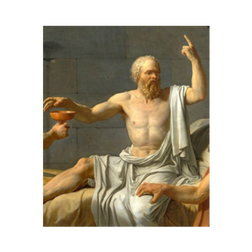
This episode's focused essay explores Socrates' pursuit of wisdom as he interviewed various esteemed individuals to understand the oracle's meaning. It highlights his discovery that many reputable figures, including politicians, poets, and skilled workers, often held an overinflated sense of their own knowledge, believing their expertise in one area extended to all. Socrates concluded that these individuals, while perhaps talented, lacked true wisdom and often spoke without genuine understanding, much like prophets or modern preachers delivering messages they don't fully comprehend. The author observes that this pretension to knowledge remains prevalent in society, even today, with supposed experts offering advice on subjects beyond their actual proficiency. Ultimately, Socrates found that his own acknowledgment of his ignorance gave him a unique advantage over those who falsely claimed wisdom.

🤔 Grand Central and Oculus: A Comparative Analysis

This episode focuses on an essay that offers a comparative analysis of two significant New York City transportation hubs: Grand Central Terminal and The Oculus (World Trade Center Transportation Hub). It highlights their architectural differences, noting Grand Central's ornate, formal design from 1913 compared to The Oculus's modern, open aesthetic. Despite their distinct styles, both structures are recognized as remarkable additions to the city, serving as crucial transportation centers. The source also points out that Grand Central, unique for being a terminal where routes conclude, boasts an impressive 44 platforms, the most of any such facility.

🏳️‍🌈 Influencer Voices: LGBTQ+ Mental Health & Coping Skills

The hosts discuss a piece that outlines a podcast project proposal titled "Influencer Voices: LGBTQ+ Mental Health & Coping Skills." This proposed podcast aims to support LGBTQ+ youth by featuring interviews with internet influencers who share their personal struggles and mental health coping mechanisms. The goal is to provide positive role models and demonstrate healthy ways to overcome adversity, particularly for vulnerable young people lacking other resources. The proposal also touches upon minimal startup costs and the target audience, emphasizing its potential to foster tolerance and acceptance.
4 de 5