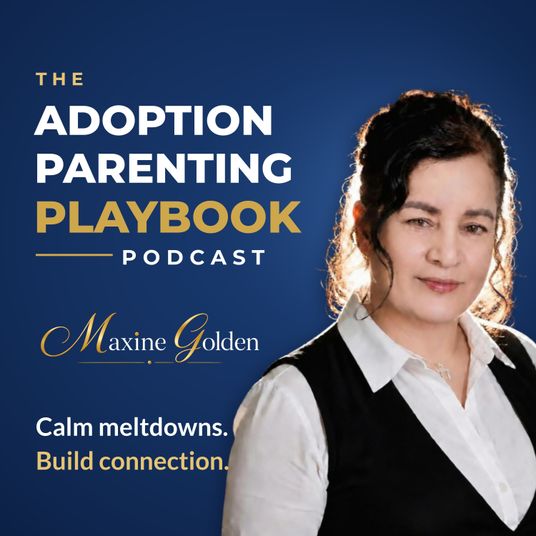
The Adoption Parenting Playbook Podcast

The Adoption Parenting Playbook Podcast

por Maxine Linda Golden
Temporada 2

Preparing Your Household & Existing Children

Before you can offer co-regulation to a child joining your family, you must first audit the emotional ecosystem of the home they are walking into. Preparing your household is not about creating a perfect environment; it is about building deep self-awareness. Welcome back to The Adoption Parenting Playbook Podcast. I'm your host, Maxine Golden, and today we are focusing on home preparation through two vital lenses: regulating your own adult nervous system, and supporting the existing children already in your home. Preparing for placement goes far beyond setting up a bedroom and childproofing your space. True preparation requires an honest evaluation of your personal physiological triggers. Ask yourself: how does your body respond to intense noise, physical rejection, overt lying, or persistent defiance? When you identify your personal triggers ahead of time, you prevent a child's survival behaviors from pulling you into your own fight or flight response. You cannot lead a child to a state of calm that you cannot access yourself. Equally critical is preparing the biological or previously adopted children already in your home. A new placement drastically alters family dynamics, daily schedules, and parental attention. Existing children often experience secondary dysregulation, feeling confused or guilty when resentment surfaces. To protect and support your existing children, implement three core practices. First, validate their full range of emotions without judgment. Let them know it is completely normal to feel angry, sad, or overwhelmed by changes in the house. Second, fiercely protect their personal belongings and private space. Every child in the home deserves a safe area where their boundaries are respected and enforced. Third, schedule non-negotiable, one-on-one micro-moments with your existing children. Brief, dedicated connection time reinforces that their place in your heart and home remains entirely secure. When you prepare your household by auditing your triggers and protecting your existing kids, you build a resilient foundation capable of welcoming a new child's complex trauma. Thank you for tuning in to Episode 3. If this episode helped you think differently about preparing your home, please take a moment to subscribe, rate, and review the podcast. Share this episode with a family currently preparing for a new foster or adoptive placement. Join us next week for Episode 4, where we will navigate open court cases, multidisciplinary teams, and avoiding the system trap. Take a deep breath, ground your nervous system, and keep building connection.

Navigating the Gap: Post-Adoption Support & Funding Therapy

Systemic support often ends at finalization, but that is precisely where the nervous system work begins. Securing specialized therapy isn't an admission of failure; it is the infrastructure of connection. Welcome back to The Adoption Parenting Playbook Podcast. I'm your host, Maxine Golden, and today we are diving into a topic that catches almost every foster and adoptive family off guard: The Gap. That disorienting space between signing legal papers and realizing that standard parenting advice, and standard healthcare, is not built for developmental trauma. When you bring a child home, you quickly realize there is a massive difference in how support systems operate. Families adopting through public foster care often retain Medicaid and basic adoption subsidies. But families navigating private or international adoption frequently find themselves on a financial island, facing steep out-of-pocket costs for specialized, trauma-informed care. And here is the hard truth: traditional talk therapy often fails our children. Standard counseling relies on the cognitive upper brain. But developmental trauma is stored in the lower brain stem and the body. Asking a dysregulated child to sit on a couch and talk about their feelings is like asking someone to fix a car engine by painting the hood. To actually shift a child's nervous system, we need bottom-up somatic interventions. Modalities like Brainspotting, EMDR, and Trust-Based Relational Intervention target the implicit memories stored in the body. To fund these specialized therapies when insurance says no, you have concrete pathways. First, explore post-adoption grant programs through foundations and state-specific family preservation funds. Second, look into educational funding pathways like Step Up For Students or specialized educational savings accounts to cover approved therapies. Third, advocate for single-case agreements with your insurance provider to cover out-of-network trauma experts at in-network rates. Remember: traditional talk therapy isn't enough, don't take an initial insurance denial as the final word, and building your care team is a proactive act of connection. Thank you for tuning in to this crucial episode. If this episode gave you practical steps to advocate for your child's care, please subscribe to the podcast and leave a quick review so other families can find these resources. Don't forget to share this link with a parent or caregiver who is currently fighting for therapy coverage. Join us next week for Episode 3, where we will discuss how to prepare your household environment and support the existing children already in your home. Take a deep breath, ground your nervous system, and keep showing up.

Love Isn't Enough (And That’s Okay)

When we tell a child whose brain is wired for threat that all you need is love, we ask them to trust a promise their nervous system cannot verify. Love is our intent; felt safety is their reality. Until the body feels safe, love cannot enter the building. Welcome to The Adoption Parenting Playbook Podcast. I'm your host, Maxine Golden, and today we are tackling a foundational truth in foster and adoptive parenting: Love Isn't Enough, And That’s Okay. If you have ever felt deep guilt because your intense love for your child did not stop a raging meltdown or instantly build trust, take a deep breath. You are not failing. You are up against neurobiology. In this episode, we retire three major adoption myths that create unnecessary pressure in our homes. First, a safe home does not automatically erase the past. A safe bedroom is your physical reality, but trauma alters neuroception, meaning your child's nervous system may still perceive fight or flight in a safe environment. Second, pre-verbal stress and early moves leave implicit physical footprints on the nervous system, even if the child was too young to hold cognitive memories. Third, expecting gratitude creates an impossible burden, because adoption always begins with loss. Healing requires shifting from environmental safety to felt safety. Environmental safety is what you build, like predictable routines and gentle voices. Felt safety is the internal biological state where your child's body finally drops its guard. When felt safety is missing, pain surfaces as sideways grief. Children rarely process trauma through calm words; instead, grief comes out sideways as explosive rage, food hoarding, control tactics, or emotional shutdown. To support them, we must swap immediate compliance for lowering the threat level. Instead of saying, look at everything we do for you, try saying: your body feels unsafe right now, but you are secure here, and I will stay right here while your nervous system settles. Always remember: love motivates you, but felt safety regulates them. Behavior is communication, and a dysregulated adult can never calm a dysregulated child. Thank you for tuning in to this foundational episode. If this message brought a sense of relief to your parenting journey today, please hit the subscribe button so you never miss an episode. Share this with a fellow foster or adoptive parent who needs to hear that they are not alone. Join us next week for Episode 2, where we will break down how to navigate post-adoption support and fund trauma-informed therapy beyond standard care. Take a deep breath, ground your nervous system, and keep building connection.
Temporada 1

Survival Responses

That meltdown, that shutdown, that overly agreeable "yes ma'am" your child gives you before they've even heard the question: none of it is defiance. It's biology. Every child who has lived through relinquishment, multiple placements, or early neglect carries a nervous system that learned to survive first and connect second. Once you can see fight, flight, freeze, and fawn for what they are, the behavior stops feeling like a problem to punish and starts feeling like a signal to answer. Episode Summary This episode builds directly on the nervous-system foundation from earlier chapters. We go deeper into the four survival responses, fight, flight, freeze, and fawn, and what each one actually looks like day to day in a child who came to your family through foster care or adoption. We talk about why these responses show up even when your home is safe now, how to tell a survival response apart from a straightforward behavior problem, and what a parent's own regulated nervous system can offer a child in that moment. The goal is a practical way to recognize which response you're seeing, in real time, and respond to the nervous system underneath it rather than just the behavior on top. What You'll Learn The four survival responses (fight, flight, freeze, and fawn) and how each one shows up in children's everyday behavior Why a child's nervous system can react to present-day safety as though the original danger is still happening How to tell the difference between a survival response and a child simply testing a limit The role of co-regulation: how a calm adult nervous system helps a dysregulated child find their way back Specific in-the-moment ways to respond to each of the four responses, rather than one generic approach for all of them Who This Is For Foster and adoptive parents who want to understand what's actually happening in their child's body during a meltdown, a shutdown, or sudden compliance, and who want a response that meets the nervous system state instead of just managing the behavior. A Line Worth Sitting With "Fight, flight, freeze, and fawn were never the problem. They were the plan that kept your child alive. Your job now isn't to shut the plan down. It's to show them they don't need it here." Center for Parent Coaching, Brainspotting & Therapy. Train. Transform. Thrive.

Trauma Resources

Survival responses are what your child's body does in a single moment. Trauma responses are what that same body starts doing all the time. Hypervigilance at the dinner table. Shutting down over a small correction. A "sorry" that comes before you've even said anything. These aren't random, and they aren't a phase. They're the lasting shape early trauma leaves on a child's nervous system, long after the danger that caused it is gone. Episode Summary Where the last episode looked at fight, flight, freeze, and fawn as in-the-moment responses, this one steps back to the bigger picture: what happens when a child's nervous system organizes itself around trauma as an ongoing state rather than a passing reaction. We talk through the patterns that show up most often in foster and adoptive kids, hypervigilance, dissociation, emotional flooding, difficulty trusting safe adults, and a tendency to carry blame that was never theirs to carry. We also talk about why these patterns can look like defiance, anxiety, or an attachment problem on the surface, and why treating the pattern instead of the root usually doesn't hold. The aim is to help you recognize a trauma response for what it is, and know what actually helps it soften over time instead of just managing it moment to moment. What You'll Learn How ongoing trauma responses differ from single-moment survival responses, and why both matter The most common trauma response patterns in foster and adoptive children: hypervigilance, dissociation, emotional flooding, mistrust of safe adults, and misplaced self-blame Why these patterns often get mistaken for defiance, anxiety, or a straightforward behavior problem What actually helps a trauma response soften over time (consistency, felt safety, and repair) versus what tends to reinforce it How to hold realistic expectations for how long this process takes, and why regression under stress is normal, not a setback Who This Is For Foster and adoptive parents who see patterns in their child, not just single outbursts, and want to understand what those patterns are actually telling them, along with what genuinely helps over the long haul. A Line Worth Sitting With A trauma response isn't your child telling you something is wrong with them. It's their body still telling an old story. Your steadiness is what teaches it a new one. Center for Parent Coaching, Brainspotting & Therapy. Train. Transform. Thrive.

Private Adoption

Private adoption often comes with less built-in support than adopting through foster care. That doesn't mean you're on your own. It means you need a plan before you need the help. Episode Summary Families who adopt through the foster care system often keep access to Medicaid, adoption subsidies and agency-funded therapy. Families who adopt privately usually carry those costs themselves. In this episode, Maxine walks through what to line up before and after a private adoption, so your child can get trauma-informed care without your family hitting a wall. What You'll Learn What to check in your health insurance before placement, including whether trauma-focused and adoption-related therapy is covered Why an adoption-competent therapist who includes the whole family in treatment is non-negotiable How superbills and community funding (such as Step Up For Students, the Sylvia Thomas Center and Camelot) can help with the cost of therapy Why budgeting for ongoing therapy and coaching is one of the most protective things you can do Where to find support groups that welcome private and international adoptive families Why it's worth asking, before finalization, whether your child could still qualify for state adoption assistance How the federal adoption tax credit works, and what it does and doesn't replace Who This Is For Families adopting privately, independently or internationally, and anyone supporting them, who want to plan for therapy and support before the first hard season arrives. A Line Worth Sitting With "Therapy is one of the most overlooked expenses of a private adoption, and one of the most protective if you plan for it early." This episode is informational, not legal or financial advice. Programs and rules vary by state and change over time, so confirm what applies to your family with your adoption attorney or agency. Center for Parent Coaching, Brainspotting & Therapy. Train. Transform. Thrive.

Adoption Subsidies

Nobody hands you a manual for the money side of adoption, and that silence costs families more than they realize. There's real financial support available to adoptive families. Most parents just find out about it too late, or not at all. This episode is the conversation you wish someone had handed you before you signed anything. Episode Summary Adoption isn't just an emotional journey, it's a financial one, and this episode pulls that piece out into the open. We walk through the basics of adoption subsidies and financial assistance: what they're meant to cover, how a child's "special needs" designation factors in, and why the support available through the foster-care system looks different from what's available through private or independent adoption. This isn't legal or financial advice. It's a map of the right questions to bring to your caseworker, agency, or your own attorney, so you walk into those conversations informed instead of guessing. What You'll Learn What an adoption subsidy is actually meant to cover, and how eligibility gets determined How the "special needs" designation works for subsidy purposes, and why it's a legal/administrative term, not a judgment about your child The differences in financial assistance between adopting through foster care versus private or independent adoption Why every state (and every family's situation) is different, and where to go to get answers specific to yours The right questions to bring to your agency, caseworker, or attorney, instead of the ones that leave you more confused Who This Is For Prospective and current adoptive parents, especially those navigating foster-to-adopt, kinship, or private adoption, who want to understand the financial support landscape before (or while) they're in it. A Line Worth Sitting With "This isn't legal or financial advice. It's permission to ask better questions, and to know you're allowed to ask them before you sign anything, not just after." Center for Parent Coaching, Brainspotting & Therapy. Train. Transform. Thrive.

Building Regulation

Your child's behavior isn't the problem. It's the smoke, not the fire. Underneath every meltdown, shutdown, or "why is he doing this AGAIN" moment is a nervous system that hasn't learned it's safe yet. You can't parent your way around that with a better consequence chart. You have to build regulation first. Everything else comes after. Episode Summary In this episode, we get to the piece that changes everything else: regulation is the foundation, not a nice-to-have. Before consistency works, before connection lands, before any strategy "sticks," your child's nervous system has to know your home is a safe place to land. We talk about what that actually looks like day to day: steady routines, predictable responses, and a felt sense of safety that a child's body registers long before their behavior shows it. This one is for the parent who's tried the charts, the rewards, the logical explanations, and is still white-knuckling their way through the hard moments. The shift isn't about trying harder. It's about building safety and regulation as the ground everything else stands on. What You'll Learn Why regulation has to come before behavior change, not after it How consistency and routine become a felt sense of safety for a child's nervous system, not just a schedule on the wall What it actually looks like to co-regulate with your child in the moment, instead of just managing the behavior When and how to bring in a trained, attuned provider (and what "attuned" should mean to you as a parent) Why "calm" is something you build together, not something you demand from your child Who This Is For Adoptive, foster, and kinship parents, and anyone parenting a child who has experienced early trauma or disruption, who are ready to move past behavior management and start at the root: nervous system safety. A Line Worth Sitting With "Regulation is the foundation. Everything else you're trying to teach your child is built on top of it, or it isn't built on anything at all." Center for Parent Coaching, Brainspotting & Therapy. Train. Transform. Thrive.

Understanding Early Trauma's Impact on the Growing Brain

Every child who joins a family through adoption or foster care has experienced at least one significant loss. Love gives them a safe place to process it, but love does not erase it. Episode Summary In this episode, Maxine looks at the loss a child carries into even the safest, most loving home. She talks about why "we give them everything" doesn't explain the behaviors so many adoptive parents see, how experiences before a child arrives (including in the womb) can shape the developing brain and nervous system, and why grief so often shows up sideways. What You'll Learn Why every adopted or fostered child carries loss, even a child placed at birth How early and in-utero experiences can shape a child's triggers and daily functioning years later How to hold two truths at once: the placement is good for your child, and your child is grieving something real What grief looks like in a child who doesn't yet have the words for it: irritability, silliness, refusing to talk about the past, or asking the same question about a birth parent again and again Who This Is For Adoptive, foster and kinship parents who are giving their child everything and still wondering why the behaviors haven't changed. A Line Worth Sitting With "Love does not erase that loss. It gives a child a safe place to eventually process it." Center for Parent Coaching, Brainspotting & Therapy. Train. Transform. Thrive.

Welcome to the Adoption Parenting Playbook: The Loss Your Child Carries Home

Whether you're still waiting for a placement or your child has been home for twelve years, this playbook was written for you. In this opening episode, Maxine Golden introduces The Adoption Parenting Playbook: A Nervous System Guide to Calming Meltdowns and Building Connection. She explains who the book is for, the frameworks behind it, how its three parts are organized, and what it is and isn't meant to do. The episode ends as Part One begins, and the next episode picks up with the loss your child carries home. In This Episode Welcome, and an educational note: the playbook is not a substitute for individualized therapy, medical advice or professional evaluation The frameworks behind the book: Brainspotting, Polyvagal Theory, Trust-Based Relational Intervention (TBRI), attachment science and somatic approaches How the book is organized: three parts across 19 chapters How to use it: start with the chapter that speaks to what's happening in your home this week What the playbook is and isn't, and when to reach out to a licensed therapist Part One begins: Preparing for Placement Press play, and subscribe so you don't miss a chapter of the playbook. Center for Parent Coaching, Brainspotting & Therapy. Train. Transform. Thrive.
1 de 2