Julian Raven's Elmira Says Yes Podcast

Julian Raven's Elmira Says Yes Podcast

por Julian Raven
Temporada 1

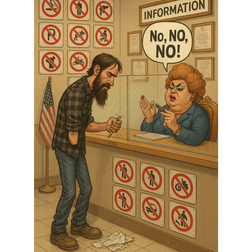
Taxpayers are Funding the Decaying American Bureaucracy and Paying the Price Too

The decay of American bureaucracy reflects a deeper spiritual rot. Once rooted in public service and humility, civil institutions have become self-serving and hostile. True leadership, like that of Lincoln and Washington, was grounded in servant-hearted values—now lost in a system driven by pride, entitlement, and indifference.

Squirrels, Solvents, and $600,000 Boogeymen — A DEC Tale as Told from Elmira’s Front Row

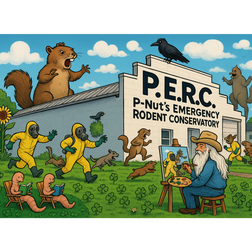
www.714BaldwinStreet.com It’s been a banner year for the New York State Department of Environmental Conservation (DEC)—if you’re measuring in PR disasters. And few stories have captured the public’s bewildered attention quite like the tale of Peanut, Elmira’s most famous (and tragically doomed) squirrel. Seized from his caretaker and euthanized by the DEC despite testing negative for rabies, Peanut’s story ignited outrage across the Southern Tier. There were murals. There were headlines. There was even a heartfelt public apology... Peanut may have been just one small mammal, but his saga touched a nerve. It wasn’t about rabies. It was about unaccountable bureaucracy steamrolling common sense and trampling the relationship between citizens and their public servants. And I would know—I’ve had a front-row seat. For nearly a decade, I’ve been trying (and I use that word generously) to engage the DEC about my property at 714 Baldwin Street. What began as an effort toward mutual understanding has spiraled into a masterclass in obfuscation, avoidance, and bureaucratic kabuki theater. Their most recent public meeting at the Steel Memorial Library was a textbook example. The event, supposedly an informational session, was advertised on the library display sign as being about 417 Baldwin Street. That’s not a typo; that’s a diversion fit for a stage magician. Was it a clerical error or a strategic shuffle? Either way, the result was confusion. As I joked on the way in, maybe their concerns (and that $600,000 cleanup plan) had magically transferred to someone else’s property. Inside, the crowd was intimate: myself, my son, two curious locals, DEC Regional Director Tim Walsh, and a silent, baseball-capped man who neither wrote nor spoke nor later published anything. Media rep? Security? Government plant? Ghost of Peanut? The DEC’s host, Kira Bruno, is a well-meaning newcomer who previously forgot to invite me to the first meeting—causing a delay in the whole process. This time, she remembered, and introduced Mark Wright, a mumbly geologist-contractor whose explanation of chemical vapor intrusion was less “scientific clarity” and more “fog machine on a foggy day.” But when it came time to recommend a $600,000 remediation solution? Suddenly, things got crystal clear. I questioned how we leapt from prior cost estimates of $10K–$70K to $600,000. Kira claimed it was based on a blend of expert and public opinion. Here’s the twist: the public hadn’t spoken yet. We were still seated. All four of us. I asked the panel to make their data intelligible. Environmental reports are famously opaque, and most residents don’t have the time or training to decipher PPMs, plume models, and mitigation matrices. If you want true “public feedback,” try using plain English, visuals, analogies—anything accessible to the average person. Silence. Then came Harolyn Hood from NYS Health. Her warning about the potential reproductive risks of vaporized dry cleaning fluid made the room drop 10 degrees. That is, until she clarified: no airborne threat currently exists on neighboring properties. None outside my warehouse. And the chemicals in question? Sold commercially under the label brake cleaner. The same pungent solvent mechanics blast over greasy engine parts every day. Apparently, the air samples showed quantities so small, they could’ve been recorded in quantum code. But fear sells, and scary graphs justify big cleanups. Unfortunately for the DEC, the thriving local ecosystem didn’t get the memo. Groundhogs flourish on site. The earth is rich, clover-filled, and earthworms sunbathe like retirees on lawn chairs. Squirrels—plentiful, unbothered—scamper about like it's a woodland utopia.
Precious Long Form Podcast Interview of Julian Raven's Artistic Development & Healing Journey with Gifted and Curious Host, Artist Rich Wright on his Show 'Artist Recovery Podcast'

Rich is a truly gifted podcast host who methodically, and with great sensitivity, unveils your own story to his audience through his profoundly attentive listening and the formulation of the precise questions necessary to unfold your story. It was a pleasure to share my artist journey on the Artist Recovery Podcast with Rich Wright. Rich Wright can be reached at www.artistrecoverypodcast.com

The Sacred Cow of American Culture: The Smithsonian Institution and Its Unquestioned Reverence

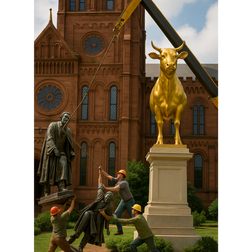
The Sacred Cow of American Culture: The Smithsonian Institution and Its Unquestioned Reverence By Julian Raven | Voice in the Wilderness Every country houses a “sacred cow” so revered that critique feels like heresy. Britain has the monarchy, Spain the Catholic Church, and the United States—cloaked not in robes but in red-sandstone towers—has the Smithsonian Institution. Its marble corridors echo with more than artifacts; they hum with national mythology. Media pundits, federal judges, and schoolteachers reflexively defend it, as if loyalty to the museum were loyalty to the flag itself. Yet I, born in London and raised in Marbella, never made the childhood pilgrimage to Washington. I view the Castle without nostalgia—and the spell breaks. A Royal Bastard’s Bequest The Smithsonian exists because James Smithson, illegitimate son of the 1st Duke of Northumberland, willed his fortune (105 sacks of gold sovereigns) to a republic he never visited. Shunned in Victorian society, he sought immortality abroad. Congress debated the gift—Senators Preston and Calhoun called it undignified—yet in 1846 accepted, founding an institution “for the increase and diffusion of knowledge.” Smithson left no paradigm-shifting discovery: a minor mineral, Smithsonite, bears his name. But the U.S. transformed his shame into a 21-museum temple holding 154 million objects—a shrine to American identity financed by British aristocratic guilt. Psychological Imprint When an entire nation learns its history through one gatekeeper, that gatekeeper becomes gospel. The Smithsonian isn’t merely a museum; it is a storytelling engine that shapes collective memory. Questioning it triggers the same reflex as questioning scripture. Trustee to Taxpayer Congress accepted Smithson’s gold as trustee, promising 6 percent annual interest to run the enterprise. Over time the trust blurred: the interest faded, the funds were absorbed, and taxpayers now bankroll what was meant to be a self-sustaining gift. Investigations, including a 1976 Washington Post exposé by Charles Krause, uncovered private Smithsonian corporations and vanished slush-fund dollars—yet the aura of sanctity persists. The Cult of the Display Case Because the Smithsonian presents itself as neutral, its omissions hide in plain sight. Displays can freeze an official narrative while inconvenient truths gather dust in storage. Reverence morphs into idolatry; dissent looks unpatriotic. Sacred or Sober? The Smithsonian is not intrinsically evil, yet its untouchable status is dangerous. A mature republic must prod its icons: Which voices are missing? Who profits from the narrative? Sacred cows, after all, make the tastiest hamburgers. I speak as an outsider who sees the gilt and the cracks alike. My journey—from submitting a Trump portrait, to being black-listed, to suing the Institution, detailed in Odious and Cerberus: An American Immigrant’s Odyssey and His Free-Speech Legal War Against Smithsonian Corruption—shows what happens when you rattle the nation’s golden calf. I’m Julian Raven, sounding a Voice in the Wilderness: bring the idol down to eye-level, inspect it, and let the true stories breathe. #Smithsonian #SacredCow #InstitutionalIdolatry #HiddenHistory #VoiceInTheWilderness #JulianRaven #OdiousAndCerberus #FreeSpeech #CulturalMythology

What is The Smithsonian Institution Legally? President Trump Fires Director Kim Sajet on Legal Fiction Podcast Episode 1

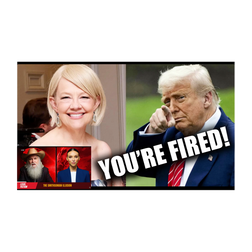
Legal Fiction Ep. 1 – The Smithsonian Illusion | Julian Raven on Free Speech, Trust Law & Constitutional Crisis Description: 🎙 In this premiere episode of Legal Fiction, host Alexandra Reed sits down with artist and litigant Julian Raven, whose years-long legal battle against the Smithsonian Institution is exposing a deeper constitutional crisis the media missed. When former President Trump called for the removal of National Portrait Gallery Director Kim Sajet, most headlines focused on political spectacle. But behind the scenes, Raven’s case—Raven v. Sajet—raises an unresolved legal question: 👉 What is the Smithsonian Institution—federal agency or public trust? 📜 This episode explores: – Raven’s First Amendment lawsuit and its Supreme Court trajectory – The contradiction between “government speech” and public trust – Media silence and journalistic failure – What’s at stake for artists, citizens, and constitutional law – Why this may be one of the most overlooked legal battles in America 🧠 If you care about free expression, government accountability, or the future of public institutions, this episode is for you. 🔔 Subscribe, share, and follow us on all platforms for more in-depth interviews exposing the stories the law tells—and the ones it hides. Keywords: Smithsonian Institution, Julian Raven, Legal Fiction Podcast, Kim Sajet, John Roberts, Supreme Court, free speech, First Amendment, public trust, government speech, legal controversy, constitutional crisis, public institutions, Raven v Sajet, legal podcast, art censorship, legal contradiction, SCOTUS, Washington DC lawsuits, fiduciary trust, media bias, government accountability Hashtags: #JulianRaven #LegalFiction #Smithsonian #FirstAmendment #SupremeCourt #KimSajet #FreeSpeech #PublicTrust #ConstitutionalLaw #ArtCensorship #GovernmentAccountability #MediaBias #SCOTUS #LegalPodcast #RavenvSajet

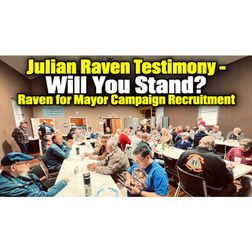
Julian Raven Christian Testimony - Will You Stand? message and Raven for Mayor Recruitment at Men's Breakfast, Horseheads, New York

Will You Stand?

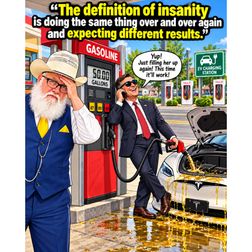
History Repeating Itself - Doing the same thing over and expecting different results..insanity!

ELMIRA SAYS YES | History Repeating Itself: Elmira's City Manager In 1972, Elmira promoted its City Chamberlain to City Manager just before Hurricane Agnes devastated the city. Fifty-four years later, amid another fiscal crisis, history repeats itself. Following Michael Collins's retirement, City Chamberlain Charmain Cattan takes over as Interim City Manager. Julian Raven examines the troubling parallels, Elmira's failure to recover economically, and whether the city's 94-year-old system of government has become part of the problem. Are we learning from history or repeating it?

Is Rural King Good for Elmira, Good for Rural King, or Good for Both?

This week, Rural King opened in Elmira to packed parking lots, ribbon cuttings and a lot of excitement. I am a free-market capitalist and an entrepreneur. I have no objection to large retailers, and I hope Rural King succeeds. But Elmira has been struggling economically for decades, and that means every major development decision deserves serious scrutiny. So this podcast asks a simple question: Is Rural King good for Elmira, Good for Rural King, or good for Both? We are going to look past the opening-day crowds and examine the harder issues: net job creation, pressure on local hardware and farm stores, money leaving the region, big-box retail concentration, downtown development, location, and what happens if a large chain eventually leaves after smaller competitors have disappeared. This is not an argument against Rural King. It is an argument for asking the questions that should have been asked before the ribbon was cut.

The Elmira Skatepark Story You have Never Heard - Part 2 of 5 Exposing Local Elmira Media Bias

Elmira’s aging skatepark became the center of a bigger debate over stewardship, government grants, community responsibility, and how local media frame civic disagreement. In this episode, Julian Raven examines his proposal to restore the existing park, the city’s push for a new state-funded facility, and the press conference exchange that largely disappeared from the evening news—asking whether Elmira received the full debate or only the official story.

Elmira's Baldwin St. Truck Crash Story or Rescue/CPR/Man Lives? Did WENY and WETM Steal the Good from Elmira? How the Corrupt Local Media Reframes The News to Remove the Good When it Threatens Their Agenda

After a pickup truck crashed into a Baldwin Street home, Julian Raven called 911, helped remove an unresponsive driver from the vehicle, and joined a DPW worker in CPR and rescue breathing until emergency crews arrived. Yet local coverage largely framed the event as a property-damage story and reduced Raven to a “crash witness.” This episode compares the Elmira reporting with similar rescue stories elsewhere and asks how editorial framing can change what a community understands—and remembers—about what really happened.
1 de 2