BrainCast

BrainCast

por Sussex Neuroscience Society

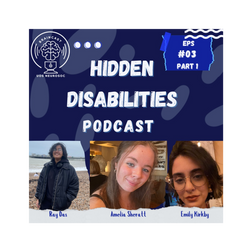
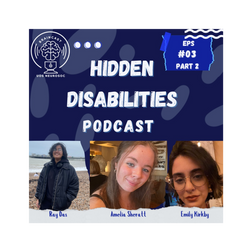
EPISODE 3- idiopathic intracranial hypertension (part 2)

Join Emily and Ray this week in a long format (part 2 of 2) session to talk with our guest Amelia about lived experiences with neurological disorders. In this episode, we follow Amelia’s journey with idiopathic inter cranial hypertension and how it affects their life. Please Enjoy and Follow!

EPISODE 3- idiopathic intracranial hypertension (part 1)

Join Emily and Ray this week in a long format (part 1 of 2) session to talk with our guest Amelia about lived experiences with neurological disorders. In this episode, we follow Amelia’s journey with idiopathic inter cranial hypertension and how it affects their life. Please Enjoy and Follow!

From Rejection to Resilience: Interview Tips with Scientifica's Stephanie Baldwin

When looking for a job, chances are you'll face a few "no's" before you get to a "yes" — and that's not necessarily a bad thing! In this podcast, Stephanie Baldwin, People Services Manager at Scientifica, joins Ray Das, co-host of BrainCast, for an insightful discussion on embracing rejection and top interview tips. Stephanie explains how each rejection can be a chance to learn, grow, and refine your approach, sharing practical strategies to turn those setbacks into stepping stones for growth, resilience, and personal development. About Scientifica - Scientifica is a leading producer of state-of-the-art electrophysiology and imaging tools. Scientifica supports researchers around the world to make advancements in neuroscience, cardiology, cancer research, and various other scientific areas. In addition to leading equipment and comprehensive support, Scientifica hosts an extensive Resource Centre dedicated to fostering the sharing of expertise, which is full of a wide range of blogs, videos, case studies, and much more! Interested in hosting an episode, or joining as a guest speaker? Pop us an email - sj464@sussex.ac.uk / fm421@sussex.ac.uk
Consciousness with Anil Seth

Anil Seth is one of the most prominent consciousness researchers in the 21st century. Working as a professor of Cognitive and Computational Neuroscience at the University of Sussex, and director of the Sussex Centre for Consciousness Science, Seth focuses on how brain systems operate to produce the rich inner experience we are all familiar with, but that is inherently different for each of us. As if this wasn’t impressive enough, Seth is also the author of the Sunday Times Top 10 bestseller, ‘Being You’, and the speaker of one of TED’s most popular science talks. In this episode of BrainCast, our co-hosts Loll Downes and Paddy Haresnape speak with Seth about how the field of consciousness science can be translated into psychiatric medicine, the phenomenon of inner diversity and our perceptions of the world, and the possibility of conscious AI machinery. Listen to this episode to better understand individual perceptions of reality and the self, and the current approaches to uncovering the mysteries of consciousness. To learn more about the incredible work of Anil, find his website, and his TED talk, linked below. https://www.anilseth.com/ https://embed.ted.com/talks/the_ted_interview_anil_seth_explores_the_mystery_of_consciousness Purchase Anil’s highly praised book here. Interested in hosting an episode, or joining as a guest speaker? Pop us an email - ac2021@sussex.ac.uk :)

Mitochondrial Diseases with Aya Tarabeine

In today's episode of BrainCast, our host Alice Cox speaks with Aya Tarabeine, a postgraduate research student at UCL's Queen Square Institute of Neurology, about her journey to study mitochondrial function, her thoughts and opinions on current debates within mitochondrial biology, and moments of running her own podcast that has been particularly memorable. Listen to Aya's own podcast, Your Brain Uncovered, here. Similarly, if you have any questions for Aya, feel free to reach out using aya.tarabeine.22@ucl.ac.uk. For more frequent BrainCast updates, follow us on Instagram (@usneurosoc) or Twitter (@SussexNeuroSoc). Any further questions, drop us a message at ac2021@sussex.ac.uk.

Hidden Disabilities: Functional Neurological Disorder Awareness

In today's episode of BrainCast, we continue the Hidden Disabilities series where our host Emily Kirkby talks with Rae about her hidden disability; Functional Neurological Disorder (FND), a disorder characterised by the dysfunction of the nervous system, and how the brain/body send and receive signals. Rae discusses her experiences with the healthcare system, and what they think needs to be done to make society more accessible for those with a hidden disability.

Food Rewards and Cues with Dr Eisuke Koya

In today's episode of BrainCast, our host Angus Thain talks with Dr Eisuke Koya, a reader in behavioural neuroscience at the University of Sussex, about appetitive associations between food rewards and cues that predict their availability.

PhD Research with Oluwaseyi Jesusanmi

In today's episode of BrainCast, our host Maja Nowak talks with Oluwaseyi Jesusanmi, a PhD student working on sensory neuroscience at the University of Sussex, about his PhD project, his work experience in Japan, as well as his advice for undergraduates looking to go into academia.

Diversity in STEM Research with Dr Eleanor Jayawant

In today's episode of BrainCast, our host Sam Gornall talks with Dr Eleanor Jayawant, a Research Fellow in Computational Systems Biology at the Brighton and Sussex Medical School, about experiences of a career in STEM with disabilities, and why it is important to encourage diversity in every field, not just research.

Hidden Disabilities: Hereditary Neuropathy with Liability to Pressure Palsies

In today's episode of BrainCast, we begin the Hidden Disabilities series with hosts Emily Kirkby and Sude Umac, who talk with University of Sussex student Alex Michael about their hidden disability, Hereditary Neuropathy with Liability to Pressure Palsies (HNPP). We talk about their experiences within the healthcare and educational system, and what they think needs to be done to make society more accessible for people with hidden disabilities.
2 de 3