The STEM Lab

The STEM Lab

por The Stem Lab
How to Choose Age-Appropriate Engineering Projects for Teenagers
IA
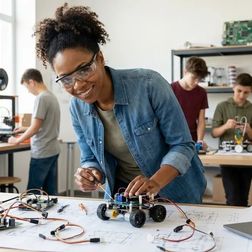
How to Choose Age-Appropriate Engineering Projects for Teenagers You'll learn to evaluate engineering projects for teenagers by mapping technical requirements to actual skill milestones, not arbitrary age brackets. This guide walks through assessing prerequisites, compatibility, expandability, and career alignment—so you can select projects that build sequentially toward industry-standard competencies. Expect to spend 20 minutes identifying your teenager's current capabilities and 10 more matching them to project pathways that challenge without overwhelming. What You'll Need: - Current skill inventory: programming languages known (block-based, Python, C++), CAD experience, electronics breadboarding comfort - Lab infrastructure assessment: available power capacity (120V outlets, surge protection), workspace ventilation, tool access - Target platform documentation: Arduino IDE compatibility notes, Fusion 360 licensing status, GitHub account setup - Progressive learning path map (see (/article/how-to-design-stem-learning-path)) - Budget ceiling and recurring cost tolerance (subscriptions, consumables, cloud credits) Step 1: Inventory Existing Technical Proficiencies and Tool Famil…

Teen Home STEM Lab Setup Checklist: Essential Equipment and Tools

IA
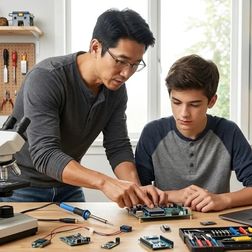
Teen Home STEM Lab Setup Checklist: Essential Equipment and Tools Building a home STEM lab for teenagers isn't about filling a room with flashy gadgets. It's about establishing a progressive capability-building environment where your teen develops actual skills used in engineering, computer science, and research careers. I've equipped dozens of these spaces, and the difference between a functional lab and a glorified toy closet comes down to intentional infrastructure choices. This checklist covers the essential categories—from computing platforms to measurement tools—that transform a bedroom corner or garage space into a legitimate skill-development workshop for teens aged 13-18. Computing and Programming Foundation Your home STEM lab for teenagers needs a solid computing base that supports multiple programming environments and CAD software. I'm not talking about a gaming rig—you need flexible, expandable platforms. - Dedicated development computer (not shared family machine): Minimum 16GB RAM, discrete GPU for CAD work, dual-boot capability for Linux/Windows. Your teen needs admin privileges to install IDEs, configure development environments, and break things safely. I've se…

What Are STEM Challenges for High School Students: Competition Types Explained
IA
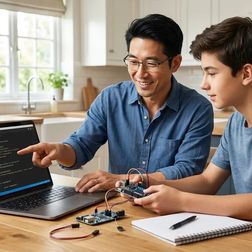
What Are STEM Challenges for High School Students: Competition Types Explained Your teenager's home experiments are building real skills—but stem challenges for high school students translate those capabilities into measurable achievements that colleges and employers recognize. These structured competitions aren't just résumé padding. They're opportunities to test problem-solving under constraints, collaborate across skill sets, and present technical work to expert judges. For families investing in (/article/home-stem-lab-for-teenagers), competitions provide clear milestones that validate your child's progress and reveal gaps in their learning path. What Are STEM Challenges for High School Students? STEM challenges for high school students are structured competitions where teens apply science, technology, engineering, and mathematics skills to solve defined problems within specific constraints. Unlike open-ended science fair projects, these challenges typically include strict timelines, material limitations, and objective judging criteria. Teams or individuals design solutions to real-world problems—from building autonomous robots to analyzing environmental data to pitching sust…

How to Start Teaching Your Teenager Python Programming at Home
IA
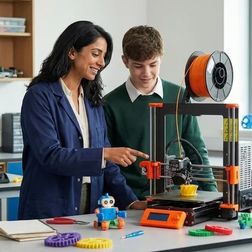
How to Start Teaching Your Teenager Python Programming at Home I've watched hundreds of teenagers walk into our fab lab with zero coding experience and walk out six months later building their own sensor arrays, automating 3D printer workflows, and scraping data from APIs. The difference between the kids who stick with it and those who bounce off? A structured learning path that connects Python to physical outcomes they can see and touch. Teaching teenagers Python isn't about memorizing syntax—it's about building a capability that unlocks real engineering tools. This guide walks you through the entire setup process, from hardware requirements to your first meaningful project. Expect 3-6 months to get from complete beginner to building functional programs that control hardware. We're building toward industry-standard workflows here—the same Python that runs professional CNC machines, scientific instruments, and production automation systems. What you'll learn: How to set up a complete Python development environment, structure a progressive curriculum, choose hardware that bridges code to physical results, and troubleshoot the common friction points that derail beginners. What Yo…

Best 3D Printers for Teen STEM Projects Under $500
IA
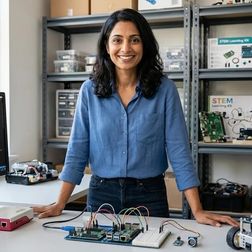
Best 3D Printers for Teen STEM Projects Under $500 You're watching your teenager move beyond ready-made projects, and you're wondering: are 3d printers for teens really worth the investment, or just another complicated device collecting dust? The right 3D printer becomes a skill-building workshop that transforms abstract CAD concepts into tangible engineering prototypes. Below, you'll find nine carefully selected 3d printers for teens that balance educational value with real-world capability—each one a stepping stone toward industry-standard manufacturing skills. Creality Ender 3 V3 SE: Industry-Standard Introduction to Additive Manufacturing The offers your teen unfiltered access to the same FDM technology used in professional prototyping labs. This open-frame printer requires active learning—bed leveling, adhesion troubleshooting, and temperature calibration all become hands-on lessons in materials science. Your teen gains authentic problem-solving experience with this model because it doesn't hide the mechanics behind proprietary software. The trade-off for this transparency? Expect failed prints during the first week while they learn proper bed leveling techniques—the sens…

Arduino vs Raspberry Pi for Teens: Which Platform Builds Better STEM Skills
IA
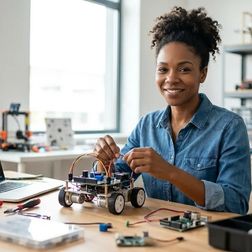
Arduino vs Raspberry Pi for Teens: Which Platform Builds Better STEM Skills For most teens, Arduino delivers faster, more tangible wins in physical computing and electronics fundamentals, while Raspberry Pi excels at software-intensive projects and computational thinking. The arduino vs raspberry pi for teens debate isn't about which is "better"—it's about matching your teenager's current interests and learning trajectory to the right platform. This comparison breaks down technical requirements, skill outcomes, and progressive learning paths so you can choose the platform that builds industry-relevant capabilities your teen can actually use. I'll walk you through compatibility requirements, hands-on vs screen-based learning trade-offs, and how each platform prepares your teenager for different STEM career pathways. You'll leave knowing exactly which investment fits your home lab setup and your teen's developmental readiness. Quick Comparison | Criterion | Arduino | Raspberry Pi | |---------------|-------------|------------------| | Primary Focus | Electronics, sensors, physical computing, embedded systems | Software development, general computing, Python programming, AI/ML proj…

Best Robotics Kits for Teenagers: Advanced Programming and Engineering Projects
IA
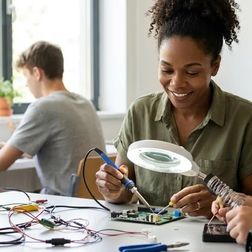
Best Robotics Kits for Teenagers: Advanced Programming and Engineering Projects Picture this: your sixteen-year-old is hunched over a circuit board at midnight, debugging a Python script that controls a six-axis robotic arm she's programmed to sort recyclables by material type. She's not playing—she's building the exact skills solar installation technicians and automation engineers use every day. The best robotics kits for teenagers bridge the gap between guided learning and professional-grade tooling, teaching ROS integration, sensor fusion, and mechanical design principles that translate directly to careers in sustainable manufacturing and renewable energy infrastructure. After testing dozens of platforms with varying power budgets, ecosystem lock-in, and real-world durability, I've identified the kits that genuinely prepare teens for industry-standard workflows rather than just another screen-based game. What to Look For in Robotics Kits for Teenagers Industry-Standard Software and Hardware Compatibility You want your teenager learning the same tools they'll encounter in engineering internships and university labs. Look for kits supporting Arduino IDE, Visual Studio Code, or…

STEM Activities for Teenagers: Building Real Engineering and Coding Skills
IA
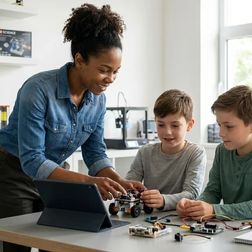
STEM Activities for Teenagers: Building Real Engineering and Coding Skills Teenage STEM education should feel less like playtime and more like apprenticeship. The stem activities for teenagers that matter aren't edutainment—they're rehearsals for actual engineering work, software development, and scientific research. You're investing in capability milestones that translate directly into industry tools, competitive portfolios, and the kind of hands-on fluency colleges and employers recognize instantly. If your teenager can design parametric CAD models, write Python scripts that control hardware, or collect calibrated environmental data, they're not "playing with STEM"—they're building a technical résumé. What Is ? Stem activities for teenagers are structured, project-based learning experiences that develop measurable technical competencies in science, technology, engineering, and mathematics. Unlike elementary kits focused on exploration and wonder, teenage STEM work emphasizes industry-standard tools, reproducible methodology, and transferable skills. These activities bridge the gap between guided tutorials and independent problem-solving. Your teenager isn't just following ins…

How to Choose Age-Appropriate STEM Activities for 12 Year Olds

IA
Choosing STEM activities for a twelve-year-old is nothing like choosing for a younger kid. At this age, they're ready to move beyond toy platforms and start using the same tools professionals use—real programming languages, industry-standard hardware, projects that actually generate data and solve problems. But most parents are still selecting activities the same way they did three years ago, relying on age ranges and marketing hype instead of evaluating technical compatibility, skill progression, and real learning outcomes. This episode walks you through a systematic framework for choosing activities that match where your child actually is and build directly toward the next capability tier, from defining measurable milestones to avoiding subscription traps and dead-end platforms. Show Links Affiliate Disclosure: As an Amazon Associate I earn from qualifying purchases. Full article Arduino Uno R3 Raspberry Pi 4 Model B Elegoo Arduino Uno R3 Starter Kit Arduino Starter Kit Related Articles Air Quality Sensors Explained: What Student Citizen Scientists Should Know Enclosed vs Open Frame 3D Printers for Kids: Safety and Performance Compared How to Collect and Analyze Environmental Data with Sensor Kits How to Transition from Block-Based to Text-Based Robot Programming Best Coding Robot Kits Under $100: Budget-Friendly STEM Learning

Complete STEM Lab Setup Checklist for 12 Year Olds at Home

IA
Setting up a STEM lab at home for your twelve-year-old isn't about buying the most expensive gadgets or filling a room with flashy toys. This episode walks you through exactly what you need to create a real working space where your kid can move from following tutorials to building their own projects — and maybe even solving problems they notice on their own. You'll learn what tools, software, and safety gear actually matter, how much space and money you really need, and how to set up a learning path that builds real skills instead of just weekend entertainment. Show Links Affiliate Disclosure: As an Amazon Associate I earn from qualifying purchases. Full article BBC micro:bit Arduino Uno R3 Raspberry Pi 4 Model B 4GB LEGO Mindstorms Robot Inventor Flashforge Adventurer 5M Related Articles Air Quality Sensors Explained: What Student Citizen Scientists Should Know Enclosed vs Open Frame 3D Printers for Kids: Safety and Performance Compared How to Collect and Analyze Environmental Data with Sensor Kits How to Transition from Block-Based to Text-Based Robot Programming Best Coding Robot Kits Under $100: Budget-Friendly STEM Learning
4 de 15