Stand Firm in Dark Waters

Stand Firm in Dark Waters

por Ric Osuna
Temporada 1

What If Everything You've Been Told About the Rapture Is Wrong | Part 2

What did the earliest Christians actually believe about the Rapture? In Part 2 of this series, Ric Osuna traces the historical development of Rapture theology from the generations closest to the Apostles through the rise of modern Dispensational Premillennialism. Together, we'll examine the writings of Papias, Polycarp, Justin Martyr, Irenaeus, Tertullian, Hippolytus, Augustine, John Nelson Darby, and others to discover how Christians throughout history understood the Tribulation, the Millennium, and the return of Jesus Christ. Did the earliest followers of Christ expect to escape tribulation? Or did they believe the Church would endure hardship before being gathered to the Lord? Most importantly, we'll continue applying the central principle of this series: Observation before interpretation. Scripture before systems. Scripture interpreting Scripture. In this episode you'll discover: - What the earliest Church Fathers taught about the end times - The origins of Historic Premillennialism - Augustine's influence on Christian eschatology - How Dispensational Premillennialism developed - John Nelson Darby's role in modern Rapture theology - Why church history still matters today - The key differences between the historic view and the pretribulation view Whether you hold a pretribulation, post-tribulation, amillennial, or postmillennial perspective, this episode will challenge assumptions and encourage deeper study of Scripture. Because before we decide what a passage means, we must first understand what it says.

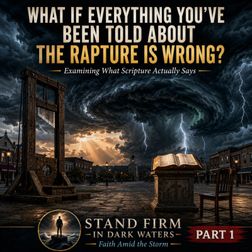
What If Everything You've Been Told About the Rapture Is Wrong? | Part 1

For many Christians, the pretribulation Rapture is simply accepted as biblical fact. It's the view presented in countless sermons, prophecy conferences, bestselling books, and popular films. But what if the story is more complicated than most of us realize? In Part 1 of this special series, Ric Osuna begins a deep dive into one of the most debated subjects in Christian eschatology: the timing of the Rapture. Together, we'll explore the foundations of end-times theology, define key prophetic terms, and examine why different Christians arrive at very different conclusions about the Tribulation, the Millennium, and the return of Christ. Most importantly, we'll establish the guiding principle for this entire series: Before we decide what a passage means, we must first understand what it says. In this episode you'll discover: Why the Rapture has become so influential in modern evangelicalism The difference between premillennial, amillennial, and postmillennial interpretations What the Bible means by terms like Tribulation, Millennium, and Parousia Why prophecy can be difficult to interpret How church history and theology have shaped modern end-times beliefs Why Scripture must remain our ultimate authority Whether you're firmly committed to a pretribulation view, convinced of a post-tribulation position, or simply curious about what the Bible teaches, this series is designed to challenge assumptions, encourage deeper study, and strengthen your faith. Because the ultimate purpose of biblical prophecy is not fear. It's faithfulness.

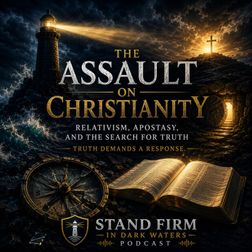
The Assault on Christianity: Relativism, Apostasy, and the Search for Truth (Part 2)

What happens when objective truth is replaced with personal preference? In Part 2, Ric Osuna explores the deeper philosophical foundations beneath pluralism and examines how relativism, consumer culture, and spiritual compromise have contributed to a growing famine of biblical truth. Through the writings of David Lyon, Bruno Latour, R.C. Sproul, and C.S. Lewis, listeners will discover why Christianity insists that truth is objective, morality is universal, and salvation is found through Jesus Christ alone. This episode also explores the powerful Moral Law argument, the historical evidence for the Resurrection of Jesus, and the growing apostasy foretold in Scripture. Topics include: Relativism and objective truth Consumer Christianity Spiritual famine and apostasy C.S. Lewis and the Moral Law Human flourishing and God's design The historical Resurrection of Jesus Christ Why truth demands a response In a culture filled with spiritual options, this episode asks a simple but life-changing question: What if Jesus really is who He claimed to be? Scripture Focus: Amos 8:11-12, 2 Timothy 4:3-4, 1 Corinthians 15:17, and 1 Corinthians 16:13.
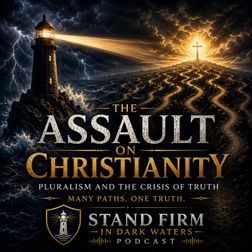
The Assault on Christianity: Pluralism and the Crisis of Truth (Part 1)

Is Christianity becoming just one spiritual option among many? In Part 1 of this series, Ric Osuna examines the rise of postmodernism, the growing influence of religious pluralism, and the cultural shift away from objective truth. Why do so many people believe that all religions ultimately lead to God? Can contradictory truth claims all be equally valid? Drawing on the work of philosophers, theologians, and scholars such as John Hick, Harold Netland, and C.S. Lewis, this episode explores the tension between pluralism and Christianity's claim that Jesus Christ is uniquely "the way, the truth, and the life." Topics include: The rise of postmodernism Religious pluralism and relativism John Hick's pluralistic hypothesis Reductionism and obfuscation The uniqueness of Christ Christian exclusivism Truth versus tolerance If truth matters, then the claims of Jesus deserve to be examined seriously. Scripture Focus: John 14:6

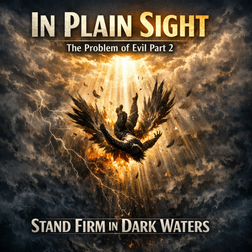
In Plain Sight: The Problem of Evil (Part 2)

In In Plain Sight – The Problem of Evil (Part 2), the discussion moves beyond abstract philosophy into the biblical reality beneath humanity’s deepest wounds. This episode argues that the Christian worldview uniquely identifies evil as a real intrusion into a good creation—rooted in rebellion, pride, and distortion—and is the only worldview that both names evil honestly and accounts for its origin, meaning, and ultimate defeat. Rather than denying suffering or dismissing moral outrage, Christianity explains why evil feels wrong, why dignity still matters in the midst of pain, and why hope is rational even in darkness.

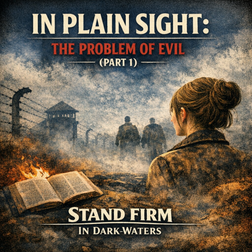
In Plain Sight: The Problem of Evil (Part 1)

Over the next two episodes of Stand Firm in Dark Waters, we tackle the problem of evil. In Part One of “In Plain Sight: The Problem of Evil,” we face the question that won’t stay theoretical: if God is good, all‑powerful, and all‑knowing, why does evil exist—and why does it so often feel like it’s winning? We start with philosophical clarity by defining evil, distinguishing moral evil (human cruelty) from natural evil (disease and disaster), and separating the logical, evidential, and deeply personal arguments. Then, we enter the skeptical case through Mackie’s inconsistent triad, Hume’s dilemma, and modern arguments about gratuitous suffering—pain that appears pointless and undeserved. Along the way, we expose a hidden assumption behind many objections: If God has morally sufficient reasons, we should be able to see them. Part One lays the philosophical groundwork for the problem of evil, whereas Part Two shifts from philosophy to Scripture to trace evil’s origin and God’s answer.

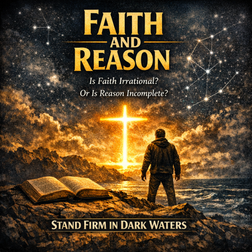
Is Faith Irrational? Or Is Reason Incomplete?

In this episode, “Is Faith Irrational? Or Is Reason Incomplete?”, we examine the false divide between faith and reason. Drawing from Scripture, philosophy, and history, Apologist Ric Osuna explains why Christian faith is not a blind leap, why reason is never truly neutral, and how faith restores and completes human understanding. From biblical teaching to Enlightenment skepticism, from modern relativism to contemporary legal and cultural debates, this episode invites listeners to step out of the shadows and see reality clearly in the light of Christ. If you’re wrestling with doubt, navigating cultural pressure, or seeking confidence that Christianity can stand up to serious scrutiny, Stand Firm in Dark Waters is designed to help you think more deeply, live more faithfully, and remain anchored in turbulent times.

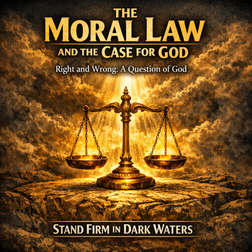
The Moral Law and the Case for God

What if the greatest danger we face today isn’t political division—but moral erosion? In this episode of Stand Firm in Dark Waters, we examine the case for objective moral truth in an age shaped by relativism. Drawing from C.S. Lewis’ concept of the Moral Law, we explore why our shared sense of right and wrong is not something we invent, but something we recognize—even when we fail to live up to it. From cultural shifts and philosophical skepticism to insights from thinkers like Immanuel Kant, this episode asks whether moral awareness is best explained by chance and social convention—or by a moral Lawgiver. This is the first episode in a series examining why many thoughtful people believe God is not merely a comforting idea, but the most reasonable explanation for the reality we live in.

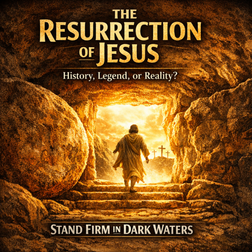
The Resurrection of Jesus: History, Legend, or Reality?

Welcome to Stand Firm in Dark Waters: Faith Amid the Storm. In this Easter launch episode, Ric Osuna—Apologist, Author, and Coach—begins where Christianity either stands or falls: the Resurrection of Jesus Christ. This episode addresses truth, doubt, and spiritual warfare with clarity and conviction, examining the Resurrection not as a comforting idea, but as a claim about public history. We walk through three areas: (1) what Christians confess, (2) what skeptics argue, and (3) what conclusions are best supported by historical evidence. You’ll meet “Marcus,” a thoughtful modern skeptic who respects Jesus as a moral teacher but struggles with exclusivity and miracles. With Marcus, we consider major objections: “dead men don’t rise,” the legend hypothesis, hallucination claims, and challenges to Gospel reliability. Then we evaluate key historical foundations you highlight in the script: Jesus’ crucifixion (widely attested), the burial tradition, the empty tomb question, the role of women as first witnesses (criterion of embarrassment), early creedal material, and the rapid conversion of skeptics like Paul and James. Finally, we ask: Are miracles rejected because the evidence is weak—or because some rule them out in advance? If the Resurrection is dismissed solely because it is supernatural, the debate shifts from history to philosophy. This episode invites believers to stand firm, and it warmly welcomes those who are unsure about God, wrestling with doubt, or seeking faith in Christ to listen, reflect, and pursue truth with integrity.