Spatial Navigator

Spatial Navigator

por Nanostring Technologies Inc.
Temporada 3
Kirsty Short & Arutha Kulasinghe - Unveiling the Past: Exploring Immune Responses to the 1918 Influenza Virus through Spatial Multiomics
Presenting a recorded conversation from AGBT, where we engage in dialogue with two esteemed guests from the University of Queensland. Collaborating in the realm of virology, they possess a distinctive and invaluable collection of samples—the ones from the 1918 Spanish flu. In this episode, discover the compelling reasons behind the partnership between a virologist and a spatial omics expert. Together, they embark on a mission to address a pivotal question: Can spatial multiomics be applied to historical samples to unravel the unique aspects of the immune response to the 1918 influenza virus in young adults?
Will Howat & Alyssa Rosenbloom - the story behind the GeoMx IO Proteome Atlas development
Listen to Will Howat, Vice President of Validation & Technical Quality at Abcam and Alyssa Rosenbloom, Associate Director of Research Proteomics discuss how the GeoMx IO Proteome Atlas panel was developed and validated as part of the Abcam-NanoString partnership. Tune in to this episode and get ready to investigate the expression of 570+ human protein targets on one slide.
Temporada 2
Adam Bates & Matthew Bottomley - Dissecting the role of the immune system in skin and lung cancer with spatial biology
Listen how spatial biology brought together a nephrologist and a cancer research graduate student from the University of Oxford to help each other dissect the role played by the immune system in skin and lung cancer and open the way for new immuno-therapy drug targets.
David Krull - the power of mentoring, networking and collaborations, lessons from the GeoMx® DSP Best Practices Guidance Consortium
In this episode, we talked to David Krull, Associate Director at GSK, leading the cellular biomarkers team. He told us about his passion for coaching and mentoring and how vital networking and collaborations have been for his career. We discussed how pharmaceutical companies are embracing tissue profiling technologies and David shared his views on applying spatial omics for biomarker discovery.
Alessia Ciarrocchi - Spatial transcriptomics at the service of translational oncology
In this new spatial navigator episode, we speak to a spatial pioneer, Pr. Ciarrocchi Professor at the Azienda Unità Sanitaria Locale and Cancer Research institute of Reggio Emilia, who shares her passion for translational oncology and how she got started as group leader. During this podcast, we learn how her current work on spatial transcriptomics to dissect pleural mesothelioma heterogeneity directly serves her community. Listen to the episode to learn more about mesothelioma pathology, immune/inflammatory processes and biomarker discovery.
Sarah Best and Saskia Freytag - Dissecting high-grade glioma spatially
Sarah Best and Saskia Freytag are laboratory heads at the Brain Cancer Research Lab in Australia's Walter and Eliza Hall Institute of Medical Research.In this podcast episode, they share their views and interest for tackling high-grade glioma by dissecting its heterogeneity and its interactions with the microenvironment. They also discuss why Spatial Biology was key to uncover subtype-specific heterogeneity and how they combined the power of GeoMx DSP and CosMx SMI to maximize their understanding of this cancer type. At the end of the episode, they comment on the future of spatial multiomics, why location matters and how it is revolutionizing the field. This podcast includes information regarding worldwide products and services, not all of which are available in every country.
Mirranda Orr, PhD - Alzheimer’s Disease, cellular senescence and spatial biology
In this episode we talk about Dr. Orr’s research on the effects of tau accumulation on cellular senescence and how leveraging spatial biology with both GeoMx DSP and CosMx SMI teaches us more about the biology of neurodegenerative diseases than we have learned in the past 10 years. This podcast includes information regarding worldwide products and services, not all of which are available in every country.
Cheryl London, PhD - Humanity's best friend, a tale of two species.
Dogs are man's best friend, but more than companions, in veterinary science, dogs are being studied to develop better cancer treatments that can translate to the clinic. Today we talk to Dr Cheryl London from Tufts University. She is a Veterinarian and a Vet Oncologist. We discuss how and why canines are used as model animals for cancer and how she worked with NanoString as a part of a consortium to develop the Canine IO panel on the nCounter and the hot-off-the-press Canine Cancer Atlas on the GeoMx. This podcast includes information regarding worldwide products and services, not all of which are available in every country.
Dana Mustafa Ph.D. - Passion, Pancreatic Cancer and the Power of Research
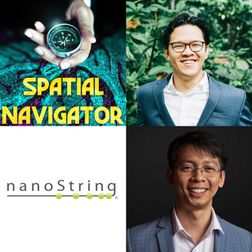
"I am passionate about my work because I want to find new ways to improve the lives of cancer patients." - Dr. Dana Mustafa In this episode, we talk to Dr. Dana Mustafa, a cancer researcher at Erasmus University Rotterdam. Dr. Mustafa discusses her research on pancreatic cancer and brain metastasis, and she shares her insights on the challenges and opportunities of cancer research. She also offers advice to young aspiring researchers who want to make a difference in the fight against cancer. Dr. Mustafa is a passionate and dedicated researcher who is committed to finding new ways to treat cancer and improve the lives of cancer patients. She is a role model for young aspiring researchers who want to do translational work and affect clinical outcomes. We hope you enjoy this episode! This podcast includes information regarding worldwide products and services, not all of which are available in every country.
Quan Ngyuen Ph.D. - Decoding the Future: Transcriptomics, Machine Learning, and Spatial Biology Data
On today's episode, we talk to Dr. Quan Ngyuen. He is a renowned genomics and machine learning expert, leading the GML lab at IMB, University of Queensland. Focused on cancer-immune cells and neuroinflammation, he strives to improve diagnosis and treatments through single-cell analysis and spatial analysis of tissue. We discuss his experience working with multiple spatial technologies, his thoughts on data analysis, and its best practices. We also get his wishlist for both spatial instruments and the larger research community. This podcast includes information regarding worldwide products and services, not all of which are available in every country.
1 de 3