
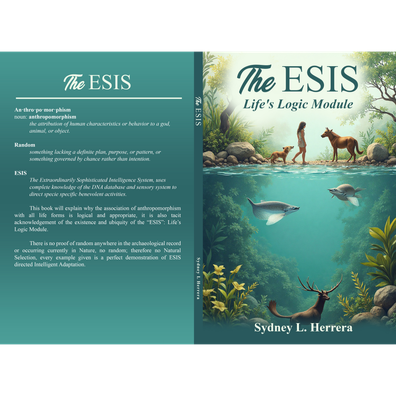
Anthropomorphism refutes Darwinism
Notas del episodio
Nature and our expanding knowledge are purposefully defying the assertions of Darwinism. Almost before the dust had settled from Darwin's publication in 1859, in 1869 there were two significant discoveries by chemists that in retrospect, not only completely refutes Darwinism but provides the basis of the knowledge that guides our current technology and medicine.
The Swiss chemist Friedrich Miescher isolated what he called "nuclein", which we know today as DNA, which turned out to be the blueprint for the physical forms of every living organism, also in 1869, the Russian chemist Dmitri Mendeleev received in a dream/vision The Periodic Table of Elements.
Today based on our expanding knowledge, we know that unlike the guesses of alchemy, hydrogen, oxygen, iron, gold and lead along with all elements in the universe are comprised of the same basic subatomic particles: protons, neutrons and electrons despite their physical differences.
One of the unfortunate assertions prevalent with proponents of Darwinism is that anthropomorphism is simply a fabrication of humans to attempt to use paradigms that are familiar to our cultures and civilization to explain the behaviors that can be observed in Nature but these behaviors do not really exist in the “lower” animals. This is unfortunate because like the widespread use of “over time” or “Mother Nature”, this denial of what can be observed by anyone regardless of their educational level or depth of relationship with plants and animals in Nature seems very much like cult-like assertions of “do not believe what you see but what I say”.
One does not have to spend extended time in Nature or achieve any level of education to recognize, caring, sharing, nurturing, communicating, acquiring and defending territories, and even service to others that mirror and even surpass that of many human communities, as such anthropomorphism is a characteristic of many plants and animals and extends to many of the interspecies symbiotic relationships in Nature.