Science Behind the Glass: illuminating the human side

Science Behind the Glass: illuminating the human side

por Science behind the Glass
Temporada 4

When Law Fails the Planet: The Iran War, Nuclear Fears, and the Ecocide

Bonus
The world has rules. Powerful nations just don't follow them. Professor Gary Meyers returns to Science Behind The Glass to break down the legal vacuum behind today's most dangerous conflict, and what it means for all of us. Main topics: ICC & jurisdiction — why the US, Israel, and Iran are untouchable US strikes Iran — no Congress, no mandate, no consequences Nuclear enrichment — Iran at 60%, far beyond civilian use Humanitarian collapse — 700K displaced, a girls' school bombed, Gaza ongoing Rules-based order — is international law already dead? Timestamps 00:00 Introduction and Context of Current Events 02:10 Legal Complexities in International Relations 04:26 Humanitarian and Environmental Catastrophes 06:54 Military Actions and International Law 08:46 The Role of the International Criminal Court 08:57 US Military Strategy and War Powers 11:14 Preventive Self-Defense and International Law 16:50 Preventive and Anticipatory Self-Defense 18:26 Nuclear Threats and International Oversight 21:39 Western Perspectives on Iran's Threat 23:15 European Union's Role and Responses 25:36 Economic Implications of the Conflict 27:47 The Cost of War and Public Sentiment 28:58 Hate Speech Legislation and Political Discourse 31:09 Environmental Impact of Warfare Follow us: nstagram: sciencebehindtheglass X: @sbtg_podcast @daniesguerra @LINDAHE1988 FB: Science behind the Glass TikTok: https://www.tiktok.com/@sbtgpodcast?_t=ZS-8u2DmABj4Us&_r=1 References https://www.aljazeera.com/news/2026/3/3/iaea-confirms-some-damage-to-irans-natanz-nuclear-facility https://ceobs.org/iran-war-environmental-risk-overview-as-of-27th-march/ https://www.aljazeera.com/features/2026/3/9/israeli-attacks-on-iran-fuel-sites-aim-to-break-resilience-of IAEA (International Atomic Energy Agency) - Official updates on Iran’s nuclear programme and safety assessments: https://www.iaea.org/newscenter/topics/iran https://apnews.com/hub/iran

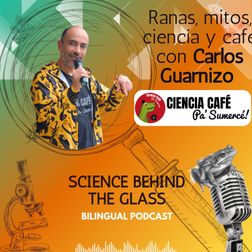
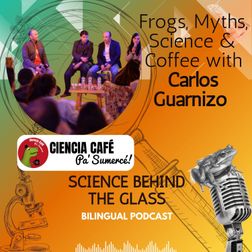
Frogs, Myths, Science & Coffee with Carlos Guarnizo

What if science felt as natural as having a drink with friends? 🍺🔬 Meet Carlos Guarnizo, a Colombian scientist who turned science communication into a movement. He created Ciencia Café Pa Sumerce , and what he's built is unlike anything in the science world. Here's what makes him someone every science communicator needs to hear: 🇨🇴 From Bogotá to the world: Carlos proves that groundbreaking ideas in science outreach come from unexpected places, not just Silicon Valley or MIT 🎭 Science meets art: He brings researchers into bars, artistic stages, and music venues so anyone can walk in, grab a drink, and walk out knowing something new 🎶 Unlikely collabs: Ciencia Café has partnered with the Bogotá Philharmonic Orchestra, blending classical music and science to reach audiences that traditional lectures never could 🧠 The real barrier isn't knowledge: It's how we communicate it. Carlos breaks down exactly why scientists struggle — and the surprisingly simple fix Timestamps 00:00 Scientific Communication and Its Importance 02:50 Carlos Guarnizo's Journey in Communication 06:02 The Creation of Ciencia Café Para Sumergirse (Science Café to Dive Into) 08:49 The Intersection Between Science and Communication 12:07 The Importance of Telling Our Own Stories 15:05 Challenges in Scientific Communication 18:07 Collaboration and Empathy in Science 21:02 The Impact of Science on Society 23:53 The Power of Art in Scientific Communication 26:59 Family Influence on Scientific Communication Referencias Carlos Guarnizo en LinkedIn - https://www.linkedin.com/in/carlosguarnizo/ Biocore Universidad de los Andes - https://biocore.uniandes.edu.co/ https://youtu.be/y0jmHOx_7P8?si=ZMWTGWgCSKFXGFeR https://cienciacafesumerce.wordpress.com/ https://es.mongabay.com/2022/08/proyecto-de-divulgacion-cientifica-en-colombia-carlos-guarnizo-entrevista/
Ranas, mitos, ciencia y café con Carlos Guarnizo

En esta entrevista, Carlos Guarnizo comparte su trayectoria en divulgación científica, cómo empezó, sus desafíos y estrategias para comunicar la ciencia con empatía y efectividad. Descubre cómo la ciencia puede ser accesible, cercana y poderosa a través del arte, la familia y la participación comunitaria, como lo ha hecho Ciencia Café Pa' Sumercé, que ha transformado espacios de la ciudad en centros de entretenimiento que vinculan a la comunidad de todas las edades. Lista de capitulos 00:00 Introducción a la Ciencia Humana 07:00 El Viaje de la Divulgación Científica 13:49 Conexiones entre Investigación y Divulgación 20:48 La Importancia de Contar Nuestras Propias Historias 26:05 Desafíos en la Comunicación Científica 27:39 La Importancia de la Comunicación Científica 36:10 Estrategias para Comunicar Ciencia con Empatía 39:32 Transformando Congresos Científicos en Eventos Inclusivos 44:01 El Poder del Arte en la Divulgación Científica 46:08 Involucrando a la Familia en la Ciencia Encuentranos en: www.sciencebehindheglass.com Instagram: sciencebehindtheglass X: @sbtg_podcast @daniesguerra @LINDAHE1988 FB: Science behind the Glass TikTok: https://www.tiktok.com/@sbtgpodcast?_t=ZS-8u2DmABj4Us&_r=1 Referencias Carlos Guarnizo en LinkedIn - https://www.linkedin.com/in/carlosguarnizo/ Biocore Universidad de los Andes - https://biocore.uniandes.edu.co/ https://youtu.be/y0jmHOx_7P8?si=ZMWTGWgCSKFXGFeR https://cienciacafesumerce.wordpress.com/ https://es.mongabay.com/2022/08/proyecto-de-divulgacion-cientifica-en-colombia-carlos-guarnizo-entrevista/
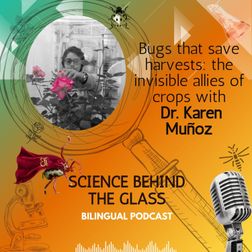
Bugs that save harvests: the invisible allies of crops with Dr. Karen Muñoz

In the world of agriculture, the spotlight usually falls on the harvest, but what happens beneath the surface and within the plants is vital. In this episode of Science Behind the Glass, Dr. Karen Muñoz Cárdenas, a leading researcher in crop biodiversity, we discover how tiny organisms — mites, nematodes, bacteria, and more — not only sustain our crops, but also forge a crucial alliance with farmers. Karen shares her passion for these mites and how her life, shaped by Colombian landscapes, led her to uncover the tiny world of animals that protect our crops. Timestamps 00:00 Introduction to Tiny Allies in Agriculture 02:58 Karen's Journey and Inspiration for Biodiversity 08:45 The Role of Farmers in Biodiversity 11:55 Understanding Biological Controllers 16:01 Experiences with Mites and Their Impact 18:48 The Fascination with Balloustium Mites 22:05 The Life Cycle of Mites and Soil Importance 25:47 Research and Discoveries in Biological Control 29:19 Transitioning to Entrepreneurship in Biological Solutions 37:25 Sustainable Agriculture: Moving Beyond Monocultures 48:08 Empowering Scientists and Communities for Change Follow us: nstagram: sciencebehindtheglass X: @sbtg_podcast @daniesguerra @LINDAHE1988 FB: Science behind the Glass TikTok: https://www.tiktok.com/@sbtgpodcast?_t=ZS-8u2DmABj4Us&_r=1 References https://vandersteensolutions.com/home/ https://www.xerces.org/blog/planting-for-helpful-predators-how-natural-enemies-can-control-garden-pests-for-you

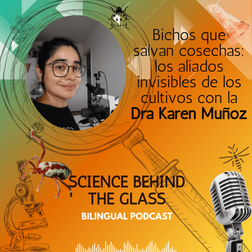
Bichos que salvan cosechas: los aliados invisibles de los cultivos con la Dra Karen Muñoz

En el mundo de la agricultura, el protagonismo suele recaer en la cosecha, pero lo que ocurre bajo la superficie y en las plantas es vital. En este episodio de Science Behind the Glass, la Dra. Karen Muñoz Cárdenas, investigadora destacada en biodiversidad de cultivos, descubrimos cómo diminutos organismos, acaros, nematodos, bactrias y más no solo sostienen nuestros cultivos, sino que también forjan una alianza crucial con los agricultores. Karen nos cuenta su pasión por estos acaros y cómo su vida, llena de paisajes colombianos, la llevó a descubrir el pequeño mundo de los animales que protegen los cultivos. Lista de Capitulos 00:00 Inicios y Pasión por la Biodiversidad 08:48 Experiencias en Europa y la Identidad Cultural 15:40 Desafíos de la Agricultura y el Uso de Pesticidas 21:08 Controladores Biológicos: Héroes Invisibles de la Agricultura 28:37 La Potencialidad de la Naturaleza 30:23 Los Agricultores como Superhéroes 33:52 Construyendo Puentes entre Productores y Científicos 38:01 Desmitificando el Control Biológico 42:28 El Paisaje Agrícola Ideal 46:02 Saberes Ancestrales y Agricultura Moderna 50:50 Pasiones y Conocimientos de Karen 53:41 The Invisible Life Beneath Our Feet 54:12 The Importance of Biodiversity 54:38 Connecting Through Podcasting 55:04 Supporting Science Narratives Encuentranos en: Instagram: sciencebehindtheglass X: @sbtg_podcast @daniesguerra @LINDAHE1988 FB: Science behind the Glass TikTok: https://www.tiktok.com/@sbtgpodcast?_t=ZS-8u2DmABj4Us&_r=1 Referencias https://vandersteensolutions.com/home/

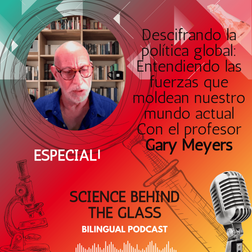
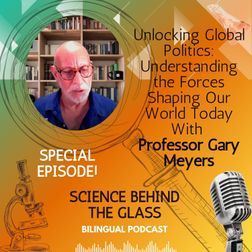
Descifrando la politica global: Entendiendo las fuerzas que moldean nuestro mundo actual con Profesor Gary Meyers

Bonus
En esta conversación, Gary Meyers analiza la importancia de la Carta de las Naciones Unidas, los desafíos para hacer cumplir el derecho internacional y las implicaciones de la política exterior de Estados Unidos en las relaciones globales. Explora los roles del Consejo de Seguridad y de la Corte Penal Internacional, así como el impacto de los tratados ambientales. La discusión también aborda iniciativas recientes, como la Junta de Paz, y concluye con una nota de optimismo cauteloso respecto a futuros esfuerzos diplomáticos. Lista de capitulos 00:01 Por qué importa el derecho internacional 01:35 ¿Qué es la Carta de la ONU y qué prohíbe? (uso/amenaza de la fuerza) 05:58 Origen de la ONU (posguerra) y Artículo 2(4) con ejemplos 07:44 ¿Quién hace cumplir la Carta? CIJ, Consejo de Seguridad y el veto 12:09 ¿Cómo se reforma la ONU? (eliminar veto / súper mayoría) 13:56 Desfinanciamiento de la ONU: impacto y por qué no desaparece 16:45 Venezuela y soberanía: presión sobre recursos energéticos21:20 “Junta de Paz” en Davos: Gaza, miembros y controversias 24:41 CPI: procesos, límites reales y efecto “no pueden viajar” 32:23 Clima y tratados ambientales: París, regulación y futuro (cierre con esperanza) Follow us on: Instagram: sciencebehindtheglass X: @sbtg_podcast @daniesguerra @LINDAHE1988 FB: Science behind the Glass TikTok: https://www.tiktok.com/@sbtgpodcast?_t=ZS-8u2DmABj4Us&_r=1 Refrences 🔗 https://theconversation.com/geoffrey-robertson-believes-international-law-is-failing-us-but-the-solutions-are-unclear-272174 🔗 The UN Security Council and the Politics of Veto DOI: 10.1080/13533312.2019.1647896 🔗Carta de las Naciones Unidas (texto oficial en español) https://www.un.org/es/about-us/un-charter/full-text 🔗Consejo de Seguridad de la ONU (página oficial en español)https://main.un.org/securitycouncil/es 🔗 Article 2(4) and the Use of Force in International Law DOI: 10.1017/S002058931700015X 🔗UN Reform and the Future of Multilateralism https://brill.com/view/journals/gg/gg-overview.xm 🔗 https://www.scmp.com/news/china/diplomacy/article/3342092/trumps-peace-board-no-match-un-and-possible-boon-china-analysts-find 🔗 Climate Justice and International Law in the Age of Breakdown https://academic.oup.com/jel

Unlocking Global Politics: Understanding the Forces Shaping Our World Today

Bonus
In this conversation, Gary Meyers discusses the significance of the UN Charter, the challenges of enforcing international law, and the implications of US foreign policy on global relations. He explores the roles of the Security Council and the International Criminal Court, as well as the impact of environmental treaties. The discussion also touches on recent initiatives, such as the Board of Peace, and concludes with a note of cautious optimism regarding future diplomatic efforts. Chapters list 00:00 Understanding the UN Charter and Its Importance 14:06 The Role of the Security Council and Enforcement Challenges 27:26 The Impact of US Foreign Policy on Global Relations 40:32 Hope for Diplomacy and Future Global Cooperation Follow us on: Instagram: sciencebehindtheglass X: @sbtg_podcast @daniesguerra @LINDAHE1988 FB: Science behind the Glass TikTok: https://www.tiktok.com/@sbtgpodcast?_t=ZS-8u2DmABj4Us&_r=1 Refrences 🔗 https://theconversation.com/geoffrey-robertson-believes-international-law-is-failing-us-but-the-solutions-are-unclear-272174 🔗 The UN Security Council and the Politics of Veto DOI: 10.1080/13533312.2019.1647896 🔗 Article 2(4) and the Use of Force in International Law DOI: 10.1017/S002058931700015X 🔗UN Reform and the Future of Multilateralism https://brill.com/view/journals/gg/gg-overview.xm 🔗 https://www.scmp.com/news/china/diplomacy/article/3342092/trumps-peace-board-no-match-un-and-possible-boon-china-analysts-find 🔗 Climate Justice and International Law in the Age of Breakdown https://academic.oup.com/jel

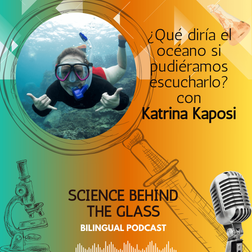
¿Qué diría el océano si pudiéramos escucharlo? con Katrina Kaposi

¿Qué pasa cuando el océano se calienta… y la vida tiene que adaptarse? En este episodio de Science Behind the Glass, conversamos con Katrina Kaposi: bióloga marina, investigadora, comunicadora y creadora de experiencias educativas que llevan el arrecife a las personas que nunca han podido verlo de cerca. Hablamos de cambio climático desde el lado humano: el blanqueamiento coralino como crisis energética y de supervivencia, y por qué la ciencia no basta si no logra conectar con la gente. Katrina también comparte la realidad de investigar en el mar: expediciones, turnos extremos, cansancio, asombro… y el poder de contar historias para transformar la forma en que cuidamos lo que amamos. Capítulos (timestamps): 00:23 Introducción: ciencia que se siente 01:32 Vocación y camino personal0 4:21 Corales, veneno y supervivencia0 6:22 Blanqueamiento y calentamiento del mar 10:16 Hallazgos e implicaciones 16:45 Educación y Reef Literacy 20:49 Storytelling: ciencia para el público 24:55 Expedición en mar profundo 36:30 Impacto, conservación y políticas Timestamps 00:00 Introduction to Marine Science and Personal Journey 03:17 Understanding Coral and Their Venom Ecology 06:15 The Impact of Coral Bleaching 08:50 Research Findings on Coral Venom and Bleaching 11:59 The Role of Coral in Ecosystems 14:58 Starting a Marine Education Business 18:11 The Importance of Storytelling in Science Communication 21:13 Experiences on the Research Vessel 23:54 The Interconnectedness of Marine Ecosystems 27:11 Future of Marine Science Communication 41:55 The Ocean's Vital Role in Our Well-Being 43:06 Connecting Through Science and Community Follow us on: Instagram: sciencebehindtheglass X: @sbtg_podcast @daniesguerra @LINDAHE1988 FB: Science behind the Glass TikTok: https://www.tiktok.com/@sbtgpodcast?_t=ZS-8u2DmABj4Us&_r=1 Reference link https://www.reefliterasea.com.au

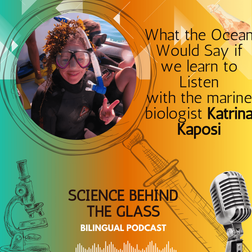
What the Ocean Would Say if we learn to Listen with Katrina Kaposi

Dive beneath the surface with marine biologist, storyteller, and ocean explorer Katrina Kaposi on Science Behind the Glass! She’s not your average scientist. Katrina’s journey stretches from failing science in high school to studying venom in coral reefs and helping shape how we think about climate change and coral survival. If you thought coral was just colourful rock, think again. These animals sting, fight, adapt, and communicate in ways we’re only beginning to understand. In this episode you will learn: In this episode, you will learn: Why coral reefs are venomous: how their tiny stinging cells, called nematocysts, help them feed, defend, and even fight for space on the reef. 🌡️ What really happens when corals bleach 🔬 How cutting-edge research is revealing coral resilience 🌊 What life is like aboard a deep-sea research vessel — 💬 Why storytelling matters in science: ReefliteraSEA Timestamps 00:00 Introduction to Marine Science and Personal Journey 03:17 Understanding Coral and Their Venom Ecology 06:15 The Impact of Coral Bleaching 08:50 Research Findings on Coral Venom and Bleaching 11:59 The Role of Coral in Ecosystems 14:58 Starting a Marine Education Business 18:11 The Importance of Storytelling in Science Communication 21:13 Experiences on the Research Vessel 23:54 The Interconnectedness of Marine Ecosystems 27:11 Future of Marine Science Communication 41:55 The Ocean's Vital Role in Our Well-Being 43:06 Connecting Through Science and Community Follow us on: Instagram: sciencebehindtheglass X: @sbtg_podcast @daniesguerra @LINDAHE1988 FB: Science behind the Glass TikTok: https://www.tiktok.com/@sbtgpodcast?_t=ZS-8u2DmABj4Us&_r=1 Reference link https://www.reefliterasea.com.au
Temporada 3

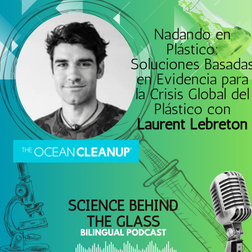
Nadando en Plástico: Soluciones Basadas en Evidencia para la Crisis Global del Plástico con Laurent Lebreton

En este episodio, nos sumergimos en una de las crisis más invisibles pero urgentes de nuestro tiempo: la contaminación plástica en los océanos. Charlamos con Laurent Lebreton, jefe de investigación de The Ocean Cleanup, sobre cómo la ciencia, los modelos de datos y la cooperación internacional pueden ayudarnos a enfrentar este desafío global. Desde la Gran Mancha de Basura del Pacífico hasta los ríos urbanos más contaminados, Laurent nos guía por el lado científico y humano de una misión que busca limpiar el mar… y cambiar el sistema. En este episodio aprenderás que: Mil ríos contribuyen al 80 % de la contaminación plástica en los océanos. La Gran Mancha de Basura del Pacífico contiene unas 100,000 toneladas de plástico. La contaminación por plásticos no es solo un problema ambiental, es una falla sistémica que involucra infraestructura, políticas públicas y responsabilidad global. Existen soluciones científicas y tecnológicas de vanguardia para enfrentar el plástico en el océano. Los gobiernos y las corporaciones deben rendir cuentas por su papel en la crisis del plástico. 00:00 Introducción al episodio – La crisis del plástico 02:06 Inicio de la entrevista con Laurent Lebreton 02:28 Infancia, conexión con el océano y vocación científica 03:44 Cómo inició su trabajo con plásticos y Ocean Cleanup 05:01 Modelos para rastrear y predecir la contaminación plástica 06:30 ¿De dónde viene el plástico? Los ríos como arterias del océano 08:27 ¿Qué países son los mayores contaminantes? 11:16 La Gran Mancha de Basura del Pacífico: ¿qué nos dice? 13:00 Redes de pesca y desechos de la industria pesquera 16:10 ¿Cómo evitar dañar vida marina durante las limpiezas? 19:35 Microplásticos vs. macroplásticos: prioridades en la recolección 22:14 Evaluando el impacto ambiental de las limpiezas 23:40 Aves marinas y cómo el plástico engaña a sus sentidos 24:16 El fracaso del tratado global sobre plásticos 27:00 Diferencias en políticas entre países – el caso de Guatemala 30:23 ¿Qué se debe hacer en los próximos 5 años? 32:30 Estandarización de plásticos y reciclaje inteligente 34:28 ¿Qué pasa con los bioplásticos? 37:46 Cultura de usar y tirar: el verdadero problema 38:59 De la observación a la acción: un llamado como científicos y ciudadanos Follow us on: Instagram: sciencebehindtheglass X: @sbtg_podcast @daniesguerra @LINDAHE1988 FB: Science behind the Glass TikTok: https://www.tiktok.com/@sbtgpodcast?_t=ZS-8u2DmABj4Us&_r=1 Reference link https://theoceancleanup.com/
2 de 11