Raven's Gate Night Whispers

Raven's Gate Night Whispers

por Jamison Walker

The Caregiver

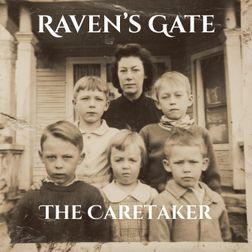
The job listing is too good to be true. Live-in caretaker for an elderly woman. Private room. Meals included. $800 a week. Light duties. The only catch: three previous caretakers quit within a month. Claire, a nursing student desperate to escape a moldy apartment and a deadbeat roommate, signs the contract without asking too many questions. Mrs. Hartwell is ninety-one, frail, mind wandering. She calls Claire by the wrong names, carries on conversations with people who aren't there, and issues one warning with absolute clarity: Don't go in the basement. Don't open that door. Not for any reason. Not even if you hear them crying. The crying starts on the fifth night. Claire finds books hidden throughout the house. Old books about faeries and changelings. Academic texts about children who aren't quite right, who don't eat human food, who sing songs in languages no human has ever spoken. She finds photographs of the children who passed through Mrs. Hartwell's "foster home" over the decades—and some of them look wrong in ways the camera shouldn't be able to capture. When Mrs. Hartwell dies, Claire finally opens the basement door. The space is larger than the house above it. Iron cages line the walls. And the children inside are hungry. They've been hungry for a very long time.

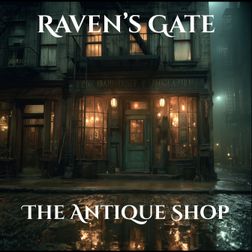
The Antique Shop

New York, 1923. Wilhelm Taube is twelve years old, an orphan running from a workhouse that treats its children like slaves. He ducks into an antique shop that shouldn't exist, hiding in a massive wardrobe while men from the orphanage search the streets. EISENGLASS ANTIQUES AND CONSIGNMENT reads the sign. The shop is dark, silent, filled with treasures from centuries past—a Queen Anne secretaire, medieval armor, meerschaum pipes, jewelry that belonged to queens. And a cornhusk doll. Faceless. Simple. Utterly out of place among the opulence. At midnight, Wilhelm discovers why the doll matters. The shop fills with ghosts—spirits bound to the objects they loved most, reliving their defining moments for eternity. A woman writes love letters that will never arrive. A sailor smokes a pipe, watching horizons only he can see. A child sings in Russian to a baby that isn't there. But one ghost is different. Liesel, a girl who died in the winter of 1848, sees him clearly. She tells him about the shop's secret: an obsidian mirror that grants wishes to those who want them with their whole heart. Wilhelm has nothing in the world but his father's broken pocket watch and a lifetime of running ahead of him. But Liesel offers him something he's never had: a place to belong. A family that will never leave. An eternity among the treasures and the ghosts. All he has to do is wish.

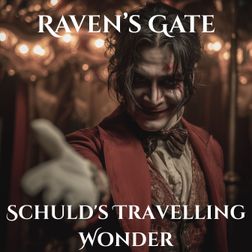
Schuld's Travelling Wonder

The post on The Veil Archives was three years old and had only four comments. But the details matched accounts going back to the 1800s: a carnival that appears deep in the wilderness, never in the same place twice. Lights and music where no lights should be. People who enter and never return. And those who do come back... changed. Ronald Davis has researched paranormal phenomena for six years without ever seeing anything he couldn't explain. When he convinces his ghost-hunting group—Reggie, Jason, Crystal, and the chronically overlooked Lois—to investigate, he hopes to finally find proof. What they find is Schuld's Travelling Wonder. Real. Impossible. Beautiful in ways that make the skin crawl. A ringmaster in crimson welcomes them with a smile that promises everything and costs more than they know. One by one, the group separates. Reggie follows a beautiful woman into the House of Horrors and sees every cruelty he's ever committed played back in scenes that close around him like walls. Jason follows a clown into the Freak Show and meets the twisted reflections of everyone who bent themselves to become something they weren't. Crystal rides the Tunnel of Love and learns what it means to be truly empty. Only Ronald and Lois escape with gifts: footage that will make them famous, and a mirror that shows a beautiful face. But gifts from the carnival always come with a price—and the corruption has already begun.

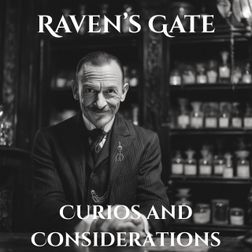
Curios and Considerations

The shop wasn't there on Monday. Between the dry cleaner's and the nail salon, where Karen Singleton has walked every day for three years, a door now stands. CURIOS & CONSIDERATIONS, the sign reads. EST. 1887. Below that: The Perfect Thing for the Perfect Person. Inside, a man named Mr. Considine listens. He doesn't interrupt. Doesn't judge. Doesn't offer platitudes about forgiveness. He just asks one question: Is there someone in your life who's wronged you? Karen thinks about Dr. Goodfellow. The affair. The promises. The promotion she earned on her back that went to someone else who was better at the game. She tells Mr. Considine everything. He offers three gifts to choose from. A ring that poisons its wearer slowly, blackening the skin from finger to heart. A clock that counts down to the moment of death, its ticking inescapable. And an antique surgeon's kit—including a lobotomy set—that compels its recipient to perform the procedure on themselves. The price? A drop of blood. A piece of soul. But Karen isn't the only customer. And the gifts work exactly as promised. And when your enemy dies screaming, someone else might be shopping for a gift... with your name on the tag.

The Trestle

Billy Mason is thirteen years old, and he's always been running. Running from his father, whose belt leaves marks that take weeks to fade. Running from Mr. Hensley at the soda fountain, whose eyes hold something dangerous. Running from the boys at school who smell weakness like dogs smell fear. Now he's running from Winston Hewitt and Chad Duncan, their threats echoing through the hot summer air of 1942 as they chase him toward the abandoned railroad trestle—the one that ends at a gap where the tracks fell away decades ago. Cornered, Billy does the only thing left. He jumps. But he doesn't fall. Instead, he lands in a shadow world—a mirror of his town where no one can see him, where the people he knows stand frozen in their darkest truths, where time moves differently and confession is the only currency that matters. Here, Billy hears what his father really thinks of himself. What Mr. Hensley wrestles with in silence. What Chad fears and Winston embraces. And with each confession he witnesses, Billy ages. Changes. Becomes something between the terrified boy who jumped and the man who will emerge decades later—a protector for the hunted, a predator for the predators, a guardian of the trestle that exists between worlds.

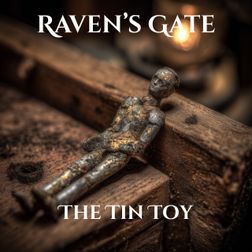
The Tin Toy

Deep in the October woods, two teenage friends discover an abandoned cabin that shouldn't exist. Jake's been hiking these trails since childhood—he knows every path, every creek bed, every fallen tree for miles. But this cabin? This path? He's never seen them before. Inside the rotting structure, among rusted tools and water-damaged newspapers from another century, Jake finds a tin toy soldier. Heavy. Detailed. Clearly old. Worth something, probably. He slips it into his pocket. That night, a figure appears in his bedroom. Small. The size of a child. Moving with a step-and-drag rhythm that sounds wrong in the darkness. Its skin has dried and pulled tight against ancient bones, its clothes tattered wool from another era, its eyes milky white pools that see everything. It points at the tin toy. Then at Jake. "Mine."

The Ship

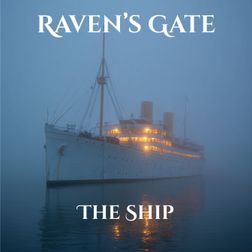
The fog came in thick and sudden, rolling across Lake Superior like something alive. A Korean War veteran, alone on his fishing boat in 1962, cuts the engine and waits for it to pass. Then he hears the music. A ship emerges from the mist—not a modern vessel, but something from another era entirely. Three stacks. White hull. Brass railings gleaming. Lights blazing from every window, warm and golden, as a string quartet plays something elegant and old. He should be afraid. This ship doesn't exist. Ships like this haven't existed for decades. Instead, he climbs aboard. What he finds is a party that never ends. Champagne that never runs dry. Passengers in evening dress, dancing and laughing as if the world outside has stopped mattering. They welcome him. Accept him. For the first time since the war, since the horrors of Chosin Reservoir, since coming home to a country that looked through him like he was already dead—he feels like he belongs. But nothing is free. And when a fellow passenger offers him a beautiful pearl-handled gun and a simple invitation, he realizes the true price of admission to this eternal voyage. One bullet. One choice. Forever.

The Rooms that Shouldn't Exist

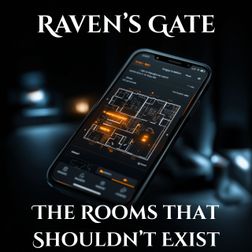
After his divorce, all Martin wanted was something that was finally his own. A house with good bones. Windows that let in light. A place where he wasn't just a guest in someone else's life. The security system was his first project. He mapped every room, named every zone, watched the app turn green with the satisfaction of a man who finally controlled something. Then the notifications started. Motion detected: Library. He doesn't have a library. Motion detected: Attic. It's a single-story house. Motion detected: The Mourning Chamber. The Room of Old Photographs. The Final Room. Every time he deletes them, they come back. And the dreams are getting harder to ignore—a woman with kind eyes, showing him through rooms that couldn't exist, rooms that know exactly what he needs to feel whole again. She promises him belonging. Peace. A place that's truly his. All he has to do is stay. As the zones multiply and the woman's visits grow more vivid, Martin starts sleeping more. Losing time. Fading. And the security system keeps adding rooms he never named, documenting spaces that shouldn't exist, mapping the architecture of something that isn't a house at all—but a trap disguised as home.
The Recording

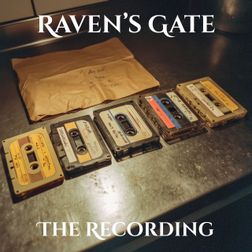
A true-crime podcaster receives an unmarked package on his doorstep. Inside: five cassette tapes labeled like episodes—and a note that reads simply, "You're ready." Marcus Cole has spent six years hosting Cold Trail, a podcast dedicated to unsolved cases. What his audience doesn't know is why he's really obsessed with cold cases: his mother was murdered when he was six years old. Stabbed seventeen times in their home. No witnesses. No forensic evidence. The killer was never found. The first tape contains the audio recording of that night. His mother's voice. His six-year-old self being tucked into bed. And then the sounds of someone entering the house—someone she knew, someone she trusted—followed by four minutes he can never unhear. But this isn't just evidence of an old crime. As Marcus listens to the remaining tapes, he discovers that someone has been watching him his entire life. Guiding him. Shaping him. Taking credit for his scholarship. His career. His success. Claiming to have orchestrated everything he's ever achieved. And now this person wants to meet. When Marcus follows the instructions to a quiet family restaurant, he discovers the killer's identity—and realizes that the person he's trusted most in the world has been hiding the most devastating secret imaginable. But the restaurant's other patrons aren't just witnesses. They're something else entirely. And Marcus is about to learn that some families are bound by something far darker than blood.

The Island

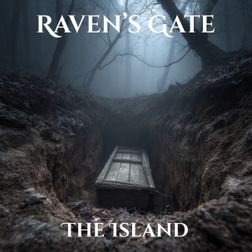
The bayou has belonged to the Thibodaux family since great-granddaddy Obadiah carved this land from nothing. Ezekiel knows the stories—the parties, the elegance, the hundred and forty-seven souls who worked the plantation before the war. He mourns those glory days the way his grandfather taught him, drinking whisky in his pirogue and dreaming of when the world made sense. Then the fog rolls in. Thick and white, moving like something alive, it swallows everything until Ezekiel can't see ten feet in any direction. His boat drifts until it hits solid ground—an island that shouldn't exist, that has never appeared on any map, covered in old-growth oak and lit by fires where Black men and women have built something impossible: a community that has thrived for over a century, hidden from the world that wanted to destroy them. They recognize his name. Thibodaux. The name his family gave them when they had no names of their own. They remember everything: the ship. The auction block. The whip. The locked bedroom where Obadiah took what he wanted. And now they have questions for Ezekiel. About who he is. What he believes. Whether the legacy he's so proud of deserves to continue—or whether it ends here, on an island where the sins of the fathers are finally answered.
5 de 6