Q is stand for Quality

Q is stand for Quality

por Veljko Massimo Plavsic
Temporada 1

Quality is an utophy or is feasible 🤔

Use code QXQ25 for all my deals https://mydeals.page/1qo0 Quality Quality, though universally recognized as important, is characterized by a "notable plurality of interpretations that reflect its complexity and semantic richness." This semantic diversity often leads to confusion and partial approaches. Traditionally, quality is defined as "conformity to requirements" (Philip Crosby) or "fitness for use" (Joseph Juran). These definitions highlight that quality is not absolute but "always relative to specific needs or expectations." William A. Foster's words succinctly capture the intentional and strategic nature of quality: "Quality is never an accident; it is always the result of intelligent intention, sincere effort, intelligent direction and skillful execution; it represents the wise choice among many alternatives." In Italian organizations, the perception of quality often oscillates between two extremes: a bureaucratic view that reduces it to procedures and certifications, and an aspiration for excellence that is difficult to translate into operational practices. This gap between ideal and reality creates the "tension expressed by the 'I would like but I cannot'" ("vorrei ma non posso") paradox. II. The "I Would Like But I Cannot" Paradox: Core Obstacles The "vorrei ma non posso" paradox manifests on multiple levels, creating constant tension between aspirations and operational realities, particularly in the Italian context: Value-Cost Dichotomy: Quality is recognized as a value in principle but often perceived as a cost in daily practice. This "myopic view prevents quality from being considered an investment with significant long-term returns." Organizations invest in quality systems without fully grasping the benefits, reinforcing the perception of quality as a cost and obligation. Time-Quality Conflict: The pressure to meet deadlines and manage daily urgency clashes with the need to dedicate time and resources to quality system implementation, which requires "planning, training, and constant monitoring." Consequences: This paradox leads to frustration among quality professionals, who are "forced to become 'diplomats and accommodating people to the detriment of quality'." Overcoming this requires a deep cultural change, transforming quality from "external compliance to internal value, from regulatory obligation to strategic choice, from cost to investm

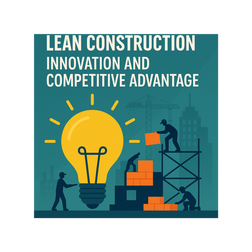
Lean Construction: Innovation and Competitive Advantage

Studio (Le risposte salvate sono di sola visualizzazione) This detailed briefing document reviews the main themes and most important ideas or facts from the provided sources on the application of Lean methodology in construction and road building sites. Briefing Document: Lean Methodology in Construction and Road Building Date: October 26, 2023 Subject: Review of "La metodologia Lean nei cantieri edili e stradali: Innovazione e vantaggi competitivi" excerpts. Key Takeaway: The Lean methodology, originating from the Japanese automotive industry, offers a transformative approach for the construction sector by focusing on eliminating waste and optimizing processes. Despite inherent differences between manufacturing and construction, adapting Lean principles can lead to significant improvements in time, cost, safety, quality, and environmental sustainability, ultimately providing a strong competitive advantage.

ISO 19011: Auditing Management Systems Guidance

Use code QXQ25 for all my deals https://mydeals.page/1qo0 The provided text, an article from Quality Magazine, focuses on ISO 19011, a standard offering guidance for auditing management systems. It highlights that while many are aware of updates to ISO 9001, fewer realize ISO 19011 is also under review for a potential new revision. The article explains that ISO 19011 replaced an earlier standard, ISO 10011, to address the need for audit guidelines, especially for organizations implementing ISO 9001. The source also features typical magazine elements like advertisements for sponsored content, popular stories, and upcoming events, indicating it's a publication for professionals in the quality and manufacturing sectors.

Blue Ocean strategy

lock settings PRO Fonti Chat Studio arrow_backdelete (Le risposte salvate sono di sola visualizzazione) Blue Ocean Strategy: Detailed Briefing Document Executive Summary The Blue Ocean Strategy, developed by W. Chan Kim and Renée Mauborgne, is a transformative business framework centered on creating uncontested market spaces, or "blue oceans," where competition is minimal or non-existent. This contrasts sharply with "red oceans," where businesses compete in saturated markets, often leading to price wars and diminishing profits. The core of Blue Ocean Strategy lies in "value innovation," which is the simultaneous pursuit of differentiation and low costs. By focusing on unmet customer needs and delivering unique value propositions, companies aim to unlock new demand and establish sustainable competitive advantages. While it offers a powerful roadmap for innovation and growth, the strategy also faces critiques regarding its practical implementation, the potential for rapid imitation, and significant organizational hurdles. Key Concepts & Principles 1. Value Innovation "Value innovation is the linchpin of the Blue Ocean Strategy, essential for businesses aiming to transcend traditional competitive landscapes. It entails redefining customer value in ways that make competition irrelevant." This involves developing offerings that resonate with customer values while maintaining an economically feasible cost structure, fostering loyalty and engagement. It encourages businesses to "raise the standards of their products or services above industry norms." 2. Blue Ocean Strategy Defined This framework encourages businesses to "move away from competition-focused tactics and instead create new market spaces, referred to as 'blue oceans,' where competition is minimal or non-existent." It promotes "the simultaneous pursuit of differentiation and low cost, aiming to unlock new demand and detach from the competitive fray." 3. Core Principles The strategy revolves around two main concepts: creating uncontested market space and making the competition irrelevant. This requires shifting focus from competing within existing market boundaries to redefining them, recognizing that "market structure and competitive dynamics can be influenced by a company’s strategic choices."

BMW Plant Uses AI for Quality Control

Use code QXQ25 for all my deals https://mydeals.page/1qo0 This text describes how BMW Group Plant Regensburg is implementing artificial intelligence (AI) to enhance quality control in vehicle production. A new AI-driven software solution generates customized inspection recommendations for each unique vehicle on the assembly line. This system analyzes vast amounts of data to automatically determine the necessary checks and presents them to employees via a smartphone app, ultimately aiming to improve efficiency, speed, and reliability in ensuring premium vehicle quality. The article highlights that this initiative is part of BMW's broader digital transformation towards an intelligently connected factory.

IATF 16949:2016 complete guide

Use code QXQ25 for all my deals https://mydeals.page/1qo0 Here is a detailed briefing document reviewing the main themes and most important ideas or facts from the provided source on IATF 16949: Briefing Document: IATF 16949 Overview Prepared For: [Recipient Name/Team] Date: October 26, 2023 Subject: Review of Key Concepts and Requirements of IATF 16949 1. Introduction and Purpose of IATF 16949 IATF 16949 is the international standard for quality management systems specifically developed for the automotive industry. Published by the International Automotive Task Force (IATF) in 2016, it replaced ISO/TS 16949. It is structured as a supplement to ISO 9001, incorporating all of its requirements while adding specific automotive sector needs. The primary goal of IATF 16949 is to "harmonize quality systems globally to ensure consistency in the international automotive supply chain, reducing variability and improving overall efficiency." The standard emphasizes a "strong process orientation and an emphasis on defect prevention rather than detection." This proactive approach aims to minimize variation and waste and promote continuous improvement and lean methodologies.

AIAG VDA FMEA vs. Previous AIAG FMEA

Use code QXQ25 for all my deals https://mydeals.page/1qo0 These sources describe the evolution of Failure Mode and Effects Analysis (FMEA) in the automotive sector, focusing on the shift from the original AIAG FMEA method to the more recent AIAG-VDA FMEA Handbook. The transition is highlighted as a harmonization effort between American and German automotive industry groups to create a standardized, structured process for risk assessment. Key changes discussed include moving from a numerical Risk Priority Number (RPN) to a criticality-based Action Priority (AP) approach, emphasizing structure-function-failure relationships, and implementing a seven-step methodology. While offering advantages like improved collaboration, enhanced risk analysis, and global consistency, the sources also address implementation challenges related to complexity and customer-specific requirements. Case studies demonstrate the practical application and benefits of the updated framework in both design and manufacturing processes.

Quality 5.0

Use code QXQ25 for all my deals https://mydeals.page/1qo0 Transformation Transition: A Briefing on Quality 5.0 Executive Summary This document synthesizes key insights from an analysis of Quality 5.0, an emerging paradigm in quality management. As a product of Industry 5.0, Quality 5.0 represents a significant evolution, building upon the technological foundations of Quality 4.0 while introducing new, critical dimensions: human-centricity, sustainability, resilience, and social responsibility. This shift blends advanced technology with a deeply human and ethical focus. The successful implementation of Quality 5.0 hinges on overcoming substantial challenges, including cultural resistance, complex technology integration, and significant workforce skill gaps. A central tenet of this transformation is that the labor force must adapt, leading to an evolution in job roles and required skills. Ultimately, Quality 5.0 is positioned as a foundational element that contributes to the broader concept of Society 5.0—a Japanese vision for a future where technology and human needs are harmoniously integrated to enhance quality of life and drive sustainable development.

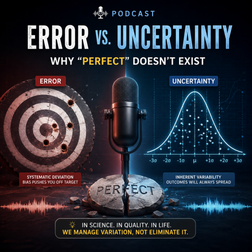
Error vs. Uncertainty: Why Perfect Doesn't Exist

Why a Digital Twin is Not a Controller It is a common misconception to view a digital twin as a high end PID Controller or a Smith Predictor. While these are reactive control loops, a digital twin is a probabilistic, multi scale simulation. Unlike a simple controller, a digital twin integrates fleet history aggregating data from thousands of similar assets to refine its uncertainty budget and predictive accuracy. It doesn't just react to the present; it simulates the future within a quantified performance envelope. Traceability is the absolute anchor of the Evidence Package; without a clear map from test plans to acceptance criteria, the digital twin cannot be considered a qualified tool for safety critical operations. In modern industrial digitalization, evidence is rarely in one place; it is often dispersed across ML pipelines, Jira tickets, and cloud databases. A robust package must: Map artifacts to criteria: Explicitly link test results to the intended use requirements. Include Supplier Evidence: Account for third-party models or sensors where training data might be opaque. Standard-Compliant Records: Every calibration event must document the Date, Method, Standard used (with CMC), and the Responsible IndividualChallenges and the Digital Frontier We are currently transitioning from a paper-based past to a machine-readable future. Several Roadblocks to Scaling remain: Fragmentation: Calibration certificates are often trapped in static PDFs rather than machine-readable Digital Calibration Certificates (DCCs). Manual Data Entry: Human transcription of calibration data breaks the digital chain of trust. Sensor Drift in the Wild: Sensors in uncontrolled environments age and drift over time.

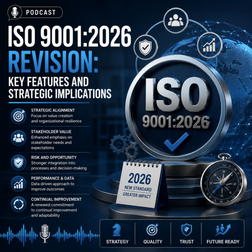
ISO 9001:2026 Revision: Key Features and Strategic Implications

Use code QXQ25 for all my deals https://mydeals.page/1qo0 The International Organization for Standardization (ISO) is currently in the process of revising the ISO 9001 standard, with the updated version—ISO 9001:2026—expected for publication in mid-2026. This revision aims to ensure the standard remains relevant amidst evolving technology, legislation, and market practices. Critical updates focus on integrating climate change considerations, adapting to digital transformation (including AI and automation), and reinforcing ethics, transparency, and risk-based management. Organizations will be granted a three-year transition period following publication to adapt their Quality Management Systems (QMS). Proactive preparation through gap analysis, digital readiness, and a reinforced culture of sustainability is recommended to ensure a seamless transition. The revision is driven by three primary catalysts: Relevance: The 2015 version predates the mainstream explosion of AI, the mass adoption of remote work, and the urgency of the circular economy. The new standard adapts to stay useful in this high-tech, high-speed operating environment. Correction: Auditing the 2015 version revealed "gray areas"—ambiguities regarding risk and opportunity that led to inconsistent application. The 2026 revision provides the necessary technical corrections to ensure uniform compliance. Alignment: Using the "High-Level Structure" (now Harmonized Structure), the revision ensures that ISO 9001 remains perfectly compatible with other standards like ISO 14001 (Environmental) and ISO 45001 (Safety), allowing for a seamless, integrated management system. Understanding the why behind these changes is the first step toward mastering the how of the new requirements.

2 de 3