Engineering Innovations

Engineering Innovations

por Elmore Family School of Electrical and Computer Engineering
Temporada 3
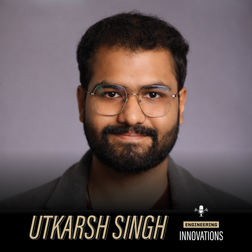
Seeing the Invisible: The Future of Infrared Detection
Utkarsh Singh on Poisson Bolometers and Nanoscale Infrared Detection at Purdue ECE Host Kristin Malavenda interviews Purdue ECE PhD student Utkarsh Singh about his path from New Delhi to Purdue and his research on nanoscale spintronic devices for long-wave infrared (8–14 µm) detection. Singh explains how nanoscale structures exhibit new physics and can enable smaller, lower-power detectors with different, more digital readout behavior than traditional analog infrared sensors. He describes Poisson bolometers, which treat fluctuations between discrete resistance states as a useful noise signal, measuring changes in switching statistics under infrared radiation rather than minimizing noise. The conversation covers applications including surveillance, biomedical imaging, astronomy, and heat-assisted detection and ranging, as well as challenges in fabrication yield, device fragility, and degradation. Singh also discusses PhD realities, advisor support, a rewarding hardware-readout success, and advice on patience, research experience, self-care, and hobbies like music, working out, and traveling. 00:00 Welcome and Guest Intro 00:50 Early Interest in Engineering 02:06 Choosing ECE Path 02:47 Why Purdue for PhD 03:49 Research Evolves Over Time 05:15 Nanoscale Devices Explained 06:20 Infrared Detection Basics 07:43 Why Nanoscale Matters 08:44 Poisson Bolometer Concept 11:23 Why Better IR Detection 13:04 Infrared Detector Roadmap 13:43 Nanofab Scale Challenges 15:08 Handling and Device Degradation 16:36 Learning From Failure 17:49 PhD Workday Rhythm 18:41 Research Direction Realities 19:48 Advisor Support Style 21:03 Breakthrough Moments 23:10 PhD Advice and Balance 24:30 Hobbies and Wrap Up Purdue ECE: http://engineering.purdue.edu/ECE Facebook: http://facebook.com/purdueece X: https://x.com/PurdueECE Instagram: https://instagram.com/purdue.ece LinkedIn: https://www.linkedin.com/company/purdue-ece The Elmore Family School of Electrical and Computer Engineering at Purdue University is one of the nation's largest and most highly ranked ECE programs. Purdue ECE prepares the next generation of engineers and technology leaders through world-class education and interdisciplinary research that advances semiconductors, artificial intelligence, quantum technologies, communications, computing, microelectronics and more. With strong industry partnerships and a commitment to innovation, Purdue ECE is helping solve some of the world's most pressing technological challenges.
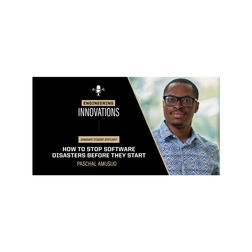
How to Stop Software Disasters Before They Start
How to Stop Software Disasters Before They Start: Purdue PhD Paschal Amusuo on Formal Verification, Unit Proofing & Zero Trust In this episode of Engineering Innovations from Purdue ECE, host Kristin Malavenda interviews fifth-year PhD candidate Paschal Amusuo, a Qualcomm Innovation Fellow researching software security with formal verification and runtime defenses. Amusuo shares his path from Port Harcourt, Nigeria, to Purdue and explains how memory-safety bugs—like those behind major outages such as the 2024 CrowdStrike incident—can crash systems or enable attackers to steal or alter data. He describes how formal verification differs from testing by mathematically checking whether any input can cause failure, and how his “unit proofing” approach makes these techniques more accessible to software engineers. He also discusses zero-trust design for third-party software dependencies, daily PhD life, mentorship with advisor James Davis, real-world vulnerability disclosures, and advice for prospective PhD students focused on learning and impact. Purdue ECE: http://engineering.purdue.edu/ECE Facebook: http://facebook.com/purdueece X: https://x.com/PurdueECE Instagram: https://instagram.com/purdue.ece LinkedIn: https://www.linkedin.com/company/purdue-ece YouTube: https://www.youtube.com/@PurdueECE Purdue University's Elmore Family School of Electrical and Computer Engineering, founded in 1888, is one of the largest ECE departments in the nation and consistently ranks among the best.
Can AI think like a Scientist?
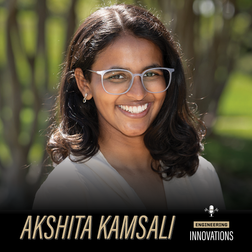
Explaining Trustworthy AI & Self-Driving Labs with Purdue PhD Candidate Akshita Kamsali In this episode of Engineering Innovations from Purdue’s Elmore Family School of Electrical and Computer Engineering, host Kristin Malavenda interviews fifth-year PhD candidate Akshita Kamsali, who works with Professor Avi Kok on deep learning with a focus on computer vision and natural language processing. Akshita shares how her engineering background and Purdue exchange experience led her to pursue a PhD at Purdue, and how her research evolved from optics to AI. She explains her work on understanding and improving the reliability of deep learning models used in sensitive areas such as medicine and security, and discusses her Lawrence Livermore National Laboratory internship exploring large language models for multimodal “self-driving labs,” emphasizing challenges such as safety, security, transparent object sensing, accuracy, and efficiency. Akshita also reflects on the realities of the PhD journey, advising, and career plans. Purdue ECE: http://engineering.purdue.edu/ECE Facebook: http://facebook.com/purdueece X: https://x.com/PurdueECE Instagram: https://instagram.com/purdue.ece LinkedIn: https://www.linkedin.com/company/purdue-ece Purdue University's Elmore Family School of Electrical and Computer Engineering, founded in 1888, is one of the largest ECE departments in the nation and is consistently ranked among the best in the country.
The Future of 6G, Built on a Chip
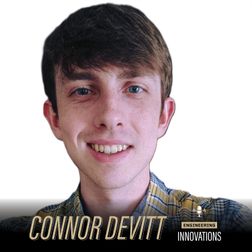
What does it take to turn a big research idea into a real device and a paper in Nature? In this episode of Engineering Innovations, we talk with Purdue ECE PhD student Connor Devitt about research that could help shape the future of 5G and 6G wireless communication. The conversation explores how tunable chip-scale filters work, why they matter for future mobile networks, and what it was like to push this project from concept to fabrication to publication. Along the way, we also get a look at the day-to-day life of a Purdue ECE PhD student, from lab work and device testing to setbacks, breakthroughs and the long road of research. Purdue ECE: http://engineering.purdue.edu/ECE Facebook: http://facebook.com/purdueece X: https://x.com/PurdueECE Instagram: https://instagram.com/purdue.ece LinkedIn: https://www.linkedin.com/company/purdue-ece Purdue University's Elmore Family School of Electrical and Computer Engineering, founded in 1888, is one of the largest ECE departments in the nation and is consistently ranked among the best in the country.
Engineering Innovations: The Internet, but Make it Quantum
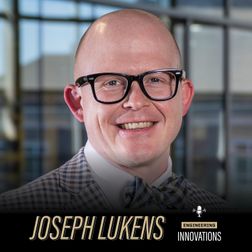
Engineering Innovations: The Internet, but Make it Quantum Host Kristin Malavenda interviews Purdue ECE associate professor Joseph Luken about engineering “spooky action at a distance” into real technology, including quantum communication networks and the future quantum internet. Luken explains how the quantum internet would transmit qubits and distribute entanglement, why networking is essential for scaling quantum computing and sensing, and why Einstein objected to entanglement until Bell’s later experimental tests supported quantum predictions. He describes quantum key distribution (QKD), how it detects eavesdropping, and how it contrasts with post-quantum cryptography, arguing for pursuing both given the risk of future quantum attacks. Luken discusses recent industry momentum, predicts fault-tolerant quantum computing may arrive within 10 years, and emphasizes integrated photonics as critical to moving quantum systems off optics tables and reducing loss. Purdue ECE: http://engineering.purdue.edu/ECE Facebook: http://facebook.com/purdueece X: https://x.com/PurdueECE Instagram: https://instagram.com/purdue.ece LinkedIn: https://www.linkedin.com/company/purdue-ece Purdue University's Elmore Family School of Electrical and Computer Engineering, founded in 1888, is one of the largest ECE departments in the nation and is consistently ranked among the best in the country.
Engineering Innovations: How AI is Changing Images and Video
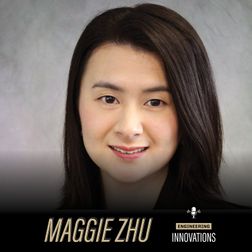
AI and Visual Data Compression: Insights from Purdue ECE Professor Maggie Zhu In this episode of Engineering Innovations, host Kristin Malavenda explores the fascinating world of visual data compression with Professor Maggie Zhu of Purdue University's Elmore Family School of Electrical and Computer Engineering. They discuss how AI is revolutionizing the efficiency of image and video compression, the challenges and opportunities it presents, and how these advancements impact industries ranging from healthcare to entertainment. Tune in to learn about the latest research and future possibilities in AI-driven compression. ECE: http://engineering.purdue.edu/ECE Facebook: http://facebook.com/purdueece X: https://x.com/PurdueECE Instagram: https://instagram.com/purdue.ece LinkedIn: https://www.linkedin.com/company/purdue-ece Purdue University's Elmore Family School of Electrical and Computer Engineering, founded in 1888, is one of the largest ECE departments in the nation and is consistently ranked among the best in the country.
The Hidden Cost of AI: Making Data Centers Sustainable
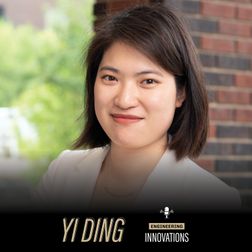
Understanding the Environmental Impact of AI with Dr. Yi Ding Hosted and produced by Kristin Malavenda In this episode of Engineering Innovations, host Kristin Malavenda talks to Dr. Yi Ding, an associate professor at Purdue University's Elmore Family School of Electrical and Computer Engineering. They discuss the immense energy consumption of modern AI systems like ChatGPT, which could soon account for up to 12% of US electricity usage. Dr. Ding's research focuses on the broader environmental impacts of AI, including carbon emissions, water consumption, and biodiversity. They delve into how AI models and data centers contribute to these issues and explore strategies for developing sustainable AI systems. Dr. Ding sheds light on policy implications, data transparency, and industry practices that need to change for a more sustainable future. The episode also touches on Dr. Ding's personal journey into this research and her pedagogical approach to mentoring students. 00:00 Introduction to Engineering Innovations 00:14 The Energy Cost of AI 00:32 Meet Dr. Yi Ding 01:00 Understanding AI's Energy Hunger 03:16 Inside Data Centers 04:22 Beyond Energy: Carbon, Water, and Biodiversity 08:26 Dr. Yi Ding's Research Journey 10:32 Balancing Performance and Sustainability 15:00 The Role of Policy and Regulation 16:07 Future of AI and Sustainability 22:18 Mentorship and Personal Insights 27:15 Conclusion and Farewell Purdue ECE: http://engineering.purdue.edu/ECE Facebook: http://facebook.com/purdueece X: https://x.com/PurdueECE Instagram: https://instagram.com/purdue.ece LinkedIn: https://www.linkedin.com/company/purdue-ece Purdue University's Elmore Family School of Electrical and Computer Engineering, founded in 1888, is one of the largest ECE departments in the nation and is consistently ranked among the best in the country.
Unveiling the Complex Web of Software Security
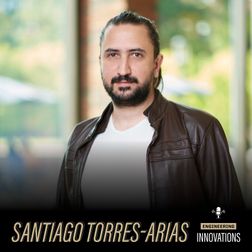
Unpacking Software Supply Chain Security with Dr. Santiago Torres Arias Hosted and produced by Kristin Malavenda In this episode of Engineering Innovations, host Kristin Malavenda speaks with Dr. Santiago Torres Arias, an assistant professor at Purdue University's Elmore Family School of Electrical and Computer Engineering. The discussion examines the complexities and importance of software supply chain security, exploring the various risks and vulnerabilities present in the modern digital landscape. Dr. Torres Arias shares insights about his research projects, including the in toto framework and the Sigstore project, both designed to protect the integrity of software throughout its development and distribution. He also touches on the interplay between cybersecurity and everyday software use, the role of machine learning, and the importance of interdisciplinary collaboration in tackling these challenges. Finally, they discuss practical advice for both consumers and students in the field of cybersecurity. 00:00 Introduction to Engineering Innovations Podcast 00:58 Understanding the Software Supply Chain 01:52 Dr. Santiago Torres Arias' Journey into Cybersecurity 03:06 The Importance of Cybersecurity in Everyday Life 08:07 In Toto: Securing the Software Development Lifecycle 13:53 The Role of Open Source in Software Security 15:54 Exploring the Evolution of Letters and Software Security 16:29 Introduction to Applied Cryptography 17:47 AI and Machine Learning in Supply Chain Security 19:32 Balancing Technology Use and Security Awareness 20:52 Future Challenges in Supply Chain Security 21:55 Interdisciplinary Collaboration in Research 23:26 Choosing Academia Over Industry 24:37 Qualities of a Good Research Student 25:53 Embracing Failure in Engineering 27:15 A Journey into Engineering 28:27 The Creative Side of Engineering 29:06 Personal Hobbies and Decompression 29:49 Conclusion and Farewell Purdue ECE: http://engineering.purdue.edu/ECE Facebook: http://facebook.com/purdueece X: https://x.com/PurdueECE Instagram: https://instagram.com/purdue.ece LinkedIn: https://www.linkedin.com/company/purdue-ece Purdue University's Elmore Family School of Electrical and Computer Engineering, founded in 1888, is one of the largest ECE departments in the nation and is consistently ranked among the best in the country.
What Makes 2D Materials a Game-Changer for Future Electronics?
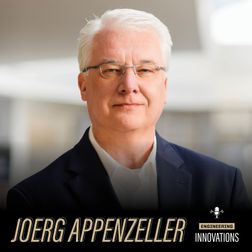
Exploring the Future of Electronics with 2D Materials In this episode of Engineering Innovations, host Kristin Malavenda welcomes Dr. Joerg Appenzeller, the Barry M. and Patricia L. Epstein Professor at Purdue University's Elmore Family School of Electrical and Computer Engineering. Dr. Zeller shares his journey from studying physics in Germany to joining Purdue, delving into his fascinating research on two-dimensional (2D) materials. These materials, which are just one atom thick, have potential applications in transistors, memory, and interconnects, promising to revolutionize electronics. Dr. Zeller explains the unique properties of 2D materials, their advantages over traditional materials like silicon, and their expected adoption timeline. Additionally, he discusses the importance of interdisciplinary work, students' involvement in innovative research, and the hands-on training provided at Purdue. Tune in to learn how these groundbreaking materials could shape the future of technology. Hosted and produced by Kristin Malavenda 00:00 Introduction to Engineering Innovations Podcast 01:01 Meet Dr. Yorg Zeller: From Germany to Purdue 05:16 Understanding 2D Materials 07:37 Graphene and Its Impact 09:21 Applications of 2D Materials in Electronics 12:35 Challenges and Future of 2D Materials 20:39 Student Involvement and Research 30:48 Career Paths and Personal Insights 36:42 Reflecting on Teaching and Student Engagement 38:07 Introduction to Engineering Innovations Podcast 01:01 Journey to Purdue and Research in 2D Materials 05:16 Understanding 2D Materials and Their Applications 09:21 Challenges and Future of 2D Materials 20:39 Student Involvement and Research Impact 30:48 Career Paths and Personal Insights 35:01 Conclusion and Podcast Wrap-Up
How Is Wireless Charging Technology Transforming Transportation?
Revolutionizing Electric Vehicles: Dynamic Wireless Power Transfer and the Future of the Grid In this episode of Engineering Innovations, host Kristin Malavenda discusses cutting-edge research on dynamic wireless power transfer technology for electric vehicles with Professor Dionysios Aliprantis from Purdue University's Elmore Family School of Electrical and Computer Engineering. The conversation explores how this technology, which enables electric vehicles to charge while driving, can help create greener highways and a more resilient energy system. Professor Aliprantis shares his journey into electrical and computer engineering, inspired by his father and uncle, and highlights the challenges and potential of dynamic wireless power transfer, particularly for heavy-duty trucks. The discussion also touches on the Grid of Tomorrow consortium, which aims to advance the electric grid and develop skilled engineers. Practical insights into the test bed for the technology and future projections for its implementation on highways are shared, along with the broader economic and environmental benefits. Kristin and Professor Aliprantis wrap up by discussing the importance of mentorship and the impact of engineering work on everyday life. 00:00 Introduction to Engineering Innovations 00:51 Meet Professor Deis: A Journey in Electrical Engineering 05:14 Dynamic Wireless Power Transfer Explained 10:29 The Future of Electrified Highways 18:26 Grid of Tomorrow Consortium 23:09 Mentorship and Personal Insights 28:25 Conclusion and Farewell Purdue ECE: http://engineering.purdue.edu/ECE Facebook: http://facebook.com/purdueece X: https://x.com/PurdueECE Instagram: https://instagram.com/purdue.ece LinkedIn: https://www.linkedin.com/company/purdue-ece Purdue University's Elmore Family School of Electrical and Computer Engineering, founded in 1888, is one of the largest ECE departments in the nation and is consistently ranked among the best in the country.
1 de 3