Philosophy for Better Humans.

Philosophy for Better Humans.

por Joey Caster

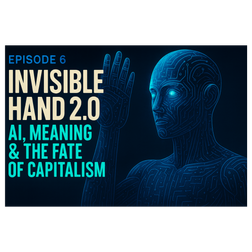
The Invisible Hand 2.0 - AI, Meaning & The Fate Of Capitalism

Episode 6 — AI, Meaning & the Future of Humanity Adam Smith and the Rise of the Abundance Economy Narrated by Charles Sebastian Whitby Philosophy for Better Humans What happens to capitalism, identity, and the human soul when scarcity disappears? In this sweeping, cinematic episode, Charles Sebastian Whitby explores one of the most consequential questions of our age: Can capitalism — and the idea of meaningful work — survive a world transformed by artificial intelligence and material abundance? Drawing from Adam Smith’s overlooked moral philosophy, Viktor Frankl’s search for meaning, Nietzsche’s call for self-creation, and the psychological challenges of a post-labor world, this episode takes listeners on a deep journey through: The collapse of scarcity and the birth of the abundance economy AI as “The Invisible Hand 2.0” — the allocator of a new world Why humans struggle when work no longer defines identity The rise of the meaning economy: creativity, purpose, community The new role of humans as creators, mentors, explorers, moral teachers How personal meaning becomes the currency of the future Why AI doesn’t make humans obsolete — it reveals who we must become With vivid storytelling, philosophical depth, and a compassionate voice, this episode helps listeners understand not just the future of economics… but the future of themselves.

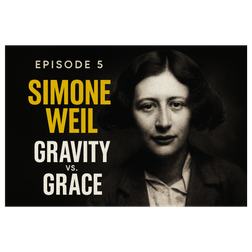
Episode 5: Simone Weil — Gravity vs. Grace

Episode 5 — Simone Weil: Gravity vs. Grace Philosophy for Better Humans Narrated by Charles Sebastian Whitby What if every human life is shaped by two invisible forces—one that pulls us downward, and one that lifts us upward? In this profound long-form episode, Charles Sebastian Whitby explores the piercing philosophy of Simone Weil, the French mystic who believed that “gravity” (ego, habit, selfishness, reactivity) constantly drags us into suffering, while “grace” (attention, compassion, silence, sacrifice) has the power to redeem our inner and outer world. Through intimate storytelling, vivid metaphors, and deep psychological insight, this episode guides listeners into Weil’s revolutionary ideas on: Learning to pause before reacting Seeing the person behind the label The discipline of attention The healing power of silence The moral beauty of saying “yes” slowly Transforming suffering into compassion This is not a lecture—it’s a conversation. A walk into one of the most luminous philosophies of the 20th century, grounded in everyday tools you can use today to live with more clarity, compassion, and grace. A transformative episode for anyone seeking peace in a noisy world.

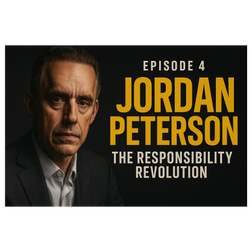
Episode 4: Jordan Peterson — The Responsibility Revolution

In this deeply human and beautifully told episode, Charles Sebastian Whitby guides listeners into Jordan Peterson’s philosophy of responsibility, order, and the courageous confrontation with life’s chaos. Blending vivid storytelling with psychological depth, this episode explores why “clean your room” isn’t about tidiness at all—but about reclaiming sovereignty over your life. Through myths, real-life stories, shadow integration, the meaning of suffering, and the quiet power of small responsibilities, this episode reveals how Peterson’s ideas can help anyone create a life of clarity, courage, and purpose. An intimate, transformative journey into what it really means to become a responsible—and therefore meaningful—human being.

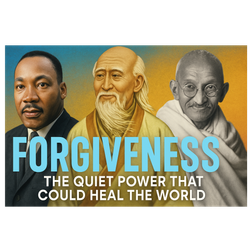
Episode 3: Forgiveness: The Quiet Power That Could Heal the World

What if forgiveness isn’t a moral suggestion—but a civilizational necessity? In this gripping episode, Charles Sebastian Whitby investigates forgiveness as a courageous philosophical act that has shaped revolutions, ended feuds, and brought healing to wounded souls. Guided by thinkers from ancient religions, classical philosophy, Eastern wisdom, Enlightenment ideals, and modern dissidents, this journey uncovers how forgiveness can interrupt cycles of anger and build a better future—starting with your own heart.

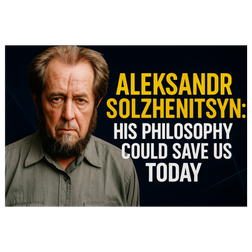
The Philosophy of Aleksandr Solzhenitsyn - How his ideas could save us today

The Philosophy of Aleksandr Solzhenitsyn — Truth, Suffering, and the Moral Courage to Resist Podcast: Philosophy for Better Humans Host: Charles Sebastian Whitby In this powerful episode, we examine the life, ideas, and moral philosophy of Aleksandr Solzhenitsyn — Nobel Prize–winning author, Soviet dissident, and one of the most courageous truth-tellers of the 20th century. Solzhenitsyn believed that society collapses when individuals abandon truth, responsibility, and moral courage. His warnings were not just political — they were deeply spiritual and philosophical, offering a blueprint for how ordinary people can resist tyranny both in the world and within themselves. 🔥 What You’ll Learn Why Solzhenitsyn believed truth is the foundation of freedom How suffering, when faced honestly, becomes a path to moral growth The dangers of ideological thinking and “little lies” in everyday life How to become a person who cannot be compelled to say what they do not believe Lessons from The Gulag Archipelago and A Day in the Life of Ivan Denisovich Practical modern applications: personal responsibility, courage, integrity

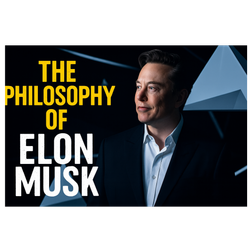
The World Changing Philosophy of Elon Musk

Episode Description — “The Philosophy of Elon Musk: Relentless Drive & the Vision for a Better World” In this episode, host Charles Sebastian Whitby dives deep into the mind of one of the most driven innovators of our time — Elon Musk. We explore Musk’s philosophy of relentless work ethic, audacious goal-setting, and uncompromising dedication to solving humanity’s biggest problems. This isn’t just a story about business success — it’s a study in how to think bigger, act faster, and refuse to accept limitations. From first principles reasoning and extreme focus, to his belief in sacrificing comfort for progress, we break down the mental frameworks that fuel SpaceX, Tesla, Neuralink, and beyond. You’ll learn: Why Musk believes meaningful work requires obsession, not motivation The power of first-principles thinking to overcome obstacles that stop everyone else How to cultivate a mindset that turns “impossible” into engineering problems The importance of aiming at world-changing goals, not incremental improvements Musk’s ultimate vision for humanity — from sustainable energy to multi-planet life Whether you admire him, question him, or simply want to understand the psychology behind his drive, this episode will challenge you to rethink your own boundaries and pursue the biggest version of your life. Subscribe, take notes, and get ready to push past what you thought was possible.

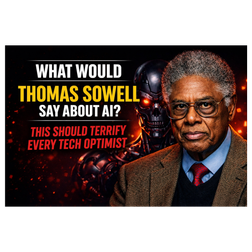
What Would Thomas Sowell Say About AI? His Answer Should Terrify Every Tech Optimist

Since 1964, America has handed more and more decision-making power to experts, institutions, and centralized systems — and Thomas Sowell spent 60 years documenting exactly how that goes wrong. Now, artificial intelligence is the most powerful centralized decision-making system ever built. And almost nobody is asking the questions Sowell would demand we ask. In this episode of Philosophy for Better Humans, we apply the complete intellectual framework of Thomas Sowell — one of the greatest economists and social thinkers of the 20th century — to the AI revolution reshaping every corner of your life right now. This is not a politics episode. This is not a tech episode. This is a wisdom episode. And it may be the most important thing you hear before the algorithm decides your career, your finances, your information, and your future. What You Will Discover in This Episode: Why Sowell's Knowledge Problem — developed in his masterwork Knowledge and Decisions — reveals a fatal structural flaw in how AI systems are built and deployed. Why the AI industry is the most powerful version of what Sowell called the Anointed — credentialed, well-intentioned, largely unaccountable experts imposing their vision on billions of people who had no say in the matter. How Stage One Thinking, Sowell's most accessible and devastating concept from Basic Economics, explains why AI policy keeps failing the people it claims to help. How the Conflict of Visions — the constrained versus unconstrained view of human nature from his 1987 book A Conflict of Visions — maps with eerie precision onto the divide between AI optimists and AI doomers. The three questions Sowell used to destroy bad policy arguments — Compared to what? At what cost? What hard evidence do you have? — and how to apply them to every AI headline you read. Why real accountability in AI requires consequences, not principles documents. And ten specific, practical ways to protect your own judgment, your own knowledge, and your own autonomy in a world that is rapidly outsourcing human decision-making to machines. Key Topics Covered: Thomas Sowell Basic Economics explained, Thomas Sowell Knowledge and Decisions AI, Thomas Sowell Intellectuals and Society tech industry, Vision of the Anointed Silicon Valley, AI regulation unintended consequences, AI bias algorithmic discrimination, AI accountability frameworks, AI hiring tools discrimination, AI criminal justice recidivism tools, AI content recommendation radicalization, Sowell constrained vision unconstrained vision, dispersed knowledge artificial intelligence, AI governance regulatory capture, Stage One Thinking AI policy, tacit knowledge machine learning limits, AI ethics problems 2025 2026, should you trust AI decisions, philosophy of technology, Thomas Sowell quotes, Thomas Sowell philosophy. Why This Matters Right Now: Agentic AI systems are making autonomous decisions without human oversight. AI hiring tools are screening millions of job applicants. AI recommendation engines are shaping what billions of people believe. AI systems are influencing sentencing, lending, healthcare, and education. And the people building the guardrails are the same people who built the systems. Thomas Sowell saw this structure — expert authority without accountability — repeat itself across every domain of policy for six decades. He documented how it always ends. This episode is the framework you need before the algorithm decides your life. Perfect For: Anyone thinking seriously about AI and its impact on society. Fans of Thomas Sowell, Milton Friedman, Friedrich Hayek, and free market philosophy. People who feel uneasy about AI but cannot articulate exactly why. Leaders and entrepreneurs navigating AI adoption in their organizations. Students of economics, philosophy, political science, and technology ethics. Anyone who loved our previous episodes on Hayek and Friedman and wants to go deeper.

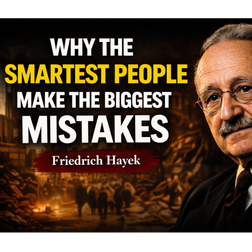
Why the Smartest People, Make the Biggest Mistakes - Friedrich Hayek

In 1959, MIT's brightest minds tried to plan the Soviet economy with computers. 30 years later: 70 million dead. Why do brilliant people create catastrophic disasters? [MAIN DESCRIPTION] In this episode of Philosophy for Better Humans, we explore one of the most uncomfortable truths in history: The smartest people often make the worst mistakes. Not despite their intelligence—but BECAUSE of it. Nobel Prize-winning economist Friedrich Hayek spent his life warning about "The Fatal Conceit"—the dangerous belief that human beings are smart enough to centrally plan economies, societies, and civilizations. His insights are more urgent than ever as experts demand control over AI, climate policy, information, and your personal choices. 🔥 What You'll Discover: Why MIT economists tried to design the Soviet economy (and failed catastrophically) The "Knowledge Problem" that makes central planning impossible—no matter how much data you have How The Road to Serfdom explains why economic planning inevitably destroys freedom Why the most sophisticated systems (language, cities, markets) have NO designer The psychology of why intellectuals are attracted to socialism and comprehensive plans What "scientism" is and why treating society like a physics experiment kills millions How Hayek's warnings apply to AI governance, COVID policy, and climate regulation TODAY 📊 Key Topics Covered: ✅ The Fatal Conceit - Why intelligence without humility is catastrophic ✅ The Knowledge Problem - Why no one can know enough to plan society ✅ Spontaneous Order - How complexity emerges without conscious design ✅ The Road to Serfdom - Why planning leads to tyranny ✅ Intellectuals and Socialism - Why smart people support failed systems ✅ Scientism - When science becomes dangerous pseudo-religion ✅ Soviet economic planning failures and famines ✅ The Holodomor - 7 million dead from "expert" wheat planning ✅ Public housing disasters (Pruitt-Igoe, Brasília, Soviet blocks) ✅ Jane Jacobs vs. Robert Moses - Wisdom beats expertise ✅ COVID-19 policy failures and expert overconfidence ✅ AI regulation debate and the limits of expert control ✅ Climate policy and the dangers of comprehensive planning ✅ Why markets solve problems experts can't even see 💡 Why This Matters NOW: Right now, the smartest people in the world want to: Control AI development "for our safety" Reorganize the global economy around climate Regulate information to fight "misinformation" Mandate health behaviors based on "expert consensus" Redesign capitalism, education, and society itself They're absolutely certain they know enough to do this. Hayek would say: That certainty is the problem. This episode will show you why—with historical examples that should terrify you and contemporary parallels you can't ignore. 🎯 Perfect For: Anyone concerned about government overreach and expert authority Entrepreneurs and business leaders who deal with bureaucracy People skeptical of central planning and comprehensive solutions Those interested in Austrian economics and classical liberalism Anyone worried about AI regulation and tech governance Students of political philosophy and economic theory Fans of free market thinkers like Milton Friedman, Thomas Sowell, Ludwig von Mises Anyone who wants to understand why smart people supported communism Critical thinkers questioning COVID policies, climate mandates, and expert consensus Parents fighting standardized education and one-size-fits-all systems
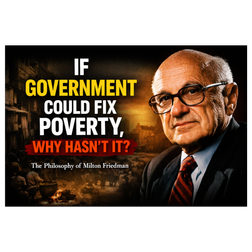
Milton Friedman: If Government Could Fix Poverty, Why Hasn't It?

Since 1964, America has spent over $30 TRILLION fighting poverty—yet poverty rates remain unchanged. Nobel economist Milton Friedman knew why, and his answer will shock you. [MAIN DESCRIPTION] In this episode of Philosophy for Better Humans, we dive deep into one of the most controversial economic minds of the 20th century: Milton Friedman. Why did the War on Poverty fail? How do welfare programs trap people instead of helping them? And what does this mean for our future as AI threatens millions of jobs? 🔥 What You'll Discover: Why $30 trillion in anti-poverty spending hasn't reduced poverty rates since 1967 The "welfare cliff" that punishes poor people for working (effective tax rates over 100%) How public housing projects like Pruitt-Igoe became government-backed ghettos Milton Friedman's radical solution: The Negative Income Tax (precursor to Universal Basic Income) The moral case for free markets vs. government intervention Why good intentions often create terrible outcomes How to apply Friedman's philosophy to modern problems like AI automation 📊 Key Topics Covered: ✅ War on Poverty - Why 60 years of government programs failed ✅ Welfare trap economics and poverty cliffs ✅ Public housing failures (Robert Taylor Homes, Pruitt-Igoe) ✅ Negative Income Tax explained simply ✅ Free market capitalism vs. socialism debate ✅ Universal Basic Income and the future of work ✅ AI automation and technological unemployment ✅ Economic freedom and political freedom ✅ Unintended consequences of government policy ✅ Real solutions to poverty that actually work 💡 Why This Matters NOW: As we face the biggest economic transformation in history—AI and automation threatening to replace millions of jobs—Friedman's insights are more relevant than ever. Should we implement Universal Basic Income? Will robots create mass unemployment? Can government solve these problems, or will it make them worse? This isn't just economic theory. This is about YOUR future, YOUR freedom, and YOUR ability to build a better life. 🎯 Perfect For: Anyone interested in economics, philosophy, or politics Entrepreneurs and business owners People concerned about poverty and inequality Those curious about Universal Basic Income (UBI) Anyone worried about AI taking their job Fans of free market economics or libertarian philosophy Students of Milton Friedman, Friedrich Hayek, Thomas Sowell Anyone who wants to understand why government programs often fail 🧠 About Milton Friedman: Nobel Prize-winning economist, advisor to presidents, and champion of economic freedom. Friedman's ideas shaped policy worldwide through his books "Capitalism and Freedom" and "Free to Choose." Love him or hate him, you can't understand modern economics without understanding his philosophy. This episode will challenge everything you thought you knew about poverty, welfare, and the role of government in society. 🔔 SUBSCRIBE to Philosophy for Better Humans for more deep dives into the ideas that shape our world!

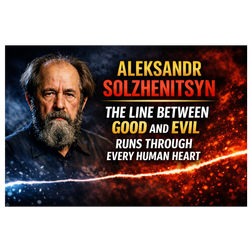
Aleksandr Solzhenitsyn - The line that runs through every human heart

Aleksandr Solzhenitsyn Target Keywords: Aleksandr Solzhenitsyn, The Gulag Archipelago, Live Not By Lies, Stoicism, Moral Philosophy, Personal Responsibility, Truth. Description: What happens to the human soul when it is stripped of everything? In this episode, we dive into the life and philosophy of Aleksandr Solzhenitsyn, the man who survived the Soviet Gulags to deliver a message that still shakes the world today: "Live Not By Lies." > Most people blame "the system" for their problems, but Solzhenitsyn discovered a terrifying truth while lying on rotting prison straw: the line between good and evil doesn't run between political parties or nations—it runs through every human heart. In this episode, you will learn: Why small, "harmless" lies are the most dangerous thing you can do. How to take radical responsibility for your own life. Why comfort makes us shallow and how suffering can actually refine us. How one person choosing the truth can shake an entire empire. Timestamps: 0:00 - The 4 words that changed history 2:15 - From Soldier to Prisoner: The birth of a conscience 8:40 - The Gulag as a moral laboratory 12:13 - Practical Philosophy: Live Not By Lies 18:52 - Why suffering is a school for the soul 22:33 - The line through every heart 32:50 - 4 Pillars of a better human 43:50 - Final Recap Subscribe to Philosophy For Better Humans for weekly deep dives into the minds that shaped humanity.
2 de 4