
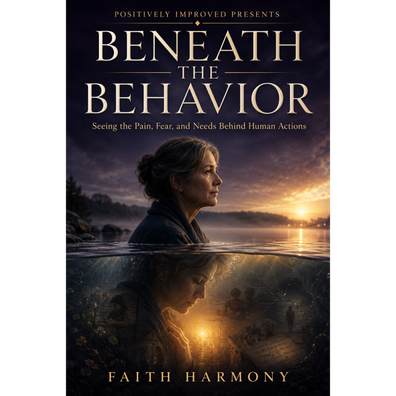
Notas del episodio
What happens when we repeatedly judge the behavior we can see without considering the pain, fear, or unmet need beneath it?
In this episode of Beneath the Behavior, Marcus finally learns the truth behind Theo’s disruptive behavior. What appeared to be disrespect was partly the response of a child struggling with abandonment and trying not to feel invisible. This discovery reveals that misreading behavior is not neutral. It can create disconnection, reshape our perception of others, and cause meaningful opportunities for understanding and repair to disappear.
We also challenge the belief that compassion is a form of weakness. Genuine compassion does not ignore harmful behavior or eliminate accountability. It allows us to recognize the person beneath the reaction while maintaining clear boundaries, honoring our needs, and responding from our values rather than emotional reflex.
In this episode, we explore:
- What Marcus discovers beneath Theo’s classroom behavior
- How judgment creates emotional distance within relationships
- Why people hide their true feelings when they no longer feel safe
- How repeated misreadings can shape a lens of resentment
- The connection between our expectations and what we notice
- How misreading behavior causes opportunities for repair to be missed
- Why compassion should not be confused with surrender
- How understanding and accountability can coexist
- The difference between addressing behavior and attacking identity
- Why compassion without boundaries can become self-abandonment
- How self-compassion supports honest accountability
- What it means to remain firm without becoming cruel
Questions for reflection:
- Have you ever misunderstood someone’s behavior and later learned there was more beneath the surface?
- How does judgment affect the emotional safety within your relationships?
- What assumptions may be shaping the way you interpret another person?
- Where might compassion help you respond with greater clarity?
- Is there a situation in which understanding someone’s pain has caused you to overlook your own boundaries?
- How could you address harmful behavior without reducing the person to that behavior?
- What would it mean to remain compassionate while still requiring accountability?
Compassion is not a technique for controlling another person’s response. It is a commitment to choosing the kind of person we want to be, even when we cannot control the outcome.
We can understand the pain and still require change.
We can remain soft without becoming fragile.
PI Reading for Growth is presented by Positively Improved™ and created to support greater self-awareness, emotional healing, and intentional personal growth.
Namaste.