Nature Detectives

Nature Detectives

por Diana McPherson
Temporada 3

Washington Native Bees with Bee Atlas Volunteer Coordinator, Caleb Lankford

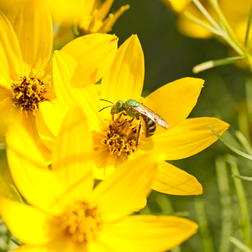
Meet Caleb Lankford, Volunteer Coordinator for the Washington Bee Atlas program under the Washington State Department of Agriculture. He enjoys working with people as much as working with bees. A former high school teacher, he found his way to native bees when he returned to college for a master's degree in Natural Science. In need of a part-time job, he found a local pollinator lab and was introduced to the Bee Ladies and quickly discovered the wonders of native bees. Caleb loves science and wants to make it accessible to everyone. The Washington Bee Atlas trains volunteers to survey native bees around the state. Community involvement and participatory science are the heart of this program. Caleb says his “true passion is engaging with the volunteers. I love to see the excitement they get when they first learn about native bees.” Native bees are vital to native flowering plants as well as many food crops. While honey bees are important pollinators, the pollen they collect is taken to the hive and turned into honey. Native bees use buzz pollination, which moves pollen from plant to plant so those plants can produce seeds for the next generation. Some native bees are also reliant upon certain plants and their pollen for their offspring, similar to the monarch butterfly being reliant upon the milkweed plant. Food plants, like blueberries, are reliant upon native bees' buzz pollination. “One third of all food humans eat is tied back to a pollinator”, Caleb says. “One in every three bites, you have bees to thank for that”. When most people think of a bee, they picture “the black and yellow striped honeybee or even the buzzy bumblebee” since they are most familiar. But native bees come in “all sorts of shapes, sizes, and colors”. Contact Caleb Lankford here: https://agr.wa.gov/beeatlas caleb.lankford@ag.wa.gov WA Bee Atlas on Instagram @wsdagov WA Bee Atlas on Facebook @WaStateDeptAg Support Nature Detectives here: https://buymeacoffee.com/naturedetectives
Temporada 2

Meet the Creators of Atlas and Stella

Meet the creators of Atlas and Stella Save the Reef, author Josie Smeltzer and illustrator Hannah Cooper. Their new kids book is directed to ages 5-8 but all ages will love it. You can get a copy of their book most places books are sold including: Amazon Barnes and Noble Bookshop Additional ocean education resources mentioned in the podcast: Ocean Oceanographic Society The Salish Sea School I hope you've enjoyed our interview and I know you'll enjoy the book.

Photographing Wild Horses

In this episode, I discuss some tips on photographing wild horses - where to find them, camera settings suggestions, and what to do with your images to help wild horses. A short bonus video with some images from 2 of the wild herds I've photographed, Onaqui in Utah and Salt River in Arizona, can be viewed on my YouTube page: https://youtu.be/JCbC1UkNaSs Other mentions in the podcast: Onaqui Catalogue Foundation: https://onaquicatalogue.org/ Save America's Wild Horses: https://www.saveourwildhorsesandwildlife.org/

America's Wild Horses

I sit down to talk with Linda Greaves from Save America's Wild Horses about these somewhat hidden and more so unknown wildlife. Recent scientific research provides evidence that wild horses are a reintroduced native species that have been vital to humans' way of life, yet now they are facing the threat of managed extinction. I hope you enjoy our conversation and will help out with your investigation and assignment that I suggest at the end of our talk. Wild Horse advocacy groups you may want to get involved with: Save America's Wild Horses: https://www.saveourwildhorsesandwildlife.org/ American Wild Horse Conservation: https://www.americanwildhorse.org/ Wild Horse Education: https://wildhorseeducation.org/ Save the WY Checkerboard Herds (Facebook group): https://www.facebook.com/share/g/1F2t3YFR4j/ Save the Onaqui Horses (Facebook group): https://www.facebook.com/share/g/1HzcXSajfY/ Salt River Wild Horses - Advocates (Facebook group): https://www.facebook.com/share/g/19LxUNjER4/ For images of wild horses from UT, CO, WY and/or AZ, please visit my site, https://www.friendsinnature.com/images.html, and go to my Giving Back Through Art Gallery. 20% of proceeds are given to groups helping each of these wild horse herds.

Mason Bees - Super Pollinators

I interviewed Carrie Moorlang from Knox Cellars Orchard Mason Bees in western Washington. Learn about the Mason bees, why they're important pollinators, and how to house them. Watch the video of our interview on my YouTube page: https://youtu.be/SrCTo_zkAQw . Watch the full video or skip ahead to 23:29 to begin watching and listening to the conversation on the mason bee houses. Resources mentioned during the interview: 1) Pollinator Partnership - www.pollinator.org2) Orchard Bee Association (OBA) 0 www.orchardbee.org3) The Orchard Mason Bee book by Brian L Griffinhttps://www.knoxcellarsmasonbees.com/product-page/book-the-orchard-mason-bee-24) Common Bees of Western North America https://www.knoxcellarsmasonbees.com/product-page/common-bees-of-western-north-america-brochureKnox Cellars Orchard Mason BeesCarrie Morlang, Proprietor knoxcellarsmasonbees@gmail.com⁠https://www.facebook.com/knoxcellarsmasonbees/⁠

Yakima River Water Stargrass

Learn more about water star grass (Heteranthera dubia) and join a summer removal event with Benton County Conservation District https://www.bentoncd.org/ Watch my stargrass removal video https://youtu.be/2H3bReGHDvE

The Monarch Butterfly

Learn about the monarch butterfly and how to get involved in protecting the species. Organizations mentioned in podcast: Xerces Society: https://www.xerces.org/ Monarch Joint Adventure: https://monarchjointventure.org/ Journey North: https://journeynorth.org/ Southwest Monarch Study: https://swmonarchs.org/ Butterfly Habitat Oasis Project: https://loriacash.com/projects/projects-butterfly-habitat-oasis-project/ Monarch fine art prints: https://www.friendsinnature.com/archive
Temporada 1

Investigating Your Backyard

Join me as we investigate our backyards for pollinators, insects, and other wildlife while learning the difference between venomous and nonvenomous (friendly) snakes and why they should stay in your yard. I'll also review the proper mix for hummingbird feeders so you can safely feed hummers while enjoying their visit to your yard, or your personal green space.

Welcome to Nature Detectives

Welcome to the first episode of Nature Detectives podcast. Your host, Diana, welcomes you and talks briefly about her childhood experiences exploring nature.

Shorebirds Galore!

Learn about shorebird species along the Pacific coast migrating north back to their breeding grounds in the Arctic.
1 de 2