Mining Scripture
por Rick Neubrander Temporada 3
IT IS FINISHED - Christ in ALL Things

What did Jesus actually mean when He cried out "IT IS FINISHED"? In this episode of Mining Scripture, we go beyond the surface of the Crucifixion to uncover the legal and prophetic "blueprint" that was settled at the Cross. We dive deep into the Greek concept of Meros—the legal inheritance Peter nearly missed in the Upper Room—and explore why the Titulus (the sign above Jesus' head) was a sovereign broadcast to the entire ancient world. From the "Silence of the Lamb" in Isaiah 53 to the "Paid in Full" accounting reality of the Resurrection, we trace how Christ fulfilled every line item of Prophecy In this episode, we discuss: The Mandatory Cleansing: Why "Meros" is the key to our legal union with Christ. The Prophetic Blueprint: How Christ legally satisfied the requirements of Prophecy, The Two Thieves: A powerful look at justification by faith alone in the final moments of life. Shadow Meets Substance: Why the Temple veil tore and what "It is Finished" means for your debt today. The Unified Resurrection: How the Father, Son, and Spirit acted in perfect unity to break the Roman seal. The Blueprint is not finished. While the work of redemption is settled, the work of our High Priest continues. Join us as we continue to mine scriptures in the next Podcast. This podcast was generated from my full and complete study. I had AI make it into a discussion so it is easy to listen to. If you wish to see the full document click on the link below. IT IS FINISHED
The Legal Framework for Salvation - Christ in ALL Things

Is the Cross the end of our salvation, or the beginning of a legal process? In this deep-dive episode of Mining Scripture, we move past "thematic resemblance" to examine the airtight legal framework of our salvation. Using the blueprint of the earthly sanctuary shown to Moses, we uncover how Christ’s work in the heavenly sanctuary preserves the exact sequence, function, and legal logic of the Old Testament shadows. If the Cross provided the blood, the Sanctuary applies it. We present five distinct witnesses—from the 14th of Nisan to the fire of Pentecost—to prove that Jesus is not just a memory, but an active High Priest and Mediator. In this study, we mine the riches of: The Sanctuary Pattern: Why the "copy and shadow" (Hebrews 8:5) governs the heavenly reality. The 9th Hour Sacrifice: The technical legal timing of the Passover Lamb and the retiring of the earthly system. Paid in Full vs. Applied in Fact: Understanding the Greek word Tetelestai and why the record of sin requires an ongoing High Priestly ministry. The Legal Witnesses: How Christ fulfilled the Feast of Unleavened Bread, the Wave Sheaf - Firstfruits, and the Heavenly Inauguration. The Day of Atonement: Why atonement could not happen at the Cross and what the cleansing of the sanctuary means for you today. Discover the Preeminence of Christ in every detail of the blueprint—from His sinless rest in the tomb to His worthiness to open the heavenly scrolls. This podcast was generated from my full and complete study. I had AI make it into a discussion so it is easy to listen to. If you wish to see the full document click on the link below. The Legal Framework for Salvation
Jesus in the Fall Feasts - Christ in ALL Things
If the Cross provided the blood, when is it actually applied? In this continuation of our series Mining Scripture, we move from the Spring Feasts to the final three Fall Feasts of the Sanctuary calendar. We uncover how these ancient shadows provide an airtight legal timeline for human history—revealing exactly where we stand today in the cosmic judgment. We move past the "Long Dry Summer" of the Dark Ages to examine the rise of the Little Horn and the transition of Christ’s ministry into the Most Holy Place. This isn't just history; it is a legal roadmap from the year 1844 to the final ingathering of the saints. In this deep-dive study, we mine the riches of: The Seven Marks of Identity: A legal breakdown of Daniel 7 and the historical rise of the Little Horn (538 AD–1798 AD). The Investigative Judgment: Why the "Ancient of Days" took His seat after 1798 and what it means for the books to be opened before the Second Coming. The Feast of Trumpets : The prophetic "alarm" that woke the world and the mathematical proof of the 2,300-day prophecy of Daniel 8:14. The Two Great Disappointments: Why the Disciples at the Cross and the Millerites in 1844 made the same legal error—and how God used it to reveal the truth. The Fourth Angel’s Glory: The promise of the Latter Rain and the final call to "Come out of Babylon." The Feast of Tabernacles: The ultimate fulfillment where God finally "pitches His tent" with humanity in a New Earth where death and pain are eradicated. Understand your place in history and see the High Priest’s work move toward its final cry: "It is done!" This podcast was generated from my full and complete study. I had AI make it into a discussion so it is easy to listen to. If you wish to see the full document click on the link below. The Fall Feasts
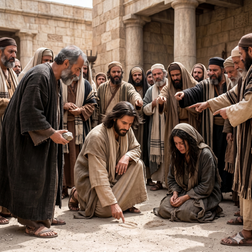
In this episode, we tackle one of the most misunderstood aspects of ancient history and biblical theology: How women were truly viewed and treated in the first century versus the radical standard established by Jesus Christ. While many perceive ancient traditions as the divine design, a closer examination of the textual and historical evidence reveals that the subjugation of women was a symptom of a broken world that Jesus systematically came to reverse. In this episode, we mine how women are depicted from the original creation to the early apostolic movement: Genesis 1:27 & 3:16 — We analyze God’s original design establishing the co-equal status of male and female in the image of God, and demonstrate textually that the "ruling over" of women was a direct consequence of the Fall, not the original plan. The Historical Baseline — We examine the strict legal, religious, and social restrictions placed on women by first-century Roman civil law and the Jewish oral traditions recorded by Josephus and the Mishnah, proving they were treated as permanent minors and legally barred from serving as reliable witnesses. Mark 5:24–34 & Luke 10:38–42 — We explore how Jesus intentionally broke through cultural taboos, publicly restoring the identity of a ceremonially unclean outcast and flatly overriding rabbinic rules by validating a woman's fundamental right to sit at His feet as a formal student of Scripture. John 11:20–27 & John 4:7–9 — We discuss the profound depth of Jesus' interactions, highlighting how He honored Martha’s intellect by entrusting her with the foundational theology of the resurrection and shattered public speech prohibitions to deliver His first unmasked messianic declaration to a Samaritan woman. John 20:11–18 — We connect Christ's subversion of first-century legal prejudices to the morning of the resurrection, where He bypassed the hiding male leaders and explicitly commissioned Mary Magdalene to be the primary witness and first proclaimer of the Gospel. This episode systematically moves through the historical manifestations of Christ's ministry, from His defense of an exploited woman in the temple courts to the physical honor and protection He provided for His own mother from the cross. We conclude with a look at how the early apostolic church lived out this restored design, examining the prominent leadership, teaching, and prophetic ministries of women like Priscilla, Dorcas, Phoebe, Junia, Lydia, Euodia, Syntyche, and the four daughters of Philip. We show that the elevation of women is not a modern cultural adjustment, but a direct return to the original design of God. This podcast was generated from my full and complete study. I had AI make it into a discussion so it is easy to listen to. If you wish to see the full document click on the link below. The Image Restored 
Parable of the Wedding Garment
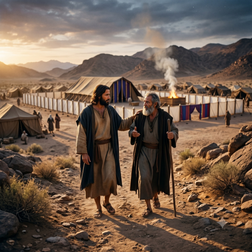
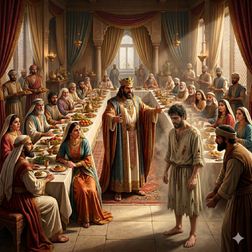
In this episode, we tackle one of the often misunderstood parables of Jesus' ministry: The Parable of the Wedding Garment in Matthew 22:1–14. While many perceive the final judgment as a simple evaluation of human goodness, a closer examination of the textual, historical, and sanctuary evidence reveals that human righteousness is legally insufficient to survive the King’s final inspection. In this episode, we mine the historical timeline and judicial framework of the wedding feast from the original invitation to the execution of the final verdict: Matthew 22:1–7 — We analyze the first two waves of royal messengers sent to the covenant people, tracing the prophetic fulfillment of their violent rejection down to the historical closing of corporate probation and the destruction of Jerusalem in AD 70. Matthew 22:8–10 — We examine the universal highway call that gathers both the "bad and the good," demonstrating textually that entry into the wedding hall is based entirely on the grace of the invitation, not the prior moral condition of the guests. The Near Eastern Context — We investigate ancient customs to prove that the host King provided the mandatory wedding garments entirely free of charge, showing that to appear in one's own clothing was an intentional act of insubordination and high treason. Matthew 22:11–12 — We explore the legal and chronological timing of the King's visual inspection, connecting this scene to the investigative judgment of Daniel 7 where the character of every professed believer is scrutinized before the close of human probation. Matthew 22:12–14 — We discuss the profound significance of the unclad guest being left speechless before the court, proving that all human excuses collapse under divine law and that Christ’s imputed robe of righteousness is our only legal defense. This episode systematically moves through the structural outline of this parable, from the fatal mistake of treating the King's command with indifference to the absolute finality of the executive sentence when human agency is brought to a permanent halt. We conclude with a look at how this prophetic warnings connects to the closing scenes of earth's history, showing that the wedding garment is not a modern theological adjustment, but a direct return to the sanctuary plan of God. This podcast was generated from my full and complete study. I had AI make it into a discussion so it is easy to listen to. If you wish to see the full document click on the link below. Parable of the Wedding Garment
Jesus in the Old Testament: The Real Identity of the I AM
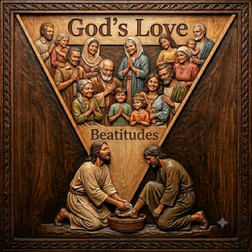
Did Jesus Christ begin His existence in a manger in Bethlehem, or has He been running the biblical timeline from the very beginning? Many people view the Bible as two separate stories—a distant God of judgment in the Old Testament and a gentle Savior in the New Testament. But when you look closely at the text, the boundary lines vanish. The scriptures reveal an unbroken timeline showing that the Savior who died on the cross is the exact same God who has been physically interacting with humanity since Genesis. In this study, we pull back the curtain on the Hebrew Scriptures to uncover the physical appearances of Christ long before His human birth. We look at the explosive claim of John 8:58 where Jesus declares "Before Abraham was, I AM," and trace that exact identity back to the burning bush. By resolving the ultimate Old Testament paradox—how humanity can see a visible God when the Father is invisible—we reveal how Jesus stepped into human history as the Angel of the LORD, the Judge of Sodom, and the Commander of the army at Jericho. Finally, we unpack how the entire wilderness Tabernacle was actually a three-dimensional prophecy mapping out the life and sacrifice of our Savior. In this episode, we uncover: The Ultimate Claim: Why the religious leaders tried to stone Jesus for using the sacred name "I AM" in John 8. The Visible God: How preincarnate appearances of Christ (Christophanies) solve the mystery of people seeing God face-to-face. Walking Through Fire: The physical presence of the Son of God protecting His people in the fiery furnace of Babylon. The Tabernacle Blueprint: How every single piece of furniture, from the courtyard gate to the Mercy Seat, maps out the plan of salvation. The Prophetic DNA: The ancient blueprints in Isaiah and Micah that detailed the Savior's eternal origin and resurrection. This podcast was generated from a complete study for discussion purposes. You can access and read the full document here: Jesus in the Old Testament
The Beatitudes - Sermon on the Mount
In this episode, we tackle one of the most famous—and most misunderstood—teachings of Jesus' ministry: The Sermon on the Mount (Matthew 5–7). While many view the Sermon on the Mount as nothing more than a collection of moral sayings, impossible ideals, or practical advice for Christian living, a closer examination of the textual, historical, and first-century Jewish context reveals that Jesus was announcing the constitution of the Kingdom of Heaven—a kingdom that completely overturns the world's definition of righteousness, greatness, power, and success. In this episode, we examine five of the major themes that reveal the true purpose of Christ's greatest sermon: The Beatitudes (Matthew 5:1–12) — We examine why Jesus calls the poor in spirit, the meek, the merciful, those who mourn, and those persecuted for righteousness the truly blessed, revealing that the Kingdom of Heaven completely reverses the values of the Roman world and human society. Jesus and the Law (Matthew 5:17–48) — We explore one of the most debated statements in the New Testament: "I did not come to destroy the Law but to fulfill it." We investigate whether Jesus abolished the Law, raised its standard, or revealed its original intent, demonstrating that true obedience begins in the heart long before it appears in outward actions. True Religion vs. Religious Performance (Matthew 6) — We investigate Christ's teaching on prayer, the Lord's Prayer, fasting, giving, material wealth, and anxiety, showing that genuine righteousness is measured by a living relationship with the Father rather than public displays of religious devotion. The Upside-Down Kingdom — We trace the recurring theme running through the entire Sermon on the Mount, revealing that Jesus systematically overturns every human measure of greatness by replacing power with humility, revenge with forgiveness, self-promotion with service, and outward religion with inward transformation. The Two Roads and the Final Decision (Matthew 7) — We conclude by examining the narrow and broad ways, false prophets, true and false disciples, and the wise and foolish builders, demonstrating that the Sermon on the Mount ultimately confronts every person with a single question: Will Christ's words become the foundation upon which your life is built? This episode systematically moves through the structure of the Sermon on the Mount, from Christ's opening declaration of who is truly blessed to His closing warning that merely hearing His words is not enough. We conclude by showing that Jesus was not presenting a new set of religious rules, but revealing the character of His Kingdom and calling every disciple to an inward transformation that is ultimately demonstrated by outward obedience. This podcast was generated from my full and complete study. I had AI make it into a discussion so it is easy to listen to. If you wish to see the full document click on the link below. The Beatitudes
What Do the Seven Churches Really Represent? Part 1
What if the seven churches of Revelation were not only letters to seven ancient congregations, but also a prophetic picture of the Christian church moving through history? In this episode of Mining Scripture, we examine the first four churches of Revelation — Ephesus, Smyrna, Pergamum, and Thyatira — and ask whether their order follows the actual development of Christianity from the apostolic church, through persecution, compromise, and into the Dark Ages. +Why does Ephesus so closely resemble the apostolic church, with strong doctrine and missionary zeal, yet a loss of first love? +Why does Smyrna focus so heavily on persecution, suffering, faithfulness, and death? +What changed when Christianity moved from persecution into acceptance and political power under Rome? +Why does Pergamum introduce compromise, false teaching, and a growing union between church and state? +And why does Thyatira seem to describe the much longer period of spiritual darkness that followed? +Is this sequence only coincidence, or did Revelation outline the broad course of Christian history centuries in advance? +What changes when we read these churches not only as ancient congregations, but as part of a continuous prophetic timeline leading toward the final church before Christ returns? Whether you have always understood the seven churches historically or have only seen them as first-century churches, this episode will invite you to compare the symbols, the history, and the words of Revelation for yourself. This podcast was generated from my full and complete study. I had AI make it into a discussion so it is easy to listen to. If you wish to see the full document, click on the link below. The 7 Churches Part 1
What Do the Seven Churches Really Represent? Part 2
What if the last three churches of Revelation describe the final chapters of Christian history—and reveal the greatest spiritual danger facing the church before Christ returns? In this episode of Mining Scripture, we continue our study of the seven churches of Revelation with Sardis, Philadelphia, and Laodicea, following the prophetic sequence from the Protestant Reformation through the Advent awakening and 1844 to the final church. +Why does Sardis have a reputation for being alive while Christ says it is dying? +What is the open door Christ places before Philadelphia, and how does it connect with the heavenly sanctuary? +What really happened in 1844, and was the Great Disappointment a failed prophecy or a misunderstood event? +Why does Laodicea believe it is rich and needs nothing while Christ calls it poor, blind, and naked? +What do the gold, white garments, and eye salve offered by Christ represent? +Could the greatest danger to the final church be believing that possessing the truth means we are spiritually prepared? The last three churches present a sobering progression from the Reformation to the final church before Christ returns. This episode examines Revelation 3, Daniel 8:14, the heavenly sanctuary, 1844, the investigative judgment, and the Laodicean message to ask where we are in prophecy—and what Christ says His final church actually needs. This podcast was generated from my full and complete study. I had AI make it into a discussion so it is easy to listen to. If you wish to see the full document, click on the link below. The 7 Churches Part 2