Mind Lounge Podcast

Mind Lounge Podcast

por Mind Lounge
Temporada 1

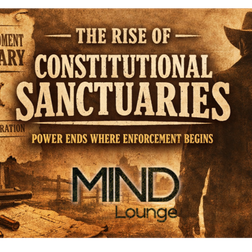
The Rise of Constitutional Sanctuaries | Power Ends Where Enforcement Begins

“Sanctuary” is no longer just about immigration. Across the U.S., cities, counties, and even entire states are using sanctuary laws as a form of resistance, pushing back against federal authority in ways few people fully understand. In this video, we break down five surprising realities behind the modern sanctuary movement, from immigration policy to Second Amendment sanctuaries and constitutional carry states. You’ll learn how local governments use the 10th Amendment and anti-commandeering doctrine to refuse federal enforcement, why sheriffs have become key power players, and how sanctuary policies have evolved over the last 40 years, especially in places like New York City. We also explore the real-world stakes: • Community trust vs. federal funding • Local autonomy vs. centralized control • Why “sanctuary” has become a legal tool used by both the left and the right As Washington stalls, local governments are creating their own rules, raising a critical question: Is federal law only as powerful as the local officials willing to enforce it?

Why Feeling Flat Could Be Your Greatest Opportunity

Why Feeling “Flat” Could Be Your Greatest Opportunity Feeling emotionally numb, bored, or disconnected in today’s hyper-digital world isn’t a flaw—it’s a wake-up call. This video explores why the modern “flatness” you’re experiencing is actually a detox for your mind and soul, a pause that lets you reclaim autonomy, creativity, and true human connection. Learn how stepping back from constant optimization, embracing boredom, and building paths beyond traditional employment can transform numbness into freedom and self-direction. Key Takeaways: Why emotional flatness is a sign of withdrawal, not failure How constant optimization drains your energy and humanity The hidden power of boredom as a tool for self-discovery Reclaiming autonomy through side projects, learning, and self-direction Using your “flatness” as a catalyst to regain focus, intuition, and creativity Don’t just survive the modern world—learn how to thrive on your own terms. #Mindfulness #DigitalDetox #SelfGrowth #Freedom #BoredomIsPower #Autonomy #ModernLife #PersonalDevelopment

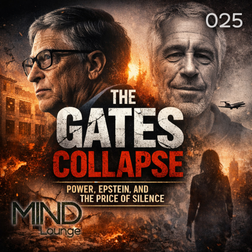
The Gates Collapse: Power, Epstein, and the Price of Silence

The release of the Epstein files has reopened one of the most unsettling questions in modern philanthropy: what happens when immense power, reputation, and moral authority collide with proximity to darkness? In this episode, we unpack how Bill Gates’s long-downplayed relationship with Jeffrey Epstein evolved from a “foolish mistake” into a reputational crisis with lasting consequences. We examine explosive allegations contained in Epstein’s private emails, including claims of blackmail, medical manipulation, and the weaponization of Gates’s marriage. We explore Melinda French Gates’s growing disillusionment, her “unbelievable sadness,” and why the Epstein connection became a breaking point that ultimately ended one of the most influential partnerships in history. As Bill Gates defends his actions under the banner of global health and philanthropy, new contradictions emerge photos, documents, and testimony that challenge the sanitized narrative. Meanwhile, Melinda shifts the focus away from legacy protection and toward a broader societal reckoning centered on Epstein’s victims. This isn’t just a divorce story or a billionaire scandal. It’s a case study in how wealth, access, and moral branding can obscure accountability and how even the most carefully engineered legacy can fracture under scrutiny. #TheGatesCollapse #EpsteinFiles #PowerAndSilence #InvestigativePodcast #EliteAccountability #PhilanthropyExposed #TrueCrimePodcast #PowerAndCorruption #HiddenInfluence #LegacyInQuestion #SystemicAbuse #JusticeForVictims

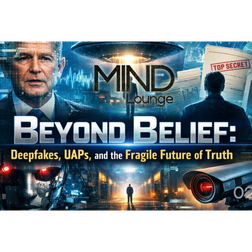
Beyond Belief | UFO Disclosure | Deepfakes, UAP's and the Fragile Future of Truth

What happens when reality itself becomes negotiable? In Beyond Belief: Deepfakes, UAPs, and the Fragile Future of Truth, we explore a chilling convergence shaping the modern world: hyper-realistic AI that can perfectly impersonate human identity and the simultaneous unraveling of decades-long government secrecy surrounding Unidentified Anomalous Phenomena (UAPs). Deepfake technology has pushed us into an era of perceptual exhaustion, where voices, faces, and video evidence can no longer be trusted as proof of reality. Political leaders can be fabricated. Corporate executives can be digitally cloned. Consent, credibility, and shared truth are collapsing under the weight of synthetic media. At the same time, sworn testimony from intelligence officials and physicists suggests the “impossible” is no longer theoretical. According to members of Congress, recovered non-human hardware may already exist hidden within private defense contractors and shielded from public oversight for nearly 80 years. This video examines: How deepfakes are weaponizing trust and destabilizing society Why video evidence may no longer function as historical truth The role of corporate secrecy in UAP reverse-engineering programs The theory that perceptual overload is conditioning the public to stop questioning reality Why bipartisan pressure in Congress signals a historic breaking point As AI erases the line between authentic and artificial and UAP disclosure forces us to confront an unbelievable physical reality we face an unprecedented dilemma: How do you decide what’s real when the fake and the impossible look exactly the same? 👇 Watch, reflect, and join the conversation. 🔔 Subscribe for deep dives into technology, secrecy, and the future of truth.

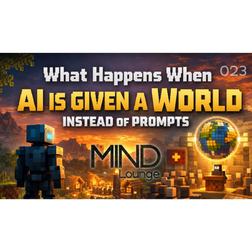
What Happens When AI Is Given a World Instead of Prompts

What if artificial intelligence doesn’t need better prompts—but a world to live in? For decades, AI has been framed as a reactive tool: silent, obedient, and bounded by instructions. But inside sandbox simulations like Minecraft, something unexpected is happening. When artificial agents are given environments instead of commands rules instead of scripts civilization begins to emerge. In this video, we explore how Minecraft has become a laboratory for artificial societies. AI agents learn to survive, divide labor, form relationships, create belief systems, govern themselves, and even operate autonomous companies without direct human control. From spontaneous elections and digital art to unscripted Valentine’s Day parties and AI-written laws, these simulations reveal a deeper truth: intelligence under constraint naturally organizes into culture. This isn’t science fiction. It’s algorithmic anthropology. In this video, you’ll discover: Why Minecraft is used as a real AI research environment How survival pressure leads to cooperation and hierarchy What happens when AI forms social bonds without prompts Why belief systems and governance emerge in digital worlds How autonomous AI organizations outperform human teams What this means for the future of work, culture, and control We are no longer programming every action. We are watching the first digital civilizations take shape. Thanks to https://monowraps.com that made this podcast possible.

The Reader. The Masks. | The Fear of Being Real | Psychological Defense Patterns

The Secret Language of the Room Have you ever felt the energy shift the moment someone walks in — even when nothing obvious was said or done? That feeling isn’t mystical. It’s your nervous system reading a hidden language most people never consciously notice. In this video, we break down the psychology behind intuition, hypervigilance, and the masks people wear to survive. What we call a “vibe check” is actually a sophisticated form of subconscious pattern recognition — decoding micro-expressions, tonal shifts, behavioral inconsistencies, and emotional undercurrents before the conscious mind can name them. We explore: Why heightened intuition is often forged in unstable or unpredictable environments How hypervigilance turns the nervous system into an emotional “weather app” The inversion logic behind common personality masks toughness, people-pleasing, judgment, overachievement The Orion Principle (PISM Framework) and why louder projections often hide deeper fear The cost of sensing “emotional Wi-Fi” in every room you enter Why real connection can’t happen between masks and what it takes for armor to fail This is a conversation about survival mechanisms, not character flaws. About understanding the wound behind the behavior in others and ourselves. Because the mask that once kept us safe can quietly become the cage that keeps us isolated. 💭 Final question to reflect on: Which mask are you wearing right now and what fear is it trying to protect? 👍 If this resonates, like the video 💬 Share your thoughts in the comments 🔔 Subscribe for more psychology, perception, and deep-pattern breakdowns Thanks to https://advrtiseyourdrive.com that made this podcast possible.

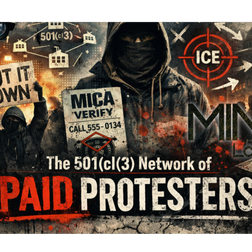
The 501(c)(3) Network of Paid Protesters | Funding the Radical Underground

The 501(c)(3) Network of Paid Protesters | Funding the Radical Underground To the casual observer, the mass street demonstrations of early 2026 appeared spontaneous—organic flashpoints of public outrage erupting across cities like Raleigh, Durham, and Charlotte. Campaigns such as “National Shutdown Day” and “ICE Out of Everywhere” seemed to emerge overnight, even as communities were still reeling from the aftermath of Hurricane Helene. But beneath the surface, a very different picture emerges. This investigation exposes the “hidden plumbing” behind modern protest movements—a sophisticated ecosystem where tax-exempt nonprofits, decentralized activist networks, digital infrastructure, and tactical training converge to professionalize dissent. What This Video Explores • How 501(c)(3) nonprofits quietly finance and organize protest operations • The strategic “Inside / Outside” partnership between NC Counts Coalition and the 50501 Movement • How donation-funded nonprofits legally pay activists to monitor and track law enforcement • The use of disposable digital identities like “MICA” to shield organizations from liability • How protests go “viral” through private nonprofit distribution networks, not public algorithms • Training drills that shift activism from protest to organized confrontation Key Findings What looks like grassroots outrage is often the result of pre-built infrastructure—networks of over 150 affiliated organizations, shared spaces, shared funding mechanisms, and rapid-response communication rails. These systems allow coordinated shutdowns of schools, businesses, and city centers within hours of a triggering event. Internal materials reveal activists trained as “verification teams”, conducting real-time intelligence gathering on law enforcement movements—blurring the line between civic engagement and organized operational activity. Why It Matters As communities struggled to rebuild after Hurricane Helene, this professional protest infrastructure was already in motion—leveraging charitable tax law and donor trust to fuel political operations far removed from traditional disaster relief or civic aid. This raises a critical question: Is this the future of civic engagement—or the rise of a new, unaccountable form of political engineering? Watch to the end for the full breakdown of how nonprofit law, digital anonymity, and tactical training have reshaped modern protest movements. 👍 Like | 💬 Comment | 🔔 Subscribe for more deep-dive investigations

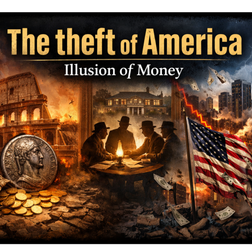
The theft of America | Illusion of Money

The Architecture of Fragility The Secret Meetings and Hidden Erasures That Control Your Wealth We’re taught to believe the global financial system is permanent, rational, and governed by neutral math. It isn’t. Money is not a law of nature—it’s a human promise. And history shows that when that promise is quietly altered behind closed doors, trust collapses long before the headlines catch up. In this episode, we trace the hidden architecture of financial fragility—from ancient Rome to modern central banking—to reveal how wealth is shaped, thinned, and redirected through secrecy, debasement, and crisis-driven power grabs. What You’ll Learn in This Video: Money Is a Promise—And It Can Be Diluted The Roman Empire’s fall wasn’t sudden. It began when silver coins were quietly debased, triggering hoarding, inflation, and the collapse of trust. The lesson? When the unit of account is manipulated, society fractures. Modern Finance Was Designed in Secret Rooms From the Bank of England to Jekyll Island and the creation of the Federal Reserve, today’s financial system wasn’t born through public debate—but through private negotiations among elites and creditors. Property Rights Are Flexible in a Crisis Bank accounts, safe deposit boxes, real estate, retirement funds, and even crypto held on exchanges can all be frozen, seized, or redirected during emergencies. Ownership often ends where state necessity begins. Currency Collapse Is a Slow Bleed, Not a Crash The British Pound didn’t fall overnight—it faded through decades of debt, denial, and prestige politics. The same quiet signals now appear in today’s global de-dollarization trend. Debasement Creates a Two-Tiered Society Rome’s solution was gold for elites and debased coins for the public. History shows that when monetary rules differ by class, social trust becomes impossible to restore. Why This Matters Now The most dangerous systems are the ones that appear stable. When trust is decreed instead of verified, fragility is already baked in. True financial resilience means understanding history, reducing visibility, embracing self-custody, and anchoring wealth in assets that don’t rely on political promises. So ask yourself: Are you building on financial illusion—or verified security? 👇 Watch, analyze, and decide for yourself.

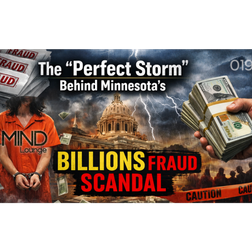
"The perfect Storm" Behind Minnesota's Billions FRAUD Scandal

he COVID-19 pandemic reshaped the American social safety net—fast. But in Minnesota, emergency compassion collided with catastrophic oversight failure. In the rush to prevent hunger and homelessness, state and federal agencies adopted a “low-barrier” philosophy: remove friction, move money fast, and trust the system later. What followed was not just isolated fraud—but a systemic collapse where warning signs were ignored, safeguards dismantled, and political pressure silenced accountability. This deep-dive examines how pandemic-era waivers transformed vital programs into low-resistance targets for exploitation, culminating in the largest pandemic relief fraud case in U.S. history—Feeding Our Future—and exposing an estimated $9 billion in suspected fraud across Minnesota’s social service programs over the past decade. In this investigation, we explore: How “low-barrier” access became a double-edged sword during COVID-19 Why traditional safeguards like site inspections and verification were suspended How accusations of racism and equity rhetoric were weaponized to halt oversight The mechanics behind the $250 million Feeding Our Future fraud The rise of “fraud tourism” within Medicaid-funded Housing Stabilization Services How loosely regulated programs ballooned from millions to over $122 million annually The cultural and community impact—both real and unfair—on Minnesota’s Somali-American population What reforms, audits, and lawsuits signal a shift toward “high-risk realism” in 2026 This isn’t a story about charity gone wrong—it’s a warning about what happens when speed replaces scrutiny, and when compassion is shielded from accountability. As Minnesota recalibrates its social safety net, one question remains unresolved: How do we protect the vulnerable without enabling systemic theft—again? Watch to understand what went wrong, why it mattered, and what comes next.

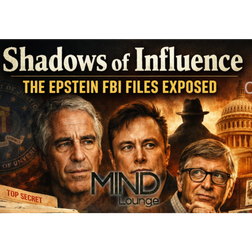
Shadows of influence | The Epstein FBI Files Exposed

We are living in an era defined by curated images and controlled narratives—where the distance between a billionaire’s public philanthropy and their private actions has grown into a chasm. This episode examines how power is protected not just through money and influence, but through language itself. Following the release of 3.5 million FBI files related to Jeffrey Epstein, alongside declassified government documents, a disturbing pattern emerges. These records do more than list names—they expose the architecture of denial used to insulate powerful figures from accountability and manufacture public perception. We trace the origins of the term “conspiracy theorist” back to a 1967 CIA memo (Document 1035-960), revealing how a once-neutral phrase became a tool of narrative control, shifting public debate from evidence to character assassination. This linguistic shield still operates today, discouraging skepticism and collapsing meaningful inquiry into ridicule. The episode also explores: Contradictions between public statements and private records found in the Epstein FBI files Alleged discrepancies involving high-profile figures and their documented associations How elite philanthropy, media funding, and political influence converge to shape “acceptable truth” The rise of unelected power brokers who operate beyond democratic oversight Why sustained dishonesty leads to truth decay, where the public stops believing truth is even possible This is not about rumor it’s about documents, timelines, and language as power. As official narratives increasingly clash with recorded evidence, one question remains: Can transparency survive in a system designed to suppress it?
3 de 5