Grub & Grace

Grub & Grace

por Mark Flower
Temporada 1

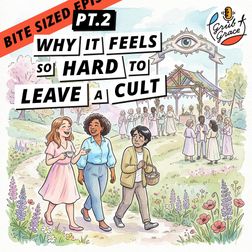
BSE: Cults Part 2 - Why It Feels So Hard To Leave A Cult

Leaving a cult or high-control group is often far more difficult than outsiders understand. In this episode, we explore the psychological and emotional barriers that make departure so overwhelming for those inside these environments. We begin by examining accelarousal—the intense stress response triggered by major acceleration events such as sudden doctrinal shifts, leadership crises, punishment, or escalating demands within a group. We discuss how prolonged exposure to these events can overwhelm the nervous system and contribute to acute stress disorder, leaving members in a state of fear, confusion, and emotional paralysis. From there, we look at the many reasons people struggle to leave high-control groups, including fear of punishment, loss of family and community, identity collapse, financial dependence, and the terror of facing an uncertain world outside the group. Finally, we discuss practical and compassionate ways to support someone who may be trying to leave a cultic environment—what helps, what harms, and why patience and empathy matter far more than confrontation. This episode offers a deeper understanding of why leaving a cult is not simply a matter of “walking away,” but often a painful and destabilizing process that can reshape every part of a person’s life.

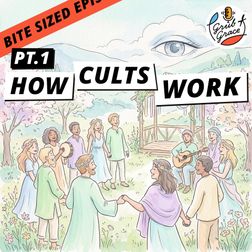
BSE: Cults Part 1 - How Cults Work

What actually makes a cult… a cult? In this episode, we break down the mechanics of high-control groups and explore why cults are far more psychologically sophisticated than most people realize. Rather than focusing on strange beliefs or sensational stereotypes, we examine the systems of control that define cultic environments. We begin by asking the deceptively simple question: What is a cult? From there, we unpack the eight patterns of thought reform commonly found in high-control groups—psychological tactics used to shape belief, suppress dissent, and create dependency. We also explore the six conditions that make undue influence possible, looking at how ordinary people can be manipulated in the right circumstances through isolation, authority, fear, and environmental control. Finally, we apply these frameworks to a real-world example by examining a former cult, showing how these dynamics operate in practice and why leaving such groups is often far more difficult than outsiders assume. Whether your interest is psychological, religious, sociological, or just morbidly curious—this episode offers a deeper look at how cults function, why they work, and what makes them so hard to escape.

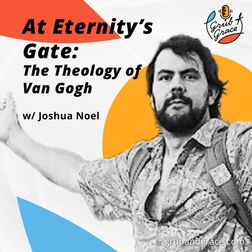
At Eternity's Gate: The Theology of Van Gogh

Vincent van Gogh is usually remembered for three things: swirling paintings, emotional instability, and that one extremely over-discussed ear incident. But before he became one of history’s most iconic artists, Van Gogh was chasing a very different calling: ministry. Born the son of a Dutch pastor, Vincent once hoped to follow in his father’s footsteps. He studied theology, preached to coal miners, and threw himself into faith with the kind of intensity that made people wonder whether he was deeply devoted or just… a lot. When the pulpit didn’t work out, Van Gogh didn’t abandon his spiritual questions—he redirected them. In this episode, Mark and returning guest Joshua Noel explore how Van Gogh’s theology shaped his art, how his religious upbringing influenced his worldview, and why his paintings may be less “pretty landscapes” and more visual sermons with excellent lighting. Come for the sunflowers. Stay for the existential angst. - Joshua Noel is a licensed minister, an aspiring Taoist Christian, an open theist (not process), taught hermeneutics & children's church for many years. He has been a podcaster for a long time with the Anazao podcast network. Under the umbrella of Anazao, you can find him as part of the Whole Church Pod, Systematic Geekology, and Dummy for Theology. He also has his own substack.

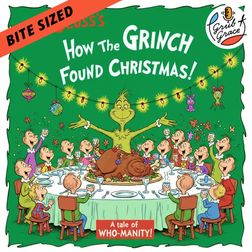
BSE: How the Grinch Found Christmas

This Bite Sized Episode peels back the fuzzy green wrapping paper on a figure we assume we’ve already figured out. Spoiler: we haven’t. The Grinch is more than a sour-faced holiday thief with a bad attitude and a questionable relationship to joy—he’s a surprisingly layered character with a long shadow and some real philosophical bite. In short, this green recluse has range. We’ll explore the Grinch’s many incarnations and what they reveal about belief, culture, and the strange ways we tell moral stories—past and present. Expect detours into symbolism, spirituality, and a few ideas that usually get shoved to the edge of the sleigh and avoided with a thirty-nine-and-a-half-foot pole. Before you decide this episode is proof that our hearts are “two sizes too small,” stick around. Yes, there may be some garlic in the soul—but as the song reminds us, one person’s toxic sludge is another person’s potpourri. So grab some roast beast, check your Christmas cheer at the door (or don’t), and come see how the Grinch didn’t just steal Christmas—he complicated it. Listen on Apple Podcasts, Spotify, or wherever else you listen. Check out our website at grubandgrace.com, or find us on our socials: Instagram: @grubandgracepodcast Facebook X: @grubandgrace Cover art generated by Adobe Firefly AI model Gemini 2.5 (w/Nano Banana) Music Attributions: O'er The River Nore: UXIDYUKIJRPMLPIG Winter Wonder: LVNOVID1PHKUZ9UF Christmas Ballroom: 9PZD6AQSBUTGKFVZ In The Quiet Night: XO8BHGTLKTZPVHM2 St Nick's Workshop: NGW9HNQEF0LCGSBJ Sugar Plum: JREHXR91OMGPTTEQ Christmas Time Is Coming: L566O5WTZQDCJCCV Mistletoe Farms: 2CTL6XME1DNHAYH5 Yuletide Dawn: IF7ED4B4MZWVOFJX Mrs Claus: SW05O3E0MYZLVDSF We Wish You A Merry Christmas: JGMAAWLOXJUOQUQ4 Harp- Arpeggio - Nordic Tune - Shepherds Melody.wav by gertraut_hecher -- https://freesound.org/s/564909/ -- License: Attribution NonCommercial 4.0 Celtic Whistle Melody by f-r-a-g-i-l-e -- https://freesound.org/s/520148/ -- License: Creative Commons 0

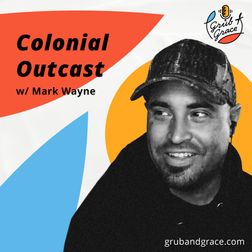
Colonial Outcast w Mark Wayne

Explícito
What does revolutionary spirit look like? History has shown us examples from the French Revolution to the Sandanistas in Nicaragua. Mark Wayne hops on to have a discussion about this very topic as we navigate through Palestine, voting, and the revolutionary spirit of the Black Panther Party. Mark Wayne is an ex-army national guardsman who uses his platform to inform and bring people together. He co-hosts the podcast Colonial Outcasts with Greg Stoker.

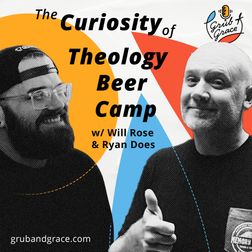
The Curiosity of Theology Beer Camp

Explícito
Have you ever asked big theological questions about faith and God that you felt weren't acceptable in your immediate community to share? Have you ever felt that your faith tradition hasn't been living up to your vision of how it should be? You're not alone, and neither should it be that way. For us, Theology Beer Camp has been a space that allowed us to be us, and created a space to express yourself free of judgement and shame. Join us as we quest through Theology Beer Camp in St. Paul, MN, 2025.

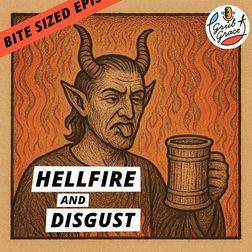
BSE: Hellfire and Disgust

Is there a unified concept of hell? That being eternal, conscious, torment. Does salvation give us a free pass to ignore evil in the world today? How does disgust tie in to the concept of hell? We will be exploring all of these questions on this episode. Buckle up, because we're about to find out why we're disgusted with hell.

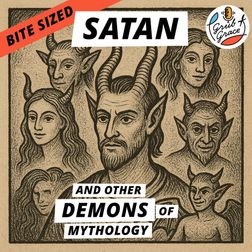
BSE: Satan & Other Demons of Mythology

From Mesopotamian spirits to the fiery figure of Satan, demons have haunted human imagination for millennia. In this episode, we journey through ancient mythologies and religious lore, uncovering how different cultures have defined and described these shadowy beings. We’ll explore infamous demons of early civilizations, trace their influence through Jewish and Christian traditions, and ask the big questions: Who is Satan really, and how does he fit into the broader story of the Bible? By looking at the evolution of these figures, we reveal how demons reflect cultural fears, moral struggles, and the eternal human search for meaning.

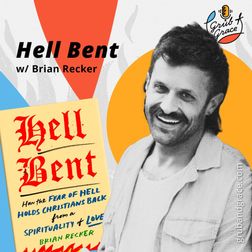
Hell Bent w Brian Recker

What comes to mind when the word “hell” is mentioned? Demons with pitchforks? Endless torment? Listening to ASMR of your grandparents eating sandwiches while they breathe through their nose? My guest today is Brian Recker, author of the new book Hellbent. Brian is a former evangelical pastor, public theologian, speaker, and writer on Christian spirituality without exclusionary dogma and he helps explain why we can stop worrying about hell and start focusing on love. You can find Brian on his website https://www.brianrecker.com/ As well as Instagram @berecker Find out more about his book, Hell Bent, here.

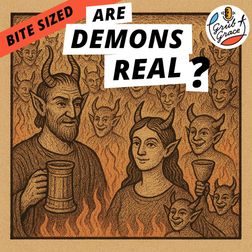
BSE: Are Demons Real?

Are demons real—or are they a story we’ve been telling ourselves for centuries? In this episode, we attempt to offer an alternative view of looking at demons as well as how the origins of demons may just be literary and cultural creations and how the idea evolved across history. From ancient texts to medieval folklore and modern horror, demons have been less about actual creatures lurking in the dark and more about shaping human behavior. We unpack how the concept of demonic forces has been used to provoke fear, enforce moral codes, and ultimately control communities. By looking at demons through the lens of psychology, storytelling, and power, we reveal how this enduring myth says more about us than about the supernatural.
3 de 7