Gateway Bible Talks

Gateway Bible Talks

por Gateway Parish
Temporada 8
2 Living Generously - Giving Courageous Mercy: Cyprian
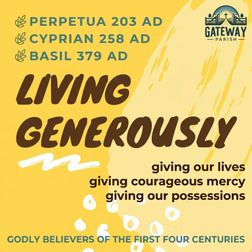
What does Christian mercy look like when it costs us something? Can Jesus really change a person’s heart — opening our lives, homes and possessions to people in need? And what about people who oppose us, misunderstand us, or can give us nothing in return? On our Kids’ Church Sunday, the kids help tell the story of Cyprian of Carthage: a wealthy pagan whose conversion to Christ transformed how he used his possessions, cared for the sick during a devastating plague, showed mercy to Christians who had failed under persecution, and ultimately gave his own life rather than deny Christ. Through Isaiah 58, Psalm 41, 1 John 3 and Luke 6, we see where that courageous mercy begins: “We know what love is because Jesus gave his life for us.” Please excuse some recording problems in the last part of the sermon — the BOYA microphone recorded the voice unusually quietly. Go deeper: Stephen Nichols, Cyprian of Carthage: Crisis in the 3rd Century — read a brief introduction to Cyprian, persecution, repentance and leadership in the early church.
1 Living Generously - Giving our Lives: Perpetua
In AD 203, a young Christian mother named Perpetua faced a stark choice: make a small public sacrifice to the Roman gods and go home to her family—or remain faithful to Jesus and face death. Her remarkable prison account, The Passion of Perpetua and Felicity, gives us one of the earliest Christian martyr stories and a vivid picture of Jesus’ confronting words: “Whoever loses their life for my sake will find it.” Big idea: Because Christ is worth everything, Christians can hold even life itself with open hands. Bible readings: Genesis 3:14–15; Matthew 10:34–39; Revelation 2:10. Go deeper: Kevin DeYoung / Clearly Reformed — “Perpetua and Felicitas and the Martyrs of the Church - a 1-hour church-history lecture. Very good, very clear, very accessible.
Temporada 7
6 (final) Judgment Day - Revelation 14:14 - 15:4
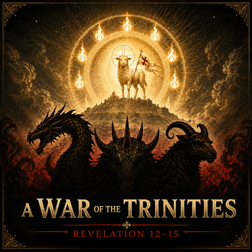
Judgment Day is one of Christianity’s hardest truths. What will it actually look like? Why does Revelation picture Jesus harvesting the earth, then grapes being crushed in the winepress of God’s wrath? Revelation 14:14–15:4 gives us three confronting but hope-filled pictures: Christ gathers his people safely; God finally brings evil to an end; and the redeemed stand victorious, singing the praises of God. The warning is severe, but there is a way through. The Judge is also the Lamb who shed his own blood to save. Judgment Day is real, comprehensive and wonderful. Love does not hide hard truths. Go Deeper into this passage with Don Carson: Revelation (Part 19)
5 True Religion and its End - Revelation 14:1-13
What is true religion? What does true worship actually look like? And does it really matter in the end? Revelation 14 contrasts two allegiances and two destinations. True worship means belonging to the Lamb and following Jesus wherever he goes. Heaven’s message is equally stark: worship the Creator; Babylon will fall; false worship ends in judgement; and those who remain faithful to Jesus are blessed—even in death. Further listening: D. A. Carson, Revelation 14 — a fuller treatment of the whole chapter, including the 144,000, Babylon, hell and final judgement.
4 False Signs, False Worship — Revelation 13:11–18
Who owns you? Revelation 13 shows a second beast—lamb-like in appearance but speaking like Satan—using deceptive signs, threats and economic pressure to direct worship to the first beast. The mark of the beast is not physical, but a sign of allegiance and ownership, contrasted with the Lamb’s name on his people in Revelation 14:1. Behind false worship and beastly power is Satan’s desire for the worship that belongs to God. Big idea: The greatest powers in this world want your worship. Worship Jesus. Supporting passages: Daniel 3; Matthew 24:23–25; 2 Thessalonians 2:9–12; 1 Kings 18:36–39. Go deeper: (51 mins) Don Carson on Revelation 13:11-14:5 Also though I don't agree with his take on the EU, the physicality of the beast's mark and the rapture, a great sermon by David Guzik (1hr 11 mins) Revelation 13 – All About the Antichrist.
3 When Power Demands Worship - Revelation 13:1-10
Governments can serve God’s good purposes, protecting people and maintaining order. But human power becomes beastly when it demands the allegiance and worship that belong to God alone. Revelation 13 reveals the spiritual reality behind oppressive and tyrannical power. The beast appears fearsome, speaks against God and wages war against God’s people. Yet its authority is only given for a limited time. It may take Christians’ freedom or even their lives. Jesus does not conquer by becoming a greater beast. He conquers as the Lamb who was slain, and his kingdom will never end. So what should Christians do when power demands worship? Do not fear the beast as though it were God. Remember that you belong to the Lamb, and continue with patient endurance and faithfulness. Go deeper: D. A. Carson, Revelation 13 (Part 1): Missions as the Triumph of the Lamb — a full-length message on this exact passage, exploring the beast, satanic opposition, competing claims to allegiance, and the call to endure faithfully.
2 How We Overcome - Revelation 12:7-27
How We Overcome — Revelation 12:7–17 Revelation 12 pulls back the curtain on the spiritual battle behind the struggles of God’s people. Satan has been defeated through Christ, yet he continues to wage war against those who belong to Jesus. So how do Christians overcome? “By the blood of the Lamb and by the word of their testimony” — trusting Christ’s victory, holding firmly to Jesus, and remaining faithful even when that faithfulness is costly. Bible passage: Revelation 12:7–17 Go deeper: (1hr) How Long, O Lord? — a message from Don Carson on Revelation 12:1–17, exploring Satan’s defeat, accusation, persecution, the blood of the Lamb and the faithful witness of Christians. Watch on YouTube
1 Kept in the Wilderness - Revelation 12:1-6
Kept in the Wilderness — Revelation 12:1–6 Behind the struggles of ordinary Christian life lies a cosmic conflict—but the decisive victory has already been won. Revelation 12 introduces the woman, the dragon and the child, showing Satan’s determination to destroy God’s saving purposes, Christ’s secure reign, and God’s continuing care for his people in the wilderness. Go deeper: David Guzik (56 mins) — Revelation 12: The Woman, the Child, and the Dragon Watch on YouTube
Temporada 6
8 (final) The Way Home - Genesis 3:20-24

Genesis 3:20–24 | First Things, Talk 8 of 8 Genesis 3 ends with humanity driven from Eden, cut off from God’s presence and barred from the tree of life. Yet God gives signs of hope. Eve is named for life, and God clothes Adam and Eve. These point forward to Jesus, who opens the way home through: Cleaning — our sin washed away. Clothing — believers clothed with Christ. Curtain — the barrier to God’s presence torn open. Through Christ, the way home is open. One day God’s people will live in his renewed creation, free from the curse, and “see his face” (Revelation 22:4). Book mentioned: The Garden, the Curtain and the Cross by Carl Laferton Go deeper: David Guzik: Genesis 3:10–24
7 Judgment—and a Promise - Genesis 3:8-19
Why are we so quick to hide from God and blame someone else? Genesis 3 shows sin bringing fear, broken relationships, painful toil and death. Yet judgment is not the final word: God promises that the woman’s offspring will crush the serpent—a promise fulfilled in Jesus, our serpent-crushing Saviour. Go deeper - 1 hr 6 min - Sin’s Confrontation and Curse — Genesis 3:10–24 | David Guzik A detailed, verse-by-verse treatment of God confronting Adam and Eve, the judgments pronounced, and the hope contained within the passage.
1 de 4