Full AP Course Review

Full AP Course Review

por Savant
Temporada 3

S03E02 AP Psychology Cognition Review

Dive into Season 3 Episode 2 of Full AP Course Review, where we break down the Cognition unit for AP Psychology. This episode delivers a complete audiobook-style review of key concepts, theories, and studies to help you ace the exam. Perfect for students prepping for the AP Psych test with clear explanations and memory aids. Key Topics Covered: Sensation vs. perception and the process of selective attention Memory models: encoding, storage, retrieval, and forgetting Types of memory (sensory, short-term, long-term) and techniques like chunking Language development, structure, and theories (Chomsky vs. Skinner) Thinking, problem-solving, algorithms, heuristics, and cognitive biases Concepts, prototypes, and decision-making frameworks What You'll Learn: How to distinguish absolute thresholds from difference thresholds Key experiments like Ebbinghaus forgetting curve and Loftus misinformation effect Strategies to improve memory retention for exam success Insights into intelligence testing and creativity Real-world applications of cognitive psychology principles Mastering cognition is essential for scoring high on the AP Psychology exam, as it makes up a significant portion of the test and underpins everyday mental processes. AP Psychology Cognition, AP Psych review, memory models, sensation perception, language development, problem solving heuristics, AP exam prep, cognitive biases, forgetting curve, chunking techniques Subscribe to Full AP Course Review for complete breakdowns of every AP subject and never miss an episode!

S03E01 AP Psychology: Biological Bases of Behavior

Dive into the foundational Unit 1 of AP Psychology with this episode on the Biological Bases of Behavior, exploring how heredity and environment shape who we are. We break down the nature-nurture debate, key genetic concepts, and cutting-edge research like epigenetics and twin studies to equip you for AP exam success. Perfect for students tackling the science behind behavior in Season 3. Key Topics Covered:Nature-nurture controversy and the blueprint analogy for genome-environment interaction Essential terms: genes, genome, heritability vs. heredity, behavioral genetics Gene-environment interaction and epigenetics: how environment switches genes on/off Twin studies (monozygotic vs. dizygotic) and adoption studies Shared vs. nonshared environments and their impact on personality AP exam pitfalls, mnemonics like "GENE-E," and common traps What You'll Learn:Master the interplay of genetics and environment, interpret heritability correctly for populations (not individuals), analyze twin/adoption study results, and avoid exam mistakes on topics like monozygotic twins or epigenetic marks. You'll gain tools to explain why identical twins differ and how early experiences leave lasting genetic imprints. This episode is crucial for AP Psych students—it demystifies the biological roots of behavior, boosts your Unit 1 score, and reveals why psychology is at the forefront of science today. AP Psychology, Biological Bases of Behavior, nature vs nurture, heritability, twin studies, epigenetics, gene-environment interaction, behavioral genetics, monozygotic twins, adoption studies, AP exam review Subscribe to Full AP Course Review for complete Season 3 coverage—never miss an episode!
Temporada 2

S02E06 Macroeconomics — Market Failure and the Role of Government
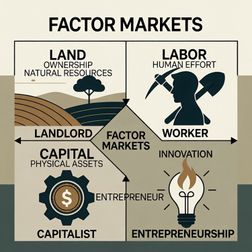
Dive into the foundational concepts of AP Macroeconomics Unit 2 with this episode on economic indicators and the business cycle. We break down the circular flow model, demystify GDP calculations using the expenditure approach, and explore critical distinctions like real vs. nominal GDP. Perfect for students prepping for the AP exam, this session equips you with intuitive insights to tackle tricky questions on economic measurement and its limitations. Key Topics Covered:The circular flow model: households, firms, factor markets, product markets, leakages, and injections Full circular flow including government and foreign sectors GDP definition, expenditure approach formula: GDP = C + I + G + (X – M) Avoiding double counting, final vs. intermediate goods, GDP vs. GNP Consumption (C), investment (I—not stocks!), government spending (G—no transfers), net exports (X-M) Real GDP vs. nominal GDP and why real matters for living standards Limitations of GDP as a measure of economic health What You'll Learn:Master the circular flow to understand money's movement in the economy, nail GDP calculations with mnemonics like "Can I Go eXploring Mindfully?", and spot AP traps like confusing investment with stocks or including transfer payments in G. You'll gain the tools to analyze business cycles and why GDP isn't the full picture of well-being. Whether you're cramming for the AP Macro exam or building economic intuition, these concepts are essential for grasping how economies function and fluctuate—key to scoring high on free-response questions. AP Macroeconomics, circular flow model, GDP calculation, expenditure approach, real vs nominal GDP, business cycle, economic indicators, factor markets, net exports, leakages injections, AP exam prep Subscribe to Full AP Course Review for complete coverage of AP courses—new episodes weekly!

S02E05 Macroeconomics Factor Markets

In this episode of Full AP Course Review, we dive deep into factor markets for AP Macroeconomics, exploring how labor, capital, land, and entrepreneurship drive production and income distribution in the economy. From wage determination to profit maximization, we break down the supply and demand dynamics that shape resource allocation. Perfect for students prepping for the AP exam, this session equips you with clear explanations and practice tips. Key Topics Covered: Definition and role of factor markets in macroeconomics Derived demand for factors of production Labor market equilibrium: supply, demand, wages, and employment Marginal revenue product (MRP) and profit-maximizing employment Capital markets: interest rates and investment decisions Land and rent determination Entrepreneurship and economic profits Market imperfections: minimum wage, unions, and monopsony AP exam-style graphs and calculations What You'll Learn: How to graph and analyze labor demand curves using MRP Calculate optimal factor employment for firms Understand shifts in factor supply and demand Apply concepts to real-world scenarios like outsourcing and automation Master FRQ and multiple-choice strategies for factor markets Mastering factor markets is essential for scoring high on the AP Macroeconomics exam and understanding how economies allocate resources efficiently. AP Macroeconomics, factor markets, labor markets, derived demand, marginal revenue product, wage determination, AP exam review, MRP calculations, resource allocation, economic factors Subscribe to Full AP Course Review for complete AP prep across all subjects! New episodes weekly.

S02E04 Macroeconomics Imperfect Competition
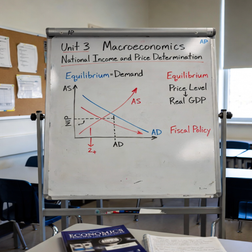
In this episode of Full AP Course Review, we dive into imperfect competition in macroeconomics, exploring how real-world markets deviate from perfect competition. From monopolies to oligopolies, learn the models, pricing strategies, and government interventions that shape economic outcomes. Perfect for AP students prepping for the exam. Key Topics Covered: Perfect vs. imperfect competition: definitions and assumptions Monopoly: barriers to entry, profit maximization, deadweight loss Monopolistic competition: product differentiation, short-run vs. long-run equilibrium Oligopoly: collusion, game theory, Cournot and Bertrand models Antitrust policies and regulation in imperfect markets Impact on macro outcomes like prices, output, and efficiency What You'll Learn: How to graph and analyze monopoly and oligopoly profit maximization Differences between price and quantity competition in oligopolies Real-world examples like tech giants and airline pricing AP exam tips: common FRQ pitfalls and must-know diagrams Policy responses: Sherman Act, price ceilings, and subsidies Master imperfect competition to ace AP Macro Unit 3 and understand why markets aren't always efficient—essential for exam success and grasping modern economies. AP Macroeconomics, imperfect competition, monopoly, oligopoly, monopolistic competition, game theory, antitrust laws, AP exam review, market structures, deadweight loss, barriers to entry Subscribe to Full AP Course Review for complete AP exam prep across all subjects!

S02E03 Macroeconomics: Production Costs & Perfect Competition

In this episode of Full AP Course Review, we dive into essential macroeconomics concepts starting with the circular flow model and GDP calculation, then explore its limitations. Perfect for AP students prepping for Unit 2, we break down the expenditure approach, real vs. nominal GDP, leakages and injections, and why GDP doesn't capture everything about well-being. Get clear explanations, mnemonics, and exam tips to master these foundational topics. Key Topics Covered:The circular flow model: households, firms, factor markets, and product markets Full circular flow with government and foreign sectors: leakages (savings, taxes, imports) and injections (investment, government spending, exports) GDP definition: market value of final goods and services produced domestically Expenditure approach formula: GDP = C + I + G + (X - M), with clarifications on consumption, investment, government spending, and net exports Real vs. nominal GDP and avoiding double counting GDP vs. GNP and limitations of GDP as a measure of economic health What You'll Learn:Master the intuitive "living organism" view of the economy, memorize the "Can I Go eXploring Mindfully?" mnemonic for GDP components, distinguish economic investment from financial, and understand why real GDP better reflects living standards. You'll also learn AP traps like transfer payments not counting in G and why GDP misses pollution, leisure, and inequality. Whether you're cramming for the AP Macro exam or building a stronger grasp of economic indicators, this episode equips you with the tools to tackle business cycle questions confidently. AP Macroeconomics, circular flow model, GDP calculation, expenditure approach, real GDP, nominal GDP, economic indicators, business cycle, AP exam prep, Unit 2 review, leakages injections, net exports Subscribe to Full AP Course Review for complete AP exam breakdowns and never miss an episode!

S02E02 Macroeconomics — Supply and Demand
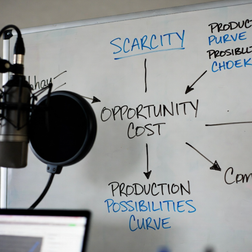
Dive into the foundational concepts of AP Macroeconomics Unit 2 with this episode on economic indicators and the business cycle. We break down the circular flow model, demystify GDP calculation using the expenditure approach, and explore critical distinctions like real vs. nominal GDP. Perfect for students prepping for the AP exam, this session equips you with intuitive explanations and exam traps to avoid.

S02E01 AP Macro: Basic Economic Concepts - Scarcity & Factors

Dive into the foundational episode of Full AP Course Review's Macroeconomics Season 2, kicking off with Unit 1: Basic Economic Concepts. We break down scarcity—the core reason economics exists—and explore how limited resources shape every decision individuals, businesses, and governments make. Perfect for AP students mastering the essentials for exam success. Key Topics Covered:Scarcity: Unlimited wants vs. limited resources, with real-world examples like the pizza buffet dilemma Factors of production (CELL mnemonic): Capital (physical tools, not money), Entrepreneurship, Land, Labor Opportunity cost: The true price of every choice due to scarcity Three basic economic questions (WHW framework): What, How, and For Whom to produce AP pitfalls: Scarcity vs. shortage, free goods, and universality across all economic agents What You'll Learn:Grasp why scarcity forces trade-offs in daily life and policy, memorize the factors of production to avoid common exam traps, and understand the WHW questions that define every economic system. You'll walk away equipped to tackle AP Macro FRQs on foundational concepts with confidence. Whether you're cramming for the AP exam or just curious about why choices have hidden costs, this episode reveals the economic bedrock that explains everything from personal budgets to national policies. AP Macroeconomics, scarcity, factors of production, opportunity cost, basic economic questions, AP exam review, Unit 1 Macro, CELL mnemonic, WHW framework, economic trade-offs Subscribe to Full AP Course Review for complete AP prep across all subjects—never miss an episode!
Temporada 1

AP World History Modern Unit 9 Part B: Globalization & Technology After 1900

In this episode of Full AP Course Review, we continue our deep dive into AP World History Modern Unit 9 by examining how revolutionary advances in transportation, communication, and military technology after 1900 reshaped global exchange. From container shipping and commercial aviation to radio, television, and the internet, these innovations compressed time and distance, accelerating the movement of goods, ideas, people, and even pathogens across borders.

AP World History Modern Unit 9 Part A: Technology and Globalization After 1900

This episode launches our Unit 9 review by exploring how transportation, communication, and military technologies after 1900 shrank distance and accelerated globalization. We break down the internal combustion engine, containerization, radio-to-internet advances, and the spread of nuclear weapons, showing exactly why the College Board ties each development to trade, culture, disease, and conflict.
5 de 7