Ecommerce Finance Podcast

Ecommerce Finance Podcast

por Stephen Brown | LedgerGurus
E34: Highbeam vs Traditional Banks: Which Wins for Ecommerce?
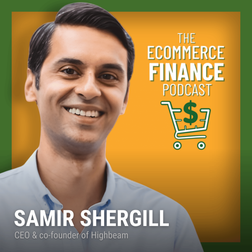
Ecommerce banking with Highbeam is what a financial platform built for online sellers actually looks like, and this episode breaks down exactly why that matters. Stephen Brown, COO at LedgerGurus and co-owner of Sole Toscana, sits down with Samir Shergill, CEO and co-founder of Highbeam, to dig into why traditional banks fail ecommerce businesses, how specialized neobanks are stepping in to fill that void, and what responsible financial infrastructure looks like for DTC brands and online sellers. They cover the real cost of merchant cash advances and why a 10% fee is almost never a 10% loan, how Highbeam approaches working capital lending for a segment traditional banks refuse to touch, why multiple bank accounts are a smart cash management strategy, and how focusing exclusively on ecommerce brands allows Highbeam to build tools that match how these businesses actually operate. Key Takeaways: Why Ecommerce Banking With Highbeam Is Built Differently From Traditional Business Banking What Is a Neobank and How Does It Work for Online Sellers The Real APR Behind Merchant Cash Advances and Why Most Sellers Miss It How to Calculate the True Cost of a Merchant Cash Advance Before You Sign Why Ecommerce Working Capital Loans Are So Hard to Get From Traditional Banks How to Use Multiple Bank Accounts as a Cash Management Strategy for Your Business What Makes Ecommerce Lending Different From Asset-Based Business Loans Why Specializing Your Financial Platform in One Industry Produces Better Results How to Maximize Yield and Minimize Interest as a DTC Brand What Is the Debt Spiral Treadmill and How to Avoid It as an Ecommerce Seller How to Evaluate Whether a Financing Offer Is Right for Your Ecommerce Business Why Long-Term Optimism in Ecommerce Requires Short-Term Financial Discipline Chapters: 00:00 The E-Commerce Banking Landscape 02:25 The Rise of Neobanks 05:28 Challenges in E-Commerce Lending 08:18 Understanding Merchant Cash Advances 10:57 The Importance of Transparency in Financing 22:04 The Importance of Financial Management 29:04 Specialization in Financial Services for E-commerce 36:12 Optimism in E-commerce and Consumer Brands Guest Info: Samir Shergill is the CEO and co-founder of Highbeam, a banking platform built to help brand founders and operators grow sustainable businesses through smart financial decisions. Highbeam works with omni-channel brands like Sabah, Birthdate Co, Suzie Kondi, and Branch Furniture to help them maximize yield, minimize interest spend, and run profitable businesses. Before founding Highbeam, Samir worked as a software engineer at Microsoft and spent years at ad tech startup AppNexus, where he first got exposure to the financial challenges facing ecommerce brands. Samir Shergill on LinkedIn - If this conversation raised questions about how your ecommerce business is managing cash and banking, reach out to our team at LedgerGurus immediately.
E33: Ecommerce Tax Strategy - The Big Beautiful Bill Just Changed the Game!
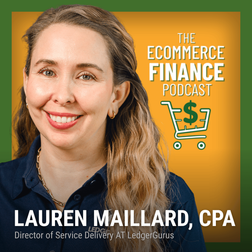
Ecommerce tax strategy changed dramatically in 2025 and most online business owners have no idea what they are missing. The Big Beautiful Bill introduced some of the biggest tax planning opportunities ecommerce sellers have seen in years, and understanding them could mean thousands of dollars back in your pocket. Stephen Brown, COO at LedgerGurus and co-owner of Sole Toscana, sits down with Lauren Maillard, Director of Service Delivery and head of the income tax practice at LedgerGurus, to break down exactly what changed and how it applies to your ecommerce business. Today’s Key Takeaways: What Is Bonus Depreciation and How Does It Reduce Your Ecommerce Tax Bill in 2026 How to Expense Equipment Like Forklifts and Machinery 100% in Year One Why Your Warehouse Does Not Qualify for Bonus Depreciation and What Does How to Fully Deduct R&D Costs in Year One Under the Big Beautiful Bill What Is the Qualified Business Income Deduction and Do You Qualify How S-Corps and Sole Proprietors Can Take a 20% Deduction on Net Income Does the No Tax on Overtime Rule Apply to Your Ecommerce Business Can You Deduct Car Loan Interest as an Ecommerce Business Owner Cash Basis vs Accrual Accounting: Which One Saves You More on Taxes How to Run Accrual Books and Still File Taxes on a Cash Basis Why TikTok Tax Advice Can Get Your Ecommerce Business Audited The Two IRS Rules Every Business Deduction Must Pass Chapters: 00:00 Intro and Disclaimer 01:29 What Is Depreciation and Why It Confuses Business Owners 02:27 IRS Depreciation vs Book Depreciation 05:08 Where Bonus Depreciation Actually Helps 06:19 Cash vs Accrual Accounting for E-Commerce 08:53 R&D Expensing Under the Big Beautiful Bill 10:10 Qualified Business Income Deduction Explained 11:10 No Tax on Tips and Overtime 12:42 Car Loan Interest Deduction and the Company Car Nuance 13:56 Why TikTok Tax Advice Is Dangerous Guest Info: Lauren Maillard, CPA, is the Director of Service Delivery at LedgerGurus, a virtual accounting and bookkeeping firm that specializes in e-commerce and small-to-medium businesses. In her leadership role, she oversees operational accounting and specializes in e-commerce finance, channel activities, and sales tax compliance. She actively contributes to the e-commerce accounting industry through thought leadership, appearing on industry podcasts and hosting educational webinars on e-commerce finance trends. You can connect with her or view her professional background directly on LinkedIn Lauren Maillard on LinkedIn - Tax strategy is not a once-a-year conversation. If anything in this episode raised questions about how your ecommerce business is structured or what you might be missing, it is worth having that conversation with someone who knows the ecommerce space. You can reach Lauren and the LedgerGurus team here.
E32: Financial Impacts of EOS in Ecommerce
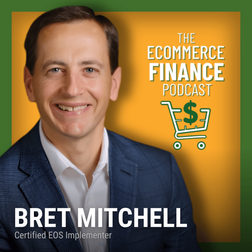
EOS is gaining serious traction in the ecommerce space and the financial results are hard to ignore. In this episode of the Ecommerce Finance Podcast, Stephen Brown, COO at LedgerGurus, sits down with Bret Mitchell, EOS Implementer at EOS Worldwide, to break down what EOS actually is, why ecommerce businesses are adopting it, and the real financial impact it can have on your bottom line. From going red to black in four months to holding flat in an industry down over 40%, Bret shares the stories and principles behind why thousands of companies are running their business on the Entrepreneurial Operating System. If your ecommerce business feels like it is running you instead of the other way around, this episode is for you. Today's Key Takeaways: EOS Stands for Entrepreneurial Operating System and It Is a Proven Framework Used by Nearly 30,000 Companies Ecommerce Businesses Using EOS Have Gone From Unprofitable to Their First Million Dollar Month EOS Focuses on Six Key Components: Vision, People, Data, Issues, Process, and Traction Vision Without Traction Is Hallucination and You Need Both to Grow The Visionary and Integrator Roles Are Critical and the Tension Between Them Can Be Your Greatest Asset Getting the Right People in the Right Seats Is One of the Fastest Ways to Move the Financial Needle A Scorecard With 5 to 15 Weekly Measurables Gives You an Absolute Pulse on Your Business Most Leadership Teams Do Not All Understand How the Business Makes Money and EOS Forces That Conversation You Can Start for Free Because EOS Worldwide Gives Away Tools and Offers a Free 90-Minute Session With an Implementer EOS Is Not a Strategy But It Will Help You Set a Better One and Execute It Chapters: 00:00 Introduction to EOS in Ecommerce 02:54 Bret Mitchell's Journey to EOS 05:57 Understanding EOS: The Entrepreneurial Operating System 08:59 The Financial Impact of EOS 11:30 Key Components of EOS 14:42 EOS in Ecommerce: Specific Considerations 17:36 The Visionary and Integrator Roles 20:29 Navigating Tensions Between Visionaries and Integrators 23:13 Implementing EOS: Getting Started 26:28 Conclusion and Resources for EOS Guest Info Bret Mitchell is a builder who is passionate about helping leadership teams turn complexity into clarity, execute with discipline, and build better businesses and better lives. He began his career in New York City with PwC consulting Fortune 500 companies because he wanted a front-row seat to the patterns that separate consistently successful companies from the rest. Over the course of his career, Bret has worked across 15+ industries and served on multiple executive teams. Highlights include: Today, Bret focuses on helping leaders gain real traction in their businesses. He does this by providing a complete system and simple tools—called EOS—proven to help leadership teams get clear on where they’re going, execute with discipline, and function as a healthy, cohesive unit in a way that fits their unique organization. Bret Mitchell on LinkedIn - If you need help getting your ecommerce finances in order so your scorecard and numbers actually mean something, reach out to LedgerGurus.
E31: IEPPA Tariff Refunds
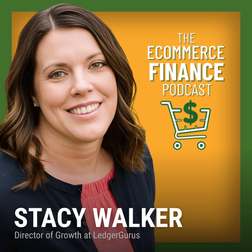
IEEPA tariff refunds are now legally available and the filing system is live. In this episode of the Ecommerce Finance Podcast, Stephen Brown, COO at LedgerGurus and co-owner of Sole Toscana, walks through the complete IEEPA tariff refund process from start to finish alongside Stacy Walker, Director of Growth at LedgerGurus. The Supreme Court ruled IEEPA tariffs unconstitutional. The Court of International Trade followed up and ordered Customs and Border Patrol to issue refunds. CBP has since built a new system called CAPE, the Consolidated Administration and Processing of Entries, inside the ACE portal to process IEEPA tariff refunds electronically. Phase one went live on April 20, 2026. Today’s Key Takeaways: IEEPA Tariffs Were Ruled Unconstitutional and Refunds Are Now Legally Available The CAPE System Went Live April 20, 2026 and the Refund Process Has Officially Started Only the Importer of Record Qualifies, If Your Manufacturer Filed, the Refund Goes to Them Refunds Are Electronic and Take 60 to 90 Days Once Your Application Is Submitted Your First Move Is Getting Set Up in the ACE Portal at ace.cbp.gov This Is Not Automatic, You Have to Initiate the Process Yourself Do Not Count on This Money Until It Actually Hits Your Account Expect the Refund to Be Taxable Income and Plan Ahead Now Your Broker Probably Will Not Come to You, You Have to Go to Them Avoid Pop-Up Services With No Track Record and Work With People You Already Trust Chapters: 00:00 Are IEEPA Tariff Refunds Real and Can Brands Actually Count on the Money? 00:27 What Is Being Refunded and Why the Supreme Court Ruling Changed Everything 02:00 What Is the CAPE System and Why Does It Matter for Ecommerce Sellers? 02:40 Who Qualifies and Who Gets Left Out? 04:52 How Long Will It Take to Actually Get Your Money Back? 06:46 Where Do You File and How Do You Track the Progress? 09:08 How Much Money Are We Talking and Is It Worth the Effort? 09:57 The Step-by-Step Process for Filing Your IEEPA Tariff Refund 13:25 Where Does the Refund Go in Your Books and What Are the Tax Implications? 15:35 Three Things Every Operator Should Do Right Now 22:15 How to Avoid Surprises and Stay Ahead as the CAPE System Evolves Guest Info Stacy Walker is the Director of Growth at LedgerGurus, where she leads the sales and growth strategy for one of the ecommerce industry's most specialized accounting firms. With a background that spans business development, sales, and marketing, Stacy brings a front-line perspective on what ecommerce brands are actually dealing with, having spent years talking directly with seven and eight-figure sellers navigating everything from scaling challenges to profitability gaps. Stacy Walker on LinkedIn - If your ecommerce business paid IEEPA tariffs in 2025 and you need help navigating the refund process or getting your books in order, reach out to LedgerGurus at ledgergurus.com. https://ledgergurus.com/ecommerce-accounting-services/?utm_source=RSS&utm_medium=podcast&utm_campaign=e31
E30: Ecommerce Debt Mistakes That Quietly Drain Your Margins
Stephen Brown, COO at LedgerGurus and co-owner of Sole Toscana, sits down with his business partner Preston Alder to talk about ecommerce debt. They break down why debt feels so confusing for operators, how bad loan terms get hidden behind simple marketing, and why cash flow pressure makes these decisions even harder in inventory businesses. You’ll learn how to think about debt as a tool instead of a shortcut. This episode covers what makes debt useful, what makes it dangerous, and how to spot the difference before it creates bigger problems in your business. Key Takeaways Debt is not the problem. Misunderstanding it is. Merchant cash advances look simple but cost far more than expected. Revenue-based lending drains cash as sales come in. Inventory debt is safer than unproven marketing spend. Strong margins do not mean strong cash flow. Fast growth increases cash pressure. Credit cards and supplier terms can reduce the need for loans. Easy money is usually the most expensive. Forecasting shows debt risk before it becomes a problem. Financial discipline matters more as debt grows. Chapters 00:00 Understanding E-commerce Debt 04:41 Philosophy on Debt in Business 09:31 Using Loans to Buy Businesses 14:20 The Risks of Starting with Debt 19:06 Good vs. Bad Debt 23:56 Navigating Debt Terms and Paybacks 26:04 Understanding Merchant Cash Advances 28:50 The Risks of Debt and Loan Terms 31:30 Cash Flow Management Strategies 37:17 Leveraging Credit for Business Growth 40:56 Financial Discipline and Forecasting 45:44 Simplifying Financial Management for Growth Guest Info Preston is a business operator and co-owner of Sole Toscana. He brings hands-on experience managing growth, cash flow, and day-to-day decisions in an ecommerce brand. SoleToscana.com Preston Alder on LinkedIn If you are using debt but still feel tight on cash, reach out to us at LedgerGurus and we’ll help you figure out what to fix.
E29: Why Your Ecommerce Metrics Don't Match the Top Performers (Ecommerce KPI Benchmark Report)
Stephen Brown, COO of LedgerGurus and co-owner of Sole Toscana, sits down with Stacy Walker, Director of Growth at LedgerGurus, to break down their 2025 Ecommerce KPI report. They walk through what actually separates profitable brands from struggling ones using clean, real financial data. They explain how growth, profitability, ad spend, and channel mix all connect. You will learn what the top-performing brands are doing differently and why many sellers are chasing growth without understanding their numbers. Key Takeaways Clean financial data is required for benchmarking. Bad accounting leads to wrong decisions. 44% of brands were both growing and profitable. Most brands are not hitting both. Gross margin alone does not guarantee profitability. It is only the starting point. Profitable brands still operate on single-digit net margins. Profit is tighter than most expect. Higher ad spend does not always lead to better results. Efficiency matters more than volume. Diversifying sales channels reduces reliance on paid ads and improves stability. Wholesale plays a major role in profitability for top-performing brands. Growth without profit creates cash pressure and risk. It is not a sustainable strategy. Cash balance follows profitability. Unprofitable brands burn through cash quickly. Most brands do not actually know their true profit due to poor COGS and inventory tracking. Chapters 00:00 Introduction to E-commerce Success Metrics 02:42 Understanding Benchmarking and Data Integrity 05:22 Analyzing Profitability Quadrants 08:24 Gross Margins and Their Implications 11:19 Ad Spend Insights and Sales Channels 14:21 Cash Flow and Financial Health 16:59 Growth vs. Profitability Dynamics 19:38 Strategies for Improving Profitability 22:17 Common Mistakes in E-commerce Accounting 25:08 Final Thoughts and Key Takeaways Guest Info Stacy Walker is the Director of Growth at LedgerGurus, where she leads the sales and growth strategy for one of the ecommerce industry's most specialized accounting firms. With a background that spans business development, sales, and marketing, Stacy brings a front-line perspective on what ecommerce brands are actually dealing with, having spent years talking directly with seven and eight-figure sellers navigating everything from scaling challenges to profitability gaps. Stacy Walker on LinkedIn - If you want to understand how your numbers translate into real business value, the team at LedgerGurus helps ecommerce operators build financial clarity that supports smarter growth decisions. https://link.ledgergurus.com/e26-rss
E28: Growing Without Debt: The Slow, Sustainable Path to a Profitable Ecommerce Brand
In this episode, Stephen Brown of LedgerGurus talks with Matthew Kidman, co-founder of House of Joppa. Matthew shares how he built a profitable ecommerce brand without taking on debt, even with the cash pressure that comes from inventory, long lead times, and seasonal demand. They break down what slow, sustainable growth actually looks like in practice. Listeners will hear how Matthew uses lean inventory, supplier terms, and tight cash discipline to stay in control while still growing the business. Key Takeaways Debt enables growth but increases risk when inventory slows Lean inventory reduces cash pressure but leads to stockouts Back-in-stock flows help recover missed sales Supplier terms ease upfront cash strain Slow growth protects margins and reduces stress Forecasting tools help but judgment still matters Build holiday inventory gradually, not all at once Strong margins support self-funded growth Partners help, but founders must stay involved Sustainable growth comes from cash discipline Chapters 00:00 Introduction to House of Joppa 01:36 Matthew's Journey and Philosophy on Debt 04:16 The Launch of House of Joppa 07:16 Inventory Management and Cash Flow Strategies 10:14 Scaling and Supplier Relationships 13:22 Challenges of Inventory Forecasting 16:11 Customer Engagement During Stock Outs 26:18 Negotiating Supplier Terms for Better Cash Flow 27:58 Cash Management Strategies for Sustainable Growth 29:49 Building a Long-Term Business Vision 31:44 Inventory Management During Holiday Surges 33:50 Effective Inventory Planning and Forecasting 37:33 Navigating E-commerce Challenges 39:42 Keys to Achieving Strong Profit Margins 41:25 The Role of Effective Marketing Partnerships 46:26 The Importance of Business Owner Involvement Guest Info Matthew Kidman is the co-founder of House of Joppa, an ecommerce brand that sells Catholic home decor, jewelry, and gifts. He built the business alongside his wife, starting from a simple Instagram account and growing it into a multimillion-dollar brand. Before ecommerce, Matthew worked in real estate and later owned an insurance agency, where he developed his approach to cash management and operations. After experiencing the pressure of credit card debt early in his career, he chose to build House of Joppa without using debt. Today, he focuses on running a profitable, sustainable business with strong margins, lean inventory, and disciplined cash flow. His approach prioritizes long-term stability over rapid, high-risk growth. Matthew Kidman on LinkedIn - If you want to understand how your numbers translate into real business value, the team at LedgerGurus helps ecommerce operators build financial clarity that supports smarter growth decisions. https://link.ledgergurus.com/e26-rss
E27: Business Valuation Before the Sale: How to Build Value You Can Use Right Now
Stephen Brown from LedgerGurus sits down with Mark Lupton, founder of Greenhouse Business Advisors, to talk about what actually makes a business valuable while you are still running it. Most founders only think about valuation when they are ready to sell. But the choices you make every day about growth, profit, and risk are already shaping what your business is worth. Stephen and Mark break down the difference between chasing growth and building real value, why buyers care so much about risk and how the business is run, and why proof of traction matters more than a good idea on paper. Key Takeaways Cash flow, profit, and business value don't always move in the same direction. Value grows when opportunities are backed by proof they work. New channels only add value when the numbers already make sense. Relying too much on one supplier or platform hurts your valuation. Customer retention shows whether your business delivers real value. Buyers want to see revenue consistently turn into cash. Needing constant outside capital makes your business less attractive. How you run the business matters just as much as how much you make. The less the business depends on you, the more it is worth. Thinking long term moves you from putting out fires to building something valuable. Chapters 00:00 Why founders misunderstand business value 01:20 Mark Lupton's journey into ecommerce finance 03:40 The three financial lenses every founder should use 06:10 Why valuation matters even without a planned exit 08:20 Looking at your business like a potential buyer 10:10 Opportunity versus risk in company valuation 13:00 When chasing growth can actually destroy value 20:10 Proof and protection in business strategy 23:10 How Porter's Five Forces applies to ecommerce 28:10 Why customer value drives long-term growth 31:10 Demonstrating that your financial engine works 38:20 The different ways businesses are valued 41:50 Financial returns versus founder satisfaction 45:10 Knowing when someone else can scale the business further 47:20 Turning a founder-led company into a real asset 49:20 Where to connect with Mark Lupton Guest Info Mark Lupton is the founder of Greenhouse CFO, where he leads a team of CFOs who help consumer brands grow in a financially healthy way. He has served as CFO of Carnivore Snax for three years, helping them grow from $2 million to over $30 million in revenue. He also advises DTC fintech companies using his experience as an operational CFO. Before starting Greenhouse, Mark was a partner at a consulting firm where he provided CFO services and helped clients secure multi-million dollar raises. He holds an MBA in entrepreneurship and finance and a degree in engineering, and started his career as an engineer at a Fortune 300 company. Mark Lupton on LinkedIn - If you want to understand how your numbers translate into real business value, the team at LedgerGurus helps ecommerce operators build financial clarity that supports smarter growth decisions. https://link.ledgergurus.com/e26-rss
E26: Metrics for Every Stage of Ecommerce Financial Maturity
Stephen Brown from LedgerGurus sits down with Geoff Gualano from A2X to break down the four levels of ecommerce accounting maturity and the metrics that actually matter at each stage. Many founders think they understand their numbers because they can see revenue in Shopify or Amazon. But once payouts, fees, inventory, and cash flow enter the picture, the story gets more complicated. This episode walks through what changes as a business grows, why accrual accounting matters sooner than most people think, and how clean financial data unlocks smarter decisions, better forecasting, and stronger investor conversations. Takeaways In an ideal world, everyone would have accurate metrics to track. Most e-commerce businesses fall into one of four maturity levels. Level one focuses on basic compliance and tax metrics. Level two emphasizes financial visibility and understanding past performance. Accurate revenue recording is crucial for higher maturity levels. Level three involves forecasting and budgeting based on accurate data. Level four is about being investor-ready with reliable financials. Understanding cash flow is essential for business sustainability. E-commerce businesses need to adapt to changing market conditions. Continuous improvement in financial practices leads to better outcomes. Chapters 00:00 Why revenue is harder than it looks 03:10 The four levels of accounting maturity 07:20 Cash vs accrual accounting explained 12:45 Why accurate revenue changes everything 16:30 The key profit and margin metrics 22:10 Advertising, fulfillment, and contribution margin 28:00 Cash flow and inventory pressure 32:40 The cash conversion cycle breakdown 36:30 Moving into forecasting and planning 40:15 Budget versus actual and scenario planning 44:30 The era of the sophisticated seller 47:20 Investor-ready financials and due diligence 52:00 Final advice on leveling up Guest Info Geoff Gualano leads go-to-market at A2X, where he oversees marketing, revenue operations, and partner relationships. He has spent nearly a decade in the cloud accounting ecosystem, including time at Hubdoc and Xero. At A2X, Geoff works with ecommerce sellers and accounting firms to automate revenue reconciliation and bring clarity to financial reporting across platforms like Shopify, Amazon, eBay, Etsy, Walmart, and PayPal. His focus is helping businesses trust their numbers so they can make better decisions and scale with confidence. Geoff Gualano on LinkedIn If you are unsure where your business sits on the maturity curve, our team at LedgerGurus helps ecommerce founders move from reactive bookkeeping to strategic financial clarity. https://link.ledgergurus.com/e26-rss
E25: Data rich. Decision poor. What’s missing?
Stephen Brown from LedgerGurus talks with Nate Littlewood, founder of Future Ready CFO, about why ecommerce founders struggle to turn financial data into real decisions. Even with dashboards and reports, many operators feel stuck, overwhelmed, and unsure what actually matters. This episode breaks down why more data doesn’t create clarity, how to identify the numbers that matter most, and how simple frameworks help founders focus, reduce stress, and make better decisions without becoming finance experts. Key Takeaways More data does not lead to better decisions without context. Founders often focus on what they enjoy instead of what the business needs. Not knowing what “good” looks like creates decision paralysis. Gross margin problems make most growth efforts pointless. Too much inventory hides cash flow problems instead of fixing them. Cash flow issues often come from overstocking, not low sales. Bottlenecks show where effort will actually move the business forward. Financial clarity reduces stress and burnout for operators. Chapters 00:00 Why data doesn’t lead to decisions 04:30 The real cost of ignoring financial context 08:15 Why good data still creates confusion 11:10 The context vacuum problem 14:20 Founder archetypes and blind spots 18:05 Focusing only on what you’re good at 21:30 Why ecommerce is harder now 24:45 Inventory as a risky bet 27:55 The four stages of financial maturity 32:40 Turning ideas into priorities 36:00 Cash flow and inventory mistakes 40:10 Why too much inventory hurts quietly 43:00 Staying on the path to clarity 45:00 Where to find Nate and final takeaways Guest Info Nate Littlewood is the founder of Future Ready CFO, where he helps early-stage ecommerce and CPG founders bring clarity to their numbers and make better business decisions. His work focuses on using financial data to guide priorities like marketing spend, product strategy, and growth decisions. Nate has built and run his own ecommerce business, served as a lead mentor for a NYC-based startup accelerator, and spent nearly a decade on Wall Street before becoming an entrepreneur. Today, he works with founders through content, courses, and 1:1 coaching to make finance more accessible and reduce the risk of avoidable business failure. Nate Littlewood on LinkedIn If your numbers feel overwhelming instead of helpful, our CFO advisory team helps founders turn data into clear, confident decisions. https://link.ledgergurus.com/e25-rss
1 de 4