
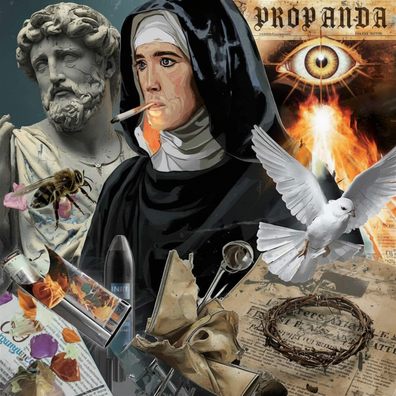
Deconstructing: The Myth of Absolute Free Will
Explícito
Deconstructing with Vulombe por Vulombe M.
T1 · E12
31 jul 2026
29:33
Notas del episodio
In this episode, we confront the load bearing contradiction at the center of monotheistic architectures and modern power systems: the insistence that human beings possess total moral choice, existing alongside an all powerful framework that predetermines every outcome. We trace this conflict from ancient theological disputes to modern neuroscience and algorithmic control, revealing how maintaining this paradox serves as a dual tool for social engineering and institutional control. Finally, we move past the myth of unconditioned free will toward situated agency and systemic liberation.
Key Conceptual Frameworks
- The Core Paradox: The structural contradiction between absolute human moral accountability and absolute divine foreknowledge. Individuals are held personally responsible for outcomes already written into the design.
- The Historical Trajectory: The evolution from Pelagian concepts of human agency to Augustine's Original Sin, intensifying through Luther's bound will and Calvin's Double Predestination, which codified systemic human powerlessness.
- Philosophical and Neurological Determinism: How the Argument from Foreknowledge, Schopenhauer's insights on desire, and Libet's and Haynes's fMRI research demonstrate that brain decision pathways precede conscious awareness.
- Colonial Weaponization: The strategic deployment of predestination to justify conquest and docility, instantly shifting to the language of free will to punish resistance and enforce individual liability.
- Secular Calvinism and Algorithmic Control: How neoliberal capitalism preaches complete personal responsibility while subjecting individuals to hyper deterministic predictive algorithms that engineer behavior and monetize impulse.
- Situated Agency vs Fatalism: Abandoning retributive cosmic justice for restorative models. Rejecting absolute free will allows us to move past external verdicts and cultivate practical, real time agency within our environmental conditions.
Episode Outline and Act Breakdown
- Act I: The Interrogation Room With One Chair: Deconstructing the cosmic paradox of free choice under absolute foreknowledge and total design control.
- Act II: The Historical Evolution of the Trap: From Pelagius and Augustine to Erasmus, Luther, Calvin, and the Synod of Dort.
- Act III: The Philosophical and Neurological Deconstruction: Aquinas, Schopenhauer, Libet, and Haynes testing moral agency against hard science.
- Act IV: The Systemic and Colonial Weaponization of Predestination: Colonial justification, chattel slavery, Weber, and shifting between providence and moral blame.
- Act V: Secular Calvinism and Algorithmic Determinism: Modern surveillance capitalism, predictive policing, and automated individual liability.
- Act VI: Living Without the Verdict: Moving beyond retributive punishment toward transformative justice and cultivating situated agency in an unscripted world.