Critique of the Podcast Form

Critique of the Podcast Form

por Critical Theory Working Group

Episode 18: Rupture Theory (Ft. Cam West)

J. E., Cam, and Mac are joined by Cam West of Negation Magazine to discuss his essay "Rupture Theory" and the possibility of politics at a distance from the state. We discuss the status of the party-form, the dialectic of spontaneity and organization, and so on, especially as they pertain to the last 10 years in the US. Cam West's article = https://www.negationmag.com/articles/rupture-theory

Episode 17: Who Paid The Riddler of Western Marxism? (Part 2)

By popular demand, J. E. and Crane unite in a two-part episode (of which this is the second part) to, uh... review? critique? lampoon? Gabriel Rockhill's book Who Paid the Pipers of Western Marxism Inter alia, they answer pressing questions like, who controls the academic world? (Probably not annoying "idealist" grad students) Did the Frankfurt School destroy the American labor movement? (No, lol) And, what does it mean to use wissenschaftlich DHM hermeneutics to dialectically situate subjective agency with the objective totality of material conditions? (Hell if we know!)

Episode 16: Who Paid The Riddler of Western Marxism? (Part 1)

By popular demand, J. E. and Crane unite in a two-part episode to, uh... review? critique? lampoon? Gabriel Rockhill's book Who Paid the Pipers of Western Marxism. Inter alia, they answer pressing questions like, who controls the academic world? (Probably not annoying "idealist" grad students) Did the Frankfurt School destroy the American labor movement? (No, lol) And, what does it mean to use wissenschaftlich DHM hermeneutics to dialectically situate subjective agency with the objective totality of material conditions? (Hell if we know!)

Episode 15: Wokeness Must be Defended
The description: JE, Cam and Re interrogate Foucault's mid 1970s lectures at the Collège de France, Society Must be Defended. They discuss Foucault's method, his genealogy from Race Wars to Racism and modern conspiratorial thinking among other things.

Episode 14: Theoretical Players' Ball

J. E. and Anatarah discuss Johan Huizinga's classic book Homo Ludens, a foundational work for game studies.

Episode 13: Discoursing the Discorsi

Helen, Esther, and Crane tackle the first book of Machiavelli's Discourses on Livy, reading Machiavelli as a precursor to historical materialism and a radical republican. In the process, they pose the question: what can the critical theory of society learn from Machiavelli today?

Episode 12: A User's Guide to Montaigne and the Function of Skepticism
Crane and Helen talk about Horkheimer's 1938 essay "Montaigne and the Function of Skepticism," which sees Horkheimer both show the skeptical core of both religious dogmatism and philosophical skepticism, as well as its changing valence throughout the development of the capitalist mode of production.

Episode 11: Situationism and the Critique of Reification
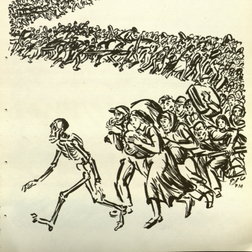
Imogen, Sebastian, and Sam discuss Situationism as a vindication of Hegelian Marxism and a critique of reified life through its various forms of appearance: artistic production, urban planning, and student life.

Episode 10: Working Through the Past with Ernst Bloch

Esther and Sebastian discuss the 1932 fragment Nonsychronism and the Obligation to its Dialectics from Bloch's Heritage of our Times. Our hosts talk about their personal encounters with Bloch, revolutionary traditions and the meaning of the communist dictatorship of the present over the past. Special guests include: Kanafani, Amel, and Pasolini. Bloch's essay, as Walter Benjamin commented, "takes its place inappropriately". Perhaps its time was never there, perhaps it contains a utopia waiting to be excavated.

Episode 9: Fighting About Lukács Again

Mac and Crane are joined by J. E. to continue the discussion about Lukács's politics and his essay "Legality and Illegality." This episode goes into depth on the historical and political context of Lukács's work, debates in the Comintern, and the aftermath of the Hungarian Revolution.
2 de 3