Conversations with Musicians, with Leah Roseman

Conversations with Musicians, with Leah Roseman

por Leah Roseman
Temporada 6

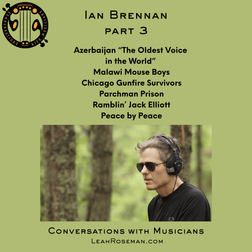
Recording Global Music with Producer Ian Brennan Part 3: Azerbaijan, Malawi, Parchman Prison

This is my third conversation with Ian Brennan in this mini ongoing series with him, within my podcast. If you missed Parts 1 and 2 they are linked in the show notes for you. Today you’ll hear about how he recorded some of the oldest voices in the world in Azerbaijan, and some of the bonus tracks including the Kronos quartet and The Good Ones. Ian shared how he met the Malawi Mouse Boys and then brought them to international attention, and what that has meant for them. We talked about the Chicago Gunfire Survivors project, Ian’s book Peace by Peace, 99 Steps Toward Violence Prevention and De-escalation, and the powerful Parchman Prison albums. At the end I asked him about his Grammy-nominated album with Ramblin’ Jack Elliot “I Stand Alone”. In the show notes you’ll find photos from the album covers by Ian’s wife the Italian-Rwandan filmmaker and photographer Marilena Umuhoza Delli. You'll find the track information for the excerpts in the timestamps and everything is linked in the show notes on my website. You can also watch the video on my YouTube or listen to the podcast on your preferred platform and I've also linked the transcript. Have a look at the show notes where you'll find all the links, including different ways to support this podcast . Please note that I’ve linked suggested episodes you’ll find interesting along with other episodes with Ian, each focusing on different albums he’s recorded. Complete show notes (00:00) Intro (02:40) Azerbaijan “The Oldest Voice in the World” album with clips tracks 1, 5, album linked in show notes (13:13) Ageism, Azerbaijan, clips of tracks 23 Kronos and 26 The Good Ones (17:58) the Malawi Mouse Boys with clips, In Memory of a Hungry Child and tracks 2, 5 “Score for a film about Malawi without music from Malawi”, NPR Tiny Desk (26:30) Malawi Mouse Boys touring, WOMAD, daily struggles (34:50) Other suggested episodes (35:51) Malawi Mouse Boys homemade instruments, Track 14, album linked in show notes (46:17) Chicago Gunfire Survivors clips track 3, 2, 6 (55:23) book Peace by Peace, non-violent crisis intervention, great advice for all of us (01:08:12) Parchman Prison Project with clips from 2 albums linked in show notes Break Every Chain, MC Hammer, Parchman Prison Blues (01:17:20) Ramblin’ Jack Elliott “I Stand Alone”, Grammy nomination

Ruby Colley: the Story of "Hello, Halo", Celebrating Artistic Expression and Neurodiversity

I’m so happy to bring you this episode with the British Ivor-nominated composer, violinist and sound artist Ruby Colley. She grew up with her artist parents and her brother Paul who is neuro-divergent and non-speaking. This conversation shines a light on her beautiful album Hello Halo with the brilliant Exaudi vocal ensemble. She composed this alongside her brother, transcribing Paul’s sounds and using recordings of his voice to make a vocal map of his life & relationships. You’ll be hearing music from this work as well as her project Overheard. Ruby spoke to me about the influence of Breton folk music and J.S. Bach and how she uses field recordings. You’ll also hear about how she has collaborated in some of her audiovisual projects with her mother the artist Kate Adams who founded Project Art Works, a visual arts organization that collaborates with neurodiverse individuals and those with cognitive impairment and high support needs. We talked about navigating music education, stepping away from competitive environments, the joy of improvisation and Ruby’s upcoming project inspired by the beauty of swifts. You’ll find the track information for the musical excerpts in the timestamps and everything is linked in the complete show notes on my website. You can watch the video on my YouTube or listen to the podcast on your preferred platform, and I’ve also linked the transcript. It’s a joy to bring these inspiring episodes to you, and I do all the many jobs of research, production and publicity. Have a look at the show notes of this episode on my website, where you’ll find all the links, including different ways to support this podcast, and other episodes you’ll enjoy, with Karen Power, Gaelynn Lea, Ian Brennan, Mack Hagood, Mark Growden and Teagan Faran, among so many since 2021. (00:00) Intro (02:28) Hello, Halo, Paul’s communication with clips of track 1, 4 (09:37) Kate Adams Cosmology of Care with clip of track 6, what we all need (13:37) notation, clip of track 3, field recordings, Ivor Novello nomination, film (17:13) Project Art Works, makaton sign language, connecting with other families (22:46) Overheard, Edgeland, audio-visual work, how birds change their song, with clips of track 7, 8, 2 from Overheard (31:20) other episodes you’ll enjoy and ways to support this podcast (32:13) field recordings, creating Overheard, clip of track 5 Bell of the Waves from Overheard, improvisation, Bach, Breton folk music (37:56) music education, Dartington College, neurodivergent (42:51) becoming a parent, interdisciplinary approach to the arts (46:52) new project with swifts, teaching

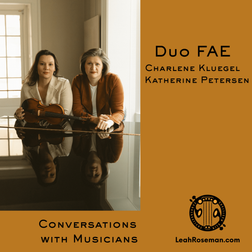
Gilded Age Women Composers: Duo FAE Charlene Kluegel Katherine Petersen

This episode is with Duo FAE violinist Charlene Kluegel and pianist Katherine Petersen. The first part of this conversation focuses on their album Dissidents of the Gilded Age. You’ll be hearing excerpts from this beautiful program and learning about the composers Dame Ethel Smyth, Cécile Chaminade and Amy Beach. Charlene and Katherine are long-time collaborators and close friends and we got into conversations around education, what a path to a career in classical music can look like, and how they have dealt with challenges including becoming mothers. Wth hundreds of kilometres separating us, I really felt like I was enjoying a thoughtful coffee date with brilliant new friends, and I hope you feel that as well. Show notes bring you to: their websites, suggested episodes, video version, transcript, podcast merch, podcast newsletter and how you can buy me a coffee to support this independent project! Show notes with all the links (00:00) Intro (02:17) Dissidents of the Gilded Age album Amy Beach, Cécile Chaminade (06:58) Dame Ethel Smyth, Sufragette movement, clip of her anthem March of the Women complete video linked in show notes (09:08) Dame Ethel Smyth with clip Track 6 Smyth A minor sonata, op. 7, III Romanze (12:40) Cécile Chaminade with clip Track 1 Chaminade Trois Morceaux, op. 31, no. 1 and Track 3 no. 3 Bohémienne, finally clip of track 2 Romanza) (19:23) Amy Beach, linked episodes with Samantha Ege and Juliana Soltis, with clip of Track 11 Beach Sonata in A minor, op. 34, IV Allegro con fuoco (25:47) friendship started at the Aspen festival 2008 (27:36) touring the program in Europe, clip of Track 9 Beach Sonata in A minor, op. 34 II Scherzo (29:28) FAE, bonding over Brahms and starting the duo, Boman Desai’s book (32:43) Charlene’s university years, baroque violin minor (34:51) other linked episodes and ways to support this podcast (35:54) Charlene’s pedagogical handbook on style considerations in orchestral excerpts (38:52) Charlene’s decision to pursue music, broader education at Cornell (40:42) Katherine’s educational path and discovering chamber music with clip Track 10 Beach Sonata in A Minor, op. 34 III Largo con dolore (45:04) collaborative pianist career, Sarah Lehman mentor (50:03) classical music career danger of burnout (52:45) next projects and past experiences (59:32) European educational differences (1:02:00) becoming parents and taking care of ourselves (01:05:44) music educators Photo: Brittany Purlee

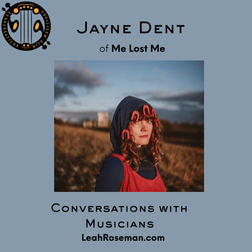
Folk Creativity in the 21st Century: Embracing a Playful Life with Jayne Dent (Me Lost Me)

Jayne Dent is a British interdisciplinary artist, singer and composer and I was absolutely delighted to explore ideas around a creative and playful life with her. You’ll be hearing clips of music from Me Lost Me, with inspirations from folk culture old and new. She opened my mind to what folk creativity and community can mean in the 21st century. You'll also hear about community music making, collaborations with dancers, experimentation with e-textiles, and the challenges and joys of her career path. I was really struck by her creative and curious spirit and you’ll be hearing about some of her chance-based writing tips and her varied interests from creating costumes to medieval sword fighting. Show Notes: Jayne Dent, Me Lost Me, Suggested episodes, Podcast Merch, Newsletter, Buy me a coffee, Video version, Full transcript photo: Amelia Read (00:00) Intro (02:36) Me Lost Me RPG, clip of Marie it is While Summer I Last (09:46) Me Lost Me, RPG video game inspirations, clip of track 2 (11:32) residencies in Aarhus, writing the Oldest Trees Hold the Earth with Ditte Elly, with clip track 8 (14:20) community music making, song writing and improvisation (17:22) future folk, what folk can mean (19:03) Me Lost Me, PHD research, folk use of tech, e-textiles (25:44) costumes, childhood inspired by parents and folk community (31:29) other episodes you’ll like, podcast merch and more (32:24) chance-based writing, CAMP France with clip of track 10 This Material Moment (35:25) challenges of freelancing, mesostic writing with clip of track 12 This Material Moment (39:38) touring, collaborators with clip of track 4 This Material Moment (45:57) more about creative process with clip Ancient Summer track 7 (48:39) making, coding, improvising, Abundance with dancers (54:01) Worm Saliva experimental improvised music with clip of Brass Neck Melt (57:56) where the name Me Lost Me came from, folk use of technologies, Guidonian hand, sword fighting

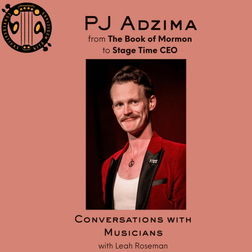
PJ Adzima: From The Book of Mormon to Stage Time CEO

I was fascinated to meet PJ Adzima, and learn about his path from his childhood on a farm to his career as a Broadway performer in the Book of Mormon. A chance encounter with a legendary composer changed his life forever and now as the CEO of the production company Stage Time, he’s paying that forward by discovering and curating talent across genres through many projects. He talked about how embracing vulnerability and studying drag has been transformative and helped him take up space, challenge norms, and create with purpose. A joyful and deep appreciation for the performing arts certainly has driven his excellence and helped him transform his side project into his full-time business, and I’m sure you’ll find PJ’s energy infectious. Like all my episodes, you can also watch this on my YouTube channel or listen to the podcast on many podcast platforms, and I’ve also linked the transcript. It's a joy to bring these inspiring episodes to you every week, and I do all the many jobs of research, production and publicity. Have a look at the show notes of this episode, where you’ll find all the links, including different ways to support this podcast, and other suggested episodes: Show Notes (00:00) Intro (01:55) Book of Mormon (06:37) Stage Time (11:23) power of drag (16:59) Masquerade nighclub curation Phantom of the Opera (21:00) The Stuppets (25:20) history of Vaudeville, dealing with racism, minstrelsy and history of Broadway (29:43) acting career (30:10) linked episodes and how to support this series (31:11) from childhood on a farm to Broadway, his big break (39:44) comedy, Louis C.K. story (43:10) curating new shows, Slam Frank (51:42) challenges and joys entrepreneurship Photo: Shawn Salley

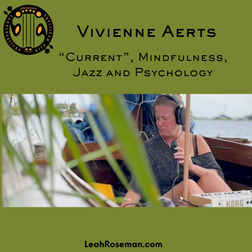
Vivienne Aerts on "Current", Mindfulness, Jazz and Psychology

Vivienne Aerts is a NYC-based Dutch Singer, Educator, and Psychologist, for many years on the faculty of the Berklee College of Music. I’ve been following her inspiring creative practice for a couple of years and I’m excited to tell you that for this episode you’ll be hearing clips from her beautiful upcoming album Current, produced on a tiny 1951 Dutch sailboat, blending jazz, electronics, and vocal loops with water-inspired soundscapes. Her husband, the renowned pastry chef Ted Steinebach also made a documentary film about the journey, which features several other wonderful musicians who hopped on the boat to record. I found it uplifting to get to know Vivienne’s interdisciplinary approach, rooted in mindfulness and how she got started as a student creating interesting opportunities for artists. You’ll also be hearing clips from a couple of her previous projects including the award-winning Typuhthâng featuring 100 female musicians which supports Congolese female cacao farmers through a partnership with Original Beans. In this age of AI, I’m inspired by Vivienne's trust and hopefulness in the need for us to engage all of our senses and the power of mobilizing micro-communities to support meaningful creative work. You can also watch this video on my YouTube; I’ve also linked the transcript, Vivienne's website, other suggested episodes, podcast newsletter sign-up, podcast merch, and how you can buy me a coffee to support this independent podcast! Everything linked here in the complete show notes: https://www.leahroseman.com/episodes/vivienne-aerts photo: Ted Steinebach (00:00) Intro (02:48) album Current and film with excerpt of track 1 (08:30) collaborations with husband chef Ted Steinebach (12:54) Current, mindfulness, the film, excerpt of track 5 (17:33) creative process Current, excerpt strack 5 and 11 (22:08) songwriting, South Korea (27:49) Current, clip of track 8 Closer, living on the boat (35:26) other linked episodes (36:23) creative process album Polaroid with clip of Streetlamps (39:16) Susanne Alt with clip of track 11 (43:31) Typuhthâng album with clips track 9, 4, 1, 6, Original Beans chocolate (50:17) Vivi Talks podcast, teaching, Berklee, entrepreneurship (55:16) her educational path, railway festival, micro-communities (01:04:51) album launch concerts on boats (01:08:12) career path with psychology and music, Dutch culture (01:12:15) Effortless Mastery Kenny Werner, different approach to teaching mindfulness with self compassion

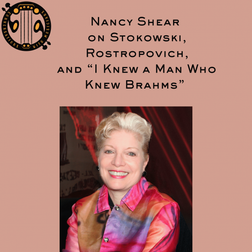
Nancy Shear on Stokowski, Rostropovich, and "I Knew a Man Who Knew Brahms"

I was so honoured and delighted to have this opportunity to have this conversation with Nancy Shear, whose diverse career in classical music will fascinate you. I loved reading her memoir “I knew a man who knew Brahms” which is very much a book about appreciation for great music making as well as the importance of reflecting on the legacies our elders. You’ll hear about insights gleaned from her close releationships with many luminaries including Leopold Stokowski and Mstislav Rostropovich. Nancy was a troubled teenager when she began working as part of the Philadelphia orchestra library staff, and her brave determination, sensitivity and brilliance have led her to many unexpected opportunities. Whether or not you are currently a fan of classical music, I’m sure Nancy’s wisdom and storytelling will inspire you. We’re also including Nancy’s suggested listening links in the show notes, as well as other episodes you’ll enjoy. Complete show notes take you to: video, transcript, Nancy's website and listening suggestions, other episodes you'll enjoy, podcast newsletter sign-up, podcast merch store, podcast support page to buy this independent podcaster a coffee, and more! SHOW NOTES with ALL links! (00:00) Intro (01:38) memoir “I Knew a Man Who Knew Brahms” (12:01) Leopold Stokowski and her memoir (38:14) William R. Smith (43:25) Eugene Ormandy (52:48) other suggested episodes (53:47) Stokowski, excerpt from the book (56:50) Stravinsky Rite of Spring, Stokowski, Mahler (01:00:35) Rostropovich (01:08:49) Nancy’s career and independence (01:17:35) Stokowski’s fascination with technology (01:20:32) great concerts, Byron Janis, Jacqueline du Pré, Ormandy (01:24:22) Curtis (01:27:41) growth mind-set, healthy tech boundaries, writing (01:36:45) final excerpt from “I Knew a Man Who Knew Brahms” about Stokowski, Saul Caston, music appreciation (01:40:14) who was the man who knew Brahms, importance of legacy photo of Nancy: David Teubner

Ian Brennan Part 2: Recording Music in Remote Communities | Ghana, Bhutan & Oakland Stories

This is my second conversation with Grammy-winning producer Ian Brennan, whose work continues to make a meaningful impact around the world. If you missed Part 1 of our interview, be sure to check the link in the show notes. In this episode, we explore Ian Brennan’s remarkable approach to recording music in some of the most remote and overlooked places on Earth. You’ll hear stories from his travels to Ghana, where he recorded in witch camps, as well as projects in Bhutan and within unhoused communities in Oakland, California—near where he grew up. This ongoing series within my podcast highlights more than 50 albums Ian Brennan has produced, many of which have helped local musicians gain international recognition and perform outside their home countries for the first time. In addition to his work in music production, Ian Brennan is also an accomplished author and a respected expert in nonviolent crisis resolution. In this conversation, we also discuss his book Peace by Peace and the philosophy behind his work. The excerpts from the albums featured in this episode are linked in the show notes. The show notes also take you to: transcript, YouTube video, Ian Brennan's website, Marilena Delli Umuhoza's videos, other episodes you'll enjoy including with Ian Brennan, newsletter sign-up, podcast merch, and how you can buy this indepedent podcaster a coffee to keep this going! Show Notes! (00:00) Intro (01:32) Bhutan Balladeers with clips (album and film linked in show notes) (18:35) experience recording “Not a Homelless Person, just a person without a home” with the Homeless Oakland Heart Collective with clips (album linked in show notes) (31:34) non-violent crisis resolution, book Peace by Peace (44:14) recording Witch Camp in Ghana (album linked in show notes) photo: Marilena Delli Umuhoza

Max ZT of House of Waters Interview: Hammered Dulcimer and Manu Delago "Deuce"

Max ZT is a superb Grammy-nominated hammered dulcimer player. I am really inspired by his broad and deep musical approach, improvisation skills, and virtuosity. You’ll be hearing inspirations and clips from his recent album with the handpan virtuoso Manu Delago, and in fact this was recorded during their album release tour of the U.K. and Europe. Max explained fascinating details about his approach to building hammered duclimers with the guidance of David Lindsey. If you’re a fan of Manu’s handpan playing you’ll also be gaining more understanding into his creative approach to performing. You’ll hear the inspiring stories of how Max came to be a student of both the Cissoko Griot family in Senegal, and the late Pandit Shivkumar Sharma in India. Max has also with us shared clips of House of Waters grammy-nominated album “On Becoming” as well as some great behind the scenes moments in the recording studio. Among Max’s collaborators, you’ll hear about the brilliant Moto Fukushima, the 6 string electric bass player in House of Waters, and Max’s wife the wonderful singer and athlete Priya Darshini. I feel that Max’s insights into mindfulness and creativity apply broadly to all of us. Complete Show Notes with all the Links! (00:00) Intro (02:59) “Deuce” with Manu Delago, clip of track 5 Inhale (05:16) Manu Delago, recording album “Deuce”, touring (15:36) different techniques on dulcimer and handpan, with clip of track 4 “Break” from “Deuce” (23:41) the innovations in tuning the dulcimer (27:00) building and designing dulcimers with David Lindsey (33:18) life-changing encounter, clip of track 6 “Rally” from “Deuce”, India, student of Pandit Shivkumar Sharma “Shivji” (37:50) other linked episodes and ways to support this podcast (38:47) India, student of Pandit Shivkumar Sharma (46:04) House of Waters, album “On Becoming” clip of track 1 “Folding Cranes” (47:07) Moto Fukushima, Avaloch Farm Music Institute with clip of track 2 Avaloch, album “On Becoming” (53:18) creative process, importance of improvisation House of Waters, clip of track 8 Improv 13, On Becoming: the Improv Sessions (01:00:41) rewards of improvisation, Mike Stern, with clip of track 4, Hang in the Air, On Becoming House of Waters (01:04:39) Priya Darshini, with clip of track 8, The Wall, On Becoming, House of Waters (01:07:57) Senegal Cissoko Griot family, kora (01:11:48) celebrating the uniqueness of the dulcimer, Bard (01:14:56) upcoming shows photo: David Sosnow

Guthman Musical Instrument Competition Highlights with Trombonist Jeff Albert

Trombonist Jeff Albert joins me for a two-part conversation. The beginning of this episode explores the unique Guthman Musical Instrument Competition at Georgia Tech which celebrates musical inventors from around the world. You’ll be hearing some of these instruments from this year’s competition and you’ll find that information linked in the show notes. The second half of this episode is about Jeff’s life as a trombonist, improvisor, music technologist and professor. You’ll hear about his many years playing and recording in New Orleans across many styles and how digital media pairs with his interest in experimental music. All the music excerpts you’ll hear are linked in the show notes for you, from several of Jeff’s albums. Whether you play in a laptop orchestra or have only the vaguest idea what that means, you’ll enjoy Jeff’s great stories and insights. I’ve been following the Guthman competition for a couple of years and I’ve also linked several previous episodes for you with musical instrument inventors in the show notes, as well as some of the other trombone players I’ve featured. You can watch the video on my YouTube or listen to the podcast, and I’ve also linked the transcript. It’s a joy to bring these inspiring episodes to you, and I do all the many jobs of research, production and publicity. Have a look at the complete show notes of this episode on my website, where you’ll find all the links, including different ways to support this podcast. (00:00) Intro (02:12) Guthman Musical Instrument Competition (06:14) clip of USAWI, video linked (06:56) College of Design at Georgia Tech (10:20) clip of Masterpiece, accessible instruments (13:09) Guthman competition, clip of Demon box, Letheliam Lateef Martin (20:29) Fiddle Henge with clip (22:45) Gajveena Debjit Mahalanobiswith clip, remembering Mark Deutsch’s Bazantar (25:49) VERTO with clip Michael Doron, about Klimchak (29:14) Krzysztof Cybulski post-digital Sax with clip (31:53) Jeff Albert, trombonist, New Orleans career (32:10) linked episodes, newsletter, podcast merch (32:58) New Orleans scene, improvised music, New Normal album with clip of Sidereal Will (35:24) Jeff’s blog, changes in the internet for musicians (41:24) pandemic, album Alone Time with track Grocery Run (43:47) life of a trombonist, album Unanimous Sources, with clip of Oregano with Intent (48:05) New Orleans music scene, unexpected path to academic life (54:37) laptop music, wife trumpeter Alexandria Smith, Atlanta Georgia Tech photo: Dennis McDonough
2 de 26