Conversations with Musicians, with Leah Roseman

Conversations with Musicians, with Leah Roseman

por Leah Roseman
Temporada 3

Elizabeth Pallett, Lutenist: Bringing the Renaissance to life!

Elizabeth Pallett is a wonderful British lute player. Her love of Renaissance music and history is infectious and she has generously provided this episode with several of her beautifully produced YouTube videos; her channel Luteweb is linked below, as well as her duo Amarylli with soprano Hannah Grove. We talk about the history of the evolution of plucked instruments in Europe, and many fascinating historical figures including Dowland and Shakespeare. Liz plays various lutes and plucked instruments and teaches at the Birmingham Conservatoire as well as online with students worldwide. Like all my episodes, you can listen to this on your favourite podcast player, watch the YouTube on my channel, and read the transcript; everything is linked on my website https://www.leahroseman.com/episodes/elizabeth-pallett I have also included detailed timestamps below. I really do need my listners' help to keep this going! Please take a look at my Ko-fi page: https://ko-fi.com/leahroseman Below are the links for Elizabeth Pallett, her website and YouTube channels: https://luteweb.com/ https://www.youtube.com/@luteweb https://www.youtube.com/@amarylli1745 https://twitter.com/luteweb Timestamps: (00:00:00) Intro (00:01:57) Her musical education, growing up on a farm (00:04:16) Julian Bream’s influence (00:05:52) introduction to the lute (00:09:17) Fantasia by Francesco Da Milano Libro Terzo 1562 (00:11:14) evolution of the lute from the oud (00:18:49) Calata Ala Spagnola by Joan Ambrosio Dalza (00:21:48) the gittern (00:25:27) please help me keep this series going by supporting me through my Ko-fi page! (00:25:52) Tastar de corde, improvisatory music (00:28:01) historical context of the music, Aurelio Brandolini (00:33:58) the gittern and the origins of the guitar (00:36:35) lute tablature manuscripts, Capirola lute book (00:39:05) Ricercar Terzo by Vincenzo Capirola (00:43:55) baroque guitar (00:46:18) Jácaras by Gaspar Sanz on baroque guitar (00:46:28) why Liz cuts her nails (00:54:54) teaching lute online and Luteweb videos (00:58:46) lute repertoire, Bach lautenwerck, why the lute fell out of favour (01:03:44) women lute players and composers (01:06:12) teaching online and sharing the love of the past and the lute (01:08:21) Recercar probably by Marco Dall’Aquila (01:10:23) teaching at the Royal Birmingham Conservatoire (01:12:43) the joy of playing figured bass (01:15:32) Amarylli, soprano Hannah Grove, creative programming (01:18:32) “Weep Ye No More Fountains” by John Dowland with Hannah Grove (01:21:08) controversy around Edward de Vere being the author of the writer who had the pen name Shakespeare (01:28:11) John Dowland (01:38:55) Eward de Vere, Marco Dall’Aquila (01:40:34) finding time to practice, balancing family life (01:42:01) bringing undiscovered music to light

Adam Blau: Film Composer of "Dead to Me"

Netflix’s hit series "Dead to Me" (which I love), the Academy Award nominated short My Year of Dicks, and many other projects including You’re the Worst and Brockmire. In this wide-ranging conversation punctuated by music used with permission, we talked about many things including Adam’s many musical influences growing up in New York City, his work for the Fred Rogers Institute and his reflections as a parent. He has wonderful advice for composers interested into breaking into the film industry and shared some of his creative process with us. Adam is a warm and engaging musician with a real love for music across many genres; he shares how he pivoted from working as a performer to composing full-time, and we explored many of his diverse projects. Like all my episodes, this is available as a podcast on your favourite podcast player, a video on YouTube, and the transcript; everything is linked to my website: https://www.leahroseman.com/episodes/adam-blau I have included detailed timestamps if you want to jump to the music or any specific topics. Please help me keep this series going! You can give me a virtual tip or consider becoming a monthly supporter starting at $3 Canadian and get access to unique perks: https://ko-fi.com/leahroseman Adam Blau website: https://www.adamblau.com/ Timestamps: (00:00) Intro (01:56) “Dead to Me”, Liz Feldman (08:14) intro to piano suite clip (08:59) clip of piano suite of themes from Adam’s “Dead to Me” score (10:48) Adam’s childhood musical influences (13:24) Center for the Performing Arts on Long Island (15:16) collaborations Rachel Axler, Jordana Williams, Liz Feldman (17:13) Village Harmony Rebecca Russell (19:49) NYC musical influences, Larry Holdridge (22:47) Yale (26:08) jazz piano (28:44) assisstant to Chris Beck, John Swihart and getting started as a film composer (34:09) Rarified Air podcast, music production libraries (41:30) writing music for podcasts (44:51) “My Year of Dicks” animated short, Pamela Ribon (48:17) intro to sound design montage clip, creative process (52:31) sound design montage clip (55:57) the 24 Hour Musical Theater Challenge, Rachel Axler (01:01:32) Fred Rogers Institute Everyday Grooves, Everbody Counts 2020 census (01:09:17) song “Tell Me What You Love About Me” from Fred Rogers Institute Everyday Grooves (used with permission for this specific podcast) (01:11:14) Adam as a singer and player, “You’re the Worst” (01:14:00) parenting and music education (01:16:51) mentoring composers, advice for the film industry photo of Adam Blau: Ari Scott

Shirley Kazuyo Muramoto: Koto Performer and Teacher

Shirley Kazuyo Muramoto is a California-based Koto performer and teacher, and she also created “Hidden Legacy”, the story of the Japanese Traditional Performing Arts in the American WWII Internment Camps. In this episode she performs some incredibly beautiful koto music, and there are wonderful stories with each piece. Like all my episodes, this is available as both video and podcast, and for those of you watching the video, you’ll notice that Shirley generously re-recorded one of her performances of a very special piece. If you want to jump straight to some music, or different topics in our conversation, you can use the timestamps. However, I encourage you to listen to the whole episode, with Shirley’s engaging insights about family and identity. This is also a video, and you can also read the transcript; everything is linked in the description to my website where you can sign up for my newsletter and get exclusive sneak peeks for upcoming episodes: https://www.leahroseman.com/episodes/shirley-kazuyo-muramoto 🙏🎙️I'm an independant podcaster, who needs your help: Can you offer me a tip? https://ko-fi.com/leahroseman Hidden Legacy film: https://youtu.be/HDqKDexQRSg Timestamps: (00:00) Intro (01:33) the koto with demo (08:13) intro to Sakura, Kimio Eto (12:15) koto music Sakura (16:47) more about Kimio Eto (18:31) playing jazz and different styles on the koto, traditional koto schools, Destiny Muhammad (25:56) making different arrangements for koto for students (29:06) koto music, Maboroshi o Oute by Chikushi Katsuko (34:12) Japanese culture: music names in Japan (37:35) Japanese Internship camps during WWII, “Hidden Legacy” (54:21) learning Japanese, going to Japan (01:00:55) college and school years (01:03:21) intro to Tsubasa ni Notte, Shoko Hikage, Kazue and Tadao Sawai (01:09:29) koto music Tsubasa ni Notte by Sawai Tadao (01:19:28) notation (01:22:10) benefits of improvisation (01:24:45) Japanese traditions, Brian in Japan (01:29:52) teaching koto

Martin Hayes: inspiring conversation and great music with the legendary Irish fiddler

Martin Hayes is an internationally renowned Irish fiddler beloved for his expressive playing and his collaborations with many great musicians in different genres including Bill Frisell, Sting, Paul Simon and more recently Yo Yo Ma with the Silk Road Project. During this episode we spoke of his wonderful book Shared Notes, and he plays some beautiful music live (you can always use the timestamps if you’re curious to jump to some music right away), but I encourage you to listen through the whole episode. Martin speaks eloquently about life, culture, friendship, identity, and staying true to what you value, and I hope this episode will thrill lovers of Irish music and bring new listeners to many of Martin’s projects including The Common Ground Ensemble, The Gloaming, and many more. We talked about the loss and legacy of Dennis Cahill, how he met Thomas Bartlett, the rich depths of traditional music that Martin learned from the older generation, and the rhythm of life growing up on the farm in County Clare. Like all my episodes, this is available as both a video and a podcast on your favourite podcast platform, and the transcript is also linked:https://www.leahroseman.com/episodes/martin-hayes Martin's website: http://www.martinhayes.com/ During the episode we talked about the tribute to Dennis Cahill, which I hoped to link directly but can't find now. It's called: Litir ó do Chara Timestamps (00:00) Intro (02:33) “Shared Notes” book and Martin’s childhood, PJ Hayes, Paddy Canny, Tulla Ceili band and learning fiddle (09:59) the nature of memory and writing the book “Shared Notes” (13:42) fiddle: jigs by Sean Ryan (16:12) different approaches to fiddling with musical demonstrations (23:10) challenges of recording, self-consciousness (25:06) The Common Ground Ensemble (29:51) pandemic reflections, teaching, mindfulness in nature (34:15) fiddle: The Glen of Aherlow (37:28) Dennis Cahill (43:15) Irish diaspora, Irish in America, immigrant experience (48:27) communicating on stage and playing what you want to play instead of what the audience expects (52:49)story about offering money back to disruptive audience (55:35) meeting Thomas Bartlett, The Gloaming (01:02:30) harmonizing Irish music (01:05:46) The Martin Hayes Quartet, Liz Knowles viola d’amore, Caoimhín Ó Raghallaigh (01:08:35) Irish language (01:11:09) Celtic culture in Spain and close cousins musically with different Celtic traditions (01:13:40) negotiating performance conditions; playing on Capitol Hill for Obama (01:16:25) traditional Irish airs (01:18:06) Fiddle: Air A Stór mo Chroí (01:19:52) the immigrant experience (01:24:19) keeping the love of music alive, performing in the moment, Mary McNamara Fleadh Cheoil (01:34:08) Fiddle: The Caolite Mountains

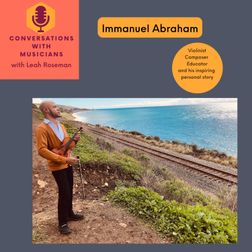
Immanuel Abraham: Violinist, Composer and his Inspiring Personal Journey

My guest today is Immanuel Abraham, a very special musican, who is an inspiring violinist, educator and composer. His phenomenal talent, discipline and creativity is even more inspiring since he didn’t have an opportunity to learn a musical instrument until the age of 14 and 4 years later, he was auditioning for the renowned University of Michigan in violin performance, playing the same Paganini caprice he’d heard Ithak Perlman play on Shalom Sesame as a child. He speaks candidly in this interview about his perseverence in the face of very difficult challenges. More information and links below, including Timestamps! Like all my episodes, this is also available as a video on my YouTube, and the transcript is linked here as well: ⁠https://www.leahroseman.com/episodes/immanuel-abraham⁠ Please help me keep this series going! You can leave a tip or consider becoming a monthly supporter and get access to special perks: ⁠https://ko-fi.com/leahroseman⁠ Immanuel is well-known on social media as The Violin Doctor, which is a Dr. Who reference, but Immanuel actually is Doctor of Musical Arts, awarded from the University of Arizona. When he was a student, in an effort to learn as much as he could that was violin-related, he started The Violin Guild which is an amazingly supportive Facebook group of over 60,000 string players worldwide. Our conversation focused on different aspects of music education, personal development, and you’ll get to hear some clips of Immanuel performing some of his 24 Caprices for solo violin. Below is a link for a discount code the week this is released, and if you’re a violinist I encourage you to buy this amazing volume, which I have been learning and plan to start recording this summer. Immanuel will be releasing his complete recording of all 24 Caprices. https://www.theviolindoctor.com/24 The discount code that will be activated May 12th through May 18th is, theviolindoctor for 25% off of the 24 Caprices for Solo Violin, Second Edition. You will also find Immanuel's current projects and social links there as well. Timestamps (00:00) Intro (02:25) perspectives on starting the violin at age 14, dealing with racism and growing up in the projects (15:02) hearing Itzhak Perlman and the opportunity for free lessons through the Merit School of Music with Guillaume Combet (21:32) inspiration for Immanuel’s 24 Caprices for Solo violin (28:48) clip of Caprice 14 (30:00) clip of Caprice 21 in C Minor, “The Blues” (31:43) Caprice 23, a fugue (complete) (35:54) please support this series on Ko-fi! (36:23) why Immanuel bought a beginner book spent his lunch money on Paganini (41:12) Andrew Jennings University of Michigan (47:15) giving students some choice of repertoire, keeping them motivated (53:08) Sphinx Organization teaching kids in the inner city (01:04:45) becoming a composer, opening for We The Kings (01:11:11) transcribing jazz, learning by ear (01:16:25) violin technique finger independence (01:22:08) yoga, dealing with stress (01:26:03) balance of composition, teaching and performing (01:28:21) discount code for the Caprices theviolindoctor

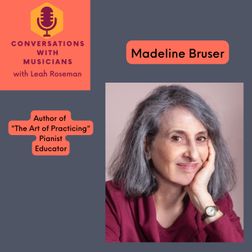
Madeline Bruser: author of "The Art of Practicing", Pianist, Educator

I’m so honoured that Madeline Bruser has agreed to be featured as a guest on this series. When I first read her book The Art of Practicing more than 20 years ago, it helped to transform my experience as a performer and teacher, and on many aspects of my life. Although Madeline’s teaching is aimed primarily at classical pianists and other musicians, I find that much of what she talks about will resonate for everybody trying to get in touch with their emotions, their connection to beauty and meaning, and their experience of being in their bodies. If you happen to be listening to this when it first is released, you should check out Madeline’s free interactive workshop on May 11 at 1pm Eastern. Her website is: https://artofpracticing.com/ Like all my episodes, this is also a video, and the transcript is also linked here: https://www.leahroseman.com/episodes/madeline-bruser Please help me keep this series and this channel going, with a tip or as a monthly supporter: https://ko-fi.com/leahroseman If the topics we address in this conversation are of interest to you, you’ll be interested that many of these important issues have come up with past guests and upcoming guests. Timestamps: (00:00) Intro (02:00) why Madeline wrote the book “The Art of Practicing”, Menahem Pressler, meditation (09:58) Body and Sound Awareness Technique (13:14) change from performer to teacher, big realizations, founding The Art of Practicing (19:48) intro to Madeline’s performance of Chopin Fantaisie Impromptu (20:33) Chopin Fantaise Impromptu (25:59) Rhythmic grouping, Stephen Burns, Kirk Ferguson (32:04) colour in harmony and tonal nuances (34:02) story of tape recorder, listening to ourselves and being vulnerable (39:14) parallels with actors and musicians, Performing Beyond Fear exercise (43:43) lineage (46:23) perfectionism (50:17) Madeline demonstrates common problems for pianists (58:04) dealing with injuries, mindfulness (01:01:25) dealing with stress, teaching online (01:06:56) journaling (01:08:58) student-centered teaching, “Freedom to Learn” Carl Rogers (01:12:51) stage fright and beta blockers (01:15:06) dealing with stressful or traumatic history (01:20:42) teaching constructively with kindness, and teacher training (01:24:00) dealing with feelings of overwhelm, orchestra playing (01:28:37) pianists and ensemble experience (01:31:51) upcoming workshops Mindfulness for Pianists, Freeing Your Energy for Performance
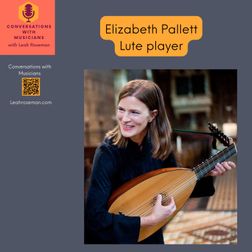
Pat Irwin: Composer TV and Film and Multi-instrumentalist with B52s, SUSS and more

Pat Irwin is a renowned film and television composer; some of his scores include Dexter: New Blood, Rocko’s Modern Life, Pepper Ann, and Nurse Jackie. He’s also a multi-instrumentalist who was a member of the B52s for 18 years; he founded The Raybeats and 8 Eyed Spy, and more recently the band SUSS of which I’m a fan. Pat also teaches film composition at NYU, and Brooklyn College at the Feirstein Graduate School of Cinema, and this conversation wove it’s way into important topics for all of us: a life well-lived, grief, the importance of creativity and of having a good hang. As always, I’ve included detailed timestamps, so if you want to jump to his days with the B52s or Dexter, go ahead, but I hope you’ll take the time to listen to this whole episode which is rich with music and stories. Pat is as articulate as he is creative. You may be surprised that the episode begins with his time in Paris interviewing jazz musicians and learning from John Cage. Please buy me a coffee! https://ko-fi.com/leahroseman Like all my episodes in this series, this is also a video, and the transcript is linked here as well: https://www.leahroseman.com/episodes/pat-irwin Pat Irwin: https://patirwinmusic.com/ Rocko's Modern Life soundtrack album link: https://open.spotify.com/artist/4cxM57oL5yL3wIDlagQyOG Timestamps: (00:00) Intro (02:51) Paris meeting Dexter Gordon, Bill Coleman, Mal Waldron, Steve Lacey, Nadia Boulanger, John Cage (09:54) intro to clip from Rocko’s Modern Life (10:21) clip from Rocko’s Modern Life the Pogo Stick Scenario (10:52) Nadia Boulanger, love of jazz (13:25) intro to Lost and Found albums (14:02) Swing Time from Volume 3 of New Sounds From the Lost and Found (15:51) Open Window from Volume 4 of Lost and Found (17:06) intro to Rocko’s Modern Life (18:11) Rocko Versus Food Boy from Rocko’s Modern Life soundtrack (20:11) Rocko’s Modern Life, Kevin Norton, Art Barron (22:12) Walter Hawkes, Long Island City, Ernie Brooks, Don Cherry, The Talking Heads (26:07) In Another Time from Wide open Sky with J. Walter Hawkes (30:36) NYC 8 Eyed Spy, The Raybeats, the B-52s, deaths of Ricky Wilson and George Scott (37:24) touring life and joining the B-52s (44:03) writing music for film and television, collecting instruments (47:12) Early Morning Song from volume 5 The Lost and Found (52:56) Dexter: New Blood (57:21) music from Dexter: New Blood Suite part 1 (59:12) SUSS, Gary Leib (01:06:06) Winter Was Hard SUSS (01:07:59) pedal steel, lap steel, Jonathan Gregg (01:09:00) teaching film composition at NYU, advice to young composers, the importance of the arts (01:17:30) SUSS (01:24:54) SUSS Across the Horizon (01:30:46) Pat’s start composing for film, changes in film composition industry (01:35:27) reflections on the importance of music

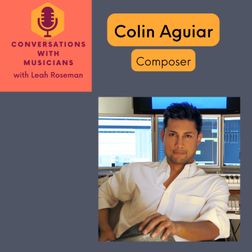
Colin Aguiar: Composer

Colin Aguiar is an award-winning Indian-Candian composer based in Los Angeles who specializes in film scoring. In this conversation we talked about his youth, growing up across parts of India, the Middle East, Europe and Canada and studying the music of various cultures, learning different instruments with a start on drums as a toddler, as well as his love for the music of Arvo Pärt and other great composers. Colins spoke about some of his mentors including Mychael Danna. This episode with Colin is the first release of several film composers I have interviewed recently, and I find it fascinating how diverse their musical backgrounds are and what a challenging and little-understood part of the music world this is. During the episode you’ll hear some clips from Colin’s compositions, used with permission. Like all my episodes, this is available on your favourite podcast player as well as a video, and the transcript is linked as well to my website: https://www.leahroseman.com/episodes/colin-aguiar https://colinaguiar.com/ Help me keep this podcast going!! https://ko-fi.com/leahroseman Timestamps: (00:00) Intro (02:18) toddler drum set, Dad’s band (05:47) Parents’ travels and emigration from India, different cultures (09:17) intro to music from Fly (12:41) music from Fly (16:01) intro to music from Torn from her Arms, Arvo Pärt (17:59) music from Torn from her Arms (19:42) synthesizers, working with session musicians who play by ear (22:51) immigration stories (25:15) arrangement of El Salvadorian anthem (26:25) learning drums and cultures through music (30:52) practicing 5 hours a day, learning different instruments (33:32) starting to compose and arrange (35:41) composition studio gear (38:46) intro to music from film “Construct”, use of dubstep (39:45) music from “Construct” (40:43) Mychael Danna and learning the job of film scoring (48:14) Lou Natale, challenges of time pressure for composers (51:29) intro to palindrome (52:18) clip from palindrome written for Construct (54:23) learning from other composers (56:55) composition Roman Toi (58:29) mentors Lou Natale, John Welsman, glenn Morley, Mychael Danna, Robert Dunca, Christopher Young (01:00:10) internal music soundtrack, being able to remember music with precision (01:02:41) Kathakali, other parallels with film music (01:06:00) different styles of film scoring, decision making, time crunches (01:13:16) use of temp tracks (01:16:27) Canadian film industry (01:17:46) pandemic shutdowns

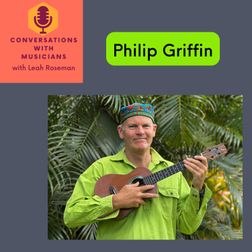
Philip Griffin

Philip Griffin is an amazingly versatile, creative, and generous musician. He plays, improvises, and composes in many styles on many different instruments. During this episode you’ll hear him play the rebab, the ukulele, and guitar in his duo with violinist Jude Iddison. He reflects on his work teaching children and people with disabilities, and reflects on some of his important mentors including Richard Gill, Linsey Pollak and Ross Daly. In the video version, I’ve included a slide show of some of his amazing nature photography, which is also on my website linked to this episode, and the link for Philip’s website and Facebook page are also included below. In this conversation with Philip, I was really happy to be able to talk about some of the themes I find most interesting as a musician: education, creativity, and mentorship. Philip was introduced to me by Linsey Pollak, and I hope if you missed his episode that you’ll check it out: https://www.leahroseman.com/episodes/linsey-pollak Like all my episodes, this is available as a video, and the transcript is linked here as well as some of his amazing nature photographs: https://www.leahroseman.com/episodes/philip-griffin Buy me a coffee? https://ko-fi.com/leahroseman https://philipgriffin.bandcamp.com/album/banksia https://www.philipgriffin.com/ https://www.facebook.com/philip.griffin.7106 Timestamps: (00:00) Intro (02:30) Linsey Pollak (06:02) talking about different instruments laouto, oud, rebab, banjo (10:24) Ross Daly, studying Turkish music (17:10) introduction to the rebab (20:24) rebab improv (23:26) Ross Daly, tours to Australia with Kelly Thoma (25:43) Linsey Pollak, learning modal music (29:23) Ricahrd Gill, learning conducting, singing (41:13) Tutti Arts, Pat Rix, and working with musicians with disabilities (53:25) music educator in schools (57:45) ukulele, New Zealand music programs Mary Cornish Maria Winder Kiwilele (01:07:38) Pat Megowan luthier (01:11:25) Renaissance guitar music by Tourdion on ukulele (01:12:46) Affetto Early Music ensemble (01:16:27) Dominique Schwartz: why Philip moved around so much! (01:18:59) Banksia album with Jude Iddison (01:19:31) violin Jude Iddison: Planting the Garlic/Philip’s Wardrobe from album Banksia (01:24:32) meeting Jude and making the album (01:27:15) Frogs, birds, Barry Wilson, photography (with slide show), Glen Storr (01:36:08) Philip’s advice

Milind Date: Bansuri player

I’m delighted to feature the master bansuri player Milind Date, who joined me from his home in Pune, India, and played his flutes as well as shared his perspectives from his life in music. As always, check the timestamps below for both the music and the many topics we covered. Milind spoke to me about his studies with the legendary Pandit Hariprasad Chaurasia, of his fusion projects especially in South Korea, he had a great story about a memorable concert he played in Toronto, he talked about his extensive travels in India and internationally. He has a large and varied discography, and has composed music for many films: https://www.milind.date/ Like all my episodes, this is available both as a podcast and video, with a transcript all linked to my website: https://www.leahroseman.com/episodes/milind-date-bansuri-player Please help me continue this series! https://ko-fi.com/leahroseman Timestamps: (00:00) Intro (01:46) bansuri flute (03:28) Sunand Bhairav (04:50) early rock music influences, fusion music Hariprasad Chaurasia (11:01) Korean tours and collaborations (17:59) solo 6 month trip in India 2021 (26:11) folk tune from Uttarakhand region (30:01) different folk traditions in India (32:18) Milind’s collection of flutes in different keys (35:01) differences between Hindustani and Carnatic music (38:09) system of gharanas, studies with Hariprasad Chaurasia (55:49) Zakir Hussain (01:05:31) writing film music, notation, Western classical musicians (01:11:31) around the world tour 2013 (01:12:58) performances in Canada (01:20:00) music as meditation (01:23:14) teaching and learning (01:29:56) flute performance
17 de 26