Conversations with Musicians, with Leah Roseman

Conversations with Musicians, with Leah Roseman

por Leah Roseman
Temporada 4

Mark Growden: Living an Adventurous Life in Music

Mark Growden is a brilliant, curious, and expressive American multi-faceted musician. He’s a multi-instrumentalist, composer, singer, music educator, conductor, and visual artist. In this episode we focus on his large and varied instrument collection and he demonstrates several unusual instruments, including different jaw harps, biclycle handebars, and overtone flutes. He shares his unique journey, and how he developed new skills in response to different challenges and opportunities. I was fascinated to hear about his inspiring recent trip to Kyrgyzstan, about many of his mentors and collaborators, and his expressive approach to musicianship training. Mark has devoted his life to making music for other people and to helping other people make music for themselves, and he is an advocate for openess about respect and understanding for people with neurodivergence and mood disorders. Mark is the founder and Artistic Director of The Calling All Choir, The Chromatic Community Music Center, SF SingFest, and The SF Jaw Harp Choir. He has released several critically acclaimed albums and has toured the US extensively. He has composed original musical scores for dozens of dance and theater companies and scored several films. We are featuring music from 3 of his albums during this episode and you’ll find his discography linked below. This episode on YouTube, and the transcript: https://www.leahroseman.com/episodes/mark-growden Mark Growden website: https://markgrowden.org To support this series, please either buy me a coffee here: https://ko-fi.com/leahroseman or shop at my merchandise store: https://www.leahroseman.com/beautiful-shirts-and-more Newsletter sign-up: https://mailchi.mp/ebed4a237788/podcast-newsletter Catalog of Episodes: https://www.leahroseman.com/about You may be also interested in my episodes with other wide-ranging musicians involved in community music, instrument-making and exploring, such as with Linsey Pollak, Kavisha Mazzella, Philip Griffin, Polina Shepherd, Jesse Stewart, Sarah Jeffery, and Gary Muszynski. Timestamps: (00:00) Intro (03:16) Kyrgyzstan, Irina Bogatyryova, jaw harp music, Kutman Sultanbekov (08:25) overtone flutes, bicycle handlebars, selijefloyte (14:06) jaw harp history and demo (17:32) jaw harp technique (21:21)clip from bicycle handlebars improvisation on Mark’s album Saint Judas (22:02) in-blown flutes, interdental embouchure, Central Asian flutes (28:23) Mark’s childhood, music education, bands (31:24)Orff Schulwerk, Blues (35:05) New Orleans, writing for choirs, leading Community Sings (42:36) Mark’s early music education (46:53) Driving into the Sunrise, from In Velvet with the New Orleans Heavies and Mark Growden (50:20) other episodes you may like and different ways to support this series (51:07) Juggling, busking, bands, digeridoo, studying art, jazz (53:04) Kodaly method (55:11) Mark’s approach to teaching musicianship, hearing intervals according to function (59:11) how Mark got into singing and choral direction, claw hammer banjo, album Lose me in the sand (01:04:26) Shady Grove from Lose me in the sand (01:08:53) move to Portland, show for the Getty museum Edyth Eyde (01:16:15) Aron Szilagyi jaw harp festival World Vibes Hungary (01:17:53) bass jaw harp demo (01:19:06) Lithuanian psaltery tuned in whole tones, Veljo Tormis Tabu, kankles psaltery (01:22:07) video music art new projects (01:25:47) mentors Vance George, Al

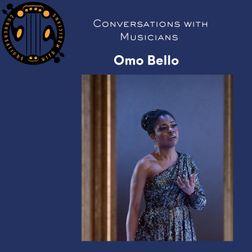
Omo Bello: Celebrating African Art Song

Omo Bello is an acclaimed French-Nigerian operatic soprano , and in this episode we are focussing on her newly-released album “African Art Song” on Somm recordings with pianist Rebeca Omordia. Many of you heard my episode this past summer with pianist and curator of the African Concert Series, Rebeca Omordia, and I’ll be linking that episode below for you. Omo talked to me about overcoming shyness and stage fright, her childhood and university years in Lagos, Nigeria, and some of her mentors including Grace Bumbry and Thomas Quasthoff. I was fascinated to gain insights from her life as an opera singer, and to learn about many of the composers from Africa and the African diaspora featured on this wonderful album, including Ayo Bankole, Fred Onovwerosuoke, Ishaya Yaron, Chirstian Onyeji and Shirley Thompson . Like all my episodes, you can watch this on my YouTube channel or listen to the podcast on all the podcast platforms, and I’ve also linked the transcript to my website: https://www.leahroseman.com/episodes/omo-bello Episode with Rebeca Omordia: https://www.leahroseman.com/episodes/rebeca-omordia-african-pianism African Art Song album: https://somm-recordings.com/recording/african-art-song/ Omo Bello website: http://www.omobello.com/about.html Omo Bello instagram: https://www.instagram.com/omo_bello Merch store to support this series: https://www.leahroseman.com/beautiful-shirts-and-more Buy me a coffee? https://ko-fi.com/leahroseman Newsletter sign-up: https://mailchi.mp/ebed4a237788/podcast-newsletter Catalog of Episodes: https://www.leahroseman.com/about Linktree Social Media: https://linktr.ee/leahroseman photo: Vincent Pontet Timestamps: (00:00) Intro (02:53) African Art Song album with Rebeca Omordia (09:12) Ayo Bankole (10:40) Ayo Banko’s Adura fun Alafia Prayer for Peace (14:22) Ayo Bankole (17:00) Omo’s childhood and university years in Lagos (32:22) Fred Onovwerosuoke, cultural context to interpret this music (39:13) excerpt of “Ngulu” by Fred Onovwerosuoke (40:11) the voice as instrument (44:49) other episodes you may like, and different ways to support this series (45:33) Grace Bumbry (53:44) Shirley Thompson (58:15) excerpt from Shirley Thompson’s "Psalm to Windrush” (59:44) Omo Bello Music Foundation in Nigeria (01:07:47) Ishaya Yarison (01:10:26) excerpt from Ishaya Yarison’s Ku zo, mu raira waƙa (01:11:54) Christian Onyegi, African Art Song album themes (01:15:34) Giri Giri by Christian Onyegi (01:17:31) percussionist Richard Olatunde Baker on the album, transmitting oral tradition of the music (01:20:46) challenges in music education in France (01:28:17) Thomas Quastoff, Des Knaben Wunderhorn album (01:34:21) challenges and joys of an opera singer

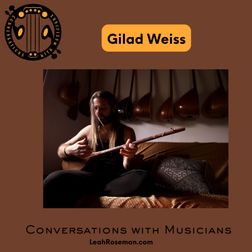
Gilad Weiss: Moving Strings

Gilad Weiss takes us on a visit to his music studio and improvises on several of his instruments, including the fretless guitar, and some of the instruments from Turkey and Central Asia, such as the kopuz, the baglama and the Turkmenistani dutar. He also spoke to me about his duo project with the Anatolian kamanche player Melisa Yildirim and we’re including a track from their beautiful album, which is linked below, along with Gilad’s album Improvisations on Fretless Guitar Volume 1, and the ways to connect with Gilad. He shared his valuable insights about teaching music, and teaching the guitar, improvisation and interesting details about the modes and tuning systems for the various instruments he demonstrates. This episode has a lot of improvised music; Gilad spent much of the interview with an instrument in his hand; please use the detailed timestamps (below) to navigate the episode, which like all my episodes you can either watch on my YouTube or listen to on all the podcast platforms, and the transcript is here too: https://www.leahroseman.com/episodes/gilad-weiss https://giladweiss.bandcamp.com/album/improvisations-on-fretless-guitar https://www.youtube.com/@TheShfanfan https://www.facebook.com/giladweis https://www.instagram.com/gilad.weiss.hadad/ https://talus.info/ It’s a joy to be able to bring these meaningful conversations to you, but this project costs me quite a bit of money and lots of time; please support this series through either my merchandise store or on my Ko-fi page: https://ko-fi.com/leahroseman Here's the merchandise store: https://www.leahroseman.com/beautiful-shirts-and-more Newsletter sign-up: https://mailchi.mp/ebed4a237788/podcast-newsletter You may be also interested in my episodes with lutenist Elizabeth Pallett, guitarists including masters Derek Gripper, Daniel Ramjattan, or Marc van Vugt, along with many episodes featuring traditional and improvised music from around the world. Catalog of Episodes: ⁠https://www.leahroseman.com/about⁠ photo: Daria Perelmuter Timestamps: (00:00) Intro (02:24) saz, dutar, guitar, fingernails (06:31) intro to “Late Night” from Improvisations on Fretless Guitar, Volume 1 (07:16)fretless guitar “Late Night” from Improvisations on Fretless Guitar, Volume 1 (11:50) Gilad’s fretless guitar, Erkan Oğur (14:29) fretless guitar improvisation (16:30) album with kamancheh player Melisa Yildirim (24:49) Yeldeğirmeni Zeybeği | Windmill Zeybek from Talûs with Melisa Yildirim and Gilad (28:11) musical experiences in Turkey, Engin Topuzkanamış (33:40) kopuz (tambur) history and demo, tuning system (36:50) kopuz improv (39:37) huseyni mode and tuning systems (43:18) kopuz improv (44:00) kisa sap baglama (46:23) other episode you will enjoy, different ways to support this series (47:15) different playing techniques, history of microtonal frets (55:48) tambur (58:46) Turkmensitani dutar (01:04:08) Gilad’s early musical influences (01:11:07) Gilad’s approach to teaching music and guitar (01:18:25) improvising and different approaches to learning (01:28:35) different guitars, approach to tuning and teaching guitar (01:34:44) next recording project

Sara Caswell: Jazz violinist

I was honoured to have this opportunity to record this conversation with the phenomenal violinist Sara Caswell, who is a GRAMMY Nominee for the Best Improvised Jazz Solo. We focused on the recent 9 Horses album, Strum with mandolinist and composer Joseph Brent, and she also spoke to me about some of her other collaborators including esperanza spalding, Chuck Owen, Nadje Noordhuis, and mentors including David Baker, Mimi Zweig and Josef Gingold. She shared how she started playing the 10 stringed Hardanger d’amore, her rich early musical life in Bloomington, and how she is grounded and inspired from her family and friends. You can read the transcript or watch the video, both linked here on my website: https://www.leahroseman.com/episodes/sara-caswell https://9horses.bandcamp.com/album/strum https://saracaswell.com/ Merchandise store: https://www.leahroseman.com/beautiful-shirts-and-more Buy me a coffee? https://ko-fi.com/leahroseman Thanks! Newsletter sign-up: https://mailchi.mp/ebed4a237788/podcast-newsletter Catalog of Episodes: https://www.leahroseman.com/about photo: Shervin Lainez Timestamps (00:00) Intro (02:19) 9 Horses album Strum, Joe Brent (07:12) clip from The House that Ate Myself, 9 horses album Strum (08:30) 9 horses trio and different recording projects (11:50) clip from Americannia from 9 horses ablum Strum (13:09) acoustic versus electric violin (15:06) about Sara’s Hardanger d’amore fiddle (23:00) clip from Long Time Away (25:27) Sara’s approach to teaching jazz (28:33) GRAMMY nomination, Chuck Owen the Jazz Surge (32:59) Sara Caswell quartet The Way to You, Nadje Noorduis (34:26) excerpt from South Shore Sara Caswell quartet The Way to You by Nadje Noorduis (37:30) early musical life in Bloomington, David Baker, supportive parents, Mimi Zweig (40:55) Josef Gingold (48:14) related episodes and ways to support this project (48:57) Bloomington years with David Baker, Jamey Abersold, Janis Stockhouse, Stanley Ritchie (53:32) New York early years, John Blake, Sylvia Rosenberg (56:47) clip from Jennie Pop Nettle-Eater (57:22) meeting Joe Brent (59:18) esperanza spalding (01:02:54) the joy of collaboration (01:04:31) clip from Strum (01:05:19) work-life balance and self-care

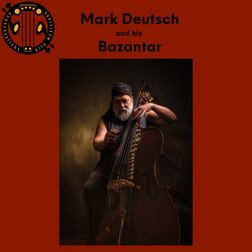
Mark Deutsch and his Bazantar

Mark Deutsch is a brilliant and unique musician who has devoted the last 3 decades of his life to his instrument the Bazantar, which is unique to him. There is only one Bazantar, which is a double bass hybrid with elements of the sitar: it has 6 main strings, 4 drone strings, and 29 sympathetic strings. Mark grew up as a multi-instrumentalist, but primarily a classical, jazz and rock bass player, and gave up a successful career as a performer to devote himself to the Bazantar. While studying sitar with Ustad Imrat Khan, Mark begin delving into the universal fundamentals of music and its underlying frequency structures. The nonlinear mathematical patterns that exist in sound are found universally in the natural world, includeng seashells, and Mark goes into some of the math of the overtone series in some detail, as well as fascinating specifics of how the Bazantar and his playing of it have evolved. You’ll hear Mark talk about how he developed his patented engineering solution to construct a separate housing for the sympathetic strings. In this episode, Mark demonstrated live, and also is sharing not only excerpts from previously released recordings, but a preview from an upcoming album. Mark Deutsch website https://bazantar.com/ Podcast website with Transcript and Video link: https://www.leahroseman.com/episodes/mark-deutsch-and-his-bazantar Buy me a coffee? https://ko-fi.com/leahroseman Merchandise store to support the podcast: https://www.leahroseman.com/beautiful-shirts-and-more Newsletter sign-up: https://mailchi.mp/ebed4a237788/podcast-newsletter Timestamps: (00:00) Intro (03:16) Mark’s background, sitar, and inspiration for creating the Bazantar (10:52) Bazantar music: excerpt from Lahja from the Picasso Tunings (12:13) studying sitar with Imrat Khan (14:10) Alain Danielou’s book Music and the Power of Sound, the math of frequencies and music (18:14) building the Bazantar (22:17) excerpt from Avodah from the album Fool (23:32) Prehistoric Planet (25:09) 8Dio samples, different tunings and playing techniques (34:19) Bazantar demo (39:37) Other episodes you’ll like and different ways to support this series! (40:54) sympathetic strings with demo (44:09) excerpt from The Crooked Road from The Picasso Tunings (45:04) prototypes and the patented engineering solution to the Bazantar (55:55) different bridge designs (58:46) improvisation plucked Bazantar (01:04:13) cross-country tour stories with the Bazantar, Mark’s musical interests (01:08:38) different approaches to improvisation, learning to play what you’re hearing (01:14:05) Mark’s approach to teaching and playing (01:21:50) first album “Fool” with both sitar and Bazantar (01:25:40) excerpt from Painted Bird on Fool (01:26:58) fasting (01:29:00) Picasso Tunings albums (01:31:45) Antique Slippers, 8th movement from the Picasso Tunings (01:35:25) decision to move to San Franciso, different tunings (01:39:18) special effect with just the sympathetic strings with demo from unreleased recording Bardo (01:42:29) Jaron Lanier, Quincy Jones disbelief (01:44:13) more Bazantar demos, ideas about improvisation, background to Kundalini Rising (01:51:54) excerpt from Kundalini Rising from Fool (01:52:55) more demos and the math of the harmonics and frequencies, developing the Bazantar (02:08:25) Mark’s approach to improvisation

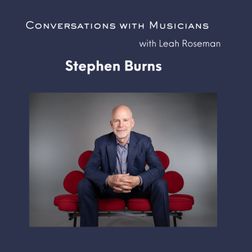
Stephen Burns

Trumpeter, composer and conductor Stephen Burns is the Founder and Artistic Director of the Fulcrum Point New Music Project in Chicago. He has been acclaimed on four continents for his virtuosity and interpretative depth in recitals, orchestral appearances, chamber music, and multi-media performances.In this interview you’ll hear him talk about some of his mentors including Arnold Jacobs, and Pierre Thibaud. Stephen Burns won several important competitions and awards which helped launch his solo career at a young age, the Maurice André Concours International de Paris, but touring internationally brings challenges which he discussed candidly with me. Stephen has worked closely with Madeline Bruser and is a certified teacher in the Art of Practicing. We talked about mindfulness, the importance of a student-centered approach to teaching, the deep connection to your audience, programming innovative programs, and specific advice for not only brass players and musicians, but for all of us. See Timestamps below for the topics covered. Like all my episodes, you can also watch this on my YouTube channel and I’ve also linked the transcript to my website: https://www.leahroseman.com/episodes/stephen-burns Stephen Burns Fulcrum Point: https://www.fulcrumpoint.org/founder Episode with Madeline Bruser: https://www.leahroseman.com/episodes/madeline-bruser Telemann: https://www.youtube.com/playlist?list=OLAK5uy_m5b5ZQtTEQjEfrDUAsQv6qjxLVALKEV0E Hindemith: https://www.youtube.com/watch?v=dmHwJbYls5Y&list=OLAK5uy_nUp5ihSm80-NXa1Zk5nGGEqvsh7PvWQ6o&index=5 Original Merch for sale: https://www.leahroseman.com/beautiful-shirts-and-more Can you buy this independent podcaster a coffee? ⁠https://ko-fi.com/leahroseman⁠ Complete Catalog of Episodes: ⁠https://www.leahroseman.com/about⁠ Newsletter sign-up: ⁠https://mailchi.mp/ebed4a237788/podcast-newsletter⁠ Linktree for social media: ⁠https://linktr.ee/leahroseman⁠ photo: Josh R Zepka Timestamps: (00:00) Intro (03:13) Madeline Bruser, The Art of Practicing, Buddhist principles (07:05) Fulcrum Point New Music Project, programming concerts (16:02) Hindemith Sonata for Trumpet 2nd mvt Maessig bewegt with David Korevaar on piano (18:45) middle school band teacher Dan Riley (26:13) making the decision to pursue music as a career (33:33) moving to New York (35:03) Telemann Concerto in D Major, 1st mvt Adagio (35:18) overcoming injury, Armando Ghitalla, Vince Penzerella (41:44) realistic goals for musicians, finding what makes you happy (44:51) the personal challenges of an international touring career (48:48) moving to Indiana then Chicago (53:33) teaching Mindfulness for Musicians (55:48) other episodes of interest and ways to support this series (56:37) Arnold Jacobs (01:01:26) Telemann’s Trumpet concert in D Major; the last mvt Allegro (01:01:24) the importance of body awareness, working with dancers Martha Clarke, Ruby Shang, overcoming injuries (01:07:54) advice for brass players, Pierre Thibaud, Madeline Bruser (01:15:44) Stephen’s teaching, online challenges (01:18:40) stage fright, performa

Alicia Svigals: Fidl Afire Catch-Up Episode

This episode is a special short Catch-Up episode with the Klezmer violinist and composer Alicia Svigals. I first spoke with her in 2021 in Season 1 of this podcast, and that wide-ranging in-depth conversation is here: https://www.leahroseman.com/episodes/e15-s1-alicia-svigals-klezmer-violinist-and-composer Today we are focusing on Alicia’s new album Fidl Afire https://borschtbeat.bandcamp.com/album/fidl-afire, with several excerpts from the album with her insights. Alicia Svigals website: https://aliciasvigals.com/home I have many episodes featuring klezmer musicians such as Polina Shepherd https://www.leahroseman.com/episodes/polina-shepherd and Marilyn Lerner https://www.leahroseman.com/episodes/marilyn-lerner, and many artists in the folk and world music scene, so please check out my catalog of episodes. https://www.leahroseman.com/about Like all my episodes, you can also watch this on YouTube, or read the transcript, everything linked here: https://www.leahroseman.com/episodes/alicia-svigals-catch-up-fidl-afire Original Merch for sale: https://www.leahroseman.com/beautiful-shirts-and-more Can you buy this independent podcaster a coffee? ⁠https://ko-fi.com/leahroseman⁠ Thanks! Newsletter sign-up: ⁠https://mailchi.mp/ebed4a237788/podcast-newsletter⁠ Linktree for social media: ⁠https://linktr.ee/leahroseman⁠ Timestamps (00:00)Intro (01:18)Fidl Afire album (05:17)excerpt from Alician’s Patsch Tants (10:38) excerpt from Mayn Mame Ver Ikh featuring Vira Lozinsky (15:57) excerpt from Dybbuk Honga (18:57) excerpt from South Fallsburg Bulgar (21:36) excerpt from Fidl Afire Fantasy (23:44) excerpt from Levitt Bulgar

Meg Okura: Jazz Violinist and Composer

Meg Okura is an award-winning Jazz composer and brilliant Grammy-nominated violinist, and the leader and founder of the Pan Asian Chamber Jazz Ensemble. This episode features several excerpts from Meg’s wonderful recent duo album “Lingering” with the Grammy Award-winning jazz pianist and composer Kevin Hays. This was a wide-ranging conversation, including Meg’s musical tribute to Ryuichi Sakamoto, her experiences playing for Cirque du Soleil, some of the challenges she’s faced, and about her search for a new spiritual community. She shared with me her thoughts on mentorship and the power of music to create real understanding and connection. Like all my episodes, you can watch this on my YouTube channel or listen to the podcast, and I’ve also linked the transcript to my website: https://www.leahroseman.com/episodes/meg-okura Album Lingering: https://megokurakevinhays.bandcamp.com/album/lingering Meg Okura Website https://www.megokura.com/home Phantasmagoria: https://open.spotify.com/track/4YG1HjeJF3qgK2AsmiqcXh Original Merch for sale: https://www.leahroseman.com/beautiful-shirts-and-more Can you buy this independent podcaster a coffee? ⁠https://ko-fi.com/leahroseman⁠ Complete Catalog of Episodes: ⁠https://www.leahroseman.com/about⁠ Newsletter sign-up: ⁠https://mailchi.mp/ebed4a237788/podcast-newsletter⁠ Linktree for social media: ⁠https://linktr.ee/leahroseman⁠ Timestamps: (00:00) Intro (02:19) meeting Kevin Hays, album “Lingering” (06:49) Again and Again (10:18) intro to Maim Korim (11:25) Maim Korim (15:07) Meg’s classical training, early interest in composing was discouraged, Pan-Asian Youth orchestra experience (19:56) commentary on Will You Hear My Voice (21:56) excerpt from Will You Hear My Voice (23:06) finding her own path into jazz in New York, influences and opportunities (27:41) BMI Jazz composers workshop (29:30) founding the Pan Asian Chamber Jazz Ensemble (40:38) excerpt from Tomiya Pan Asian Chamber Jazz Ensemble from album Ima Ima (42:09) Ryuichi Sakamoto tribute project (47:02) Michael Brecker, new album with Randy Brecker (48:54) ISJAC prize, Silent Screams: an Anthem for the Unheard (50:18) commission to write trio Phantasmagoria for Tasha Warren and Dave Eggar, writing for classical ensembles (56:00) excerpt from Phantasmagoria (57:23) parenting decisions, importance of education and community, decision to convert to Judaism (01:08:42) changes with education and music online (01:11:36) coommentary on Shamaim (01:13:28) excerpt from Shamaim (01:15:50) different ways you can support this independent podcast (01:16:43) the importance of intuition and emotion in musical composition and improvisation (01:23:06) commentary on Lingering, nostalgia and changing sense of self as we age (01:26:10) excerpt from Lingering (01:28:02) use of electric violin as a tool for composition and in performances (01:29:54) Scorchio Quartet, David Bowie, Sirius quartet, Pharaoh’s Daughter (01:35:10) Cirque du Soleil, decision to return to New York, marriage to Sam Newsome, learning jazz (01:43:19) the importance of mentorship, community, the healing power of music

Julia MacLaine: Cellist

I have known the Canadian cellist Julia MacLaine for many years in her role asAssistant Principal Cello of Canada’s National Arts Centre Orchestra, of which I am also a member. In this episode we’re highlighting her gorgeous album Preludes which pairs the Preludes of J.S. Bach for Cello solo and with newly commissioned works for solo cello by Canadian composers. Julia and I talked about many things, including how best to address the challenges of maintaining high levels of playing and inspiration, studying the craft of songwriting with the legendary Ian Tamblyn , the intricacies of putting together ambitious projects, her childhood in Prince Edward Island, and strategies to cope with performance anxiety. It was really inspiring to hear some of the wisdom Julia gained from her mentors including Timothy Eddy and the late Antonio Lysy. This episode features excerpts of music from Preludes including that of J.S. Bach, Airat Ichmouratov, Carmen Braden, Roy Johnstone and Nicole Lizée. Like all my episodes, you can also watch this on my YouTube channel, and I’ve also linked the transcript to my website, everything linked here: https://www.leahroseman.com/episodes/julia-maclaine Julia MacLaine website: https://www.juliamaclainecello.com/bio Preludes album https://www.prestomusic.com/classical/products/9309403--preludes?srsltid=AfmBOoop593ZT29pz3RSsEMawTjbiHPF_8oMICuS2ruzUn1Qo2dkujCn Preludes album on YouTube https://www.youtube.com/channel/UC80c6WS5jNMk-L5RhXOknCA Original Merch for sale: https://www.leahroseman.com/beautiful-shirts-and-more Can you buy this independent podcaster a coffee? ⁠https://ko-fi.com/leahroseman⁠ Complete Catalog of Episodes: ⁠https://www.leahroseman.com/about⁠ Newsletter sign-up: ⁠https://mailchi.mp/ebed4a237788/podcast-newsletter⁠ Linktree for social media: ⁠https://linktr.ee/leahroseman⁠ My episode with Rachel Mercer, Principal Cellist of NACO: https://www.leahroseman.com/episodes/e9-s2-rachel-mercer Timestamps: (00:00) Intro (03:02) J.S. Bach solo Preludes, Julia’s childhood in Singapore and Prince Edward Island (10:59) Prelude in D minor, Suite number 2 J.S. Bach (14:43) Antonio Lysy, bow control, intonation (20:03) boundaries with technology, Julia’s childhood no TV (22:48) Bonnie Hampton, Julia’s career trajectory, staying in good playing shape (28:08) commissioning Airat Ichmouratov’s Praeludium with excerpt (29:30) excerpt from Airat Ichmouratov’s Praeludium (31:33) commissioning new works inspired by Bach, securing funding (34:30) Carmen Braden collaboration on interpretation (37:44) excerpt from Play Time by Carmen Braden (39:01)more discussion about interpretation and editions (39:59) Timothy Eddy, Julliard and New York experience (44:22) different ways you can support this independent podcast! (45:15) Roy Johnstone (46:36) clip of No. 6 Post Bach by Roy Johnstone (47:52) PEI, Matt Zimbel (48:51) multi-disciplinary project in New York Voice of the Whale (54:38) songwriting with Ian Tamblyn (57:48) mental game, perfectionism, performance anxiety (01:04:33) Nicole Lizée with clip from Prayers for Ruins <p

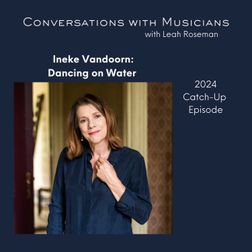
Ineke Vandoorn: Dancing on Water

This special Catch-Up episode with the Dutch singer Ineke Vandoorn focuses on her album with Jasper van ’t Hof, “Dancing on Water”, with lots of music from the album. You’ll also get to hear of her inspirational experience learning from Betty Carter. When Ineke Vandoorn won the prestigous Edison Jazz Award for her album ‘Love is a Golden Glue’ the jury wrote:"Ineke Vandoorn distinguishes herself as a singer with her adventurous way of singing. First of all because of her exceptional, striking voice with an extreme range with which she can do anything. Her voice control enables her to cross her limits. Every note is placed at the right spot. Apart from that the singer has a huge amount of guts." I couldn’t agree more! It was such a pleasure to have this opportunity to speak with Ineke again. My 2023 episode with her is here, during which she sang live for the podcast: 2023 Interview https://www.leahroseman.com/episodes/ineke-vandoorn Like all my episodes, you can watch this on my YouTube channel or listen to the podcast, and I’ve also linked the transcript to my website, everything linked here: https://www.leahroseman.com/episodes/ineke-vandoorn-dancing-on-water Ineke's website https://www.inekevandoorn.com/ Dancing on Water album https://baiximrecords.bandcamp.com/album/dancing-on-water Original Merch for sale: https://www.leahroseman.com/beautiful-shirts-and-more Can you buy this independent podcaster a coffee? ⁠https://ko-fi.com/leahroseman⁠ Complete Catalog of Episodes: ⁠https://www.leahroseman.com/about⁠ Newsletter sign-up: ⁠https://mailchi.mp/ebed4a237788/podcast-newsletter⁠ Linktree for social media: ⁠https://linktr.ee/leahroseman⁠ Timestamps: (00:00) Intro (01:54) about the album “Dancing on Water” with Jasper van ’t Hof (03:17) Paul Simon song “Quiet” with excerpt (05:59) process of creating the album (07:40) meeting Betty Carter (11:30) Marsch Fur Oelze with excerpt (13:03) Yayapriya with excerpt (16:35) please support this indepedent podcast! (17:18) Quiet American with clips (21:04) challenges of writing lyrics, The Way She Looks with clip (24:30) about Dance on the Water, with complete song (31:27) the satisfying challenge of this project
10 de 26