Campus Podcast @ Metro State University

Campus Podcast @ Metro State University

por Mr. Lucky — Educator, MAPL, M.S. Urban Education Student
Temporada 15

Podcast Training with Student Discount

Call Mr. Lucky 773-809-8594

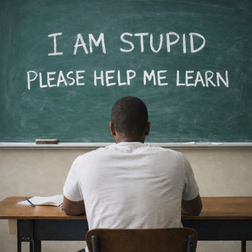
Mr. Lucky: I Admit Being Stupid — Please Help Me

Group Mini‑Lesson: “We Don’t Quit Here” Learning Objective Group members will identify one shared “quit message” and replace it with a collective resilience statement. Example: Quit message: “We always struggle with this.” Resilience statement: “We grow stronger together every time we try.” Learning Outcome Participants will demonstrate the ability to support one another by reframing negative group self‑talk into positive, action‑based language. Example: Negative: “We’re not good at finishing things.” Reframed: “We finish more when we help each other stay accountable.” 5E Learning Model (Group Version) Engage (2 minutes) Place the phrase in the center: “I Am Stupid — Can’t Learn — Please Help.” Ask the group: How does this statement feel when someone in the group says it? This opens empathy and connection. Explore (3 minutes) Each person shares one “quit message” they’ve heard in the group. Examples: “We’re not smart enough.” “We always mess things up.” “We never get things right.” This builds honesty and trust. Explain (4 minutes) Facilitator teaches: Groups often pass down quit habits without noticing. Failure is information, not identity. Groups grow stronger when they reframe together. Elaborate (5 minutes) As a group, pick one quit message and rewrite it into a group resilience statement. Example: Quit: “We give up too fast.” Resilience: “We stay in the fight because we don’t struggle alone.” Have each person say the new statement aloud. Evaluate (3 minutes) Group members share one way they will help someone else not quit this week. This shifts the lesson from individual to collective responsibility. Formative Assessment Group Reflection Card: Each person completes the sentence: “Today I learned our group becomes stronger when we…” Collected responses show: Understanding of resilience Ability to reframe Commitment to supporting one another Contact: 773-809-8594

Black Studies Needed to Correct Ignorance

$200 to any faculty member who proves me wrong. Lesson Plan: Real Black History Started Before Slavery Order My Book: www.weusoursluckybooks.com Grade/Group: High school–adult learners Duration: 30–45 minutes Objective: Learners will understand that Black history includes powerful civilizations and leaders long before the transatlantic slave trade and recognize how post‑Civil War record‑keepers omitted major parts of Black history. Thesis for Learners Black history was distorted after the Civil War because former slaveholders and their political allies controlled historical records, leaving out major Black achievements before and after slavery. Materials Image of the historical figures (Mansa Musa, Tutankhamun, Nefertiti, Nzinga, Taharqa, Shaka Zulu). Engage (5 min) Ask: “What do you know about Black history before slavery?” Show the shirt image and let learners identify any familiar names. Explore (10 min) Briefly introduce each figure: Mansa Musa: Wealth, scholarship, Mali Empire. Tutankhamun & Nefertiti: Egyptian leadership, art, religion. Nzinga: Anti‑colonial resistance, diplomacy. Taharqa: Nubian pharaoh ruling Egypt. Shaka Zulu: Military innovation, nation‑building. Explain (10 min) Discuss how post‑Civil War Southern historians—many former slaveholders—controlled textbooks and historical narratives, omitting Black excellence to preserve their political power. Elaborate (10 min) Small‑group prompt: “How does knowing this history change your understanding of Black identity and America’s historical record?” Evaluate (5 min) Exit reflection: “Name one untold truth you will carry forward.” Mr. Lucky, Master of Advocacy and Political Leadership (M.A., MAPL) Graduate Student, M.S., School of Urban Education Host, Campus Podcast @ Metro State University Social Sciences Educator-Licensed Comments: radiotalklr@gmail.com

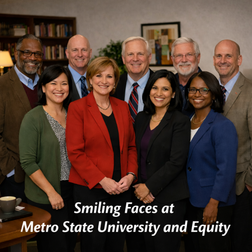
Pick Which "MSU" Faculy Hides Unfairness Behind a Smile

See My Book www.weusoursluckybooks.com Contact: radiotalklr@gmail.com Lesson Plan — The Inclusion Illusion: Smiling Faces Don’t Mean Equity Students examine how “smiling faces” in university marketing and campus culture can create an illusion of inclusion while masking inequitable structures. This lesson challenges learners to look beyond friendliness and analyze how institutions maintain or resist equity. Learning Objectives (with examples) Objective 1: Students will identify how institutional imagery can hide inequitable practices. Example: A student explains how diverse brochure photos do not reflect unequal advising access or workload distribution. Objective 2: Students will evaluate whether inclusion efforts at a university are symbolic or structural. Example: A student compares a diversity event to actual hiring, promotion, or retention data to determine if change is real or performative. Learning Outcomes (with examples) Outcome 1: Students will analyze campus materials and detect signs of token inclusion. Example: A student critiques a promotional video and identifies missing groups, selective opportunity, or silenced dissent. Outcome 2: Students will propose one structural change that improves equity for faculty or students. Example: A student recommends transparent criteria for committee appointments or advising access. 5E Learning Model Engage: Show two contrasting campus images—one cheerful and diverse, one showing data on inequitable outcomes. Ask: “What’s behind the smiles?” Explore: Students examine real or simulated campus materials (brochures, webpages, event flyers) and list what is shown vs. what is hidden. Explain: Students connect their observations to concepts: token inclusion, performative diversity, selective opportunity, unequal access, silenced dissent. Elaborate: In groups, students redesign one campus practice (advising, hiring, internships, committee selection) to make it structurally equitable. Evaluate: Students share their redesign and explain how it addresses inequity beyond imagery or friendliness. Assessments Formative Assessment: Exit Ticket — “Identify one smile-based illusion of inclusion and one structural change needed to correct it.” Summative Assessment: Short Reflection (1–2 paragraphs) analyzing a campus practice and determining whether it represents genuine equity or performative diversity, supported by examples. Mr. Lucky 773-809-8594

Slave Theology- Win $200

Blacks Were Taught This Theology During Slavery. Win $200 sending your essay response to: radiotalklr@gmail.com

Africa and Black USA Unity Part 2

Send Your Comments: radiotalklr@gmail.com Share this episode with others. Keep it moving. Learner to Learner.

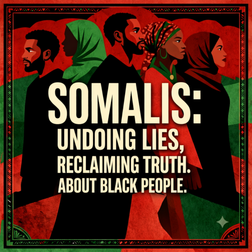
SOMALIS and Black USA Unity Part 2

For Part 2 Email radiotalklr@gmail.com or Call 773-809-8594 The opportunities available to immigrants, including Minnesota’s Somali community, exist because generations of Black Americans — alongside white allies — fought, organized, and sacrificed to expand civil rights and dismantle discriminatory systems. When Somali families began arriving in larger numbers in the late 1980s and early 1990s, they entered a Minnesota already reshaped by the victories of the Civil Rights Movement. School desegregation, fair housing protections, voting rights, and workplace anti‑discrimination laws were secured through struggle, not granted freely. These protections made it possible for Somali Minnesotans to build businesses, worship freely, run for office, attend universities, and participate fully in civic life. Acknowledging this legacy does not diminish Somali resilience; it highlights how American progress is interconnected. One community’s sacrifice becomes another community’s opportunity, creating a shared responsibility to protect hard‑won rights for every generation. SHORT LESSON PLAN Civil Rights Foundations & Minnesota Somali History Learning Objectives Students explain how civil rights struggles created opportunities for immigrant communities. Example: Identify laws (Civil Rights Act, Fair Housing Act) shaping Minnesota before Somali migration. Students describe how Somali Minnesotans benefit from and contribute to this legacy. Example: Connect civil rights protections to Somali civic participation. Learning Outcomes Students articulate links between Black civil rights victories and immigrant access to rights. Example: Explain how workplace anti‑discrimination laws protect Somali workers. Students analyze Somali Minnesota history as part of a shared struggle for equality. Example: Describe Somali leadership in government, education, and business. 5E Model Engage: Show an image of Somali civic leadership. Ask: “What conditions made this possible.” Explore: Students read a short passage on civil rights victories, Minnesota Black activism, and Somali migration. Explain: Teacher clarifies that civil rights laws created the framework immigrants' step into and progress is collective. Elaborate: Students create a two‑column chart: civil rights protections → Somali opportunities (e.g., fair housing → neighborhood building). Evaluate: Exit question: “How are Somali opportunities in Minnesota connected to earlier civil rights struggles.” Teacher checks for accuracy, clear connections, and recognition of shared responsibility. Mr. Lucky-Licensed Educator

Campus Safety Alert: Sexual Assault-State Approved Classes

Call And Listen to The Message at 612-661-0923 Student Owned and Operated. BCA State Approved Online Classes Safety Alert — Protect Yourself Against the No‑Good Culprit Clear instruction. Real empowerment. Responsible training. Basic Gun Lessons and Permit to Carry Classes-Online. Mr. Lucky-Instructor

In Treatment: Alone - The Bible or the Bottle

11 Ways to Choose God Instead of Relapse When You’re Alone 1. Remember God’s Love in the Moment of Temptation (John 3:16) When the urge hits, pause and remind yourself: God still loves me right now. Temptation grows strongest when a person forgets they are loved. Recalling God’s love interrupts the separation that leads to relapse. 2. Tell the Truth About the Struggle Instead of Hiding It (Romans 3:23) “All have sinned…” means you don’t have to pretend. Admitting the struggle out loud — even if only to God — breaks the secrecy that fuels relapse. Honesty is the doorway back to connection. 3. Use the Authority God Already Gave You (John 1:12) You have the right to choose differently. Speak it: I have authority to walk away from this. Authority unused becomes relapse; authority exercised becomes recovery. 4. Replace the Escape with a Scripture You Can Say Out Loud When the group show is gone, your voice becomes your weapon. Speak one line: “God so loved the world…” “All have sinned…” “By His wounds I am healed…” “He gave the right…” Speaking Scripture disrupts the mental pattern that leads to relapse. 5. Change Your Physical Position Immediately Relapse often begins with stillness. Stand up. Walk. Step outside. Move your body. Movement breaks the chain between thought and action. 6. Call One Person Who Knows the Real You Not the group version. Not the testimony version. The real you. Connection kills isolation, and isolation is where relapse grows. 7. Pray a Short, Honest Prayer Instead of a Long Religious One God doesn’t need performance. Say: God, I’m struggling. I need You right now. Honesty reconnects you faster than religious language. 8. Identify the Lie Behind the Temptation Every relapse begins with a lie: “I need this.” “I can handle this.” “No one will know.” Name the lie. Naming it breaks its power. 9. Choose a Healing Action That Matches 1 Peter 2:24 “By His wounds you were healed.” Healing requires action: Drink water Take a shower Read one verse Step outside Write one sentence Small healing actions reinforce the larger spiritual healing Christ already provided. 10. Remove the Object of Temptation From Your Immediate Reach Relapse is often proximity-based. If it’s near you, it owns you. Distance creates clarity. Clarity creates strength. Strength creates obedience. 11. Ask Yourself the Question That Defines Your Essay “The group show is gone. What are you going to do?” This question forces the person to confront the truth: Recovery is not what they say in the group. Recovery is what they choose when they are alone. Summary John 3:16 — Remember God’s love Romans 3:23 — Tell the truth about the struggle 1 Peter 2:24 — Walk in healing John 1:12 — Use your authority Share Your Opinions: radiotalklr@gmail.com

Attention: Social Work, Counseling, and Human Services Students

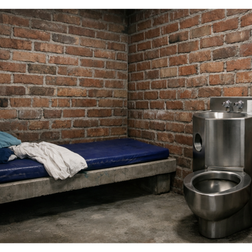
Lesson Plan: Reality Period — Consequences of Confinement Students will examine the real conditions of confinement and connect them to decision‑making. Using Reality Period, learners confront the truth of incarceration through structured reflection and guided discussion. Learning Objectives (with examples) 1. Students will identify the daily restrictions of confinement. Example: Students list how eating, showering, and phone use are controlled by staff. 2. Students will explain how loss of autonomy impacts long‑term behavior. Example: Students describe how being locked in a cell for 12 hours affects mental health and decision‑making. Learning Outcomes (with examples) 1. Students will articulate the difference between perceived toughness and actual confinement. Example: Students compare four hours of viewing a cell image to five years of incarceration. 2. Students will evaluate how personal choices can prevent future confinement. Example: Students write one decision they can change today to avoid criminal‑justice involvement. 5E Learning Model Engage: Show the detention cell image. Ask: “What would four hours in this space feel like?” Explore: Students list everything controlled in custody: meals, showers, sleep, phone access, movement. Explain: Instructor clarifies Reality Period: confronting truth without excuses or fantasy. Elaborate: Students connect confinement conditions to real‑life choices (school, peers, behavior, conflict). Evaluate: Students summarize how confinement removes freedom and how choices prevent entering the system. Formative Assessment Exit Prompt: “Name two freedoms lost in confinement and one choice you can make today to avoid it.” Summative Assessment Short Reflection (5–7 sentences): Students explain how Reality Period changed their understanding of incarceration and identify one long‑term behavior they will adjust. Contact: radiotalklr@gmail.com

4 de 12