BSPE Legal Marketing Podcast

BSPE Legal Marketing Podcast

por Viktoria Altman
Temporada 4

How Much Can I Get From an Uninsured Motorist Claim? - Samantha Kucher

From Kucher Law Group – How Much Can I Get From an Uninsured Motorist Claim? explores the complexities of seeking compensation after an accident involving an uninsured driver in New York. This episode delves into the nuances of uninsured motorist (UM) coverage, detailing how it serves as a financial safeguard for victims when the at-fault party lacks proper insurance. Listeners will gain insights into how the severity of injuries and specific policy terms can significantly influence the compensation amount. The discussion also highlights the importance of understanding policy limits and the critical role of timely action in such claims. The podcast further examines the distinctions between uninsured and underinsured motorist (UIM) coverage, emphasizing their respective applications and benefits. It underscores the necessity of comprehensive documentation, including police reports and medical records, to substantiate claims effectively. The episode also addresses the procedural steps involved in filing a UM claim in New York, stressing the importance of adhering to statutory deadlines to preserve one's rights. In addition, the episode discusses the potential challenges claimants may face, such as claim denials due to a lack of evidence or missed deadlines. It provides guidance on how to appeal denied claims and the importance of legal consultation in navigating these complexities. The role of comparative negligence in adjusting compensation amounts is also explored, illustrating how a claimant's degree of fault can impact the final settlement. Concluding the episode, Kucher Law Group emphasizes their commitment to assisting accident victims through the intricacies of UM claims. With extensive experience in Brooklyn's legal landscape, their team offers guidance to ensure clients receive the maximum compensation possible. They encourage listeners to reach out for support, highlighting their availability for consultations to discuss individual cases and provide personalized legal assistance. Kucher Law Group463 Pulaski St #1c, Brooklyn, NY 11221, United States(929) 563-6780https://www.google.com/maps?cid=5716384493669715397

What is NJ 2C:39-10 – Violation of the Regulatory Provisions Relating to Firearms? - Adam M. Lustberg

From Lustberg Law Offices, LLC – “NJ 2C:39‑10: Violation of the Regulatory Provisions Relating to Firearms” dives deep into New Jersey’s statutes governing firearm regulations and the serious consequences of noncompliance. In the first segment, we introduce NJ statute 2C:39‑10, laying out its scope as it pertains to firearm manufacturing, wholesaling, retailing, and the permits required for purchase or carry, along with machine gun, assault firearm, and tracer ammunition licenses. Listeners will learn this offense is broadly classified as a fourth-degree crime under New Jersey law. Next, we discuss key aggravating provisions: licensed dealers face stronger penalties—selling to disqualified persons or ignoring excessive transfers can lead to disqualification and license revocation, with certain offenses elevated to second-degree felonies carrying mandatory minimum prison terms of 18 months to 3 years. We also cover deceptive practices in applications—making false statements on licensing forms is a third-degree crime, with falsification in registration or certification processes rising to a fourth-degree offense. In the third segment, we review additional statutory provisions: transferring firearms to minors under 18 (or under 21 for handguns) elevates the offense to second- or third-degree crimes with mandatory minimum imprisonment. The episode also touches on new legislative changes—Bill S1425 (2024–2025 session) amended 2C:39‑10 language to include reckless violations and to expand accountability for dealers and traffickers. Finally, we explore practical takeaways: why strict compliance with permit applications, record-keeping, and transfers is crucial for both dealers and individuals; the role of legal defense in falsification cases; and how firms like Lustberg Law Offices, LLC assist clients in navigating firearm regulations and defending against 2C:39‑10 charges. Lustberg Law Offices, LLC 1 University Plaza Dr #212, Hackensack, NJ 07601, United States (201) 880-5311 https://www.google.com/maps?cid=17248268094099978177

What Is NJ 2C:39-14 – Unlawful Training in the Use of a Firearm? - Adam M. Lustberg

From Lustberg Law Offices, LLC - What Is NJ 2C:39-14 – Unlawful Training in the Use of a Firearm? breaks down the serious consequences of being charged under N.J.S.A. 2C:39-14 and explains how allegations of unlawful training in the use of a firearm can lead to second-degree criminal exposure in New Jersey. In this episode, listeners gain a clear understanding of how this statute criminalizes teaching, demonstrating, or assembling to train with firearms, explosives, or destructive devices when there is intent to further illegal activity—even if no underlying crime was ever completed. The discussion explores what N.J.S.A. 2C:39-14 prohibits, who can be charged, and how prosecutors attempt to prove criminal intent. We examine the distinction between lawful firearms instruction—such as gun safety courses, hunter education, self-defense training, and recreational shooting—and conduct that crosses the line into alleged criminal preparation. The episode also compares 2C:39-14 with related statutes, including N.J.S.A. 2C:39-4 (Possession of a Weapon for an Unlawful Purpose), N.J.S.A. 2C:39-5 (Unlawful Possession of Weapons), and N.J.S.A. 2C:39-16 (Leader of a Firearms Trafficking Network), clarifying how each law targets different conduct under New Jersey gun crime statutes. Listeners will learn about the severe penalties attached to a second-degree crime, including 5 to 10 years in New Jersey state prison, fines up to $150,000, and the presumption of incarceration under N.J.S.A. 2C:44-1. The episode also explains how the Graves Act can impact sentencing, when mandatory minimum parole disqualifiers apply, and how additional Graves-Act-eligible charges may increase exposure. Beyond prison time, we cover the long-term consequences of a conviction, including permanent criminal records, firearm disabilities under N.J.S.A. 2C:58-3(c)(1), immigration risks, professional licensing barriers, and limitations on employment opportunities involving public trust or government clearance. Finally, Adam M. Lustberg, Esq., Certified Criminal Trial Attorney by the Supreme Court of New Jersey and founder of Lustberg Law Offices, LLC in Hackensack, shares insight into defense strategies for unlawful firearm training charges in Bergen County and throughout New Jersey. A Seton Hall University School of Law graduate, admitted in New Jersey and New York, and recognized by SuperLawyers Rising Stars, The National Trial Lawyers Top 100 Trial Lawyers, Bergen’s Best Lawyers by (201) Magazine, and Avvo with a 10 out of 10 rating, Mr. Lustberg discusses defenses focused on challenging criminal intent, disputing whether actual training occurred, raising constitutional arguments, pursuing PTI, negotiating charge reductions, and seeking Graves Act waivers under N.J.S.A. 2C:43-6.2. If you or a loved one is facing allegations under 2C:39-14, this episode outlines what you need to know before stepping into the Bergen County Justice Center or any courtroom in the state. Lustberg Law Offices, LLC 1 University Plaza Dr #212, Hackensack, NJ 07601, United States (201) 880-5311 https://www.google.com/maps?cid=17248268094099978177
How an Online Divorce Works in New York (and When to Avoid It) - Juan Luciano

From Juan Luciano Divorce Lawyer – How an Online Divorce Works in New York (and When to Avoid It) provides a comprehensive guide for couples considering the digital route to end their marriage. This podcast delves into the nuances of online divorce in New York, highlighting its suitability for uncontested cases and cautioning against its use in more complex situations. Listeners will gain insights into the step-by-step process, from eligibility criteria to finalizing the divorce, and understand when traditional legal assistance might be more appropriate.In New York, an online divorce is primarily feasible for uncontested cases where both parties agree on all terms, including property division, child custody, and support arrangements. The process begins with confirming eligibility, completing necessary forms, filing documents with the court, serving divorce papers, and finally, submitting the final documents to request judgment. This streamlined approach can save time and reduce costs for amicable separations. However, it's crucial to ensure that all agreements are comprehensive and legally sound to prevent future disputes.Despite its convenience, online divorce isn't suitable for all situations. Cases involving contested issues, significant assets, or complex child custody arrangements require careful legal consideration. Additionally, if one spouse is unresponsive or cannot be located, alternative methods like a "one-signature divorce" or "publication divorce" might be necessary. These scenarios often demand the expertise of a seasoned divorce attorney to navigate the legal complexities and ensure a fair outcome.Juan Luciano Divorce Lawyer, based in New York City, emphasizes the importance of understanding the intricacies of online divorce and recognizing when professional legal guidance is essential. With extensive experience in both uncontested and contested divorces, Juan Luciano and his team are dedicated to assisting clients through every stage of the divorce process, ensuring their rights and interests are protected. For more information and personalized legal support, visit divorcelawfirmnyc.com. Juan Luciano Divorce Lawyer - Manhattan 347 5th Ave STE 1003, New York, NY 10016, United States (212) 537-5859 https://www.google.com/maps?cid=4020903599192949720

What Is Negligent Entrustment? - Luxenberg Garbett Kelly & George P.C.

From Luxenberg Garbett Kelly & George P.C. – What Is Negligent Entrustment? dives into a complex but critical aspect of car accident liability in Pennsylvania. This episode explores what happens when a person injured in an accident discovers that the at-fault driver was operating a vehicle they did not own, raising questions about the legal responsibility of the vehicle owner. The discussion introduces the legal theory of negligent entrustment, explaining how third-party liability can come into play and what standards must be met under Pennsylvania law. Listeners will learn that negligent entrustment occurs when a vehicle owner allows an unfit driver—due to inexperience, intoxication, a revoked license, or a history of reckless driving—to operate their vehicle. Liability can extend to owners who had reason to know the driver posed a danger, especially if they live in the same household or have had prior conversations revealing the driver’s history. The focus is not on the driver's misconduct alone, but on the owner's independent failure to exercise due care. This episode also covers how these claims are proven in Pennsylvania, referencing the Restatement (Second) of Torts and state-specific rules like Section 1574 of the Motor Vehicle Code. Evidence may include driving records, admissions, and even patterns of behavior observed by the owner. The team at Luxenberg Garbett Kelly & George P.C. breaks down how these elements are established in court and when a rental company might also face liability under this doctrine. Finally, the podcast outlines how damages are paid in negligent entrustment cases. While the at-fault driver’s insurance is typically the first avenue for compensation, the vehicle owner’s policy—and potentially their personal assets—may also be targeted. If the owner’s actions are found to be particularly reckless, punitive damages may apply, which insurance often doesn’t cover. With over 100 years of combined legal experience, the car accident attorneys at Luxenberg Garbett Kelly & George P.C. offer practical guidance and aggressive representation to victims across New Castle and Western Pennsylvania. Luxenberg Garbett Kelly & George P.C. 315 N Mercer St, New Castle, PA 16101, United States (724) 658-8535 https://www.google.com/maps?cid=1349618312503922919

Why Was My Workers’ Compensation Denied - Luxenberg Garbett Kelly & George P.C.

From Luxenberg Garbett Kelly & George P.C. – Why Was My Workers’ Compensation Denied? explores the common hurdles Western Pennsylvania workers face when pursuing rightful compensation after a workplace injury. This episode delves into the realities behind initial denials, including missed deadlines, insufficient evidence, and disputes about the origin of injuries. With a focus on real-world challenges and strategic legal recourse, this discussion aims to empower injured employees navigating Pennsylvania’s complex workers' compensation system.Listeners will gain insight into the reasons why a claim may be denied, whether due to injuries deemed unrelated to work, failure to report incidents within the state-mandated 21-day window, or lack of immediate medical treatment. Luxenberg Garbett Kelly & George P.C. highlights how insurance companies may use procedural missteps to deny valid claims, from disputing the legitimacy of injuries to asserting that treatment was sought from unapproved providers. Each of these tactics is explained in the context of Pennsylvania law, equipping workers with the knowledge to act swiftly and correctly.This episode also unpacks how being classified as an independent contractor can impact your eligibility, and outlines the step-by-step appeals process—from filing a Claim Petition with the Bureau of Workers’ Compensation to potential reviews by the Commonwealth Court or even the Pennsylvania Supreme Court. With detailed guidance on how to present evidence, meet crucial deadlines, and handle legal proceedings, the podcast stresses the importance of thorough preparation and legal representation.Luxenberg Garbett Kelly & George P.C. offers not only legal representation but also a compassionate partner in what can be a physically, emotionally, and financially taxing experience. Their team of Western Pennsylvania workers’ compensation attorneys understands the intricacies of the system and is committed to helping clients challenge unjust denials and maximize their benefits. Tune in to learn how to protect your rights, take control of your case, and move forward with confidence after a work-related injury.Luxenberg Garbett Kelly & George P.C. 315 N Mercer St, New Castle, PA 16101, United States (724) 658-8535 https://www.google.com/maps?cid=1349618312503922919

How Long Does a Personal Injury Lawsuit Take? - Joseph Gates

From Gates Law Firm PLLC – How Long Does a Personal Injury Lawsuit Take? explores the full lifecycle of pursuing justice after suffering injuries due to someone else's negligence. This episode dives into the legal stages and timelines individuals may encounter when filing a personal injury lawsuit in Arkansas, including filing a complaint, serving the defendant, navigating discovery, and potentially going to trial.Listeners will gain insight into the key factors that influence how long a personal injury case can take, such as the availability of evidence, allegations of partial fault, and the involvement of insurance companies. The podcast also explains Arkansas’s modified comparative negligence rule and how the size of potential compensation can extend negotiations and even lead to trial. By unpacking these elements, we shed light on why some cases resolve in months while others stretch over a year or more.The episode outlines each milestone of a typical personal injury lawsuit in Arkansas. From filing a complaint with the Circuit Clerk to the final courtroom showdown, Gates Law Firm PLLC ensures clients are prepared every step of the way. With detailed coverage of the discovery process—interrogatories, document requests, subpoenas, and depositions—listeners can anticipate what to expect and why legal strategy matters.At Gates Law Firm PLLC, our Arkansas major personal injury attorney is committed to moving your case forward with precision and clarity. Whether you are at the beginning of your claim or facing complex legal motions, our team is here to advocate fiercely and help you secure the justice you deserve. Call us at (501) 779-8091 to schedule a consultation and learn more about your options. Gates Law Firm PLLC 2725 Cantrell Rd # 105, Little Rock, AR 72202, United States (501) 779-8091 https://www.google.com/maps?cid=4114337096292287489

What Can be Used Against You in a Custody Battle? - Richard Roman Shum

From The Law Office of Richard Roman Shum, Esq. – What Can Be Used Against You in a Custody Battle offers a comprehensive examination of the factors that can influence custody decisions in New York. This podcast delves into the complexities of custody disputes, emphasizing the importance of understanding how various aspects of a parent's behavior and circumstances can impact the outcome.In New York, the court's primary concern in custody cases is the best interest of the child. This includes evaluating evidence of domestic violence, substance abuse, mental health stability, and criminal history. For instance, documented instances of physical or emotional abuse, or a pattern of harassment and coercive control, can significantly affect a parent's custody rights. Similarly, untreated mental health issues or a history of substance abuse may raise concerns about a parent's ability to provide a stable environment.Financial stability and adherence to legal obligations are also critical factors. Failure to meet child support obligations, poor financial decision-making, or an unstable living situation can be viewed unfavorably by the court. Additionally, neglecting parental responsibilities or violating custody agreements can undermine a parent's case. The podcast emphasizes the importance of demonstrating a commitment to the child's well-being through consistent involvement and compliance with legal requirements.The Law Office of Richard Roman Shum, Esq. provides strategic legal support for parents navigating custody disputes in Manhattan. By understanding the legal framework and proactively addressing potential issues, parents can better position themselves to protect their parental rights and serve the best interests of their children. For more information and resources, visit www.romanshum.com. Law Office of Richard Roman Shum, Esq20 Clinton St # 5d, New York, NY 10002, United States (646) 259-3416https://www.google.com/maps?cid=3597344583150276913

Will My Personal Injury Case Settle Out of Court? - Joseph Gates

From Gates Law Firm PLLC – Will My Personal Injury Case Settle Out of Court? explores the key reasons why most personal injury claims never make it to trial. This episode breaks down how cases often resolve more efficiently through negotiation rather than courtroom battles. You’ll learn how clear liability, injury severity, and insurance coverage shape your settlement potential, and how the Arkansas legal team at Gates Law Firm PLLC helps clients navigate each of these critical stages. In this episode, we examine the powerful incentives behind settling outside of court. From avoiding the risks of unpredictable jury decisions to cutting down on costly litigation fees, we outline how both plaintiffs and insurance companies often benefit from an early resolution. We also touch on the importance of confidentiality and how avoiding public scrutiny can make settlements more appealing, especially for defendants concerned about reputation damage. You’ll hear how financial considerations like mounting medical bills, long-term disability, and lost earning capacity play a role in determining whether a trial is necessary. We also discuss how factors like pain and suffering, the behavior of the at-fault party, and personal circumstances can all influence whether a settlement offer is acceptable or whether it's time to prepare for court. Gates Law Firm PLLC ensures that every case is trial-ready, which strengthens negotiation leverage and prepares clients for every scenario. Finally, we explore what to do when the insurance company won’t play fair. From the initial consultation to litigation, Gates Law Firm PLLC stands ready to protect your rights and push for the compensation you truly deserve. If a lowball offer is all that’s on the table, this episode explains how strategic legal preparation can lead to better outcomes, either at the negotiation table or in front of a judge. Tune in and learn how to approach your personal injury claim with clarity, confidence, and the support of a skilled legal team. Gates Law Firm PLLC 2725 Cantrell Rd # 105, Little Rock, AR 72202, United States (501) 779-8091 https://www.google.com/maps?cid=4114337096292287489

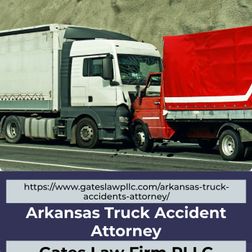
Arkansas Truck Accident Attorney - Joseph Gates

From Gates Law Firm PLLC - Arkansas Truck Accident Attorney explores what victims need to know after a devastating collision with a commercial truck in Little Rock or anywhere in Arkansas. Referencing the title tag “Little Rock Truck Accident Lawyer | Gates Law Firm, PLLC,” this episode explains why truck crashes on I-630, I-440, and throughout Pulaski County are far more catastrophic than typical car accidents, and how federal safety regulations shape every claim. Listeners learn how traumatic brain injuries, spinal cord damage, and wrongful death cases demand immediate action and strategic investigation. Joseph Gates, Esq., founding attorney of Gates Law Firm PLLC, discusses the most dangerous types of crashes, including jackknife accidents, underride collisions, rollover wrecks, and wide turn right-turn squeeze incidents. Drawing on Federal Motor Carrier Safety Administration data and Federal Motor Carrier Safety Regulations, the episode explains how hours-of-service violations, electronic logging devices, commercial driver’s license requirements, and event data recorder black box evidence can determine liability. The discussion highlights how trucking companies, maintenance providers, cargo loaders, and manufacturers may all share responsibility under legal doctrines such as respondeat superior. The podcast also clarifies how Arkansas Code § 16-56-105 and Arkansas Code § 16-62-102 impose strict three-year deadlines for personal injury and wrongful death claims, and how Arkansas Code § 16-64-122 governs modified comparative fault. Listeners gain insight into the four elements of negligence—duty, breach, causation, and damages—and the critical evidence needed to prove a case, from driver qualification files and maintenance records to police reports and expert testimony. The episode underscores how early evidence preservation can make or break a claim filed in Pulaski County Circuit Court or the United States District Court for the Eastern and Western Districts of Arkansas. Serving clients in Little Rock, North Little Rock, Conway, Benton, Pulaski County, and communities across central Arkansas, Gates Law Firm PLLC provides guidance for those facing mounting medical bills, lost wages, and insurance pressure after a truck crash. The episode outlines available compensation for economic damages, non-economic damages, and in cases of gross negligence, punitive damages. For those seeking answers after a serious truck accident, call Gates Law Firm PLLC at (501) 779-8091 for a free consultation at 2725 Cantrell Road, Suite 200, Little Rock, Arkansas. Gates Law Firm PLLC 2725 Cantrell Rd Ste 200 Little Rock, AR 72202 (501) 779-8091 https://www.google.com/maps?cid=4114337096292287489
72 de 178